Tom Lathan

The march of the larch: the Treeline is now encroaching on the arctic tundra

From our UK edition

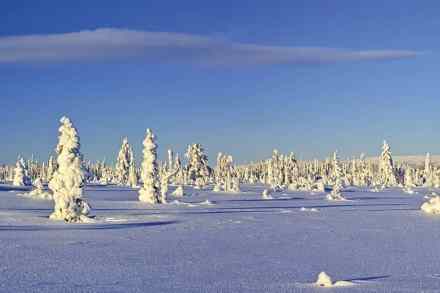
Covering 20 per cent of the Earth’s surface, the boreal forest is the largest living system, or ‘biome’, on land. It contains one third of all the planet’s trees and encircles much of the northern hemisphere in a halo of green. The northernmost extent of this forest, called the treeline, marks the point beyond which it is too cold for trees to grow. This is perhaps not where you’d expect to find Ben Rawlence, an author and journalist whose previous books have focused on humanitarian crises in Africa. But, as he explains in The Treeline, things are changing alarmingly fast in this biome: ‘The trees are on the move. They shouldn’t be. And this sinister fact has enormous consequences for all life on Earth.
Helen Macdonald could charm the birds out of the trees

From our UK edition

When Helen Macdonald was a child, she had a way of calming herself during moments of stress: closing her eyes, she would imagine and count through the layers of the earth that lay beneath her, and then the layers of atmosphere above her. ‘It had something of the power of incantation,’ she writes in Vesper Flights, an essay originally published in the New York Times Magazine and now the title piece in this new collection of essays. Much like her previous book H Is for Hawk, this volume sees Macdonald weave together personal reflections, natural and human histories and fragments of autobiography to create nature writing that is at once intimate and expansive. Some of the essays in Vesper Flights take Macdonald to extraordinary places.

Why fungi might solve the world’s problems

From our UK edition

The biologist Merlin Sheldrake is an intriguing character. In a video promoting the publication of his book Entangled Life, which explores the mysterious world of fungi, he cooks and eats mushrooms that have sprouted from the pages of a copy of the book. In another video, the double bassist Misha Mullov-Abbado ‘duets’ with a recording made by Michael Prime of that fungus eating the book. Readers of Robert Macfarlane’s Underland will recognise Sheldrake from his appearance in that book, where he serves as Macfarlane’s guide to the hidden world of fungi as the two hike around Epping Forest.

‘This pain, of all pains, cannot be palliated’: a doctor cares for her dying father

From our UK edition

Dear Life arrives at a time when the public appetite for the personal accounts of medical insiders shows no sign of abating, with scores of such books having been published in recent years. Their enduring popularity is often — and, arguably, best — characterised as a kind of literary fallout from a decade of austerity and the very public ire this has drawn from health professionals. Rachel Clarke’s 2017 debut, Your Life in My Hands: A Junior Doctor’s Story, was written partly as a response to the 2015 dispute between NHS junior doctors and the then health secretary Jeremy Hunt, as well as the general impact of austerity measures on the NHS.

Poisoned paradise

From our UK edition

For Joanna Pocock, a midlife crisis is the moment in which ‘bored of the rhythm of our days, whatever those may be… we begin to realise that we have more past than future’. With the approach of her 50th birthday and the onset of the menopause, she is struck powerfully by this notion. Her response is to leave London and to relocate, with her husband and their six-year-old daughter, to the American West, a place where she hopes ‘the fabric of our lives and rhythm of our days would be different’. It is an idyllic, optimistic premise that ties into the mythos of the American West as being a place where people can reinvent themselves.

Swarms of pestilence

From our UK edition

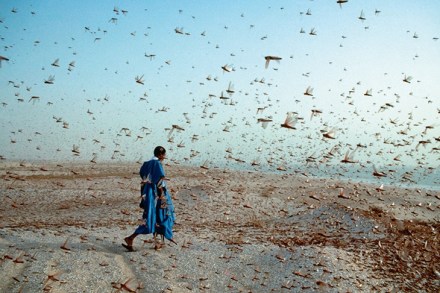
Carried on monsoon winds across the Red Sea, vast swarms of desert locusts have posed a deadly threat to the people of the Horn of Africa for millennia. One swarm can number billions of insects, cover a 1,000-square-mile area and consume 30–40,000 tonnes of food per day — all of which makes the desert locust well deserving of its collective noun ‘plague’. Much brain-power has been dedicated to the controlling of these insects, whose swarms can lead, and have led to, famines. Methods of control have included the digging of trenches to catch hoppers (juvenile locusts) and, later, the aerial spraying of chemical and fungal insecticides. In the early 1950s, however, laying poison-laced bran in the path of marching hoppers was the method most commonly used.