Frank Trentmann

When Britannia ruled the southern waves

From our UK edition

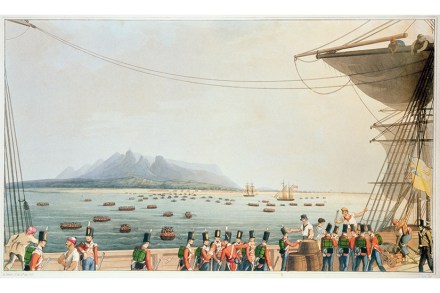
In 1798, Tipu Sultan of Mysore sent an embassy to Mauritius. At home, he had fought the British and seen his kingdom shrink. Now he hoped to recruit Mauritian republicans in a joint fight. Mauritius had been a base for French troops attacking the British in India in the 1780s. In return for their help, Tipu promised to supply any Frenchman with provisions, except wine. And he pledged to kill every British soldier in India. Tipu’s mission is one of the many fascinating stories in this rich and stimulating new history of the world between the late 18th and the mid 19th centuries. Normally it is the French Revolution of 1789 and European revolutions of 1848 that provide the cornerstones of this period.
The tsunami of stuff we have and want is based on culture and economics

From our UK edition

In 1993, the photographer Peter Menzel travelled across the globe to capture our material world. In each country, he asked a family to empty their home and pose in front of their possessions. In Texas, the Skeen family held up their large illustrated Bible, surrounded by their Ford pickup truck, their mini-van and their dune buggy, their two TVs, multiple electrical appliances, shelves and storage cabinets filled with clothes. But even households in poorer countries revealed more things than one might expect. In Mali, the Natomo family had to make do with $250 a year but had a cassette player. In Ethiopia, the even poorer Getu family lived in a straw hut, yet owned an umbrella. Possessions have been a central feature of human life since the beginning.

Nothing new under the sun

From our UK edition

Rupert Sheldrake had it coming. In A New Science of Life (1981), he argued that animals and plants have inherited a collective memory from their predecessors, thanks to ‘morphic resonance’. This also explained why animals had telepathic powers. ‘You see, I told you so,’ I said to my wife when reading about this in Steven Poole’s exciting new book, and exchanged a secret glance with our dog. Mothers, one might add, also seem to have such psychic powers and know exactly when their teenage sons are sneaking home late at night. But Sheldrake is not your average ‘new ager’ or dog lover. He is a cell biologist.