Ian Garrick-Mason

The crusaders were not such incompetent zealots after all

From our UK edition

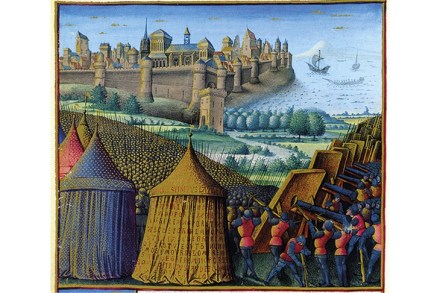
One of the strange effects that modernist, progressive society has had on what the French Annales school would refer to as our civilisation’s mentalité is the almost complete attenuation of memory about what the crusades were, why they were fought and what part they played in a multi-century struggle between two successful, expansionary and universal religions. Though this struggle is still being waged today, we’ve become expert at not noticing it. Even at the level of military history, the crusaders have been written off with a hastily scribbled judgment that amounts to: ‘Invaded the Middle East and captured Jerusalem. Eventually driven into the sea by the brilliant generalship of Saladin.’ In 1954 Major General J.F.C.
For Jack Tar, going to sea was the ultimate adventure

From our UK edition

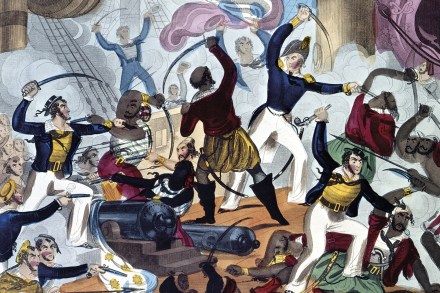
Seafaring and the rule of the waves — as the song would have it — was an integral part of Britain’s sense of identity for centuries, a fire in the national imagination arguably first sparked by the exploits of Sir Francis Drake and the defeat of the Spanish Armada, rising to full flame with the Battle of Trafalgar and the expansion and consolidation of the Empire, and finally dwindling to embers as imperial ambitions failed and ownership of the seas passed to the United States. It’s a story often told, and known almost too well.But this is not the story that the journalist-historian Stephen Taylor tells.

The Renaissance in 50 shades of grey

From our UK edition

The Mediterranean-centred era spanning a century or so either side of 1492 is filled to the brim with stories. There was the discovery of the Americas by a bold Genoese navigator; power struggles between wealthy Italian families, waged through conspiracies, poisonings and stabbings; a radical Dominican monk who managed to impose near-theocratic rule on a republican city before being burned at the stake; the advent of humanism and, subsequently, of a modern, power-focused theory of politics; and the maturing of the visual arts to a new level of sophistication, realism and emotional power. Such stories make up a significant part of the cultural inheritance of the West.

What do we really mean by the ‘language’ of animals?

From our UK edition

The reality of animal communication (or, more precisely, our belief in that reality) is a fact underwritten not by science but by direct experience. A dog owner knows that his dog communicates with him because he makes eye contact with it, notices its body movements, listens to its barks and whines and yips, and associates all of these actions with the contexts in which they occur and the actions that take place before and after such ‘signals’ have been sent. The owner unscientifically — but naturally and effortlessly — projects into the dog a sense of awareness and autonomy similar to the one he himself possesses.

Everyday wonders

From our UK edition

Walking home from work one day during the half-year I lived in London’s Maida Vale (almost three decades ago now), I was just about to turn into an archway leading to the mews house in which I rented a room when into my path a steady stream of grey feathers suddenly began falling. From directly below I couldn’t make out the cause of this, so I ascended to the top-floor patio and climbed the metal stairs to the roof. From this better vantage point I immediately saw that I was being watched in return: looking coolly back at me from the top of the keystone, only ten yards away, were the steady yellow eyes of the falcon I had interrupted in the midst of plucking its prey. Such moments of encounter with the natural world stick with us.

Ruling the waves | 22 November 2018

From our UK edition

The sea — that wine-dark whale road, to mix Homeric and Anglo-Saxon evocations of it — has always held a special place in the human psyche. A site of both great peril and great opportunity, it has influenced our languages and our cultures, just as it has our economic systems and the contours of our many histories. A presence experienced almost as universally as the sun and the soil, the sea is one of human civilisation’s shared foundations. Andrew Lambert, an eminent naval historian, is a strong believer in the power of the sea to shape the destiny of nations.

The unwinnable war

From our UK edition

Many wars have outsized and enduring effects on the societies that fight them, but for Americans the Vietnam war has one attribute that guarantees its longevity as a suppurating wound in the national psyche: it was a loss. Analyses have been numerous and perennial, from David Halberstam’s contemporary portrait of the policymakers who led the country into war, The Best and the Brightest, to last year’s mammoth ten-part documentary series by Ken Burns and Lynn Novick, The Vietnam War.

Through Western eyes

From our UK edition

‘Why have we come here? The Directory has deported us,’ grumbled the heat-stricken and exhausted soldiers of Napoleon’s Army of the Orient, having travelled for days across the desert to a spot just west of Cairo. There, at what would later be called the Battle of the Pyramids, they would face the forces of the Ottoman governor Murad Bey. Napoleon lifted his men’s spirits with a vision of history: ‘Go and remember that 40 centuries are looking down upon you,’ he told them. Though opposed by ‘vastly superior Mamluk forces’, the French exploited discipline, firepower and innovative tactics to win the day.

Two pairs of unsafe hands

From our UK edition

Nixon and Kissinger: Partners in Power by Robert Dallek For a man who once promised the press, way back in 1962, that ‘you won’t have Nixon to kick around any more’, Richard Nixon has turned out to have a remarkably long political afterlife. After a five-and-a- half year presidency, he spent the two decades after his resignation in 1974 patiently building, through books and foreign visits, his reputation as a wise elder statesman.

Making it up as we go

From our UK edition

For the scales at which we live — the buildings we inhabit, the vehicles we drive, the sports we play — classical physics is a useful, highly accurate and reassuringly comprehensible system. But at scales we never personally encounter, at immense velocities, infinitesimal sizes or cosmic distances, things are not so simple. In these worlds, time passes more slowly or quickly depending on one’s own speed, light beams travel on bendy paths through a universe of dented spacetime and electrons are not distinct particles but rather probabilistic clouds which collapse into specific measurements only when we observe them. The novelist and playwright Michael Frayn is fascinated by such worlds.

The Thirty Years Slaughter

From our UK edition

Of the many obscure conflicts of the ancient world, the Pelo- ponnesian war is perhaps the least obscure to us, thanks to Thucydides’ carefully written, if unfinished, account of it. Despite the enormous influence it grew to have on the practice of history itself, Thucydides’ achievement did not prevent future historians from tackling the same subject — of whom Victor Davis Hanson, a prolific author of books on classical Greece and ‘the Western way of war’, is only the most recent. Hanson’s approach is not simply to recount the war’s events or its campaign strategies, but to describe how the war was actually fought, and thus ‘to flesh out this three-decade fight of some twenty-four hundred years past as something very human’.

Why Rome fell

From our UK edition

I n the decade before his death in 1982, the science-fiction writer Philip K. Dick was afflicted with a powerful delusion. He became convinced that the Roman empire was still in existence; that despite what was written in all the history books it had in fact never fallen. Nineteen-seventies California was merely a false projection, a fantasy world concocted to mask the ongoing and malevolent reality of Rome, AD 70. Modern scholars of late antiquity do not suffer from this delusion. But many of them nonetheless argue that the Roman empire didn’t fall — rather, that it went through a ‘transformation’ from a Roman-led civilisation into a Germanic-led one.

Lord of misrule

From our UK edition

According to the business press, the age of the ‘imperial CEO’ is now behind us, swept away by a wave of scandals and collapsing stock prices. But for much of the 1980s and 1990s, Michael Eisner was an emperor’s emperor. Recruited from Paramount in 1984, the Walt Disney Company’s new chairman and chief executive officer immediately set about shaking up the poorly performing company. He boosted cash flow by significantly increasing theme park admission prices. He released Disney’s classic animated features as home videos, realising hundreds of millions of dollars of value from the Disney library. He launched a highly successful chain of stand-alone retail stores.

The lights that failed

From our UK edition

While the Victorian age was certainly one of unprecedented industrial and technical advances — an age, if there ever was one, of science and reason — it was also an age of unconventional religious enthusiams and spiritualist vogues. From seances held in the drawing-rooms of upper-class London families to Christian revivalist gatherings in the slums and countryside, a strong counter-current of faith flowed beneath the 19th century’s surface of rational progress.

The doubtful eye of the beholder

From our UK edition

In this historic moment of struggle between freedom and tyranny, with the destinies of entire nations hanging in the balance, the question of what ‘beauty’ is might seem a frivolous one, best put off until happier times. Until, that is, one remembers that now is always a historic moment, that the destinies of nations are always hanging in the balance. Given this, the contemplation of beauty seems like a perfectly reasonable way to pass an afternoon. Umberto Eco has kindly laid it all out for us in On Beauty, an illustrated sourcebook of ideas about the nature of Beauty (that’s his capital ‘B’) throughout the ages.

A poor pre-emptive strike

From our UK edition

‘You will be in charge, although, of course, nothing will happen, and I shall be back again this evening early,’ Major Henry Spalding told Lieutenant John Chard before riding away from the British supply depot in search of reinforcements that had failed to show up on time. Chard was thus the officer in command when barely two hours later the depot, defended by only 139 soldiers and engineers, was attacked by a column of 4,000-6,000 Zulus. The subsequent battle of Rorke’s Drift would become one of the most famous in British military history. Saul David’s history of the six-month Zulu war of 1879 arrives on the 125th anniversary of the conflict.

The five stages of a downhill descent

From our UK edition

After defeating two fascist powers in a world war, the citizens of the democratic West have gradually come to throw the label ‘fascist’ around with abandon. Police officers are fascists to the protesters they confront. University administrators are fascists to the students they discipline. Think back: many of you probably had parents who were fascists — at least with regard to your curfew. Alas, the term has come to be used rather freely even in political discourse: to the Left, postwar non-communist dictatorships under generals Franco and Pinochet were fascist, and to today’s pro-war Right, Muslim fundamentalists are Islamo- fascists’, in Christopher Hitchens’ colourful phrase.

Moving swiftly on . . .

From our UK edition

Titles that begin with the phrase A Brief History of … are no doubt written that way to connote a certain sense of humility, as if the author has been engaged in a casual endeavour and can offer no guarantee that the results will be definitive. The roots of this trend go a few decades back, when titles beginning with the oak-ribbed phrase The History of … — the kind of title that condemned Edward Gibbon to 12 years of writing and his readers to six volumes of reading — were gradually outnumbered by titles beginning with the rather more plastic A History of …. It was all but inevitable that someone would eventually spot the benefits that an adjective like ‘Brief’ could bring to the mix.

The posthumous patriot

From our UK edition

In the spring of 1943, Allied armies in North Africa prepared to attack the Axis powers on the continent of Europe. Dominating the central Mediterranean, Sicily was the obvious first target, and it was clear the German High Command would heavily reinforce the island. To counter this, British naval intelligence concocted a bold disinformation operation aimed at fooling the Germans into thinking the Allies’ real targets were Greece and Sardinia.

A regiment to reckon with

From our UK edition

In the spring of 1990, at the age of 21, I found myself sitting on an English hillside in the sun as one member of a brand-new training platoon of British squaddies. Having been marched up hill and down dale for a couple of hours that afternoon, we were handed large cans of beer by the corporals and told to stand up one by one — in front of the platoon, its NCOs, and its lieutenant — to explain what motivated us to join the Light Division. As a university-educated Canadian, my own reasons were odd-sounding and faintly naive, while the other soldiers’ reasons had an enviable clarity: ‘I got a job as a builder, but my supervisor was a twat. So I hit him in the head with my shovel.