Sarah Drury

Albania

From our UK edition

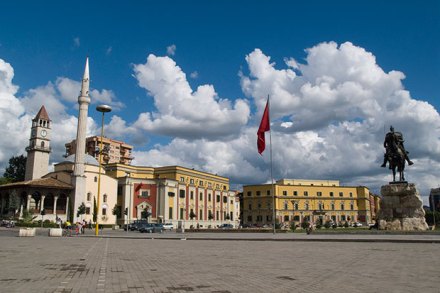
Seferis’s line about his native Greece, ‘Our country is a closed in place, all mountains’, haunted my mind as I traversed Albania. I had gone in the hope that Albania now would be like the southern Europe of my student days. The news in brief is: it is, and it isn’t. First impressions of Tirana, the capital, were that it was a city in a hurry to expand. Despite being badly damaged in 1944, it retains an unexpected charm, perhaps because of Mussolini’s pine-lined boulevards and green spaces.
A history of remembrance

From our UK edition

One fight that seems to have been won is that spearheaded by the War Memorials Trust to preserve the thousands of memorials — monuments, statues, plinths, tablets — erected across the country to honour our war dead. Through conservation grants and hard graft, and a clampdown on the scrap-metal trade, many decaying and vandalised memorials have been rescued. Inventories are being compiled, guides published, and now English Heritage is staging an exhibition atop Wellington Arch (until 30 November) that explores the history of six London memorials in its keeping. Two are visible from the arch: Jagger’s Royal Artillery masterpiece (above) and Derwent Wood’s more controversial David, commemorating the Suicide Club, aka the Machine Gun Corps.

Fifties domestic harmony

From our UK edition

Our love affair with the 1950s has been going on for years and shows no sign of abating. Pangolin London, the city arm of the Gloucestershire foundry, has cleverly used the visceral appeal of Fifties design — if ever a period merited the term gay in its original sense, this one does — to show how sculpture can be incorporated into a domestic setting (until 17 May). All too often works of sculpture, whatever their size, are put on pedestals or instinctively relegated outdoors or to public spaces.

The grandson of Scott’s deputy makes music in Antarctica

From our UK edition

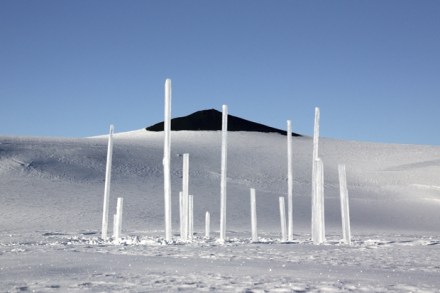
As his father lay dying some six years ago, Julian Broke-Evans promised him that he would ‘keep telling the story’, the story being that of Scott’s ill-fated but heroic 1910–13 Terra Nova expedition to the South Pole. Julian’s grandfather was Teddy Evans (later Admiral Lord Mountevans), Scott’s second-in-command, who was to win fame in 1917 as ‘Evans of the Broke’ when he took on six German destroyers in the Dover Straits. Marrying a Norwegian, he embraced the land of Scott’s rival, Amundsen, with an enthusiasm that has passed down the generations and which is now inspiring an Anglo–Norwegian collaboration of rare beauty, set on a mountain-top above Gudbrandsdalen.

The place to be

From our UK edition

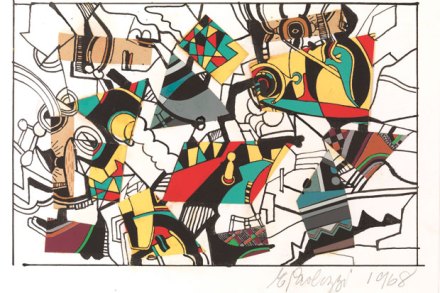
A display of drawings by 20th-century sculptors is a welcome event, and the multi-levelled, multi-functional Kings Place provides just the right ambience, the building echoing the concept and providing a satisfying mix of enjoyment, surprise and irritation. To stage Sculptors’ Drawings (until 12 October) has been a long-held ambition of Pangolin’s Rungwe Kingdon and he has assembled over 200 works, including Eduardo Paolozzi’s ‘Collage’ (above), plus a scattering of 3D pieces. It sounds straightforward, but this being the art world, and sculpture a broad kirk, no chance to complicate has been foregone.

Culture notes: All shipshape

From our UK edition

The museum Titanic Belfast (above) opened recently to commemorate the centenary of one of our best-loved disasters. If you think you know everything there is to know on the subject, or more than you really want to, think again. Hull 401, as she was known to Harland and Wolff, may yet prove to be the making of the city that famously said, ‘She was all right when she left here.’ In a building designed to echo the lines and forms of both ship and iceberg, overlooking the very slipways from which she and her sister ship Olympic were launched, the museum sets up a dialogue with the past in a way most large exhibitions find impossible.