Culture

Culture

The good, the bad and the ugly in books, exhibitions, cinema, TV, dance, music, podcasts and theatre.

We’re great and baboons are losers: this week’s lesson from Brian Cox

Television

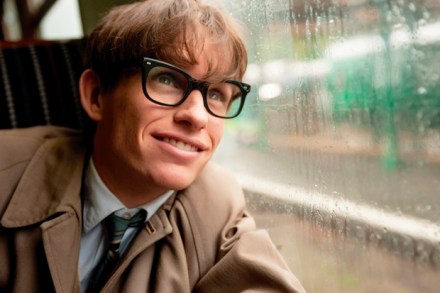
Anybody feeling a bit depressed about the shortcomings of humanity could do worse than watch Brian Cox’s new series Human Universe (BBC2, Tuesday) — which, judging from the first episode, is all about how great we are. Early on, Cox was shown hanging out, Attenborough-like, with some gelada baboons in the highlands of Ethiopia. They may share a common ancestor with us; by primate standards, they may have unusually complicated social structures and communication skills. Yet, as Cox rather gleefully pointed out, ‘They’re nowhere near as sophisticated as us.’ No wonder that while these losers are picking fleas off each other in a remote corner of Africa, we’ve not only ‘colonised every corner of the earth’, but can also live in space.

Mary Beard vs Jeremy Paxman

Radio

‘Did you find it a good read?’ asked Harrriett Gilbert. An incredibly long drawn-out sigh from Mr Paxman. ‘I think it’s really unsatisfactory,’ he at last replied. ‘But Jeremy,’ retorted Professor Beard, ‘I don’t think you’ve read it carefully enough.’ The eminent classicist from Cambridge is not afraid of conflict. She must eat her students for breakfast, loving an argument, which she of course will always win. Mary Beard didn’t just disagree with Paxman but insisted that her way of seeing, her interpretation, was the right one. She and Paxman were Gilbert’s guests on the first of a new series of A Good Read (Radio 4), in which the guests are expected to choose their favourite book and to persuade us to read it too.

ENO’s The Girl of the Golden West is irresistibly seductive

Opera

Puccini’s La fanciulla del West is, one suspects, one of those works that modern audiences struggle to keep a straight face through. The hero, for a start, decides to call himself Dick Johnson. The piece’s Wild West trappings, long since staled into Hollywood cliché, still seem a strange fit for the operatic stage (it was performed here as The Girl of the Golden West, with Kelley Rourke’s translation delivered in a variety of American accents). The redemptive, into-the-sunset conclusion takes for granted a belief that capitalism in its most primitive, brutal form could leave a group of hardened Gold Rush miners capable of forgiveness. That it might have done, ENO’s programme told us, is not actually that wide of the mark, historically speaking.

History Parade

More from Books

We left the Scout hut shortly after dark, to ambush regulars acting as invaders. Later, there was to be a demonstration of the use of a primitive stun grenade, designed dramatically to improve morale in the under-gunned Home Guard. A Dunkirk veteran CSM from Caterham had been driven down in a staff car to show us the correct application of this novel weapon, bakelite casing, with one small metal pin. After patrolling in the silent dark, failing to intercept our good-humoured opponents, we assembled among the prostrate sarsen stones beyond the Lacket, for a quiet smoke. Then we fell in to watch the CSM, who threw the stun grenade, followed it in and, as it exploded, fell, killed by the pin. He lay there, still, between two sarsen stones. It was absolutely stunning. No one spoke.

In praise of #WorldBalletDay, Ivan Vasiliev and beautiful butts

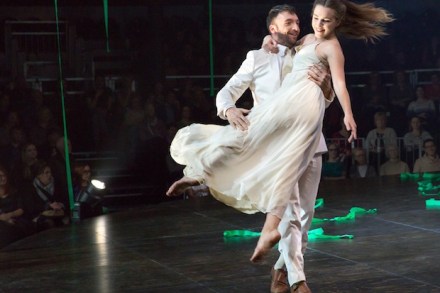
The Twittersphere never fails to surprise but it’s still hard to believe that last week #WorldBalletDay actually beat #HongKong and #Windows10 in the Twitter popularity stakes, on a day of barricades in the Chinese territory and Microsoft’s announcement of a new operating system. Twitter is a solid barometer of a vast and assertively 'engaged' segment of society whose demand to be noticed can sometimes be quite serious (see #HongKong).

Liechtenstein is utterly ridiculous – but that’s a big part of its appeal

It’s official: Europe’s least visited country is unloved little Liechtenstein. Last year, a mere 60,000 tourists travelled to this absurd Alpine principality. For discerning Spectator readers, this is great news. Liechtenstein is charming, its absurdities are enchanting, and it boasts one of the most stylish (and least crowded) modern art museums in Europe. Nothing spoils a sightseeing trip so much as lots of other sightseers. Spend a weekend in Liechtenstein - only two hours by train from Zurich - and you and your significant other should have the entire country (virtually) to yourselves. Liechtenstein is utterly ridiculous, but that’s a big part of its appeal. One of the smallest countries in Europe, it’s only 24km from end to end and barely 12km across.

Why Bombay airport is the greatest 21st century building – and what we can learn from it

'If I had to say which was telling the truth about society, a speech by a minister of housing or the actual buildings put up in his time, I should believe the buildings.' So said Kenneth Clark in his unsurpassed Civilisation. I haven’t listened to any speeches by India’s or Maharashtra state’s ministers of housing, but I hope the new terminal at Bombay’s international airport is telling the truth about their country. Opened in February, it is a triumph: not just the greatest airport building in the world, but a strong contender for the greatest of all buildings of the 21st century so far. I’ve done quite a bit of travelling in the past few months, and have been inside my share of airports.

The Foyle prize for poetry will restore your faith in arts awards

Those of us who were never destined to be great young poets can probably remember the attempts. I kept my verses from when I was 14 in a pillowcase, which was mercifully put in the wash. Writing poetry is like learning an instrument. You need a disproportionate amount of know-how simply not to sound terrible. But when I spent National Poetry Day at the South Bank Centre for the Foyle Young Poets Awards, there were no bum notes. You could hear a universal page-turning from the audience at certain points, as they all followed the readers on stage in booklet form. Here were a group of young poets who'd discovered the value of art and, what's more, art for its own exploratory sake.

The subversive thrill of Tom and Jerry

I can’t wait to watch Tom and Jerry, The Complete Second Volume, on Amazon Prime, to which, as luck would have it, I belong. Obviously I’ve seen the cartoons before – I got them in years ago for my children when they were at an age at which everyone else was looking the hellish ‘In the Night Garden’ – but this time it’ll be for the subversive thrill of the warning: ‘Tom and Jerry shorts may depict some ethnic and racial prejudices that were once commonplace in American society. Such depictions were wrong then and are wrong today.’ It reminds me of the sense of subversiveness I got when I bought Tintin in the Congo for my son, after he'd read all the other books.

The images from the Apollo missions will reduce you to tears

Arts feature

When people ask why I’m obsessed with the Apollo moon missions, I always want to reply using the same phrase: ‘Because they were out of this world.’ I never do, because it happens to sound like a very bad joke. But it’s the truth. For the first time ever, mankind left its home turf and discovered somewhere new. It was qualitatively the greatest journey in human history. Not — and this is the point — that it was mankind rejecting that home turf; leaving the Earth made us value it all the more. That’s where the greatness lay. It’s also the charm of a new exhibition in London.

My Schubert marathon

Arts feature

On 10 October, the Sheldonian Theatre in Oxford will host the first concert in ‘the biggest ever celebration of the life and work of Franz Schubert’. Over three weeks, all 650 songs (or thereabouts) will be performed, most of them in England’s oldest concert hall, the Holywell Music Room just around the corner from the Sheldonian. We’re promised the greatest assembly of Schubert singers in history: they include Sir Thomas Allen, Ian Bostridge, Sarah Connolly, James Gilchrist, Robert Holl, Wolfgang Holzmair, Angelika Kirchschlager, Christopher Maltman, Mark Padmore, Christoph Prégardien — plus the cream of accompanists: Julius Drake, Graham Johnson and Roger Vignoles.

Curator-driven ambitions mar this Constable show at the V&A

Exhibitions

The V&A has an unparalleled collection of hundreds of works by John Constable (1776–1837), but hardly anyone seems to know about them. This is perhaps because they’re usually kept on an upper floor of the Henry Cole Wing, rather off the beaten track for most visitors. This new exhibition gives us the chance to examine the V&A’s treasures, but because it has been installed in the extensive suite of galleries usually reserved for big survey shows, such as Art Deco or Modernism, a great deal of other material is also required to fill the space. So, instead of an exhibition devoted to the genius of Constable, we have an intensely art-historical display intended to demonstrate how much he owed to the masters of the past.

Could the Kenyan mall atrocities happen here?

Television

So you’ve just popped down to the supermarket for the weekly shop, toddlers in tow, when the grenades start to fly, the air lights up with tracer bullets and you realise to your horror that unless you find a suitable hiding place in a matter of seconds these are the last moments you’ll spend with your kids on earth. This was the awful crisis that faced Amber Prior and her children, who were among the numerous innocents caught up in the al-Shabaab suicide attack on the Westgate shopping mall in Nairobi, Kenya, last year. Their tale was told in the BBC2 documentary Terror at the Mall, and I make no apologies for reviewing it late because it is surely one of the most gripping and important pieces of television any of us are likely to see this year.

Christopher Hogwood: the absolutist of early music

Music

The death of Christopher Hogwood has deprived the world of the most successful exponent of early music there has ever been, or is ever likely to be. It has also reduced by one the quartet of conductors who have been called ‘the Class of ’73’, a term coined by Nick Wilson in a recent study of the early-music revolution of the 1970s and 80s. It refers to four groups that were founded in that year that are held to have changed the face of modern concert-giving: Hogwood and the Academy of Ancient Music; Trevor Pinnock and his English Concert; Andrew Parrott’s Taverner Choir; and my own Tallis Scholars. Of these it was Hogwood who had the most immediate impact and commercial success. It is also fair to say that his recordings are the most numerous, but least played, of all the Class.

If the idea of disturbing kraut-punk sung by a troll appeals, you’ll love The Fall

Music

I had a fair idea of what I was in for when I went to see The Fall at Brixton’s Electric last Friday. They’re a middle-aged band from Manchester, just like the Stone Roses, or the various incarnations of New Order. In journalese, this almost makes them ‘Heritage Rock’. I can’t remember when people started using this term, but it’s gone from the repertoire of niche music writing to being A Thing. You can’t go a week without some old beat combo or other announcing their re-formation, and in return they get a sort of protected status. Old rock music has become to the British what films about unfaithful middle-class couples are to the French. That is, culturally important but not very interesting. Consummately psychotic: Mark E.

David Fincher plays Gone Girl for laughs – at least I hope he is

Cinema

Gone Girl is David Fincher’s adaptation of the bestselling thriller by Gillian Flynn, a relentless page-turner which I’ve heard people say they read ‘even though it’s not that good’ — you were hooked; get over it; don’t be snotty — and which I read, even though it’s not that good. The twists and turns are there, but all psychological heft is ultimately thrown out the window in a way you’d never, for example, find in a Patricia Highsmith. And this screen version fully exposes the limitations of the original material. In fact, the final act is so outlandishly absurd and ridiculous and trashy that Fincher plays it for laughs. Or at least I think he plays it for laughs. Actually, the worst scenario would be if he hadn’t played it for laughs.

Will Marti Pellow attract enough tipsy hen parties to Evita to flog all 18,000 seats?

Theatre

Tim and Andy are back. Their monster hit Evita opens the fully refurbed and re-primped Dominion Theatre, which is built on the scale of an airport terminal and needs a big production to fill it. This is a beautiful version of a show that marks a decline in the Tim and Andy alliance. It hasn’t the naïve and exuberant mischief of Joseph, nor the scope and the sustained dramatic force of Jesus Christ Superstar. Earnestness, and over-reverence for their subjects, are starting to creep in. It spoils the fun to know that the Perons weren’t a pair of sweet-natured do-gooders handing out beefsteaks to the underclass but a couple of egos on stilts running a dictatorship based on fear.

Royal Opera’s Rigoletto: your disbelief may wobble but your excitement won’t

Opera

One of the greatest tests of how an opera house is functioning is the quality of its revivals. Both the Royal Opera and the English National Opera score highly in that respect. You can go to the Met, to Munich, to the Vienna State Opera and see pathetically run-down performances, the cast thrown on to the stage and told to get on with it. That never happens at the two London houses. The latest revival of Rigoletto at the Royal Opera is, in most ways, fresher than the first run in 2001. It’s the production with the split-second full-frontal male nude in the opening scene, now prolonged to two split seconds. Actually, the opening scene, revealing the Duke of Mantua’s court in all its libidinous squalor, is the least convincing part of the proceedings.

The Afterlives of the Anarchists

More from Books

Those staples in their foursquare silver strips  Stacked upwards like some brutalist   Manhattan office block  Were teased apart by fingertips And, jammed down in the stapler at half-cock,   Sent shockwaves up my wrist    Then pushed back in    They pierced the skin,   Refusing to align With folded A4’s creased and crooked spine. Another bead of blood. Another botch.  Another pamphlet not quite straight   To join the dodgy pile,  Another squat for Special Branch to watch.

David Cronenberg’s Map to the Stars: threesomes, incest, a dead dog and whiny farts

In a scene that sticks from Map to the Stars, David Cronenberg’s Grand Guignol of a Hollywood satire, Julianne Moore, playing an ageing Hollywood never-has-been, sits on the loo in front of her PA, expelling tired whiny farts from her arse, while listing – her trout pout doing its best impression of a quivering anus – the names of the laxatives and prescriptive drugs she needs as if they were old friends. Except she doesn’t have any friends; the only people she knows are casting directors who don’t call back. And it’s no wonder Havana Segrand’s bodily functions have stalled (surely a first for Cronenberg).

The camera always lies

Arts feature

Everyone knows about architecture being frozen music. The source of that conceit may be debated, but its validity is timeless and certain. For all its weightiness, architecture plays with ethereal proportion, harmony, resonance and delight: the stuff of music. But architecture is more fundamentally about the management of light and space. Or, at least, that’s how architects see it. So photography makes better sense of architecture than any other medium does: there is something congruent between the fixed optical geometry of a camera and the way we perceive buildings. And because images are more readily accessible than travel to remote sites, everyone’s experience of world architecture is, at least initially, based on the photographic record, not the real thing.

Tate Britain’s Turner show reveals an old master – though the Spectator didn’t think so at the time

Exhibitions

Juvenilia is the work produced during an artist’s youth. It would seem logical to think, therefore, that an artist’s output during their old age would be classified as ‘senilia’. Yet no such word exists. But how else to classify the three blockbuster exhibitions this year that deal with Matisse, Turner and Rembrandt’s late work? These titans produced some of their finest art during old age. The exuberance of Matisse’s cut-outs are all the more astonishing given that they were produced not in the first bloom of life but rather in the dying embers of it. Rembrandt’s late works — on display at the National Gallery from October and discussed by Martin Gayford on p64 — will include some of his most soulful paintings. Late Turner at Tate Britain has a similar narrative.

Is John Hoyland the new Turner?

Arts feature

What happens to an artist’s reputation when he dies? Traditionally, there was a period of cooling off when the reputation, established during a lifetime, lost momentum and frequently collapsed, quite often presaging a long fallow period before reassessment could take place. The Pre-Raphaelites suffered this to a very pronounced degree. Famously, Andrew Lloyd Webber tells the story of buying his first Victorian pictures for pocket money in junk shops, and just missing Lord Leighton’s ‘Flaming June’ because he didn’t have the £50 asking price. Closer to our own time, when Graham Sutherland died in 1980 his reputation plummeted terribly, having for years been overinflated by a loyal European market that bought him at increasingly high prices.

‘Likes’, lacquered cherry pies and Anselm Kiefer: the weird world of post-internet art

Exhibitions

In the mid-1990s the art world got excited about internet art (or ‘net.art’, as those involved styled it). This new way of making art would harness the world wide web, take the form of exciting online projects, bypass traditional galleries and be accessible to all with a dial-up connection. ‘Net.artists’ were self-styled radicals particularly fond of that most modernist of tropes, the manifesto, which they distributed via electronic mailing lists or electronic bulletin boards. These artists adopted funky, web-style names such as ‘Irational.org’ and ‘VNS Matrix’ and showed their work online at similarly funkily named websites like Rhizome, Suck and Echo. But there was, alas, a gap in the Matrix, to paraphrase Keanu Reeves’s finest film.

The soul, a poem, John Whitworth

Poems

The soul is like a little mouse. He hides inside the body’s house With anxious eyes and twitchy nose As in and out he comes and goes, A friendly, inoffensive ghost Who lives on tea and buttered toast. He is so delicate and small Perhaps he is not there at all; Long-headed chaps who ought to know Assure us it cannot be so. But sometimes, as I lie in bed, I think I hear inside my head His soft ethereal song whose words Are in some language of the birds, An air-borne poetry and prose Whose liquid grammar no one knows. So we go on, my soul and I, Until, the day I have to die, He packs his bags, puts on his hat And leaves for ever. Just like that.

Marriage and foreplay Sharia-style

Television

Needless to say, it’s not uncommon to hear single British women in their thirties and forties saying that all the good men are married. But in The Men with Many Wives (Channel 4, Wednesday) this came with a twist: it turned out to be precisely the reason why you should marry them too. Polygamy may be illegal in Britain, but it’s permitted under the Sharia law that many Muslims here apparently live by — and, as several of the programme’s participants told us, there’s no better guide to whether a man is husband material than the fact that he’s a husband already. Take Nabilah, who came to Britain from Malaysia to do a PhD in engineering at Cambridge. By then she was divorced and wanted someone with a proven track record of staying with his spouse.

Charles III is made for numbskulls by numbskulls

Theatre

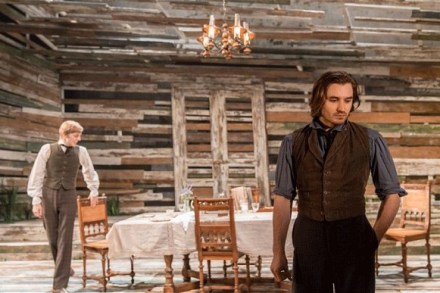
Suppose Charles were to reign as a meddlesome, self-pitying, indecisive plonker. It’s a thought. It’s now a play, too, by Mike Bartlett. In his opening scene he bumps off Lilibet, bungs her in a box and assembles the family at Buck House to discuss ‘what next?’ Bartlett imagines them as stuck-up divs. William’s a self-righteous sourpuss. Kate’s a smug minx. Camilla’s a hectoring gadfly. Harry’s a weepy drunk. Charles is a colossally narcissistic nuisance. They’re too dim to understand the constitution so Camilla has to explain that a new reign commences with the death of the previous monarch and not at the coronation. (This is for the benefit of the audience, who are assumed to have the same poultry-level IQ as the Windsors.