Culture

Culture

The good, the bad and the ugly in books, exhibitions, cinema, TV, dance, music, podcasts and theatre.

Aural wonderland

Radio

My resolution this New Year is to get to grips with podcasts, to brace up and embrace this new aural wonderland stuffed full of sound stories, experiments, features, adventures. They’ve been around for a decade, and there’s now hundreds of thousands of them, lurking in the web, hoping for someone to stream or download them. But where to start? What will be worth listening to, and not a waste of time, or just a bore, or even worse nightmare-inducing (there’s nothing like stories told on radio for creeping insidiously into the mind)? How do you find just what you want to listen to amid this babel? The easiest place to begin is the BBC’s own podcast site, Seriously... which gathers together its own selection of BBC programmes in specific categories.

Murder, he wrote

Music

The allure of Carlo Gesualdo, eighth Count of Conza and third Prince of Venosa, has been felt by music-lovers from the humblest madrigal singer to the likes of Stravinsky, Boulez and Werner Herzog. Now, just three years after celebrating the 400th anniversary of his death in 1613, his birth in 1566 gives us a second chance to remind ourselves of that heady mix of murder and chromaticism that so famously characterises his life and work. For most classical composers the music is the way into the biography. Beethoven’s deafness becomes interesting once one has got to know the Missa Solemnis. Enquiry into the circumstances that surrounded Mozart’s death begins with hearing the Requiem.

Passion play | 31 December 2015

Theatre

Illness forced Kim Cattrall to withdraw from Linda, the Royal Court’s new show, and Noma Dumezweni scooped up the debris at the last minute. And what debris. All thoughts of kittenish Cattrall evaporated as Dumezweni strode on to the stage, a luscious blend of high-performance hair and trouser-suited luminosity. Linda is in her prime, at 55, a marketing director at a beauty firm, but she faces problems at home. Her balding husband, in midlife crisis, has joined a rock band. Her older daughter, Alice, is in deep trauma after internet trolls mocked an explicit clip of her posted by a jealous ex. Linda told Alice to pull herself together but Alice has withdrawn from life and exists like a waspish nun concealing her nubile physique in a grey onesie.

Lessons from Utopia

More from Arts

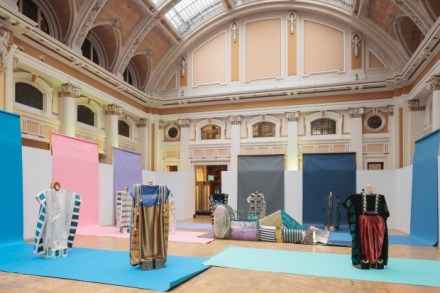
As anniversaries go, the timing could hardly be more apt. As Europe braces itself for the next Islamist attack, the next assault on our civilisation, a season of events marks the 500th birthday of a book that outlined an enlightened vision of the ideal society. Utopia 2016 is a year-long celebration of Thomas More’s Utopia at London’s Somerset House, where the Royal Society and the Royal Academy used to meet. Somerset House is a building that encapsulates the free-thinking values of the Enlightenment, and More’s Utopia is a book that encapsulates the Renaissance sensibilities that built it. We all know what sort of society Isis wants (the clue’s in the name), but what sort of society do we want? What rights are we defending?

Lemmy was a national treasure – a unique collision of swing and amphetamines

Lemmy is what happens when a small slice of 1960s counterculture just keeps on going, oblivious to the changing world. He was a national treasure: a Methuselah of the British music scene, and one of its more thoughtful members. His driving forces remained a unique collision of baby boomer passions: jitterbug, skiffle, swing, rock’n’roll, and a lot of amphetamines. He was playing chirpy Mersey Beat numbers in a suit, a tie, and a smile with the Rocking Vicars when most televisions were still black and white. When the world changed, so did he. In the late 1960s he roadied for Jimi Hendrix, and later even had the patience to show Sid Vicious of the Sex Pistols how to play the bass.

The Queen crops Charles out of her Christmas message

The Queen always judges her Christmas message perfectly – and today was no exception. As she knows, her subjects are mad keen on Kate & Wills. So she spent the longest chunk of her piece-to-camera with a picture of them, plus kids, facing the camera. To justify that, she flashed a small shot of Charles & Camilla beforehand – it didn’t last more than a few seconds. After that box was ticked, the camera zoomed in so the two of them slipped out of shot and we were just left with the five most popular royal figures in full view. Deftly done, your majesty.

Christmas tips from Niall Ferguson and Annie Nightingale

For the Spectator’s Christmas survey, we asked for some favourite seasonal rituals – and what to avoid at Christmas. Niall Ferguson Every Christmas — or, to be precise, every Hogmanay — all the members of the jazz band I played in at university gather together with their families at our place in Wales. We eat and drink gargantuan amounts and play music with steadily deteriorating precision. It is a wonderful way to see in the new year. Annie Nightingale My favourite ritual is visiting people, and I have some rules. A bottle of bubbly to each. Be charming, be fun, but be brief. Quit while you’re still popular. Then you can book a cab home to watch Some Like It Hot and High Society. Now that’s what I call Christmas.

Biblical art, like Christianity, is always renewing itself

This sign adorns a local church in Harlesden. I suppose it could be called a Pop Annunciation. Who says religious art is stuck in the past? Then again, it is a perennial - and fascinating - question in Christian art: how much contemporary life to include in biblical scenes. For centuries artists have shocked the public by including ordinary-looking young beauties as Mary, ordinary working blokes as shepherds or apostles. Caravaggio is a good example, but even before him nativity scenes were transposed to Tuscan landscapes. In fact the first realistic landscapes in Western art were posing as biblical backdrops. The shock was rehashed by the Pre-Rapahelites, whose sacred scenes featured people you might meet on the street.

There’s nothing confusing about a black actress playing Hermione Granger

A news producer rang up this morning, asking me to talk about ‘colour-blind casting’. Noma Dumezweni has just been cast as Hermione in Harry Potter and the Cursed Child, the stage sequel to JK Rowling’s novels. So there I was, listening to a hack ask ‘isn’t it confusing when black actresses play white roles?’ When I was too stunned to answer, he added, encouragingly, 'we thought you’d be happy to come on and criticise Sonia Friedman'. True, if you follow theatre, you’ll know that Sonia Friedman, the super-producer who brings Hollywood’s most commercial franchises to the West End stage, won’t be sending me a Christmas card this year. But for very different reasons.

Why would a dissolute rebel like Paul Gauguin paint a nativity?

Arts feature

A young Polynesian woman lies outstretched on sheets of a soft lemon yellow. She is wrapped in deep blue cloth, decorated with a golden star. Beside her bed sits a hooded figure, apparently an older woman, holding a baby. In the background is a huddle of resting cows, suggesting that the setting is a barn or stable. There is something familiar about the set-up — baby, young mother, farm animals — but it may take a while to notice certain details. The head of the woman on the bed is encircled by an area of darker yellow, which forms a sort of halo, and the baby’s head is similarly ringed with green. A subsidiary figure standing in the shadows has an odd protuberance, which looks a little like a wing.

The art of Beatrix Potter

Arts feature

‘I will do something sooner or later,’ wrote Beatrix Potter in the secret diary she kept in a private code. It was March 1883 and 16-year-old Potter, still mostly confined to the nursery of her parents’ house in South Kensington, had made a second visit to the Winter Exhibition of old masters at the Royal Academy. She did not identify the ‘something’ she had in mind, but it almost certainly referred to art. Although a painting by Angelica Kauffman stiffened her resolve and bolstered her confidence, the statement was one of intent above conviction. ‘It shows what a woman has done,’ she reassured herself.

A paean to the fleshy delights and tacky excess of Soho

Exhibitions

The other evening, surrounded by Christmas shoppers in the West End of London, I happened to glance up at the illuminations and was moved all over again by the old, old story. Yes, the sign was lit up once more over the defunct Raymond Revuebar, all that’s left of the club where men and women used to act out the ageless tragicomedy of desire. Strange — even blasphemous — as it may seem, the lurid blazon of a topless dancer in feathers and stilettos affected me like a holly-decked hall or a Slade-loud department store. ‘Personal appearances of the world’s greatest names in striptease’, spelled out in throbbing neon, made me come over all festive, Christmassy even.

Barometer | 10 December 2015

Barometer

Christmas birthday Next year has a claim to be the 400th birthday of Father Christmas. Ben Jonson wrote a short play for James I, called Christmas: his masque, performed at court in December 1616. The central character, named as ‘Old Christmas’ and ‘Captaine Christmas’, encouraged everyone to merriment. He had ten children, with names ranging from Misrule to Plum Pudding. While a 15th-century hymn had mentioned a ‘Sir Christmas’, Jonson was the first to give Christmas physical characteristics, including a tall hat and a beard.

December

More from Books

The ferns around the badgers’ sett are dying down, and fine webs fret the brambles. By late afternoon the moon will glint on foxes’ eyes and owls rehearse sepulchral cries, and then the badgers start to rise like shadows from the ground.

The Heckler: those who doubt the brilliance of Phil Collins are snobs

More from Arts

Three boos for those rotten spoilsports who started an online petition against Phil Collins coming out of retirement (there’s already enough suffering in the world, they said). Fools. Don’t they realise pop music is supposed to be naff? It’s the soundtrack to our tawdry lives. How could it be anything but schmaltzy? Don’t they know there’s nothing quite so uncool as a bloke with really cool taste in music? Like a large penis, a large record collection is something that only impresses other men. Phil Collins fulfils all the basic job requirements of a middle-aged, middle-of-the-road rock star. He writes undemanding songs about falling in and out of love. He can carry a tune. He can bash out a few chords on the piano.

Radio is flowering because it’s so much more potent than TV

Radio

Who would have thought in this visually obsessed age of YouTube, selfies and Instagram that radio, pure audio, no images attached, nothing to hold on to but a voice, a tune, a blast of birdsong, could not only survive the arrival of the new image-making and digital technologies but experience an extraordinary flowering of talent and expression. Thousands of radio stations are popping up right across the globe, ready for you to tap into via your smartphone or tablet, taking you straight from SW9 or NE69 to Chicago, Cape Town, Lviv or Marrakech. The quality of the sound produced by these stations is less important than an ability to draw in the listener, to tell a story, create a narrative, to use audio and nothing else to paint images in the mind.

Was my article the inspiration for this brilliant BBC dramatisation?

Television

The two things I hate most about Christmas are a) Advertland showing me how sparkly and joyous my home and bright-eyed kids are at this time of year, and b) the Doctor Who Xmas special telling me that if only I can open my heart and put cynicism aside, then I too can enjoy a mash-up of Dickens, C.S. Lewis and the Brothers Grimm, where daleks with tinsel round their guns exterminate the spirit of Scrooge as laughing children come pouring from the Ice Queen’s dungeon and something nice happens on a London housing estate. Or similar. That’s what was so great about We’re Doomed! The Dad’s Army Story (BBC2, 22 December).

Tricycle’s Ben Hur is magnificent in its superficiality – a masterpiece of nothing

Theatre

It’s the target that makes the satire as well as the satirist. Is the subject powerful, active, relevant and menacing? Patrick Barlow’s new spoof, Ben Hur, must answer ‘No’ on all four counts. The show takes aim at two principal irritants: vain actors and the Hollywood epics of the 1950s, whose titanic scale was offered as bait to audiences besotted with their cosy new TV sets. Old Hollywood is a spent ogre these days and the foibles of the acting trade are hardly a threat to civilised life, so the show can’t embrace our immediate concerns. But the execution is compellingly assured.

Musical maestros and football managers have more in common than you think

Music

You don’t have to be a follower of Liverpool Football Club, or football at all, to spot the difference. Two months ago the Reds were running about headless as a newly wrung chook; today they are putting the fear of perdition into the best teams in the land. Or take Leicester City. Last season they were locked in an epic, desperate small-town struggle for Premiership survival. Today, they are top of the League. What changed? Both teams have the same players as before, same strip, roughly the same formation. The only new face is the manager’s. Change the boss and — presto — the mood picks up, tempi get faster, goals are scored, confidence rises and everyone charges around with a smile on their chops.

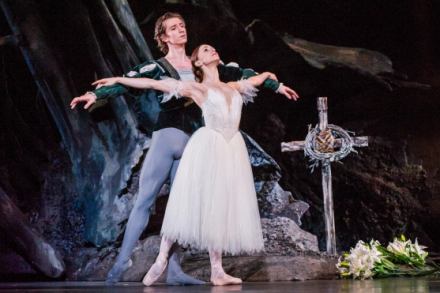
Why did a Russian ballet dancer throw acid in his boss’s face?

More from Arts

The 16th June 1961 and 17th January 2013 are two indelible dates in the annals of Russian ballet. Two events that left the world gobsmacked — the escape of a Cold War fugitive and an acid attack by a subordinate on his boss — all enhanced in strangeness and sensational interest because they came out of the ballet world, a world largely closed to the rest of us. By a coincidence that’s as informative as it is lucky, two gripping documentary films emerge right now which tell these stories with dramatic effect, but also suggest a cultural link between the defection of the Kirov’s bad boy Rudolf Nureyev and the ghastly assault upon the Bolshoi Ballet artistic director Sergei Filin.

Darth Vader is dirty and it’s not just me that thinks so

Cinema

Malcolm Tucker delivered the best description of Star Wars, in The Thick of It: ‘The one about the fucking hairdresser, the space hairdresser, and the cowboy. The guy, he’s got a tinfoil pal and a pedal bin. His father’s a robot and he’s fucking fucked his sister. Lego, they’re all made of fucking Lego.’ He didn’t mention that Star Wars is really about Henry Kissinger. It was written by George Lucas, grossed $33 billion over six films, with merchandise, founded a new and stupid religion called Jedi, which, in the 2001 census 0.8 per cent of the population of England and Wales said they identified with, and invented the Star Wars convention where you can, as I did, meet the man who operated Jabba the Hutt’s left arm.

Royal Opera’s Cavalleria rusticana isn’t nearly vulgar enough

Opera

How often do you get a chance to see two operas by Leoncavallo in the same city in the same week? Never, until this last week in London, when Opera Rara gave a concert performance of Zazà at the Barbican, and six days later the Royal Opera mounted its first production since the 1980s of Cav. and Pag. Both Leoncavallo and Mascagni are routinely thought of as one-opera composers. Zazà didn’t do a lot to undermine that view, and I doubt whether if it had been staged it would have made any stronger an impression. Like Pag., its libretto is by the composer: Wagner seems to have made that temporarily mandatory. But the plot is feeble almost to the point of nonexistence.

The rise and fall of Sony

More from Arts

Here is a Japanese fairy tale for Christmas. An allegory of insight, opportunism and a fall from favour. It is 1945. Japan is devastated and disgraced, but two bright young men, Akio Morita and Masaru Ibuka, the first a salesman, the second an engineer, have a plan to turn toxic ashes into precious metal. They have discovered a curious typewritten document published by the Civil Information and Education division of the US Occupation Forces. It is called ‘999 Uses for a Tape-Recorder’. In those days, people needed to be told these things. Inspired, they form a company called TTK and Ibuka writes in its Purposes of Incorporation that it will make ‘imaginative use of technology ...to help restore national culture’.

Giving Turner Prize to Assemble is like giving Booker to Thomas Piketty

Within the first ten minutes of last night’s televised Turner Prize ceremony, someone had twice declared that the award was a ‘concept’. I must say, this was news to me: I’d always believed it was an award for contemporary art that existed to create a buzz around young artists who otherwise couldn’t get arrested. More often than not, one of the nominees is chosen to manufacture a bit of controversy – hardly the most noble objective, but it can make for a good half hour of telly. Kim Gordon forgetting what year we were in aside, what we got instead was in no sense good TV, but then that’s not really the point.

The ten best home video releases of 2015

‘Tis the season for end-of-year lists. Here is mine. It’s for the ten best home video releases of 2015; which is to say, the ten best DVDs or Blu-rays released in Britain this year. I’m leaving out releases from abroad, even though that means leaving out some of my favourites, so as to spare your wallets. All of these can be bought without import fees or much delay. There are other caveats and restrictions. The biggest is that, despite trying my best, I cannot watch everything. There are some major releases that I haven’t got around to yet (including this Yoshida set, which I’m saving for the Christmas break). There are some that will be released between now and the actual end of the year (including this hi-def Chaplin collection).

New word order | 3 December 2015

Arts feature

In the basement of a busy café in Hockley, Nottingham, which may not have known exactly what it was letting itself in for, a young woman is loudly dissecting an unsatisfactory lunch: ‘Deep in my heart I know I love chips.’ In another basement a few hundred yards away, lit by a single floor lamp, another woman is detailing the process of a man’s decline with tear-jerking, understated tenderness. For today only, both women are going by the name Bryan. They are among 60 volunteer performers in But I Know This City!, a unique adaptation of B.S. Johnson’s strange and sometimes wonderful 1969 novel The Unfortunates.