Culture

Culture

The good, the bad and the ugly in books, exhibitions, cinema, TV, dance, music, podcasts and theatre.

Sins of the fathers | 19 November 2015

Cinema

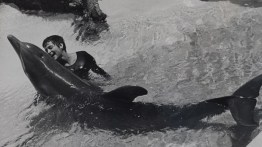
This is a documentary in which three men travel across Europe together, but they’re not pleasurably interrailing, even though there are often times they probably wished they were. For two of them, Niklas and Horst, the journey is about confronting their fathers, who were high-ranking Nazi officials responsible for the deaths of millions of Jews, while for the third, the eminent British human-rights lawyer Philippe Sands, it means visiting the place where his grandfather’s family was exterminated. This place, Galicia, which straddles the modern-day border between Poland and Ukraine, is the exact place my own grandmother’s family were murdered. Her father lost every one of his seven siblings. She lost every aunt, uncle and cousin.

All at sea | 19 November 2015

Opera

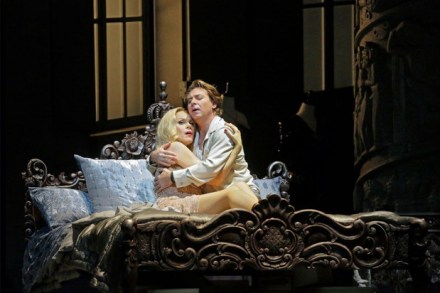
The Royal Opera House seemed nervous about Georg Friedrich Haas’s world première Morgen und Abend. They sent out a pdf of the libretto in advance, which they only ever do when they think that the words or the plot are unintelligible. Thrilled to report that it was a double whammy. An introductory soliloquy was spoken by actor Klaus Maria Brandauer. He’s apparently an Austrian national treasure. I’m not sure he’d get a part in Hollyoaks here. He wobbled on to the stage in wellies, paunch, beard and alcoholic’s nose. He was the spit in fact of Ricky Tomlinson in The Royle Family, except he said things like ‘he’ll be alone for ever alone’, instead of ‘my arse’, which coincidentally were very close to my feelings that evening.

The man who wouldn’t be king

Television

Not that long ago the BBC trumpeted a new Stakhanovite project to big up the arts in its many and various hues. And praise be, this it is jolly well doing with all sorts of dad rock docs, homages to painters and poets, while Sralan Yentob (as he surely ought at the very least to be, and soon) continues to knock frock-coated on doors like a highly remunerated person from Porlock. Before multichannels and multi-platforms, great arts coverage was (if memory serves) done without much song and dance. Lest we forget, Yentob was once a progenitor of Arena. Long the haven of burgeoning filmmakers such as Mary Harron, James Marsh and some bloke called Scorsese, Arena is 40 this month and it’s still the best.

French connection | 19 November 2015

Radio

It was as if Andrew Marr and his guests on Start the Week on Monday morning were standing on the edge of a precipice with no idea how far they would fall if they strayed too near the edge. Their conversation this week, Marr told us, would not, as usual, be a live discussion but had actually been recorded in Paris on Friday, just hours before the terrible events of later that evening. Their discussion, quite coincidentally, was focused on French history, society and identity as part of a new Radio 4 season inspired by the great 20-volume series of novels by Émile Zola, which create a fictionalised record of life in France at the turn of the last century.

Bravery

More from Books

I am not ready for the temple but neither am I ready for the market. Leave me, I pray, a little longer amongst my icy candles that light my bitter lonely rooms. When spring comes (and the seasons follow no order) you’ll find me heading all queues of worldly bravery. Just give me a few more days for cowardice and the flickering dark.

How Technicolor came to dominate cinema

Arts feature

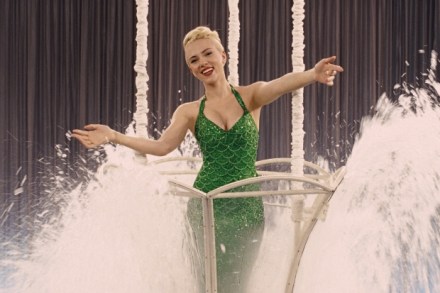
They’ve already found a cure for the common cold. It’s called Technicolor. My first dose of it came during the Christmas holidays when I was about 12. There I was, ailing and miserable, when The Adventures of Robin Hood (1938) came on the television at the end of my bed. Nothing had prepared me for this. A Sherwood Forest that was aflame with green. Clothes that shimmered purple and blue. Olivia de Havilland’s oh-so-cherry lips. Under two hours later I cast off the duvet and leapt from the fug. The sickness had gone. I now know that this medicine, Three-strip Technicolor, was a revolutionary process, the first to properly mix the three primary colours of light — red, green and blue — so that film could capture all of the colours in nature.

The man who made abstract art fly

Exhibitions

One day, in October 1930, Alexander Calder visited the great abstract painter Piet Mondrian in his apartment in Paris. The Dutch artist had turned this small space on rue du Départ, which also doubled as his studio, into a walk-in work of art. Even his gramophone, painted bright red, had become a note of pure form and colour. Calder was impressed by the squares and oblongs of the pictures all around. But he also asked a question: wouldn’t it be fun to make these rectangles move? With a perfectly straight face Mondrian replied that this wasn’t necessary: ‘My paintings are already very fast.’ As I walked around Performing Sculpture, the new Calder exhibition at Tate Modern, I mused on which of them had got the better of this exchange.

Why I’m not talking bunkum

When George Osborne travelled to China in September, he took with him gifts of British artistic and cultural enterprise. He announced major projects on Shakespeare, Hockney and British landscape painting. It is British creative talent that appeals to China and the world. For how long will the Chancellor and his successors be able to do this?  For how long will we be able to promote abroad our cultural and creative talent, when at home they are being starved? The Chancellor understands the value and importance of the arts, but sadly others remain unconvinced. In an article last week Toby Young talks of ‘bunkum’ coming from the arts sector about the failure to give the arts a proper place in our education system.

How did this plotless goon-show wind up at the Royal Court?

Theatre

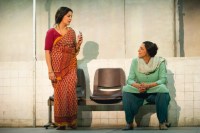
One of the challenges of art is to know the difference between innovation and error. I wonder sometimes if the Royal Court realises such a confusion can arise. Its new production, RoosevElvis, has been hailed as a thesaurus of fascinating novelties but to me it looks like a classic case of ineptitude posing as originality. It opens with two costumed women perched on bar stools speaking into microphones. One is dressed as Teddy Roosevelt in a cowboy hat and a handlebar moustache with a three-foot wingspan. The other is an Elvis impersonatrix wearing a lazy smirk and a black wig that sags forlornly over her ears, which seem to have turned pink with embarrassment. Introductions over, they reveal their true identities.

Spying and potting

Television

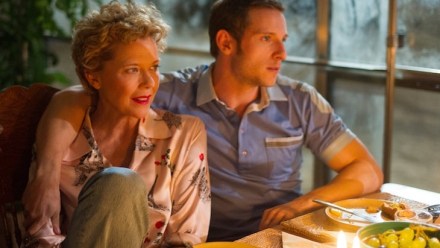
The main problem with being a TV critic, I’ve noticed over the years, is that you have to watch so much TV. It’s not that I’m against it in principle: I like my evening’s televisual soma as much as the next shattered wage slave with no life. But the reality is that you end up doing stuff like I found myself doing on this Monday night just gone — cringing at pert male arses heaving up and down in a sensitive gay love scene in some moody new BBC spy drama that is going to be occupying our screens for the next five weeks. Why?

Bach breaking

Radio

It’s just not what you expect to hear on Radio 3 but I happened upon Music Matters on Saturday morning and after playing us a clip from the opening chorus of St Matthew Passion Tom Service pronounced, ‘Bach is a tasteless and chaotic composer.’ I felt as if my ears had been syringed. Service was actually repeating what one of his guests, the Bach scholar John Butt, had just asserted, as if to verify his intention. Was he really saying that the composer formerly thought of as the epitome of balanced reflection and ‘motivic organisation’ would have sounded ‘incompetent’ to his audiences in 1727? Butt insisted, on the Passion, ‘It’s a complete mess.

That Force of Destiny isn’t a great evening is the fault of Verdi not ENO

Opera

The Force of Destiny, ENO’s latest offering to its ‘stakeholders’, as its audiences are now called thanks to Cressida Pollock, the new CEO, is perhaps Verdi’s most interesting failure. It’s an opera with too much fine, even magnificent, music to be neglected, but it doesn’t add up to a satisfactory experience. Even epics, which Force is routinely categorised as, have their limits of accommodation. Henry James described War and Peace as ‘a loose, baggy monster’, but what would he have called Force if he had had the least interest in opera or music? There are times when we are longing for the central story of vengeance and fate to get a move on.

Theatre and transgression in Europe’s last dictatorship

Arts feature

In a drab residential street in foggy, damp Minsk, four students are at work in a squat white building that was once a garage. They vocalise sequences of letters, clap their hands, throw their arms in the air, discuss their actions. Each — three girls, one boy — is elegant, light of limb, fiercely concentrated. The room they are in is about 20 feet by 20, with two blacked-out windows and four square lights on the ceiling. It’s not certain that all the bulbs are functioning. Down a tiny corridor is a bedraggled kitchen full of empty bottles that are, in fact, props. Upstairs there is a tiny rehearsal space, with a ballet-style mirror. The modest complex feels like a cross between an abandoned cricket pavilion and a bicycle shed.

M.C. Escher: limited, repetitive, but he deserves a place in art history

Exhibitions

‘Surely,’ mused the Dutch artist M.C. Escher, ‘it is a bit absurd to draw a few lines and then claim: “This is a house.”’ He made a good point. That is what almost all artists since the days of Lascaux have done: put down some splodges of paint or a line or two and proclaimed, ‘This is a bison’, ‘This is a man’, ‘This is Mona Lisa’. One of the aims of Escher’s work, which is currently displayed in an exhibition at Dulwich Picture Gallery, was to undermine such pretensions to represent reality. At first glance, his images often seem meticulously, even aridly factual.

Remembering Jeffrey Bernard’s great wonder of the world: the rotting fruit and vegetables in Berwick Street Market

There's no better way to view Soho than from Jeffrey Bernard's former council flat overlooking Berwick Street Market. For many, Bernard is remembered as a notorious writer and alcoholic - a close friend to many of the more famous artists, actors and personalities who inhabited 'The Crooked Mile'. To produce this small film, we initially wrote to the occupiers of Bernard's former flat out of the blue asking them to allow the Institute of Contemporary Arts (ICA) to host an event in their front room. I have Estrella Bravo and her husband to thank for replying and inviting me over. Having been given the green light to proceed, we then contacted Guardian art critic Adrian Searle, a former acquaintance of Bruce Bernard, Jeffrey's brother.

Picasso was a much better sculptor than a painter

If you’re anywhere near New York soon, don’t miss the exhibition of Picasso’s sculptures at the Museum of Modern Art. It has restored my love of the great magician. As a teenager I had eyes for no one else. He was the obvious god of modern art. Almost all previous art looked boring, and not much subsequent art spoke to me. I suppose I liked the posturing maleness (I also liked The Rolling Stones). But then his paintings gradually lost some of their force (at around the time that Stones songs began to sound dull after the first ten seconds of Dionysian excitement). At Tate Modern’s Matisse Picasso show in 2002 I far preferred the bright canvases of his rival – and still do.

West End wannabe

More from Arts

The love that asks no questions, the love that pays the price... The amount of unconditional love sloshing about at the Royal Ballet for choreographers and dancers is making this autumn in Bow Street a test of loyalty. At his season press conference Royal Ballet artistic director Kevin O’Hare smilingly promised us that the 2020 season might contain only works made in the past ten years. God preserve us. Two of the autumn’s three bills so far have been mixed programmes dominated by new or recent in-house contemporary ballets, and only Liam Scarlett’s Viscera, in the current bill, should be longlisted for 2020.

Glyndebourne caters to the lower-middle classes not past-it toffs

Theatre

What is Glyndebourne? A middle-aged Bullingdon. That’s a common view: a luxury bun fight for past-it toffs who glug champagne, wolf down salmon rolls and pass out decorously on the lawn. But the reality is that it caters to those of my class (lower-middle) who want to boost their pedigree with an eye-catching essay in sophistication. The Sussex opera house was founded in 1934 by John Christie, a passionate and eccentric millionaire who believed the public should suffer for his art. He hated the idea of suburban businessmen ‘catching a show’ for two hours in the West End before falling asleep on the train home. He wanted his audiences to devote an entire day to his productions.

Lush, lyrical, exquisite

Cinema

Brooklyn is a wee slip of a thing compared to the Bond film, Spectre, and cost $12 million, as opposed to $300 million, but what it lacks in length, budget, pre-title stunt sequences, theme songs, sports cars, exotic locales, babes in stages of undress, villains with master plans, Omega watches, rooftops chases, speedboats and exploding buildings, it more than makes up for with real storytelling and real feeling, which you just can’t create from post-production CGI, don’t you know.

Northern Ireland Opera’s Turandot will fill you with awe and revulsion

Opera

Chords as bright and sweet as pomegranate seeds burst and spill in Turandot, a splinter of bitterness at their centre. Left incomplete at Puccini’s death in 1924, the opera is his most radical and most cruel. You can taste something of Stravinsky’s Rite of Spring in the instrumentation, a musky roughness that rubs against the Italian composer’s customary silky precision. Woodwind and strings cling to the voices of the monstrous princess Turandot, her intoxicated suitor Calaf, and Liù, the slave who slavishly adores him because he once smiled at her. So closely scored is the writing that it is almost suffocating. This is love as an addiction: violent, sleepless, lethal. The renaissance of opera in Northern Ireland has not been timid or gentle.

Fantasy on ice

Music

In this exciting new era of Spectator cruises I have been put in mind of a dream event long in the planning: to hear Allegri’s Miserere on ice, specifically on the ice of Antarctica. A number of things came together to put this on my bucket list, from the thought of dressing up like penguins (as usual) while we sing to penguins, to reading in the press that the Tallis Scholars ‘have performed on every continent on the planet except Antarctica’. I want to fill a boat with like-minded enthusiasts and adventurers, and set off from South America via the Falklands to the Antarctic Peninsula, hoping to make a landing and a concert at Paradise Bay.

Why most four-year-olds deserve to be sectioned

Television

The first episode of Let Us Entertain You (BBC2, Wednesday) definitely couldn’t be accused of lacking a central thesis. Presenter Dominic Sandbrook began by arguing that, since its industrial heyday, Britain has changed from a country that manufactures and exports things into one that, just as successfully, manufactures and exports popular culture. He then continued to argue it, approximately every five minutes, for the rest of the programme. By way of proof, Sandbrook presented a fairly random collection of postwar Britain’s greatest hits, which served both as examples and as opportunities for some nifty wordplay designed to hammer the point home still further.

The Wolves of Memory

More from Books

Loping through thick snow, fur matted with ice, they have lost the trace that led them long ago from a legendary tale to this blank page of survival. Their warm breath freezes at the touch of air as they huddle here with sharp, bewildered faces grown solemnly pale and howl and howl and howl.

Porridge Season

More from Books

Tuesday morning. The Chopin of golden syrup is going to perform his Breakfast Fantaisie for teaspoon and dessertspoon. Such a treat to see those thin arthritic fingers pose a moment over the tranquil creamy surface. The oats lie quiet, possibly getting cold. But on the left a deep and mellow chord lands in the centre of the quivering target. Arpeggios, scribbles, signatures from the right cover the margins. What a score! It seems to wander clockwise now and widdershins in the same second, trailing off to silence with a few final isolated notes. All we can do now is to clap, and eat.

Why don’t we replace Remembrance Day with a national Day of the Dead?

This time of year features my two least favourite festivals, Halloween and Guy Fawkes Night, but the build up to Remembrance Day gives it a run for its money. I don’t mind Halloween being commercial, pagan, fake, foreign and likely to increase diabetes levels, so long as it’s for children; I just don’t know when October 31 turned into International Day of the Idiot. But now Remembrance Day is marred by the silly pressure for people like Jeremy Corbyn to wear poppies. Peter Hitchens is totally correct on this one, when he writes: ‘If you don’t want to wear one, don’t. If you want to wear a White Poppy, then you should be free to do so.