Culture

Culture

The good, the bad and the ugly in books, exhibitions, cinema, TV, dance, music, podcasts and theatre.

In a class of their own

Exhibitions

Painters and sculptors are highly averse to being labelled. So much so that it seems fairly certain that, if asked, Michelangelo would have indignantly repudiated the suggestion that he belonged to something called ‘the Renaissance’. Peter Blake is among the few I’ve met who owns up to being a member of a movement; he openly admits to being a pop artist. The odd thing about that candid declaration is that I’m not sure he really is one. A delightful exhibition at the Waddington Custot Gallery presents Blake in several guises, including photorealist and fantasist, but — although one of the exhibits is an elaborate shrine in honour of Elvis Presley — ‘pop’ is not the term that comes to mind.

Beyond a joke | 3 December 2015

Television

Let’s start this week with a joke: ‘You know Mrs Kelly? Do you know Mrs Kelly? Her husband’s that little stout man, always on the corner of the street in a greasy waistcoat. You must know Mrs Kelly. Well, of course if you don’t, you don’t, but I thought you did, because I thought everybody knew Mrs Kelly.’ No, I can’t claim my sides are entirely split either. Yet, according to the first episode of What a Performance! Pioneers of Popular Entertainment (BBC4, Thursday), this sort of material by the Victorian music-hall star Dan Leno marked the birth of stand-up comedy as we know and are perhaps overburdened by it today. The series’ stated aim is to explore mass entertainment from the days before television.

There will be blood | 3 December 2015

Radio

It was a stroke of genius to invite Glenda Jackson to make her return to acting as the star of Radio 4’s massive new series of dramas, Blood, Sex and Money, based on the novels of Émile Zola. Jackson plays Dide, the matriarch of the Rougon-Macquart families from Plassans in the depths of southern France. And she’s absolutely brilliant. Her voice is so distinctive, yet at the same time utterly ordinary, so it doesn’t stick out demanding attention but rather draws you in, like a spider weaving its web. Her timing, too, is pitch-perfect, each word given just the right weight for its meaning to be clear, whether making sinister predictions or laughing over another child’s comeuppance.

The still point

Cinema

Lewis Grassic Gibbon’s Sunset Song is the best-remembered title of a short career. Born in 1901, he was dead by 1935. The novel hymned the rhythms of rural life in north-east Scotland in prose that to modern ears sounds as if it comes from a museum of Grampian folklore. At its heart is Chris Guthrie, a spirited young woman whose dream of bettering herself as a teacher is thwarted by tragedy. The world of Sunset Song is a bull’s-eye for Terence Davies, the British director who has always been nostalgically drawn to the travails of unlucky women. Leadings actresses form an orderly queue to emote in his gorgeously lit interiors. Gillian Anderson was up for an Oscar for The House of Mirth and there was a Golden Globe nom for Rachel Weisz in The Deep Blue Sea.

Bird brained

More from Arts

For all the billing and cooing on public forums about the Royal Ballet’s The Two Pigeons revival, there’s a silent majority out there who daren’t speak for fear of the Twitter ordure that would fall on them. The box office and the empty seats attest to them. You’ll have not the smallest difficulty in booking coachloads in for any of the 11 performances remaining as I write. The curious thing is that the revival of this ballet some 30 years after it last fluttered in Covent Garden came about because of overwhelming public demand, says the Royal Ballet’s artistic director Kevin O’Hare.

Lost in translation | 3 December 2015

Opera

About 15 minutes into act one of Jenufa, the student in the next seat leaned over to her companions and whispered, ‘They’re singing in English!’ And so they were, in Otakar Kraus and Edward Downes’s translation. Janacek was obsessed with the shapes and intonations of speech; for a non-Czech speaker, a first-rate singing translation is really the only way to make Jenufa strike home with anything like the immediacy and realism he intended. But even with surtitles, the effort is useless if — as was the case throughout much of act one of this performance by Opera North — the singers are almost inaudible. It might have sounded clearer in the circle. From the front stalls, however, the situation was impossible.

Coffee with Annie

Poems

I am thinking about you Annie now that you are no longer a few miles of motorway and a couple of roundabouts from us here. I am remembering the meals, the easy chat and coffee; farewell coats and hugs in a doorway; that holiday we shared in Brixham, the fear of the foot noise on the stair which made us believe in ghosts that week, the sea house creaking, and the air screeching and crying with gulls in the dark or light until the wives couldn’t sleep in the haunted place. (How easy it is to be scared of no-one there.) And now you are not here, and your face can only live in memory’s day and night and everything that was you has been made to leave.

Heron

More from Books

Walking to the bus stop after a hospital visit, in an unfamiliar, dusty suburb, I pass a small park on the left with a stream which dives under the road, and here only a few feet away, by the water, is a heron — surely larger than life and with each feather accurately modelled. I think how grateful we should be that some municipal person has commissioned this work of art and placed it where it can give pleasure to passers-by. But startlingly a breeze flutters the bird’s feathers, and it slowly turns its head, so that we find ourselves gazing at each other. It is so exciting that I want to stop someone and share this marvel but no one is handy, and in the end I calm down and walk to the bus stop like someone just having an ordinary day.

Bequest

More from Books

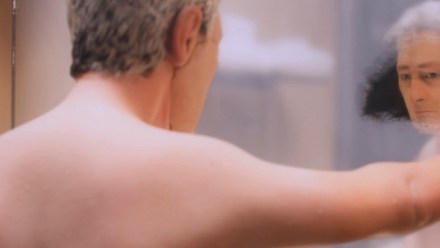
Knowing he was ill he offered a free choice of the books on his shelves, but for every one wanted said, ‘Couldn’t bear to let that go’, and died two weeks later. Seers That age when if out and about you rigorously avoid shop mirrors, or any reflective surface, not wanting to see who looks back. That age.

The bicycle may have triumphed but it’s far from perfect

Arts feature

It’s extraordinary that it took civilisation so very long to discover the benefits of putting little wheels on suitcases. We knew how to fly before we realised it was no longer necessary to huff-and-puff baggage by hand. Even odder, steam and electricity were well understood before anyone got around to developing the ingeniously simple pedal-and-crank mechanism, an invention of decisive importance, which turned the ludicrous, wobbly old hobbyhorse into today’s smooth and sensible bicycle. Its eventual triumph over all our sensibilities can be seen today when, at some practical cost to the general mobility of the capital, London is being effortfully retrofitted with cycle lanes while oil-fired traffic is perpetually stalled in a noxious smog of its own making.

Artistic taste is inversely proportional to political nous

Exhibitions

‘Wherever the British settle, wherever they colonize,’ observed the painter Benjamin Robert Haydon, ‘they carry and will ever carry trial by jury, horse-racing and portrait-painting.’ This doesn’t sound like a bad set of cultural baggage, even for those who don’t care for the races. There is clearly a lot to be said for trial by jury, and portraits make up the most enjoyable — in fact, downright humorous — section of Artist & Empire, a curious new exhibition at Tate Britain. Not, of course, that Tate approaches this subject in a playful spirit. At the entrance, a hand-wringing text declares that the British empire’s ‘history of war, conquest and appropriation is difficult, even painful to address’.

You can’t forget what Will Self says – even if you wish you could

Radio

It lasted for just a few seconds but was such a graphic illustration of the statistics behind the bombing campaign in Syria — and not a word was spoken. Martha Kearney called it an ‘audio graphic’ on the World at One on Monday and explained how Neal Razzell and James Beard for the World Service had been monitoring the number of US combat missions on Islamic State targets in Syria, hour by hour, 24/7, and comparing them with earlier bombing campaigns. Each electronic beat we heard represents one hour, Razzell told us; each beep represents the launch of one combat mission. For Syria, the electronic beeps between each beat were quite far apart — clearly distinguishable. The sound we heard represented two raids an hour, he explained, every day for 450 days.

I’m a Celebrity is like The Simpsons: good if you’re thick; even better if you’re not

Television

The best bit in I’m A Celebrity... Get Me Out Of Here! (ITV) will be when the prisoners finally revolt and turn on their evil captors, Ant and Dec. The sparky Geordie comedy duo will be imprisoned in a semi-submerged, rat-infested cage like the one in The Deer Hunter, fed on a diet of liquidised kangaroo bottom and wombat testicle, and released only to participate in a series of amusing challenges, such as a recreation of the Lemmiwinks episode from South Park, involving two giant funnels, a bunch of inserted eucalyptus leaves and a pair of ravening koalas. Though it hasn’t happened yet I’m going to keep watching every night, just in case. I wish it weren’t so. It’s such a terrible waste of life.

I wanted to beat it with a stick and cry, ‘Get on with it!’: Carol reviewed

Cinema

Carol is an easy film to admire — so beautiful to look at; entirely exquisite — but such a hard film to feel anything for. Based on Patricia Highsmith’s 1952 lesbian novel The Price of Salt, this is a love story that, here, doesn’t venture below the waist, literally, emotionally or metaphorically. It glides across its own glittering surfaces, never investigating what may lie beneath, and playing restraint to the point of inertia. Its director, Todd Haynes, has spoken about how hard it was to make a Hollywood film about two women, starring two women, so I feel bad delivering the news, but deliver it I must: what was taboo in ’52 may not be that exciting today.

Has there ever been a better time to be a lover of Baroque opera?

Opera

Time was when early music was a 6 p.m. concert, Baroque began with Bach and ended with Corelli’s Christmas Concerto, and speeds were so portentously slow that you’d have to start the B Minor Mass shortly after lunch in order to make it home in time for bed. Those dark days — caught between Baroque and a hard place — are over now. Period ensembles have never been better or more numerous, Handel and Monteverdi are a staple of operatic programming, and even Vivaldi, Cavalli, Cesti and Steffani are making their mark. Baroque is back, and this time it’s here to stay. One of the biggest success stories of recent years is the Globe’s new indoor theatre. Opened just last year, it’s already hard to remember musical life before the Sam Wanamaker Playhouse.

Treasure

More from Books

Walking down the sands to investigate what they might find, shells or stones, flotsam pieces abandoned by tides, two figures walking, slowly walking, beyond my sight. One small, one smaller, a boy and his mum in jeans and tops, an everyday disguise that makes them look quite like everyone else scattered about here between the sea and the dunes. I watch his white T shirt for the longest time, tracking his progress down an indefinite edge stretching for miles. And then only the sun, and wind, and me watching other tops and jeans on the shore, waiting until the ones I love return bringing their unique pebbles, wood and shells, unique like us, or like everyone else.

Death watch | 19 November 2015

Exhibitions

At the beginning of the summer of 1715 Louis XIV complained of a pain in the leg. In mid-August gangrene set in and by 1 September he was dead. He’d been on the throne for 72 of his 77 years. A new exhibition at Versailles looks at the elaborate rituals that followed. The Sun King died as he had lived — in public. Despite his illness, he carried on his daily routine until two days before his death, a decision made easier perhaps by the fact that he’d always conducted a good part of the affairs of France from his bedroom. It was no ordinary bedroom, and what went on there wasn’t ordinary either.

Artificial life | 19 November 2015

Arts feature

One day Julia Margaret Cameron was showing John Ruskin a portfolio of her photographic portraits. The critic grew more and more impatient until he came to a study of the scientist Sir John Herschel in which the subject’s hair stood up ‘like a halo of fireworks’. At this point, Ruskin slammed the portfolio shut and Cameron thumped him violently on the back, exclaiming, ‘John Ruskin, you are not worthy of photographs!’ He was indeed smackingly wrong to dismiss her work, as visitors to an exhibition at the V&A celebrating the 200th anniversary of her birth will be able to see for themselves. There are multiple ironies underlying this spat (they happily made up by lunchtime). Ruskin disapproved — officially speaking, at least — of photography.

High life | 19 November 2015

High life

Blind is an indie movie that has an original screenplay by John Buffalo Mailer and is directed by his older brother Michael Mailer. It stars Alec Baldwin and Demi Moore, and the cast includes yours truly. Personal feelings aside, and from all reports and rushes, this is going to be a really good one. Alec Baldwin is an old pro at this game, and his advice has been immeasurable and very much appreciated. I’ve never seen a more contented cast and there is a brilliant Polish cinematographer whose sensitivity shines through the drama. Obviously, I will not give the game away, but it’s a hell of a story: a writer who is planning to ask his wife for a divorce has a terrible car accident in which she’s killed and he goes blind.

The history of Technicolor in ten films

Does the Queen only send telegrams to British subjects? If so, I guess the rest of us will have to celebrate Technicolor’s centenary without Her Maj’s involvement. I’ve already written about the occasion for last week’s issue of The Spectator; but I thought I’d return to it having spent most of yesterday gorging on films and cake. For yesterday was the anniversary day itself. The Technicolor Motion Picture Corporation filed its start-up papers on 18 November 1915. One thing that I tried to communicate with my article is the great variousness of Technicolor. The word tends to conjure up a particular era and mood: the colourful Hollywood musicals and romances of the 30s, 40s and 50s. But the actual process and its history are far broader than that.

Lost in space | 19 November 2015

More from Arts

In a converted barn in Dorset, not far from the rural studio where she made many of her greatest sculptures, Elisabeth Frink’s son Lin is showing me his incredible collection of his mother’s work. More than 20 years since his mother died, he’s kept the vast bulk of it together. ‘I owe it to mum,’ he tells me. ‘I’ve been very close to her.’ We’re surrounded by maquettes and plaster casts — shelves and shelves of them. Enormous figures loom over us, like Easter Island statues. Drawings and paintings (many never before seen in public) are stacked against the walls.

Approachable abstraction

More from Arts

Fifteen million pounds and a hefty slice of architectural vision have transformed the Whitworth from a fusty Victorian art temple into a sumptuous and thoroughly modern gallery. The space inside now channels the visitor from one gallery to another through split levels and along wide, glass-walled extensions. The great barrel-vaulted spaces at the gallery’s core are now flooded with light from the opening up of the building into the park around it. The redevelopment has embraced the landscape surrounding the gallery and thinned the barrier between inside and out. The transformation is impressive; the sense of space remarkable.

New Neighbour

Poems

The trellis between her garden and her new neighbour’s garden is heavy with passion flower, honeysuckle and roses, so that only rare glimpses can be seen through it — a blue flower, a splash of grass, a dark cuff. She calls out politely to welcome him to the neighbourhood. Weeks later, she calls out to him again and, slowly, emboldened by invisibility, she hears herself offering confidences — her fears, guilts and indecisions. It must be like a confessional, only sunnier and without penances. She thinks she hears him breathing attentively, but then there is the muffled sound of his back door closing.

Thomas Heatherwick

More from Arts

Thomas Heatherwick is the most famous designer in the United Kingdom today and has an unquestionable flair for attention-grabbing creations. Before 2010 he was mostly known for a splashy public sculpture in Manchester, ‘B of the Bang’ (2005). Within weeks bits started to fall off. In 2009 it was dismantled. This was his most celebrated failure. But he has had others. An even earlier commission, ‘Blue Carpet’ (2002), a showy repaving of a miserable part of Newcastle city centre, lost its colouring completely within a decade (despite assurances from Heatherwick that its colour would last for a 100 years). He was propelled to global celebrity in 2012 when an audience of a billion watched his Olympic cauldron light up.

Bored by Brahms

Music

Brahms’s Clarinet Quintet begins, writes his biographer Jan Swafford, with ‘a gentle, dying-away roulade that raises a veil of autumnal melancholy over the whole piece: the evanescent sweet-sadness of autumn, beautiful in its dying’. This being late autumn, I listened to the quintet on Sunday to see if its ‘distillation of Brahmsian yearning’ still made an overwhelming impression on me. It did. I swear these are the most miserable 35 minutes in classical music. One critic refers admiringly to the display of ‘every super-refined shade of silver-grey regret’. But that’s the problem.

Ménage à trois

More from Arts

Mark Baldwin, artistic director of Rambert Dance, must take responsibility for most of the good times I’ve had recently, midwife to a litter of excellent things born out of curiosity and an unfussed love of culture, particularly music. A true artistic director (cf my complaint last time). On to the creative table at Rambert HQ this year he has thrown ideas about brass bands, a Picasso painting, something challengingly old-school for the Rambert orchestra to play, a new commissioned score or two, a bold, even foolhardy, decision to declare the Rolling Stones passé and say goodbye to Christopher Bruce’s popular but now irredeemably dated Rooster.