Culture

Culture

The good, the bad and the ugly in books, exhibitions, cinema, TV, dance, music, podcasts and theatre.

Digging for the truth

Television

The discovery of Tutankhamun’s tomb may well be one of the 20th century’s great stories — but naturally that doesn’t mean a television drama won’t want to jazz it up a bit. Or, in the case of ITV’s lavishly produced but distinctly corny Tutankhamun, quite a lot. The programme gives us a Howard Carter younger and considerably hunkier than in real life. It throws in a couple of smitten hotties to emphasise the fact. Above all, it transforms Carter into the archaeological equivalent of a maverick TV cop: a man who doesn’t play by the rules, isn’t afraid to follow wild hunches but, by God, gets results.

Ziggurat of bilge

Theatre

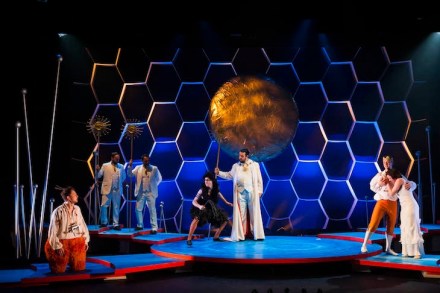
Ella Hickson’s new play analyses our relationship with oil using the sketch format. First, there’s a candlelit soap opera set in Cornwall, in 1889, with a lot of ooh-arr bumpkins firing witless insults at each other. Next, a bizarre Persian scene, set in 1908, where a Scottish footman (who uses the celebrated Edwardian colloquialism ‘OK’) rescues a ditzy waitress from a sex-maniac serving in the British army. Then we move to Hampstead, in 1970, where a female oil magnate is visited by a Libyan diplomat seeking to nationalise her wells by waving documents at her, in her kitchen, while teenage kids pop in and out performing oral sex on each other. (This is one of the most disorganised pieces of stage writing I’ve ever witnessed.

High and low

Opera

‘Besides feeble writing, there is a mixture of tragic-comedy and buffoonery in it, which Apostolo Zeno and Metastasio had banished from serious opera’. You can always rely on Charles Burney (the celebrated musicologist, who spent most of the 18th century being professionally underwhelmed) to find fault. But writing here about Handel’s Xerxes he has a point. The opera’s blend of lighter and more serious elements, though typical of Venetian opera, was by no means the norm for the Londoners who were its audience. They didn’t like it then, and nearly 300 years later it’s something we still seem to struggle with, as English Touring Opera’s latest season makes unexpectedly clear.

Loach at his most Loach

Cinema

I, Daniel Blake is a Ken Loach film about a Newcastle joiner who can’t work but faces a welfare bureaucracy that won’t listen, humiliates him, grinds him down, so it’s fun, fun, fun all the way. Yes, it is that Ken Loach film, but as that Ken Loach film is more powerful than most other films — and this is fearsomely moving (I cried), and fearsomely tender (I cried again) — you’re just going to have to suck it up.

Muslim magic

Arts feature

In 1402, when the Turkic conqueror Temur, better known in the West as Tamerlane, was poised to do battle with the mighty Ottoman Sultan Bayazid I, the greatest power in the Muslim world, he called in the astrologers. Knowing which side their bread was buttered on, the court officials duly pronounced that the planets were auspiciously positioned and gave a green light to attack. Temur was victorious. Not for nothing was he known as lord of the ‘Fortunate Conjunction of the Planets’. Half a century later, in 1453, Bayazid’s great-grandson Mehmet II stood at the gates of Constantinople. Anxious to galvanise his siege-weary troops, he summoned court astrologers, diviners and holy men to do their business.

Overshadowing all the rest

Exhibitions

We don’t know what Caravaggio himself would have made of Beyond Caravaggio, the new exhibition at the National Gallery which is devoted to his own work and that of his numerous followers. But, by chance, we do have a very good idea what he would have said at least of one exhibit: ‘The Ecstasy of St Francis’ (1601) by Giovanni Baglione. Two years after this was painted, in 1603, Caravaggio stated in a disposition to a Roman court that he didn’t know of any other artist ‘who thinks Giovanni Baglione is a good painter’. Very few of Caravaggio’s own words survive, and those that do are mainly in the records of legal cases in which he was involved. But these are enough to give an idea of his demeanour.

Going nowhere fast – and loud

Cinema

As a general rule, I would not wish to spend nearly three hours in a mini-van with young people who turn up the music real loud. As a general rule, being the age I am, I would go to any lengths to avoid such an experience. But American Honey is a film by Andrea Arnold and even though it does require you to spend nearly three hours in a min-van with young people who turn up the music real loud, you will not, in fact, regret it. Or at least not regret it entirely. A bit, perhaps, but you’ll get a good two hours regret-free. This is the first American film by Arnold, the British director who made Wasp and Red Road and Fish Tank — three brilliant films in the social-realist tradition, one of which happens to be among my favourite films of all time. (Clue: Red Road.

Box of tricks

Theatre

Travesties is a multi-layered confection of art, song, literature and pastiche. Tiny snippets of it are true. In Zurich, in 1917, James Joyce directed a production of The Importance of Being Earnest featuring a British diplomat, Henry Carr, in the role of Algy. Joyce and Carr fell out over the costume budget and became embroiled in a brief legal wrangle. That’s the starting-point for Tom Stoppard’s dazzling intellectual pantomime which features cameos from Lenin and Tristan Tzara, both residents of Zurich at the time. Tzara was an experimental vandal whose penchant for slicing sonnets into pieces was taken up by copycats and flowered, or degenerated, into the Dada movement.

Grave goods

Music

There’s a folder in my computer’s external hard drive in which you’ll find 24 complete recordings of the Bach Cello Suites, 100 recordings of Beethoven’s Fifth Symphony, 97 of his Sixth, 107 of his Seventh, 65 of Bruckner’s Seventh, 26 of Debussy’s La Mer, 44 Fauré Requiems, 25 Mozart Requiems, 79 Mahler Sixths and 45 Rachmaninov Second Piano Concertos. That sounds as if I’ve moved beyond anorak collecting to compulsive hoarding; or maybe I have delusions of presenting Building a Library on Radio 3 (‘… but only Tennstedt, with his impulsive diminuendo, grasps that the second subject is tragically compromised by the shift to C sharp minor’). Actually, I didn’t really collect them. Someone else did.

It’s (still) a man’s world

Radio

When Jane Garvey announced to the audience who had just ‘taken part’ in the 70th birthday celebrations of Radio 4’s Woman’s Hour on Monday morning that a woman listener had sent in an email asking, ‘Why do we need a programme like this in 2016?’, she almost caused a riot in the BBC Radio Theatre. A riot of disbelief and horror. What? Abolish the only programme on the BBC entirely devoted to the issues that affect women?

Sinful treat

Opera

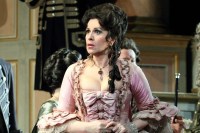
Shiny swags of gold cloth hang in front of the curtain before David McVicar’s production of Der Rosenkavalier, and that’s good. You want a touch of luxury in a Rosenkavalier. This is 20th-century opera’s great sinful, indulgent treat. Think of it and you think of Karajan and Schwarzkopf: huge creamy voices, silken Viennese strings, and New York Met production budgets. In truth, when Der Rosenkavalier gets under your skin, none of that matters. It’s not the glittering set pieces that turn out to be the real heart of the thing; not even the final Trio or the justly famous sequences in which the Marschallin ponders the transience of youth.

What is it with luvvies wanting to be ‘thoroughly European’?

There's always room for one more on the Ship of Fools, and Tom McCarthy has just booked his passage. The English novelist (no, I'd never heard of him, either) has written a column of such fifth-form puerility in the Guardian that it marks him down as a dunce of exceptional plumage. Make way, Hadley Freeman. Step aside, Zoe Williams. There's a chap out there who can give you five yards and still beat you to the tape. McCarthy, of Dulwich College and Oxford (just right for the Guardian), is in a frightful bate because he has been invited to a bash at the Royal Academy to celebrate British art and feels insulted: 'Like all English-language writers, I'm thoroughly European'. To prove it he refers to Shakespeare and Joyce, who, like him, would have voted to remain part of the European Union.

I’m sick of productions like the Met’s Tristan und Isolde

Tristan und Isolde Met Opera Live I am sick to death of productions of Tristan und Isolde which leave me bewildered, alienated, distracted from the work and its significance, unable to concentrate on the music. I haven't seen a Tristan which didn't do all these things for many years, and had vowed never to go to another, until the Met advertised its new production, with a starry cast and with Simon Rattle, a conductor who at his best, as he has been recently, is quite wonderful, even revelatory. My hopes were soon dashed.

All things bright and beautiful | 6 October 2016

Exhibitions

For much of the Middle Ages, especially from 1250–1350, ‘English work’ was enormously prized around Europe from Spain to Iceland. Popes took pains to acquire it; bishops coveted it; the quality was such that the remnants have ended up in the treasuries of Europe. London, especially the area around St Paul’s, was famous for its production. And what was English work? Embroidery, that’s what. Beautiful, costly, high-quality embroidered pieces, much of it using gold or silver thread, sometimes embellished with pearls and precious stones. Matthew Paris tells a story about Pope Innocent IV spotting some English bishops wearing lovely vestments and badgering them to find some of it for him, preferably for the lowest possible cost.

Kids’ stuff | 6 October 2016

Arts feature

When a new TV channel calls its flagship food show Fuck, That’s Delicious, we might surmise that the Reithian ideals are not foremost in its corporate philosophy. You probably haven’t heard of Viceland. You certainly haven’t watched it. It seeped on to the airwaves with little fanfare and few viewers. Viceland is the new 24-hour TV channel of Vice Media, the Canadian-American outfit that describes itself as the ‘world’s preeminent youth media company and content creation studio’. Vice began in 1994 as a magazine but now encompasses a news division, a record label, a film studio and myriad digital ventures.

Yes, he Khan

More from Arts

Giselle endures in the collective imagination as a charming, sorrowful, supernatural love story. Premièred in Paris in 1841, this keystone romantic ballet concerns a peasant girl whose trust in a disguised nobleman destroys her fragile mind and heart. Little wonder, given the ballet’s mixture of sunniness, deception, spooky woe and redemption, that it retains a timeless grip or that the title role has become the ballerina equivalent of Hamlet. English National Ballet will be at the London Coliseum in January performing Mary Skeaping’s Giselle, a chilling and historically accurate version originally mounted by the company in 1971. But first comes Akram Khan’s brand new take, another savvy commission by ENB’s artistic director Tamara Rojo.

Top of the Pops with silk tights

Theatre

Here are three roles all actors love to play. The drunk (no need to learn your lines), the dementia victim (ditto) and the aristocratic roister-doisterer humping his way through the brothels of restoration London. Nothing quite beats the 17th century. Great costumes, stylish language, shoes that add three inches to your height, and a parallel universe of moral licentiousness where every cleavage is there be ogled and every passing bottom pinched. It’s Top of the Pops with silk tights. Into this land of platitudes walks Dominic Cooper, a super-smooth baddie, who has very little warmth or humour about him, and not a trace of vulnerability.

Hole in the heart | 6 October 2016

Opera

Richard Jones’s new production of Don Giovanni at ENO bears some passing resemblances to the opera as envisaged by its librettist and composer. Mainly, however, it goes its own way, refusing most of the time, especially at key moments, to listen to the music Mozart wrote, with consequences that Jones no doubt regards as ‘creative infidelity’. When we enter the auditorium we see a contemporary streetlight and a phone booth, straight out of Jones’s production of Siegfried at the Royal Opera 20 years ago. The curtain rises on a huge ‘Wanted’ poster of Christopher Purves, followed by a depressing series of bleak rooms, in one of which the Commendatore is bedding a prostitute and wearing white boxers, signifiers of nudity at ENO.

Head ache

Radio

Quite how one person is expected to oversee not just radio but also ‘arts, music, learning and children’s departments’ was not made clear by the BBC when it announced the stratospheric rise to power within the corporation of James Purnell as the new director of everything that’s not TV or light entertainment. You may recall that Purnell was once culture minister under the Labour government and in 2013 became head of strategy at the BBC, an appointment that at the time was excused (given Purnell’s lack of programme-making experience) by Tony Hall, the director-general, as ‘of course not editorial’.

Question time | 6 October 2016

Television

At my wife’s first 12-week scan, I was expecting — and duly got — that much-documented sense of thrilled wonder at the grey blobby thing on the screen. What came as a genuine shock, though, was realising the scan also had the entirely undisguised aim of calculating the baby’s chances of Down’s syndrome, on the apparent assumption that, if they were high, we’d want to terminate. In the event, this wasn’t a dilemma we faced — which possibly makes it easy to take the moral high ground. Even so, the whole process left me feeling both uneasy and rather naive. How long had this been going on? Did everybody else know about it? And if so, when had they discussed it? A World without Down’s Syndrome?

Wrong side of the tracks

Cinema

You will surely have seen the posters for The Girl on the Train with Emily Blunt staring from a train window beneath the question: ‘What did she see?’ I don’t know ...buddleia? Bindweed? The occasional abandoned supermarket trolley? That is all most of us see from trains and while it’s true that buddleia, bindweed and the occasional abandoned supermarket trolley would make for a very dull film, it could scarcely be any duller than this. And that is the truth. This is an adaptation of the thriller by Paula Hawkins; a thriller that, I would venture, attained bestseller status largely because it was touted as ‘the next Gone Girl’ and ‘the British Gone Girl’ and we all fell for it.

American beauty | 29 September 2016

Arts feature

‘At last,’ wrote Patrick Heron, a British painter, in 1956, ‘we can see for ourselves what it is to stand in a very large room hung with very large canvases by Jackson Pollock, Willem de Kooning, Mark Rothko, Clyfford Still, Franz Kline and others.’ Just over 60 years later, we, too, can stand in a series of grand galleries at the Royal Academy’s Abstract Expressionism and see what Heron saw, and much more. He was at the (greatly anticipated) first showing of those fabled American artists in Britain. Since then, they have frequently been exhibited individually, but there has been just one collective show of the movement. Now Pollock, de Kooning and co. are back in town. Cumulatively, the result is majestic, exhilarating and visually overpowering.

White Knight

Cinema

Free State of Jones is an American Civil War drama ‘inspired’ by the life of Newton Knight, who led an armed rebellion against the Confederacy in Jones County, Mississippi, and one rather wishes that that was all it was about. Directed by Gary Ross (Seabiscuit, The Hunger Games), and starring a whiskery, leathery Matthew McConaughey, it tells that story, then thinks: while you’re here, might we tell another story? And another one? So you are fully educated in all matters? In the end, such is the weight of all these stories that you won’t lose the will to live exactly, but you will find it has been significantly weakened. The film opens in 1862 and opens as you might expect. That is, bloodily and viscerally on a battlefield mid-combat as body parts fly.

One day in November

Radio

The weather was ‘treacherous’ on Saturday, 23 November 2013, the day chosen randomly by Gary Younge as the focus for his latest book, Another Day in the Death of America. As he described it, a ‘Nordic outbreak’ of snow, rain and high winds swept across the desert states and up into the northern plains. It was for many Americans a winter’s day like many others but for ten families a shot rang out sometime during those 24 hours and their lives changed for ever. Not that these ten disparate events made the national news. Death by gunshot is so commonplace in the USA that not even when those who died are so young is it considered worth highlighting, remembering, bewailing.