Culture

Culture

The good, the bad and the ugly in books, exhibitions, cinema, TV, dance, music, podcasts and theatre.

Close encounters of the Eighties kind

Television

Stranger Things is the most delightful, gripping, charming, nostalgic, compulsive, edge-of-seat entertainment I’ve had in ages. Like a lot of the best TV these days, it’s on Netflix, which I highly recommend so long as you can cope with the technical complexities of getting it to appear on your screen in the first place. Yeah, I know, all you bastard millennial types sneering at Granddad for his inability to do stuff that’s like so totally easy and obvious.

Losing heart | 29 September 2016

Opera

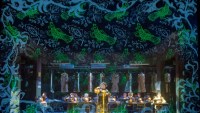
The subtitle for Mozart’s Così fan tutte may be ‘The School For Lovers’, but it’s as a school for directors that the opera is most instructive. From four lovers and two different romantic pairings, the composer spins a parable whose moral is as elusive as its morals. Faced with so much ambiguity (and so little political correctness) directors tend either to sand down the rough edges with laughs, or fling a capacious concept over the whole lot. It says something about the awkward profundity of this most inscrutable and affection-resistant of the Mozart-Da Ponte collaborations that it can take it. It says even more that you so rarely see an outstanding production.

Breaking up is hard to do

Music

’Will you be dancing?’ the man in front asks his friend before the lights go down. ‘Most likely,’ she says. Two songs in and it’s looking less and less likely. The world’s best-known Icelander is fronting a 27-piece chamber orchestra in a strings-only performance of songs from her last album (not her most toe-tapping collection). It feels like hard work. Lyrically, Vulnicura (Greek for ‘cure for wounds’) is a blow-by-blow account of her split with long-term partner Matthew Barney. Musically, anything resembling a good tune is hard to find. Each verse of ‘Black Lake’, the album’s mournful centrepiece, ends in a wavering monotone that fades to silence.

Bach to basics

Music

The churning, rheumatic mechanism of a harpsichord — notes needling your ears like drops of acid rain — doesn’t necessarily play well to an audience whose sensibilities have been moulded around the picture-perfect delicacies of the classical piano. J.S. Bach’s freakishly popular Goldberg Variations remains best known through the recording made by the oddball Canadian pianist Glenn Gould in 1955, a record that would bleed unexpectedly into mainstream consciousness. For a whole generation, the sound of the Goldbergs became interchangeable with Gould’s quicksilver fingers — and a collective amnesia grew around the fact that Bach had actually conceived his most famous keyboard work for the harpsichord.

Hilarious, puzzling, boring

Theatre

No Man’s Land isn’t quite as great as its classic status suggests. At first sight the script is a bit of a head-scrambler because Pinter’s characters are obscure to the point of incoherence. A demented alcoholic, Hirst, is cared for in his Hampstead mansion by two mysterious thugs, or servants, who may be emeritus rent boys and who are, or perhaps were, romantically linked to one another. Into this mysterious triptych comes Spooner, a simple and fascinating creation, a washed-up Oxford poet of high intelligence and low achievement who lives by cadging favours from kindly Hampstead folk. He wheedles his way into Hirst’s affections in the hope of gaining employment as a secretary, companion, literary consultant, cleaner, house-pianist, or anything.

Root and branch

Arts feature

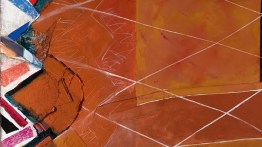
Eventually,’ said Michelangelo Pistoletto, ‘it became a movement. In fact, I believe that arte povera was the last true movement. Since then all artists have been individuals.’ We were sitting one baking hot day last month in his cool study in Biella, a small town in the foothills of the Alps where he has established a huge museum and foundation in a series of disused 19th-century textile mills. He was discussing the group of Italian artists of the 1960s of which Pistoletto himself was a founding member. Arte povera is an umbrella phrase that covers a number of diverse artists, several of them marvellous, who emerged in Italy about half a century ago. What they had in common was more a mood than a style exactly.

Food of love

Exhibitions

Modern Britain scratches its head over children who are overfed, not underfed, while guilt-ridden mothers stand accused of feeding children badly even if they are not obese. These are not insignificant troubles since childhood obesity is set to cost the NHS many millions in years to come. But as a new exhibition at the Foundling Museum in London will show, infant and child nutrition is not a new science and the challenge of nurturing, not least keeping children alive before the age of five, was taken just as seriously two centuries ago as it is now. Feeding the 400 is the first show at the museum, built on the site of the former Foundling Hospital (established in 1739, and closed in 1954), to examine how the many young boys and girls in the hospital were nourished.

Skinny dipping

Exhibitions

For a 21st-century gallery, a Victorian collection can be an embarrassment. Tate Modern got around the problem by offloading its Victoriana on to Tate Britain, but York Art Gallery decided to make the best of it. As the birthplace of William Etty, York found itself lumbered with a major collection of work by a minor Victorian artist whose reputation nosedived after his death. While Etty’s statue still dominates the gallery forecourt, most of his paintings languish in the stores. For contemporary audiences, though, he has a USP. An avid frequenter of the life room, Etty acquired a mastery of flesh tones and a penchant for painting nudes that many of his fellow Victorians regarded as pervy.

This history of the YBAs confirms their ahistoric arrogance and boundless incuriosity

Artrage by Elizabeth Fullerton. Thames & Hudson. 288pp. £24.95 Thames & Hudson is no longer a publisher much associated with writing. You do not expect its books on art and applied art to be wrought with the brio and elegance of Susie Harries or Rosemary Hill, Crook or Summerson. Which is, perhaps, just as well because Elizabeth Fullerton's text is catastrophically clumsy. According to the author note she graduated from Oxford with a degree in modern languages: one must assume that English was not among them.

The Third way

Radio

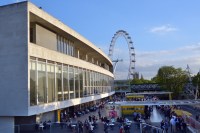
We now think of Radio 3 as the music station, but when it was created in 1946 as the Third Programme music was only meant to take up one third of its output. Dramas, features, talks were just as crucial to its identity, and poetry especially was to be heard ‘three times a week and usually at a peak listening hour, not near midnight’ to quote a contemporary news bulletin from the Manchester Guardian. Last night the station began celebrating its 70th anniversary with a concert broadcast live from the Southbank Centre in London, where for the next fortnight there’s to be an ‘immersive’ Radio 3 experience designed to remind us of the station’s original intentions, with concerts, talks, live happenings.

Cautionary tale

Television

The closing credits of National Treasure (Channel 4, Tuesday) contain the usual disclaimer that any resemblance between its characters and real people is merely coincidental. Well, coincidental maybe, but also entirely inevitable — because this is a drama based on Operation Yewtree. With its choice of subject matter, a cast including Robbie Coltrane and Julie Walters and a script by Jack Thorne (author of the all-conquering Harry Potter and the Cursed Child), the series is clearly intended as an Important Piece of Television. Yet, partly for that reason, it’s so far proving a rather careful one. Nobody who watched the first episode could accuse it of sensationalism.

In a league of her own

Theatre

The Emperor seems like a worthy lesson in Ethiopian history. Haile Selassie’s final days are recounted by a retinue of devoted flunkies. He had valets, chauffeurs, zoo-keepers and door-openers to perform every conceivable chore. Each morning a butler proffered a silver dish loaded with meat from which the emperor fed his exotic pets. A clock-watcher, ‘the Cuckoo’, performed a coded bow during meetings to inform His Majesty that new suppliants awaited him. A royal bursar helped him hand envelopes of cash to petitioners who discovered, always too late, that the donation was barely a fraction of the sum expected. A cushion-handler ensured that his titchy legs were never seen to dangle in mid-air when he took his seat on one of his many thrones.

Pole apart

Opera

Alas, poor André Tchaikowsky. A survivor of the Warsaw Ghetto, with an assumed name that probably did his musical career as much harm as good (he was born Robert Andrzej Krauthammer), he died of cancer in 1982 shortly after his only opera, The Merchant of Venice, was rejected by ENO. He’s remembered today principally for bequeathing his skull to the Royal Shakespeare Company for use as a prop, in which capacity he starred alongside David Tennant in Hamlet in 2008. That skull had a tongue in it and could sing once.

Nicholas Serota

More from Arts

In this week of toadying obsequies after the (rather late) retirement of Sir Nicholas Serota from his imperial throne at Tate, an alternative narrative (briefly) enters the minds of the mischievous. Alone, aloof, fastidious, austere, he is sitting, suited darkly, in his office surveying, with a basilisk stare, the spreadsheets and data-sets his cowering elfin helpmeets have presented him. They step backwards towards the door bowing, afraid to meet his eyes, as he shoots freezing glances towards them. His lips soon purse in cool satisfaction. He is maybe even stroking a furry white cat. Or perhaps a PVC balloon pussy by Jeff Koons. The numbers on his spreadsheets are all about attendances. And they are big numbers.

Making history | 22 September 2016

More from Arts

‘A fool’s errand’. That is how Lonnie Bunch, founding director of the Smithsonian’s National Museum of African American History and Culture, wryly characterises the decade’s work it took him to get the museum built. It opens in Washington DC this weekend. A talented fundraiser, he and his team matched the $270 million from the federal government (Oprah Winfrey donated $21 million, Michael Jordan $5 million), and travelled the country sourcing artefacts. Most difficult of all has been convincing critics that such an institution — devoted as it is to the history of black America — is necessary and not divisive, that it will tell a story, not of one culture for that culture, but of America.

Belly of an architect

More from Arts

Depending on your point de vue, Haussmann’s imperial scheme for Paris created townscape of thrilling regularity or boring uniformity. Whatever; against a backdrop of serene haute-bourgeois perfection, intrusions have always been controversial. Eiffel’s tower of 1889 was attacked by the intellos of the day. Maupassant, Gounod and Dumas fils thought it a hideous construction of riveted tin. Le Corbusier’s unrealised 1925 Plan Voisin, replacing monuments with motorways, was designed as a shock to the system. And the 1973 Tour Montparnasse, central Paris’s only tall building, is, by general agreement, brainless. The Centre Pompidou of 1977 was a test for taste while the 1989 Bastille Opera is grossly ham-fisted, the last and worst of les grands projets.

In the shadow of Picasso

Exhibitions

‘My painting is an act of decolonisation,’ declared Wifredo Lam. These are the first words you read on entering the retrospective of his work at Tate Modern. But I must say that both Lam and Tate got this statement 100 per cent back to front. On the contrary, Lam’s work strikes me as entirely a product of colonialism. It’s none the worse for that, but it’s not any better either. Lam (1902–1982) was originally from Cuba. His father, Enrique Lam-Yam, had emigrated from China and his mother, Ana Serafina, was of mixed African and Spanish descent. He was, in other words, a rather typical inhabitant of the new world. And the rich fusions of that milieu have produced such cultural wonders as Afro-Cuban music and, across the Gulf of Mexico in Louisiana, jazz.

Let the good times roll

More from Arts

For a regular dancegoer in New York City, the Alvin Ailey American Dance Theater seasons arrive with the comforting predictability of a Christmas Nutcracker. Superb dancers, Ailey’s sublime Revelations, jubilant audiences, stirring evocations of African-American identity: it’s easy to begin to take these things for granted. When you haven’t seen the Ailey company for a while, a season packed with these riveting dancers is a newly wondrous thing, a fresh discovery of the particularity that makes the troupe both a cultural and historic phenomenon. The company’s Sadler’s Wells Theatre season, which opened on the 6 September and runs through to the 17th, is the start of a six-week UK tour.

Cooking the books | 15 September 2016

Radio

Cooking really shouldn’t make good radio. On television, it’s already frustrating that you can’t taste what you’re seeing, but on radio you can’t even see it. ‘I’m just cracking an egg,’ they tell you. ‘And now I’ll crack another egg.’ The sounds — violent thuds, hissing gas, moist chewing — are more ominous than appetising and the commentary (‘I’m just mixing those eggs together now’) can’t help but be comically sedate (‘OK — they’re mixed’). So it’s a miracle that The Food Programme (Radio 4), after three decades of this sort of experiment, is as good as it often is, and Cooking for Poldark, this week’s ingenious episode, was really very good indeed.

A Bridge too far?

Cinema

Bridget Jones’s Baby is the third outing for our heroine as played by Renée Zellweger, whose cosmetic work to face has received more media attention than the film itself, but we will try to counteract that here. So, on this occasion, Bridget finds herself pregnant but does not know if the father is our old friend, uptight lawyer Mark Darcy (Colin Firth, who is not as young and dewy as he was at, say, 32, perhaps because he’s now 56), or the American dating magnate Jack Qwant (Patrick Dempsey, 50, who may have let himself go a bit, but then he has had three children, so fair’s fair). And now a note to self: stop going on about how Hollywood women are damned if they do and damned if they won’t (get older, that is) and just tell us if this is worth seeing.

Super Norma

Opera

The Royal Opera has opened the season with a triumph, and in one of the most difficult of operas, Bellini’s Norma. Not only is the work itself extraordinarily demanding on its three leading singers, but it is the one opera which is now so indelibly linked to one singer that all later performances are defined by whether they are in the same mould or whether they are resolutely different. One can’t envy listeners who have never heard Callas, in one or another of her many recordings of Norma, because it is so overwhelming an experience, but it would make life less disappointing than it already tends to be. I preferred not to go to Bartoli’s recent performance in Edinburgh, having heard her interpretation on CD.

Victoria’s secret: none of it’s true

Television

Did you know that Queen Victoria might never have married Prince Albert had it not been for an amazing stroke of luck on a woodland walk in Windsor Great Park, involving the queen’s beloved spaniel Dash. Dash, as good fortune would have it, managed to break his leg on a handy knife that someone had left lying around. And the hitherto remote and stuffy German princeling, carelessly ripping yet another of his shirts (the second in about a week) to create a makeshift bandage, splinted Dash’s leg with such tender care that flighty Emma knew at once that cold, disapproving Mr Knightley was the man for her. And that, I’m afraid, is why I’m not going to be watching another minute of this silly, facile, irresponsible series.

Estate agent

More from Arts

A big misunderstanding about art is that it excites serene meditation and transcendent bliss. But anyone who has worked in a public museum or a commercial gallery knows that this is untrue. The moral climate of the contemporary art world would embarrass the Borgias. Art excites peculation, speculation, back-stabbing, front-stabbing and avarice while fuelling nasty spats about attribution and ownership between heirs, relatives, executors and collectors. Nowhere is this more comically apparent than in the matter of artists’ estates. Once a private concern of family and lawyers, the ‘artist’s estate’ is becoming recognised as a tangible and valuable entity that needs professional management just like any other financial asset.

On the money | 8 September 2016

Arts feature

Kublai Khan, said Marco Polo, had ‘a more extensive command of treasure than any other sovereign in the universe’. There were no jangling pockets of coins in Kanbalu. Bark had been stripped from the mulberry trees and beaten into paper notes. The notes carried delicate little pictures of earlier currency — long, frayed ropes weighed down with coins. It was as though they were mocking the old ways. Paper money had been produced in China from as early as the 7th century, but that did not stop Marco Polo from gushing that the Great Khan had discovered ‘the secret of the alchemists’. Back home, there was much curiosity but apparently little urgency. Only in 1661 did the first banknotes circulate in Europe.

Time to change the record

Exhibitions

Back in the high optimism of the 2008 presidential campaign, one of Barack Obama’s more extravagant hopes was that ‘the psychodrama of the baby boom generation’ would finally be left behind: that no longer would the kind of radical late-Sixties politics ‘hatched on a handful of college campuses long ago’ be seen by both its supporters and its opponents as the key to understanding more or less everything about modern life. Sadly, though, if Obama needs proof of how comprehensively this hope has been dashed, he need only head to the V&A — where, with the supporters firmly in charge, the whole story of how great the late Sixties were, how much they’ve shaped today’s world, and how much they still could (fingers crossed!

The man who killed The Archers

Radio

Such a hoo-ha about The Archers this week as Helen faces trial by jury — and, much worse, has to confront her horrid husband Rob face-to-face for the first time since she tried to stab him with a knife in the kitchen of Blossom Hill Cottage. Whatever the decision of the court (and of Sean O’Connor, the horrid editor who is supposed to have left his job at the Radio 4 soap but who in a recent interview threatened us with a worst-case scenario that would free Helen but hand custody of the children over to Rob), it’s curtains for life in Ambridge as we know it.