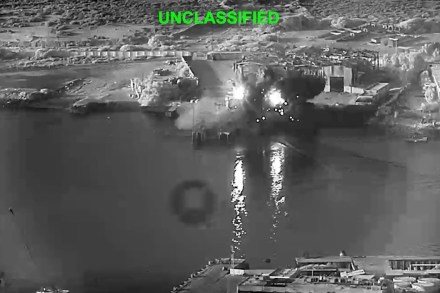
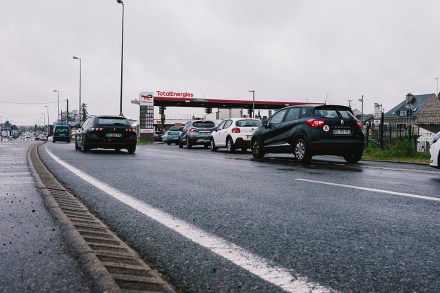
Strait of Hormuz

The Middle East is drifting into chaos

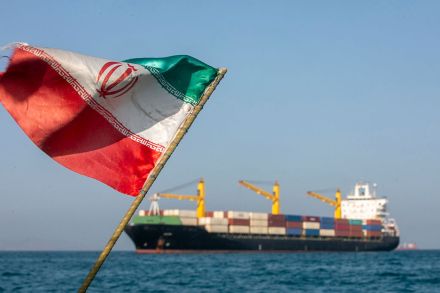
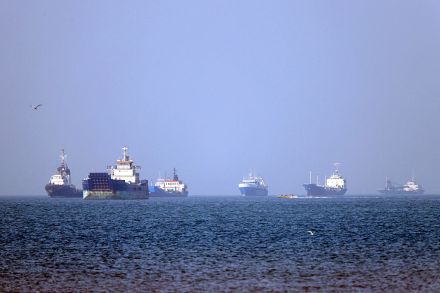
The war in Iran rumbles on, in parallel to talks that are aimed at stopping it. Both sides would rather the war were over; this limbo is causing mayhem in Iran’s economy and politics, while MAGA too has been bent out of shape. Yet a reality might be starting to take hold in which fighting simply drifts aimlessly, much like the peace talks. And much like the ships that are stuck in the Strait of Hormuz, too. As both sides try to game the stalemate, unintended consequences are emerging The US is calculating that a naval blockade, in the absence of a memorandum of understanding, can economically constrict Tehran, narrowing its room for maneuver and eventually forcing Tehran back to the table.

Trump can’t escape the Iran war

Last Friday, a senior US official gave a background briefing to the media and made some news. First, Iranian officials contacted the United States through mediators and essentially apologized for their recent attacks against shipping in the Strait of Hormuz. And second, the Trump administration expected Tehran to issue a formal statement reiterating that the chokepoint was open to all traffic. “We want them to publicly say that they will stop shooting at ships and explicitly, or at least implicitly, acknowledge that they screwed up,” the official said. “We expect the Iranians to say... that every channel in the strait will be open and that it will be toll-free.

Do Iran’s negotiators speak for the IRGC?

From our US edition

The infamous "Memorandum of Understanding" between the United States and Iran has broken down. One of the major points of failure has been the disagreement over which side controls the Strait of Hormuz.  Yesterday, President Donald Trump abruptly declared that his country should now be known as “THE GUARDIAN OF THE HORMUZ STRAIT" and "as such, as a matter of fairness, will be reimbursed at the rate of 20 percent on all cargo shipped." "POTUS is absolutely right," replied Abbas Araghchi, Iran’s foreign minister, on X. "Whoever provides secure and safe passage of commercial vessels through the Strait of Hormuz should be compensated for this service. Iran has always been the GUARDIAN of the Strait and will remain so FOREVER. 20 percent is of course too much. We will be fair.

Is the US heading for another oil shock?

From our US edition

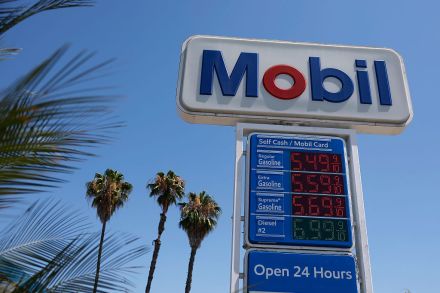
It won’t be anything on the scale of 1973, when President Nixon imposed year round daylight saving time to reduce electricity consumption as well as a 50mph highway speed limit. Nor are we likely to see the thermostat restrictions, or the standby plans for rationing, that were introduced by President Carter in 1979.  The "oil shocks" of the 1970s were not just from a different era, they were of a different magnitude as well.  Trump may well step in with some form of oil export controls Yet that does not mean that the American economy is immune to another crisis, nor that we won’t see a dramatic response from the White House - because, in reality, the US could easily run out of oil later this year.

Oil prices

Trump reveals the limits of American power

Donald Trump’s quest for regime change in Iran has backfired horribly. The President misunderstood the resilience of the 47-year-old Islamic Republic of Iran, the strategic calculations of one-time ally Israel and the physical and political geography of the Strait of Hormuz. Vice President J.D. Vance appears now to be positioned as the public face of failure. The decision to launch the assault on Iran was underpinned by Israeli confidence that Iran’s leadership could be toppled and that the United States’ overwhelming firepower would produce shock and awe. It came in the immediate aftermath of plans to acquire Greenland, incorporate Canada, assert dominance over the Panama Canal and topple the then Venezuelan government. Cuba is no doubt next on Trump's list.

iran

The Iran war is Trump’s Suez crisis

Clarissa Eden famously declared that "in the past few weeks I have really felt as if the Suez Canal was flowing through my drawing-room." Does Melania Trump feel the same about the Strait of Hormuz? Or perhaps Donald will be reminded of the strait every time he hits one over the water at Bedminster. He ought to be. The Iran war will define his presidency. It is his legacy – just not in the way he imagined. In 1956, a British prime minister discovered that we were no longer a great power. It was an end to illusions. We liked to think we had the best navy in the world, but that was irrelevant to whether we could keep a canal in Egypt.

suez

What Iran could learn from Denmark

Iran is looking increasingly Danish, which sounds like a strange thing to say. What could Iran (a theological dictatorship which massacred 30,000 of its citizens earlier this year) and Denmark (a social democracy which is one of the world’s most generous foreign aid donors) possibly have in common? Iran has chosen a great short-term policy in asserting its control over Hormuz, but a mediocre long-term one But Iran’s theologians like to keep themselves half a millennium back from contemporary mores.

Who stands to gain in the pistachio wars?

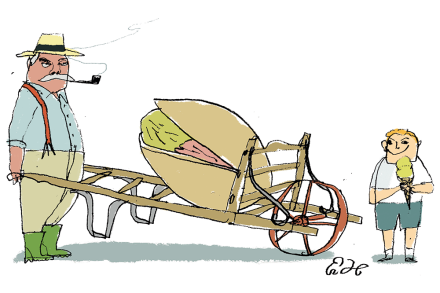
If you’ve ever lived in Marseille – where the habit of exaggeration is imbibed with mothers’ milk – you’ve heard about the sardine that blocked the port. But that’s nothing compared to the pistachio that took over the world. In late 2023, Dubai chocolate, a new kind of chocolate bar filled with pistachio cream, tahini and crunchy, toasted phyllo pastry, went viral. Chocolate brands, bakeries and purveyors of fine foods were quick to jump on the trend. Coffee chains began offering pistachio chocolate drinks (iced Dubai-chocolate matcha, anyone?) and delectable pistachio bomboloni – soft donuts filled with pistachio cream – came back on the menu in Italian restaurants.

pistachio wars
donald trump peace

Will peace be the perfect gift for the President?

Donald Trump’s 80th birthday is this weekend, and what better present for a struggling octogenarian Commander-in-Chief than a peace deal with Iran, signed if not quite yet sealed and delivered. There is, I’m told, some late scrambling over "semantics" in the so-called "memorandum of understanding" between America and Iran, and lingering issues over the language concerning the "nuclear dust" – i.e., Iran’s enriched uranium. But the rest is all but agreed. J.D. Vance could fly to Europe to sign a deal tomorrow – or if not it will be Trump as he attends the G7 in Evian near the Swiss Alps on Monday. Trump really wanted to stage a peace photo-op with Iran’s new Supreme Leader Mojtaba Khamenei but had to be told that would not be possible.

Trump has Iran over a barrel

When is a ceasefire not a ceasefire? When the person declaring it is Donald Trump. Opinions differ about the wisdom of the President’s activities with respect to Iran. Some observers tell us he is playing four-dimensional chess. Some say it more like checkers with no kings. What, after all, is he up to? The commentariat proffers several conflicting narratives. The one common thread is the certainty with which these opinions are uttered. Trump is an idiot. Trump is a genius. For those who say that he has thrown in the towel – that Iran has “won” – I’d offer two observations.

Trump Iran

What today’s Iran headlines don’t reveal about ‘Project Freedom’

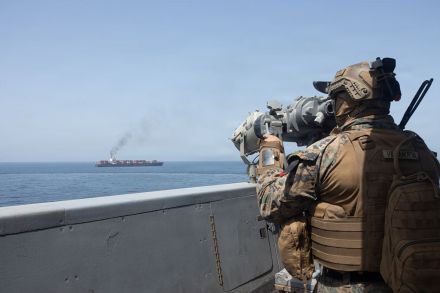
"Operation Epic Fury is concluded," declared Marco Rubio, holding his first White House press conference yesterday. The Secretary of State explained that the new mission – reopening the Strait of Hormuz – would essentially be a humanitarian operation, resulting in military exchanges only if US ships came under fire while clearing the passage of mines and other obstacles. Later, President Trump went further, saying that "Project Freedom" (the Hormuz operation) had been paused "to see whether or not" a "Complete and Final Agreement can be finalized and signed." “Project Freedom” is unworkable because the Navy cannot complete the de-mining operation Today, the markets have rebounded on news that US and Iranian officials are discussing "a memorandum of understanding.

Littoral

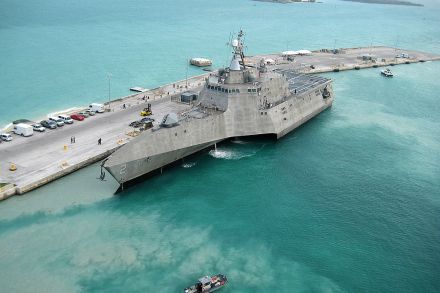
Little Crappy Ships make NACHO a safe bet

Trump Always Chickens Out, TACO, has been a profitable guideline for Wall Street traders over the course of his second term. Now however, according to commodities markets reporter Javier Blas, the safer bet has become NACHO, Not a Chance Hormuz Opens. This is sound advice, given the multiple ways that Iran controls passage, including the unknown number of sea mines reportedly planted by the Iranians in the Strait. The New York Times, has been dutifully reiterating the administration line that the witless Iranians have been unable to find their own mines. Now Trump has announced that the US Navy will “guide” traffic through the Gulf along lanes cleared of mines, while dealing “forcefully” with any Iranian attempts to interfere.

Does Abigail Spanberger want you to be fat and crazy?

From our US edition

Supreme Court Justice Louis Brandeis coined the phrase “laboratories of democracy” to describe how individual states could act as test cases for different policies and ideas. Judging by its recent track record, Virginia aspires to be the Wuhan Institute of Virology. In November, voters of the Commonwealth elected Governor Abigail Spanberger – a so-called “Blue Dog Democrat” who used to serve in the CIA and railed against socialism and calls to “defund the police” after the Democrats underperformed in the 2020 elections. Virginia Democrats also retained control of the state’s Senate and House.

iran ceasefire

Is the Iran ceasefire crumbling?

Is the fragile Iran war ceasefire over? It would appear so, with American and Iranian forces exchanging fire in the Strait of Hormuz. The renewed clashes follow President Trump’s launch of "Project Freedom," which aims to use the US military to escort stranded ships out of the critical waterway. Trump said American forces had hit seven Iranian small boats, with the US military claiming to have intercepted cruise missiles and drones launched by Tehran. Trump earlier warned that Iranian forces would be "blown off the face of the Earth" if they targeted US ships in the strait or the Persian Gulf. Tehran says it fired "warning shots" at US warships, and said it would attack any foreign force that tried to enter the strait.

Who is really leading Iran?

In declaring an extension to the ceasefire in the Iran war, President Trump signaled clearly enough that he would prefer to strike a peace deal with Tehran. J.D. Vance, the Vice President, has been kicking his heels, waiting to return to the Pakistani capital Islamabad for another go at achieving a breakthrough. The Iranians keep blowing hot and cold on whether they are ready to play their part. Trump suggested in a social media post earlier this week that he believes this is because Iran’s government is "seriously fractured." His ceasefire extension is aimed at allowing the regime time to deliver a new proposal. Trump may want to hammer everything out in Islamabad, but he is not dealing with an ordinary government operating under a straightforward power structure.

iran

Trump’s costly armchair geography

In the 19th century, the geographer and explorer David Livingstone was scathing of what he described as "easy-chair geographers" – authors and mapmakers who produced maps and treatises about the non-European world without ever leaving their learned society or personal office. Donald Trump is a latter-day armchair geographer. Or judging by photographs repeatedly released by the White House, a president comfortable convening meetings in the Oval Office with large maps displayed by his desk. But whether it is a case of acquiring Greenland or blockading the Strait of Hormuz, maps can be poor substitutes for in-field knowledge and understanding.

armchair geographer

Europe has squandered its energy security

From our US edition

“Europe is desperate for Energy, and yet the United Kingdom refuses to open North Sea Oil, one of the greatest fields in the World.” Donald Trump said this month on Truth Social. It is, to use the President’s phrase, “Tragic!!!” But the necessity of oil hasn’t always been recognized. Back in 2008, while running for the White House, Barack Obama declared that one of the major challenges facing the US is “what we will do about our addiction to foreign oil.” His solution was to switch America to renewables. In that address, known as the “New Energy For America” speech, Obama said, “We simply cannot pretend, as Senator McCain does, that we can drill our way out of this problem.

energy

Sorry, but America still holds all the cards

From our US edition

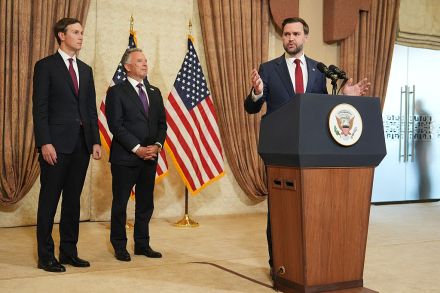
“Negotiations.” Are you heartened or dismayed by that word? Those who remember or who have read up on the seemingly interminable Paris Peace Talks designed to bring an end to the Vietnam War have reason to be dubious. A negotiation, if it is to be successful, requires that both sides be candid and in earnest. The Vietnamese were not candid participants. They stalled. They prevaricated. They acted out. It seems that the Iranians are hoping to reprise that melodrama. They will be profoundly disappointed. On the second weekend in April, Vice President J.D. Vance, Steve Witkoff and Jared Kushner met some 70 Iranian representatives in Islamabad to hammer out a peace deal.

Iran negotiations

If Trump hates the Wall Street Journal, why is its editorial board dictating Iran policy?

From our US edition

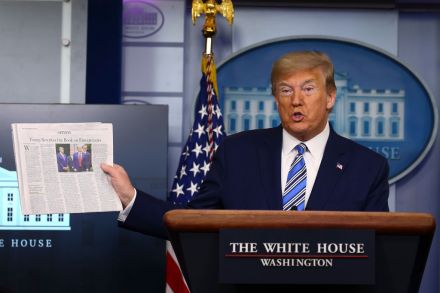
For the better part of a decade, Donald Trump has been an avid, if irascible, reader of the Wall Street Journal – particularly the columns overseen by its long-time editor Paul Gigot. Because the Journal is among the few American conservative outlets willing to criticize Trump – on everything from tariffs to temperament – he has developed a habit of denouncing it in public while devouring it in private. The Journal, Trump recently declared on Truth Social, is "one of the worst and most inaccurate editorial boards in the world." The ritual extends to annotated hard copies – margins filled with indignant scrawl – before the offending pages are FedExed back to News Corp headquarters in Midtown Manhattan.

wall street journal

Get ready for Epic Fury Part II

From our US edition

It could be the shortest negotiation in history. The United States and Iran, with their respective peace plans, are so far apart that it’s difficult to see how their differences can ever be squared.  A two-week ceasefire, which has already been broken, brought relief after five weeks of war and steadied the oil and stock markets. But the agreed ceasefire is looking fragile, as US Vice President J.D. Vance admitted. There had been “legitimate misunderstanding,” he said yesterday, over whether the ceasefire extended to Israeli action in Lebanon.