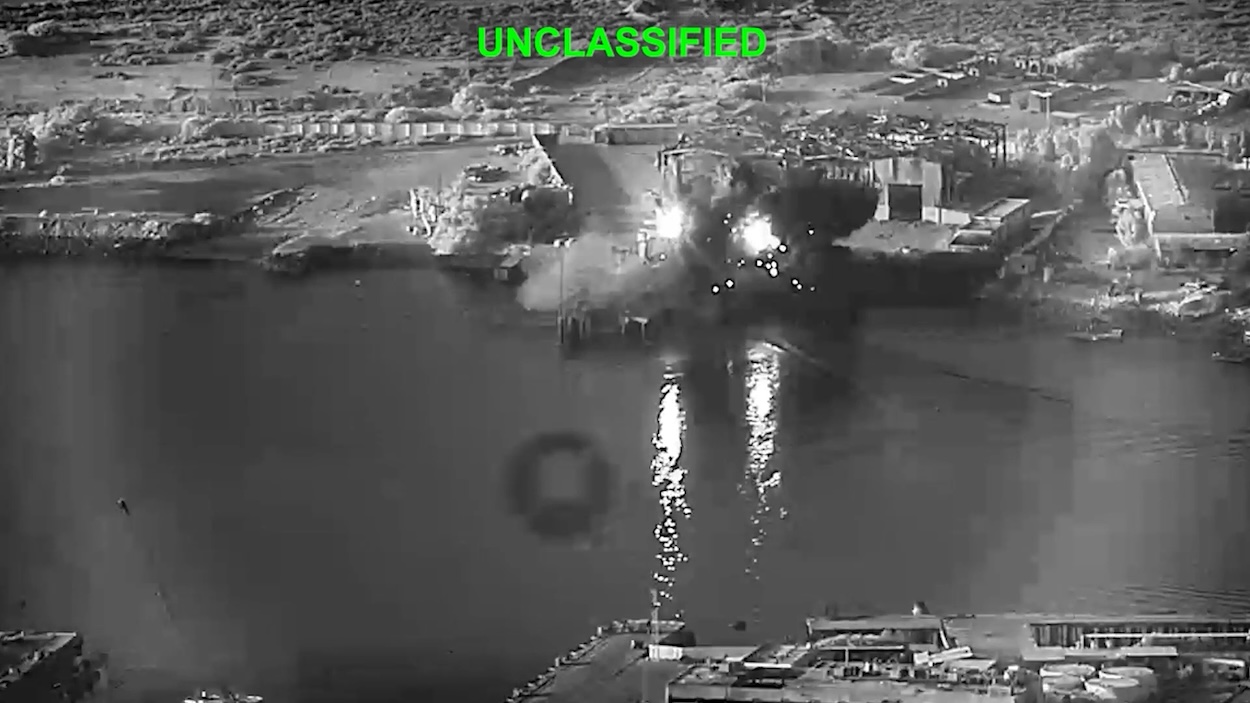
The war in Iran rumbles on, in parallel to talks that are aimed at stopping it. Both sides would rather the war were over; this limbo is causing mayhem in Iran’s economy and politics, while MAGA too has been bent out of shape. Yet a reality might be starting to take hold in which fighting simply drifts aimlessly, much like the peace talks. And much like the ships that are stuck in the Strait of Hormuz, too.
As both sides try to game the stalemate, unintended consequences are emerging
The US is calculating that a naval blockade, in the absence of a memorandum of understanding, can economically constrict Tehran, narrowing its room for maneuver and eventually forcing Tehran back to the table. A variation of this tactic worked in the lead up to the 2015 JCPOA, when the Islamic Republic felt it necessary to negotiate as it watched the pain of sanctions spill out onto streets. Iran, likewise, calculates that the US’s inability to land a knockout blow and Trump’s obsession with stock markets gives it the advantage in this increasingly bloody game of chicken.
Tehran, perhaps, overestimates its ability to withstand much more economic pressure. It overestimates, too, just how much the US cares about this conflict. In a similar vein, the US may be overlooking the fact that the Islamic Republic has little care for the welfare of its own citizens and is therefore more than willing to tolerate economic and social pain, so long as it doesn’t threaten the Islamic Revolutionary Guard Corp’s dominance over the levers of power. Certain figures in Tehran lean towards trying to wait Trump out to see who replaces him. A J.D. Vance presidency may well be less closely aligned with Israel, they believe. May well be even more generous to the Islamic Republic when it comes to concessions, borne of a desire to end what he fears could be turning into a forever war.
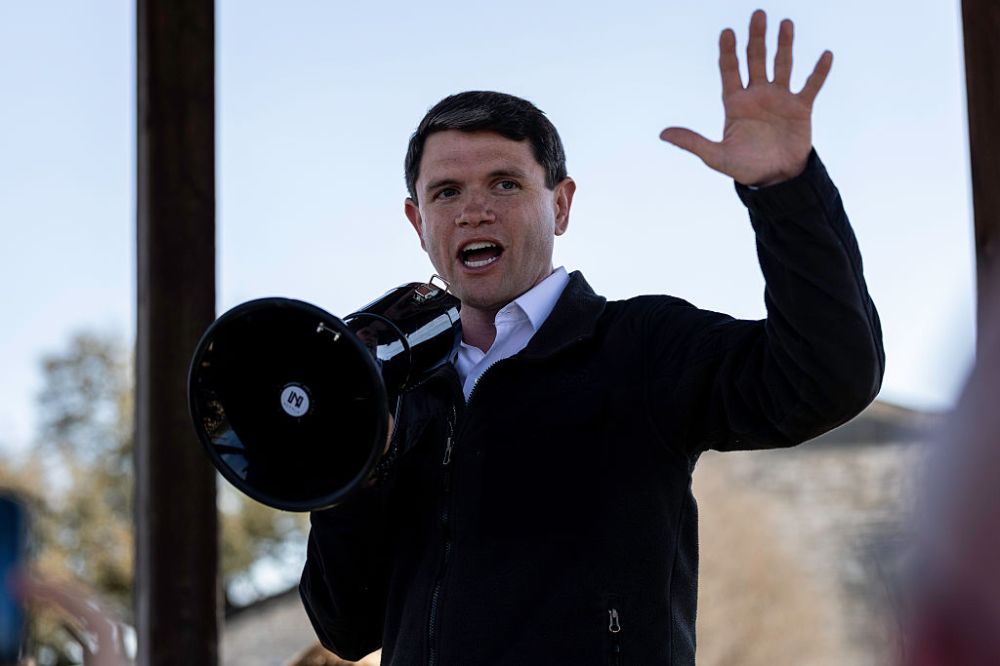
But as both sides try to game the stalemate, unintended consequences are emerging. This latest round of strikes appears to have damaged the cause of Iranian negotiators, who were minded to accept American largesse and economic aid. And in their place, as the MoU becomes increasingly threadbare, it is the clerical hardliners in Tehran whose voices are growing louder. “Why would we ever trust the Americans?” they cry. This question echoes Ali Khamenei’s dictum that any deal with the US was always going to end badly, a point repeated by Mojtaba Khamenei from his hospital bed. But this Iranian opposition to negotiation speaks to a more deeply held opposition to economic relief via US and Western investment. Iran’s clerical hardliners see a Trojan horse, in which economic aid becomes the corrupting influence of rampant capitalism and materialism. Both of which threaten, so the story goes, the purity of the revolution, a not unironic position for a regime built on corruption and graft.
As the strikes continue and the talks falter, the bargaining power of Ghalibaf et al over their domestic rivals for power, becomes weaker. The IRGC and Ghalibaf still control the levers of power, but there is no guarantee this will continue, an evolution that would further narrow the space for dialogue and the available off ramps.
It is in the wider region that these unintended consequences could be most pronounced. Who would have thought, for example, that toppling Saddam Hussein in 2003 would have allowed Iran to fulfill its long-held ambition of dominating Iraqi politics? Likewise, who could have predicted that Iraq’s de-Baathification would have directly fueled the rise of ISIS, as disaffected Sunni Iraqis, former Baathist officials and intelligence officers eventually joined the fight against those who had recently their state? Now the US wants to cut back in the Middle East. Iran and Saudi Arabia’s 2023 agreement, brokered by China, was the first major consequence of this shift in policy. We saw evidence of a more autonomous diplomacy too in 2025, when Saudi Defense Minister Khaled bin-Salman made his historic trip to Tehran.
Doha is realizing that a permanent state of conflict with Iran, in which its energy infrastructure and export capacity sits vulnerable to Iranian drones and missiles, is simply not sustainable. And therefore, the country is considering investment in Iran, pragmatic rapprochement and realpolitik. This could well lead to tension between Doha and Washington. Oman, too, is feeling squeezed between the US and Iran. And the UAE’s emerging alliance with Israel further erodes a sense of strategic consensus in the Gulf and Middle East. Without the stabilizing force of the US, there is a risk of fragmentation. “Are they seeking to topple the Islamic Republic, or simply weaken it? And if so, what is on the other side, save for an angry, vengeful Iran?” one regional political figure asked me this week.
Perhaps the greater lesson here is that alliances matter in geopolitics. And alliances rest on a measure of predictability that can sit within a system, be it trading or intelligence sharing or diplomacy. These alliances breed trust and ultimately, they become greater than the sum of their parts. Without them, we risk an end to what little predictability and order the region had.




Comments