Tom Switzer

Tom Switzer is presenter of the Switzerland podcast and co-editor, with Sue Windybank, of Prudence and Power: The Writings of Owen Harries.

If Trump hates the Wall Street Journal, why is its editorial board dictating Iran policy?

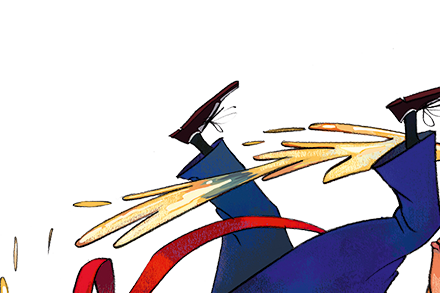
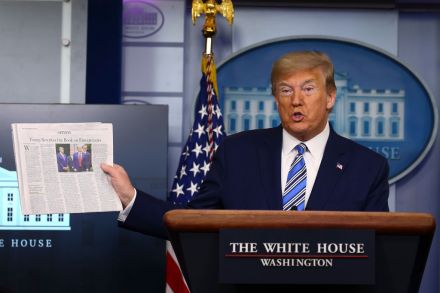
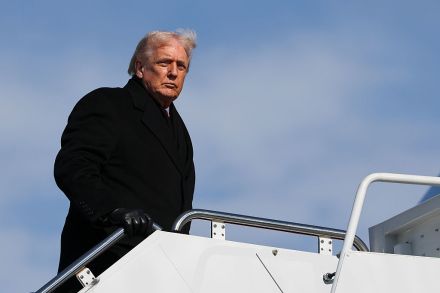
For the better part of a decade, Donald Trump has been an avid, if irascible, reader of the Wall Street Journal – particularly the columns overseen by its long-time editor Paul Gigot. Because the Journal is among the few American conservative outlets willing to criticize Trump – on everything from tariffs to temperament – he has developed a habit of denouncing it in public while devouring it in private. The Journal, Trump recently declared on Truth Social, is "one of the worst and most inaccurate editorial boards in the world." The ritual extends to annotated hard copies – margins filled with indignant scrawl – before the offending pages are FedExed back to News Corp headquarters in Midtown Manhattan.

wall street journal

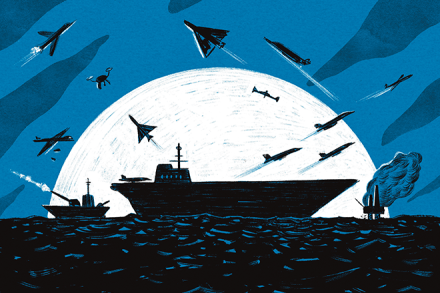
Will the war in Iran really weaken China?

Analogies in international politics are tricky and easily abused, yet they remain irresistible because they can illuminate patterns that are otherwise hard to see. Consider the present moment.  Just as Ukraine has become a growing burden for Washington and its Western allies, Iran is now a strategic burden for Moscow and Beijing. The US, particularly under the Trump administration, appears to be placing less emphasis on supporting Ukraine. Something similar may be happening in reverse with Iran.  Moscow continues to provide Tehran with assistance – most notably intelligence on US military targets – but the broader pattern suggests caution rather than deep commitment.

China Iran

Sydney Notebook

From our UK edition

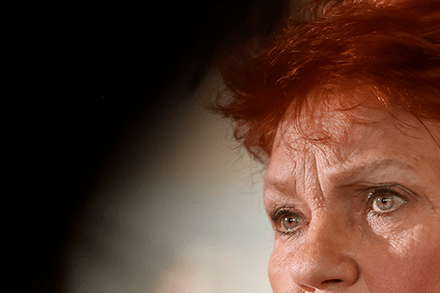
The other day, I went to a boozy barbecue near Sydney’s northern beaches. The guests were all political mates of mine and we chatted about those insurgent populists who threaten to upend established conservative parties across the globe: Donald Trump, Marine Le Pen, Geert Wilders, Beppe Grillo and, of course, Pauline Hanson — Australia’s version of all four. We put our wide-ranging discussion about domestic politics in an international context. But it was not until the next morning that I realised that we had not even talked about Malcolm Turnbull: he’s our fourth prime minister in four years, who was famous in the UK in the 1980s as the defence lawyer in the Spycatcher case.

Will Trump bring about World War Three?

One of the enduring myths about Donald Trump is that he is an isolationist: a president bent on dismantling alliances and hauling up the drawbridge on America’s engagement with the world. The reality is more unsettling. Trump’s instincts may incline toward retrenchment, but they coexist with a pugnacious temperament and a visceral conception of American honor. Given that volatile combination, it is easy to imagine an adversary taunting him out of restraint – or a well-meaning but insufficiently sensitive ally, or even an unprovoked emotional spasm, producing the same effect. After that, who knows where events might lead?

NATO’s Suez moment

In 1969, Charles de Gaulle told his friend André Malraux that America’s “desire – and one day it will satisfy it – is to desert Europe. You will see.” It has taken nearly six decades, but de Gaulle’s prophecy now looks uncomfortably close to fulfillment. After years of diplomatic effort to manage, placate and charm successive American presidents – and Donald Trump in particular – European leaders are coming to a grim realization: the United States is, at best, indifferent to their interests and sensibilities and, at worst, openly hostile to them. Some, such as Italy’s Giorgia Meloni, still believe Trump can be cajoled, that the transatlantic relationship can somehow be salvaged.

Greenland

How powerful is the China-Russia alliance?

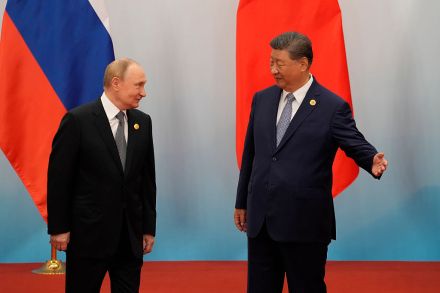
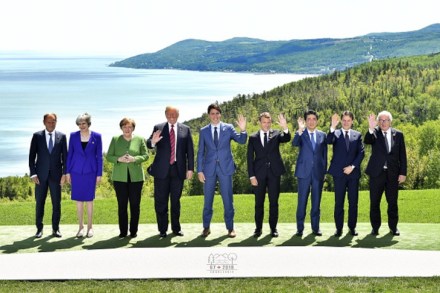
This summer’s big security summit in Tianjin, followed by the military parade in Beijing on September 3, has been widely interpreted as a sign of a new global realignment. At a time of growing friction within the US alliances in East Asia and Europe, President Xi Jinping of China, President Vladimir Putin of Russia and about 20 leaders mostly from Central Asia have not just reaffirmed their nations’ close ties. They sought to strengthen the emerging multipolar system, which they see as a rejection of the US-dominated global order. This idea is hardly new.

China

Why Republicans are sceptical about funding Ukraine

From our UK edition

When US policy-makers supported Nato expansion in the 1990s, it was widely believed that America, as the sole remaining superpower, could impose its will and leadership across the globe. ‘An American century’, ‘indispensable nation’, ‘the unipolar moment’, ‘benign hegemony’ – these became the new buzz-words of Washington’s political class. The rhetoric turned bellicose after 9/11, when outrage over the terrorist attacks, together with the mental habits of global supremacy and American exceptionalism, gave US leaders a clear, overriding sense of mission and purpose.

Meet the Aboriginal politician leading the charge against Australia’s Voice referendum

From our UK edition

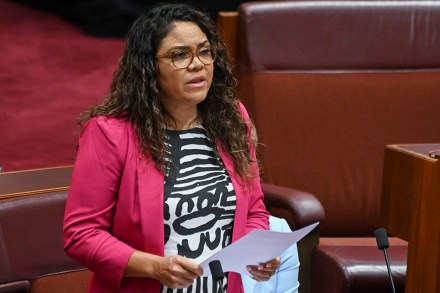
Sydney Every so often, in the life of nations, there comes a moment when a new political force articulates a sense of frustration at the old orthodoxies, or a yearning for something new. Sometimes, such a force turns into a momentous presence that transforms the national landscape. Australia has reached such a moment in the person of a 42-year-old Aboriginal mother of four. A conservative legislator for little more than a year, Jacinta Nampijinpa Price, the shadow chancellor for indigenous affairs, has challenged the old, failed narratives which argue that systemic racism is responsible for indigenous woes and that a policy of welfarism and separatism is the answer. As a result, she has changed the nature of our national debate surrounding our Aboriginal population.

Australia at the crossroads

 Sydney For decades, Australia has been known as ‘the lucky country’. At the end of the world geographically, we are separated from the global troublespots by vast oceans. We have recorded 27 years of uninterrupted growth, partly because of a surge in exports of commodities to China. At the same time, our tough border protection policies boost public confidence in, as John Howard put it, ‘who comes to this country and the circumstances in which they come’. As a result, our politics have not been profoundly affected by the kind of populist forces dismantling established parties across Europe. Nor have we witnessed an anti-globalisation backlash. Not for us any Trump- or Brexit-like insurgencies.

The Western alliance is dead

The big question that hangs over Donald Trump’s trip through Europe is not whether America’s NATO allies should spend more on defence or whether Vladimir Putin poses an overriding strategic threat to the continent. The big question is this: why should Uncle Sam continue to provide the military assets and leadership across the pond as it has for the past 70 years? The answer lies in understanding that the concept of a united political West is a tenuous and unconvincing one. Indeed, it should have been moribund since the fall of the Berlin Wall and the demise of Soviet Communism. It’s now collapsing. True, the West has an obvious and historically glorious validity.

Tony Abbott, Australia’s prime minister, has just been put to the sword. Here’s why

From our UK edition

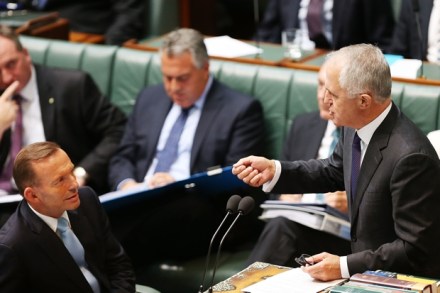
Australian conservatives just showed their prime minister all the mercy that a pack of hungry hyenas reserves for zebra prey on National Geographic. In a dramatic Liberal party-room leadership vote late this evening - morning in Britain - the former leader Malcolm Turnbull toppled the first-term prime minister in a 54-44 vote. It was done with a speed no one could have guessed 24 hours ago. Even more remarkably, Turnbull – a former merchant banker who was famous in Britain in the 1980s for the Spycatcher case -- has become party leader (again). When Abbott himself knifed Turnbull in late 2009, no seasoned observer of Canberra politics had predicted a comeback. Now Turnbull is Australia's 29th prime minister. How did it come to this?

The Australian way

From our UK edition

 Sydney Most ordinary Australians are shocked that our immensely civilised country is reviled in polite society here and abroad, when the world has so many blatant human rights abusers. The latest accusation comes from a New York Times article complaining that our policies on asylum-seekers are harsh, insensitive, callous and even brutal, and urges European nations not to copy them. Yet the policies on border protection of Tony Abbott and John Howard before him should be a lesson to Britain. At the heart of the matter is a firm but fair post-war policy that mass migration is conditional on government control over ‘who comes to this country and the circumstances in which they come’, as Mr Howard famously put it.

The many lives of Richard Nixon

From our UK edition

Winston Churchill once said of politics that it’s ‘almost as exciting as war and quite as dangerous. In war you can only be killed once, but in politics — many times.’ Perhaps no one personified this dictum better than Richard Milhous Nixon. From his election to Congress in 1946 to his resignation from the presidency in 1974, Nixon had been written off time and again. After each setback, though, ‘Tricky Dicky’ was incredibly formidable on the rebound. Even after Watergate, the disgraced former president transformed himself into a bestselling author and something of an international elder statesman.

Australia’s Tony Abbott has made history by abolishing the hated carbon tax

From our UK edition

A few years ago, the conventional wisdom down under held that Tony Abbott and his centre-right Liberal Party were crazy to oppose the notion of carbon pricing. The view was so commonplace among Canberra press gallery pundits that it seemed reckless to contradict it. Those were the days, remember, when global warming alarmism was all the rage around the western world. From Sydney to Southampton, Al Gore’s An Inconvenient Truth was a blockbuster. An Australian prime minister, Kevin Rudd, had declared that climate change was the world’s ‘greatest moral challenge.’ Nigel Lawson’s book, An Appeal to Reason, was rejected by every British publisher, to whom it was submitted.

Kevin Rudd, the dud

From our UK edition

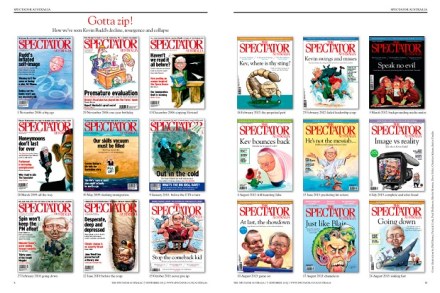
Sydney Kevin Rudd had spent so much time out of the limelight since his electoral thrashing two months ago that Australians were beginning to wonder what he was up to. The latest joke about our former two-time prime minister is that his only public appearance recently was at a suburban Brisbane retirement home, where he asked an elderly woman if she knew who he was. ‘No, but if you check at the front desk, I’m sure the nurses can help you,’ she replied. But Rudd’s decision to retire from the Australian parliament after 15 years as an MP and two years and nine months as PM (December 2007-June 2010, June-September 2013) is no joke.

The Economist, Guardian, New York Times and The Age are wrong about Kevin Rudd

From our UK edition

The Economist magazine is beginning to look a lot like the Guardian, the New York Times and the Age in Melbourne: its editorial pages are so dripping wet that one has great difficulty in turning them. How else to account for this endorsement of the Australian Labor government of Prime Minister Kevin Rudd for re-election on 7 September?  Labor’s ‘decent record’ in recent years, it argues, makes it the best party to face the challenges of the future. Yet this is a government that has turned a $20 billion surplus it inherited from John Howard’s Coalition in late 2007 into a whopping budget black hole and rising national debt.

Conservative landslide in Australia: Tony Abbott will crush Kevin Rudd

From our UK edition

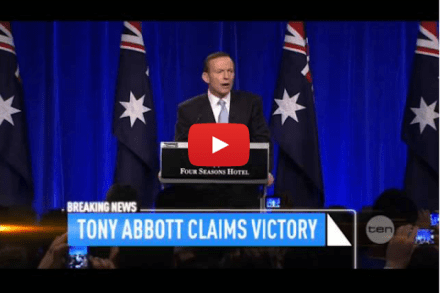
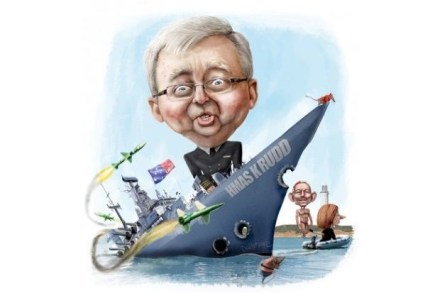
Sometimes only a cliché will do, especially when the subject is the Australian Labor party. Labor is holed beneath the water line and is sinking fast. No one, not even its newly reinstated skipper, Kevin Rudd, is capable of keeping the boat afloat as the nation heads for a general election on 7 September. In a couple of weeks, barring an act of God or a military coup, the conservative Tony Abbott, leader of the Liberal-National coalition, will replace the left-liberal Rudd as prime minister of Australia. It was not meant to be like this.

Will the fraud Kevin Rudd fool Aussies again?

From our UK edition

It wasn’t long ago that the upcoming federal election in Australia seemed to be Tony Abbott’s to lose. With Julia Gillard as damaged goods, the Opposition leader appeared poised to win one of the biggest electoral landslides in political history. Think Clement Atlee and Labour’s demolition of Winston Churchill’s Tories in 1945. But recent polls have seen the lead of Australia’s conservative coalition parties narrow dramatically, raising the spectre of another hung parliament, if not a narrow Labor victory on 7 September. What happened? What accounts for Labor’s resurgence in just a few weeks? Well, simply put, Kevin Rudd is not Julia Gillard.

Foreign Policy Begins at Home, by Richard N. Haass – review

From our UK edition

A year or so after the ‘liberation’ of Iraq, an unnamed senior Bush administration official (later revealed to be Karl Rove) boasted: ‘We are an empire now, and when we act, we create our own reality.’ Yet a decade later, America’s power and influence has diminished considerably and the American people are suffering from foreign policy fatigue. The greenback is weak, the debt mountain is of Himalayan proportions, the credit rating is downgraded and economic growth is exceptionally sluggish for a nation that is four years out of a recession. The Chinese own more and more of the US debt and they show no inclination to heed Washington’s demands to revalue the yuan or end their cyber-espionage or prevent North Korea from using nuclear weapons.