James Lewisohn

James Lewisohn is a former investment banker. He is now a financial advisor and writer

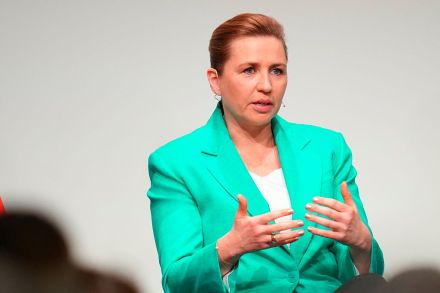
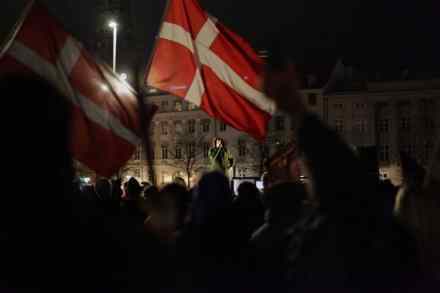
How the Danish election backfired for the left

In the aftermath of the bitterly contested 2000 US presidential election, Bill Clinton famously commented: ‘the American people have spoken; but it’s going to take a little while to determine exactly what they said’. That election ultimately took over a month plus a US Supreme Court decision to finalise and remains hotly debated to this day. Pity the poor Danes, then, who now face a similar period of extreme uncertainty. The snap Danish general election produced a polarised and atomised result for its smorgasbord of 12 political parties, with no party gaining more than 22 per cent of the vote, and no overall majority in Denmark’s 179-seat parliament.

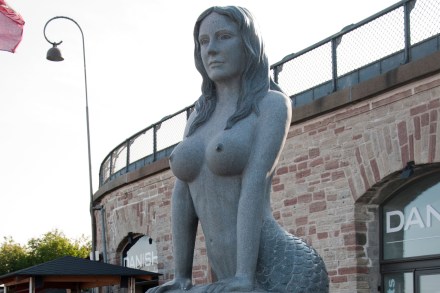
The sad tale of Denmark’s buxom mermaid

From our UK edition

Hans Christian Andersen didn’t write a fairy tale called ‘The Ugly, Pornographic Duckling’, yet his stories often feature alienation, exile and the struggle for acceptance. ‘Ugly and pornographic’, meanwhile, is how Politiken newspaper’s art critic, Mathias Kryger, has described the ‘Big Mermaid’: a 14-ton, 13-foot tall, notably buxom statue which between 2006 and 2018 stood on Copenhagen’s Langelinie promenade – only a few hundred feet away Edvard Eriksen’s iconic 1913 ‘Little Mermaid’ original (itself based on an Andersen fairy tale).

Danes are baffled by Britain’s hatred of second-home owners

From our UK edition

Spring has arrived on the North Coast of Zealand, and my fellow Danes are busily scrubbing down their summerhouses for the season. Villages which were nearly deserted during the winter – Danes can generally only occupy their summerhouses for 180 days a year – are gradually filling up. Sadiq Khan said London’s second homeowners ought to pay “much, much more” than a 100 per cent council tax premium Yet I rather doubt Sir Sadiq Khan, who earlier this month said London’s second homeowners ought to pay “much, much more” than a 100 per cent council tax premium, will be on anyone’s prospective guest list.

Here’s what Greenland should do about Donald Trump

From our UK edition

Greenland's prime minister MĂşte Egede has responded to Donald Trump's overtures to buy the island by saying it is time to shake off 'the shackles of colonialism' and hold an independence referendum. As Egede works out how to proceed on the path to independence from Denmark, and how to respond to Trump as he prepares to take office, he would be advised to do a little background reading. For Donald Trump’s policies are increasingly informed by his key lieutenant, Elon Musk; Musk’s friend and fellow PayPal co-founder Ken Howery will be the next US Ambassador to Denmark; and Musk’s key philosophical text is The Hitchhiker’s Guide to the Galaxy, which reminds us: ‘Space is big. You just won't believe how vastly, hugely, mind-bogglingly big it is.

‘We failed’: Denmark’s media is waking up to its flawed Covid coverage

From our UK edition

‘We failed’. An editorial in Ekstra Bladet, Denmark’s leading tabloid, berates the Fourth Estate – including itself – for failing to hold ministers to account during the pandemic. Worn down by repeated warnings of ‘the dormant corona monster under our beds’, Ekstra Bladet claims Danish journalists mostly took the government line. 'We have not been vigilant enough at the garden gate when the authorities were required to answer what it actually meant that people are hospitalised with coronavirus and not because of coronavirus,' the paper told its readers.

The EU can’t stop Denmark’s migrant crackdown

From our UK edition

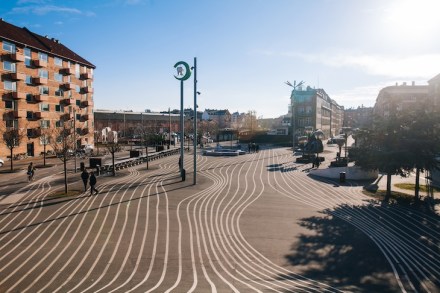
Nørrebro, Copenhagen’s hip, multicultural inner-city area, was crowned the world’s coolest neighbourhood by Time Out in 2021. Former residents include Denmark’s greatest living film star Mads Mikkelsen. If you’ve viewed Nordic noir TV dramas depicting the nexus of hip urbanism and the tribulations of mass migration, you’ll have seen plenty of Nørrebro (sometimes called ‘Nørrebronx’ in tribute to the formerly dangerous region of New York City).  Denmark has adopted a zero net-migration target The murder location in season two of The Killing? Nørrebro. Mohammed and Saif’s grocery shop in The Bridge? BlĂĽgĂĽrdsgade in Nørrebro. The cafĂŠ where fictional Danish Prime Minister Birgitte Nyborg meets her son in Borgen? Tjili Pop in Nørrebro.

How Ozempic fattened up Denmark’s economy

From our UK edition

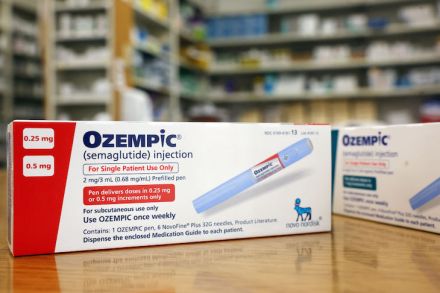
It’s official: weight-loss wonder drug Wegovy (also marketed as Ozempic) makes US celebrities shrink but makes the Danish economy grow. This week, the most amusing Oscars clickbait featured not the typical best- and worst-dressed actors, but instead celebrities who have experienced recent miraculous weight loss. The Daily Mail helpfully split this award category between those confirmed to have taken Wegovy, and others who have merely inexplicably and rapidly shrunk. Their collective weight loss is Denmark’s economic gain: this week, Denmark’s statistics agency confirmed the Danish economy grew 1.8 per cent in 2023 – but without the contribution of Wegovy’s owner, Novo Nordisk, it would instead have shrunk 0.1 per cent.

How Queen Margrethe made the Danish monarchy popular

From our UK edition

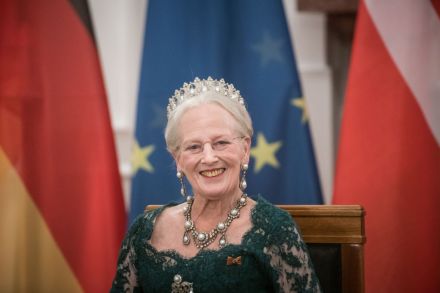
Danish New Year’s Eves are to be savoured partly for their predictability. First, on the main Danish State TV channel, the vintage British TV comedy Dinner for One, with Freddie Frinton and May Warden, is broadcast. Then there is the countdown to midnight on the face of Copenhagen’s city hall clock, followed by desultory fireworks let off by individuals in the square below (on a shoestring budget compared to the millions of pounds Sadiq Khan spends annually to promote himself in London). Cut to exultant choirs singing in the new year at a Danish Lutheran church. And, of course, earlier in the evening, the monarch’s address, given since 1972 by our brilliant Queen Margrethe II. Yet 31 December 2023 was not the New Year’s Eve Danes were expecting.

Where have Denmark’s bank robbers gone?

From our UK edition

Asked why he robbed banks for a living, the legendary American bank robber Willie Sutton allegedly replied, ‘because that’s where the money is’. Not any more, it isn’t.  In Denmark, where only twenty of the country’s 740 bank branches still hold cash in their vaults, 2022 was the first year without a bank robbery. There had been 222 as recently as 2002. Sutton, who said he robbed banks because ‘I was more alive when I was inside a bank, robbing it, than at any other time in my life’, would weep. Why have Danish bank robbers hung up their swag bags? The reason is Denmark’s rapid transition towards a cashless society, expedited by the pandemic. In the four years to 2021, the proportion of cash used for purchases nearly halved, from 23 percent to 12 percent.

Is this the reason America has had such a disastrous pandemic?

From our UK edition

If Francis Fukuyama was wrong about the end of history, he was right about one thing. Back in the scary days of March 2020 as the pandemic first hit the West, Fukuyama made one of the few predictions about Covid that turned out to be correct. It would be clear when the pandemic eventually subsided, he said, that 'the crucial determinant in performance will not be the type of regime, but the state’s capacity, and above all, trust in government'.  A study published this month in the Lancet backs up his theory. It suggests that countries whose citizens trust both their governments and each other have been the world’s big Covid winners. Why?

Why isn’t Britain adopting the Danish roadmap?

From our UK edition

Denmark’s greatest philosopher, Søren Kirkegaard, experienced only one epidemic in his lifetime, the cholera outbreak of 1853, which occurred after Denmark foolishly lifted the coastal quarantine that had saved the country from Europe’s miserable 19th century cholera pandemics. Yet he aptly sensed our response to indeterminate lockdowns: ‘the most painful state of being is remembering the future, particularly the one you'll never have’. Danes and Britons are keenly ‘remembering’ summer 2021 and are desperate for lockdown to be over.

The ECJ’s air pollution ruling against Britain is hard to swallow

From our UK edition

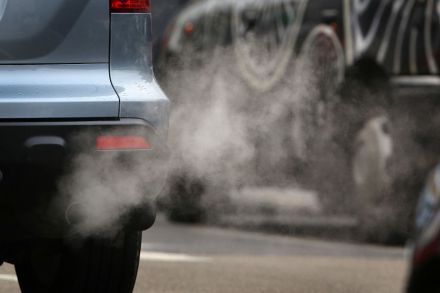
The European Court of Justice (ECJ) has ruled that the UK ‘systematically and persistently' breached EU limits for nitrogen dioxide (NOx) emissions in 16 areas including London, Manchester and Glasgow between 2010 and 2017. It's a judgement that means, despite Brexit, that a multi-million euro fine may be on its way. The UK is leaving the ECJ behind us; but as part of the withdrawal deal, we have agreed to respect its rulings on cases already in progress – and this one started in 2018. I’d be wholly in favour of the UK being fined gazillions for our historically appalling emissions – with one important caveat, which I’ll come to. After all, NOx emissions are estimated to have caused 23,500 deaths in one year in the UK.

The truth about the great diesel scandal has finally been said

From our UK edition

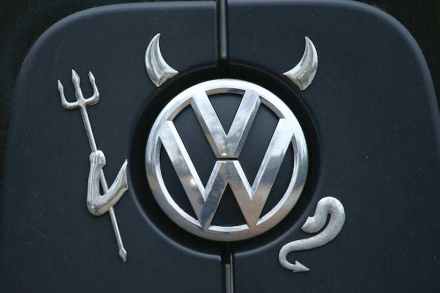
Professor Sir David King, the government’s former chief scientific adviser, has finally said something about the diesel emissions scandal that desperately needed to be said. 'These companies have blood on their hands – I say that without any doubt', he told the Daily Telegraph. 'The number of early fatalities in Britain is really very, very large due to NOx (nitrogen oxides) [in the] air, with governments across Europe encouraging diesel on the basis that the catalyst traps worked'. So now we know that policies which favoured diesel cars (mostly produced by EU carmakers) over their non-diesel competition (mostly produced by non-EU carmakers) are actually killing people. But how did we get to this sorry outcome?

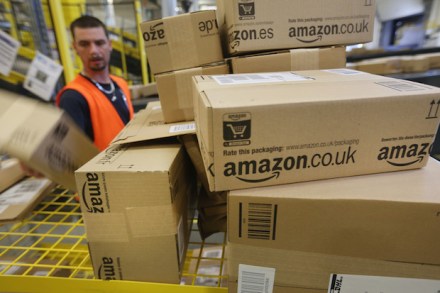
Amazon seems to be intent on utter domination in every market. Perhaps that’s its mistake

From our UK edition

Are the giant ‘Technology Trusts’ – Amazon, Apple, Facebook and Google – on the road to the monopolists’ breakers yard?  It’s received wisdom they soon will be. As Edward Luce writes in the FT, 'Big Tech is the new big tobacco in Washington. It is not a question of whether the regulatory backlash will come, but when and how.'  Delving into United States trust-busting history can help answer that question. Back in 1900, the Rockefellers pooled their copper mining interests with my (sadly, distant) cousin Adolph Lewisohn and a few others, founding a vehicle which would control an epic 70 percent of US copper output.

Hillary Clinton, and other unhealthy presidential candidates

From our UK edition

If Hillary Clinton is still unwell and proceeds to the Oval Office in November, she will not be its first incumbent suffering imperfect health.  She will not even be the first newly-elected president with pneumonia, nor the first requiring antihistamines to control their allergies.  HRC will be merely the latest in a very long line of US presidents who were much less healthy than they liked to let on. You might not even recall the first US president with pneumonia, because it killed him so very rapidly.  That was William Henry Harrison, who had difficulty adjusting to the hectic pace of the White House after his election in 1841.

In praise of the banger: Why it’s time for Brits to stop splashing out on new cars

From our UK edition

Last week, visiting friends in Italy, I had an epiphany in two car journeys. The first ride was in a spiffy-looking new Fiat 500 I’d rented. I’d been excited about driving this pretty update of a classic Italian design. Yet the brand new cinquecento was wheezy even as I drove it off the airport, and arthritic on the autostrada, petulantly ignoring my demands on the accelerator even as I bullied it with gearbox and clutch. Challenged by the steep ascent to a hilltop trattoria, it sputtered to a halt and demanded the eviction of two of my passengers (my hosts; a faux pas). This was a voyage of shattered dreams. Renting such an underpowered car had been a mistake; how could anyone dream of buying one?

Brexit could fire Denmark up to leave the EU – and reignite its smokehouses

From our UK edition

Denmark has been basking in a glorious June heatwave this past week, hastening the annual migration cycle.  ‘Summer Danes’ are a delicate subgenus of the species.  We roam the planet’s warmer regions every year between September and May, absenting ourselves from Nordic noir winters.  But mercury rising brings us home; and last week was the warmest early June week in recorded history. So I made my annual pilgrimage to our idyllic local fishing village, Gilleleje, at the northernmost tip of Zealand, a few dozen miles north of Copenhagen. Though still gorgeous, Gilleleje isn't what it used to be.