Andrew Cockburn

Andrew Cockburn is Washington editor of Harper’s Magazine.

What today’s Iran headlines don’t reveal about ‘Project Freedom’

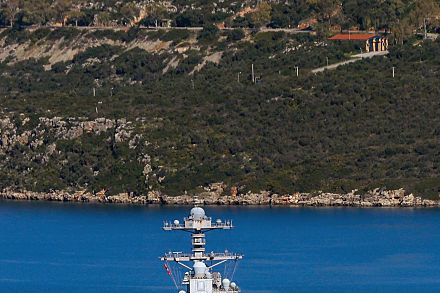
"Operation Epic Fury is concluded," declared Marco Rubio, holding his first White House press conference yesterday. The Secretary of State explained that the new mission – reopening the Strait of Hormuz – would essentially be a humanitarian operation, resulting in military exchanges only if US ships came under fire while clearing the passage of mines and other obstacles. Later, President Trump went further, saying that "Project Freedom" (the Hormuz operation) had been paused "to see whether or not" a "Complete and Final Agreement can be finalized and signed." “Project Freedom” is unworkable because the Navy cannot complete the de-mining operation Today, the markets have rebounded on news that US and Iranian officials are discussing "a memorandum of understanding.

Littoral

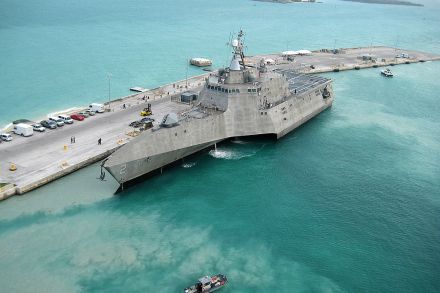
Little Crappy Ships make NACHO a safe bet

From our UK edition

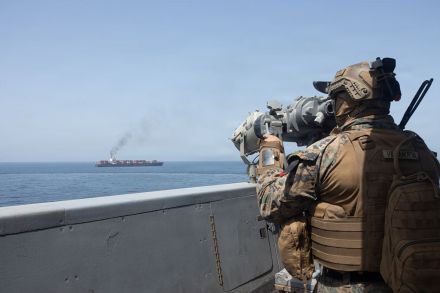
Trump Always Chickens Out, TACO, has been a profitable guideline for Wall Street traders over the course of his second term. Now however, according to commodities markets reporter Javier Blas, the safer bet has become NACHO, Not a Chance Hormuz Opens. This is sound advice, given the multiple ways that Iran controls passage, including the unknown number of sea mines reportedly planted by the Iranians in the Strait. The New York Times, has been dutifully reiterating the administration line that the witless Iranians have been unable to find their own mines. Now Trump has announced that the US Navy will “guide” traffic through the Gulf along lanes cleared of mines, while dealing “forcefully” with any Iranian attempts to interfere.

The age of the aircraft carrier is over

Ever since World War Two, America’s aircraft carrier fleets have served as imposing instruments of imperial power, roaming the oceans to cow recalcitrant nations into obedience. Favored by the Trump administration for this purpose, current experience indicates their day is done thanks to the proliferation of anti-ship missiles and the increasing ubiquity of drones. In America’s last Middle Eastern war but two, against the Yemeni Houthis in 2025, the carrier USS Harry S.Truman, complete with its attendant escorts, was driven into retreat, leaving antagonists in control of the Red Sea. On one occasion, the carrier’s desperate maneuver to avoid a Houthi drone caused an $80 million Hornet jet fighter to slide off the deck and topple into the sea.

Does Trump even know why he invaded Iran?

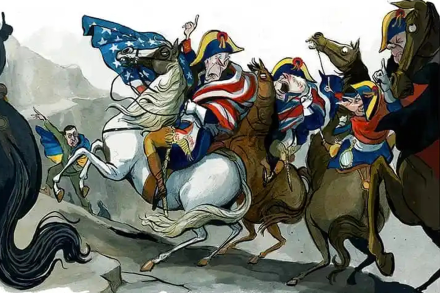
Napoleon is supposed to have defined strategy as ‘on s’engage, et puis on voit’, loosely translated as ‘get stuck in and then see what happens’. Donald Trump is not normally deemed Napoleonic, yet in his approach to strategy he appears to have taken the great general’s precept to heart, launching initiatives without much forethought regarding consequences or further steps in the light of unexpected developments. When the consequences turn out to be unwelcome, he swiftly readjusts, discarding the initial scheme in favour of an alternative course of action, as often as not headlong retreat. Thus the swingeing Liberation Day tariff regime unveiled with much fanfare in April 2025 was swiftly suspended in the face of crashing markets.

The defense industry and the US government are inextricably linked

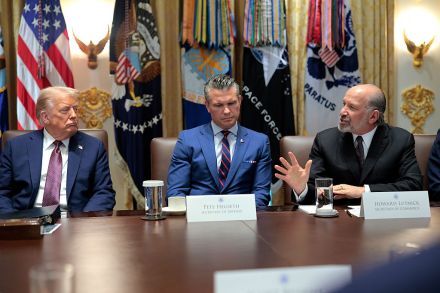
Fresh on the heels of news that the government will take a 10 percent stake in failing chip company Intel, Commerce Secretary Howard Lutnick has floated the possibility of commanding a direct stake in Lockheed Martin and other large defense corporations. Speaking on CNBC, and extolling the “exquisite” proficiency of Lockheed products, he claimed “my Secretary of Defense and Deputy Secretary of Defense are thinking about it.” The proposal obviously fulfills a key requirement, which is to appeal to the transactional proclivities of the boss. Donald Trump had greeted the Intel arrangement as a “good deal” criticized only by “stupid people,” and suggested that there will be more such investments.

defense

Will we stop Saudi Arabia developing a nuclear weapon?

Though clearly resolved to declare victory over Iran’s nuclear program and move on, Donald Trump has been beset this summer by assertions that the Iranian effort has not been “obliterated” after all and that the mullahs will be back at work in no time cranking out the requisite materials for a bomb. Therefore, according to some, Trump should bomb some more – or at least unleash Israel to do so. Whether or not Trump is pushed into further strikes, the argument over Iranian nuclear weapons capabilities will not go away.

Saudi Arabia

Is Anduril Industries building the future of warfare?

Defense contractors tend, on the whole, to be a pretty faceless crew, indistinguishable in their dark suits and hence little known to the world outside the military-industrial complex. Palmer Luckey, founder of Anduril Industries, strives to be different, invariably sporting a uniform of Hawaiian shirts, shorts and flip-flops – projecting an iconoclastic image attractive to venture-capital investors, somewhat in the manner of former crypto mogul Sam Bankman-Fried. He beguiles journalists with exciting monologues about the great things his vision can accomplish for US defense, making him, according to a glowing profile in the Financial Times, “arguably the most crucial figure bringing Silicon Valley to the front lines of American national security.

anduril palmer luckey

What do the Democrats believe in?

From our UK edition

29 min listen

Freddy Gray speaks to Aidan McLaughlin, the editor in chief of Mediaite, and Andrew Cockburn, the Washington editor of Harper's Magazine, as the Democratic National Convention draws to a close. Kamala Harris has had a dramatic rise to the top of the democratic ticket, but what does she really believe in? And is opposition to Donald Trump the only thing that unites the party?  Produced by Natasha Feroze and Patrick Gibbons.

How are Democrats reacting to the war in Israel?

From our UK edition

31 min listen

This week Freddy speaks to Andrew Cockburn, Washington editor of Harper's Magazine, about America's response to the developments in the Middle East. On the podcast they discuss the 'squad' (a section of Democrats who have been making pro-Palestinian noises), how America and Israel's surveillance system allowed the attack to happen, and the importance of the conflict ahead of next year's presidential election.

Why Haiti’s humanitarian disaster is a problem for Biden

With the end of Title 42, Donald Trump’s helpful bequest to Joe Biden of a means to exclude asylum-seekers on grounds of a health emergency that has long since passed, the administration is bracing for scenes of alien hordes thronging the border. But if there’s one picture the Biden administration least wants to see again, it’s that striking image from September 2021 of a mounted border patrolman appearing to whip a cowering Haitian migrant with his reins.  Then-White House press secretary Jen Psaki reported at the time that Biden found the photo “horrific” and “horrible,” adding “that’s not who the Biden administration is.” That same month, the US deported over 6,000 Haitians, flown with shackled hands and feet to a country many of them had left years before.

haiti

The real reason Zelensky wants the West’s jets

As the battlefront news for Ukraine turns grim, with even the New York Times conceding that “Ukrainians in [the] East” are “outnumbered and worn out,” the hope, as usual, is that a magic weapon will save the day. We have seen many such invocations in the last twelve months: Javelin anti-tank missiles, Stinger anti-aircraft missiles, M777 Howitzers, HIMARS long-range precision missile launchers, assorted Western tanks. All have been hailed in their time as potentially tipping the balance against Putin’s hordes. None have succeeded, or, in the case of as yet undelivered tanks, are likely to succeed, in altering the fundamental military balance in the war, though they contribute much to the balance sheets of the relevant Western arms corporations.

joe biden optimism jets

Why economic sanctions never work

From our UK edition

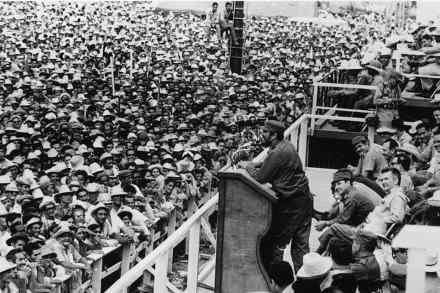
The purpose of economic sanctions was aptly summarised back in 1960 by a US State Department official in a secret memo on Cuban sanctions ‘to bring about hunger, desperation and overthrow of government.’ Twenty years later, the CIA concluded that ‘economic sanctions… have not met any of their objectives’. Worse, the measures strengthened the regime, providing Castro with ‘a scapegoat for all kinds of domestic problems’. That pattern has endured.

Can Joe Biden channel John F. Kennedy over Ukraine?

From our UK edition

​In a submission for the hotly contested prize for fatuous belligerence over Ukraine, Ben Wallace, UK secretary of state for defence, has spoken of a ‘whiff of Munich’ regarding negotiations to end the crisis. It may only be a matter of time before he, or some fellow tub-thumper, reaches into the historical locker and pulls out the Cuban Missile crisis of 1962 as an even more pertinent parallel. The story writes itself: just as the reckless Soviet leader Nikita Khrushchev brought the world to the brink of nuclear war by installing missiles in Cuba but was forced to withdraw thanks to unyielding resolve from President John F.

The Pentagon’s overreaction to China’s new weapon tests

From our UK edition

Back in the 1960s, a senior Pentagon official would greet incoming recruits to his department with a cheery announcement: ‘Welcome to the world of strategic analysis, where we program weapons that don’t work to meet threats that don’t exist.’ The recent media excitement over Chinese tests of a hypersonic nuclear weapon which, anonymous Pentagon officials told credulous reporters, overcomes even the ‘constraints of physics’ shows that not much has changed. Hypersonic missiles fly at five times or more the speed of sound.

How the US military got rich from Afghanistan

The departure of American troops from Afghanistan is being lamented (or hailed — see the Chinese press, passim) as a defeat. But this is a shortsighted attitude, at least from the point of view of the US military and the multitude of interested parties who feed at its trough. For them, the whole adventure has been a thumping success, as measured in the trillions of taxpayer dollars that have flowed through their budgets and profits over the two decades in which they successfully maintained the operation. The truth of this was forcefully brought home to me once by a friend of mine who, as a mid-level staffer, attended a conclave of senior generals discussing Donald Trump’s Afghan mini-surge back in 2018.

afghanistan military

Putin’s secret weapon? The F-35

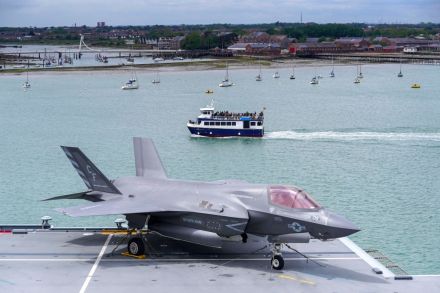
This week's Nato summit communiqué was predictably replete with bombast about the ever growing threat of Russian aggression — along with tentative references to the 'challenges' of China's 'growing influence’. More cheerfully, it greeted the news that '24 allies are spending over 20 percent of their defense expenditures on major equipment’, with confident hopes that newcomers would join this exclusive club in the near future. Given that for seven European Nato members the principal item of ‘major equipment’ in question is Lockheed's F-35 fighter, this is good news for the Lockheed Corporation, but not such glad tidings for countries contracted to buy the plane, who find their armed forces steadily reduced to a state of emasculated beggary as a result.

f-35 fail

Democrat blues: the leadership fears and loathes the grassroots

This article is in The Spectator’s March 2020 US edition. Subscribe here. ‘Today, I’m reflecting on the three years we’ve spent preparing for this moment, the changes we’ve made to make sure we are ready.’ That was Tom Perez, chair of the Democratic National Committee, on February 3, as Iowa Democrats prepared to state their choices in their state’s now infamous caucuses. Proclaiming that the Democratic party is ‘at its strongest when we empower the grassroots’, he expressed pride in ‘the historic reforms we passed to increase transparency and accessibility, and that the power is where it belongs: with our voters’.

democrats

Joe Biden’s fractious relationship with the truth

This article is in The Spectator’s inaugural US edition. Subscribe here to get yours. ‘He ran twice for president and lost when he didn’t have dementia,’ a veteran Democratic party operative remarked to me earlier in the year apropos Joe Biden. ‘So why should we think he’d win now he does have dementia?’ It was a fair question, to which the answer could be: (a) maybe he does have dementia, but so what? Ronald Reagan had dementia for at least part of his presidency (how early this manifested is open to argument — first or second term?

joe biden