Stalin

Chinese puzzle or matryoshka doll – the complexity of Sino-Russia relations

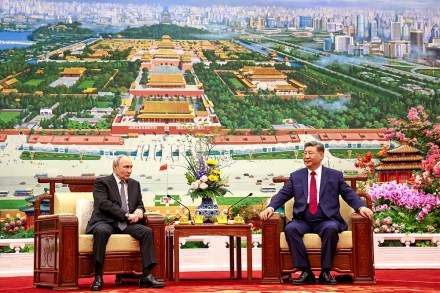
China and Russia are twins. Both are great Asian land empires; both are continental, multi-ethnic powers that expanded by pushing forward their borders rather than by crossing oceans; both have a deep tradition of autocracy that survives to this day; and both (more plausibly in China’s case) believe that their social contract, ideology and system of government is a universal one superior to all others. In Entangled Empires, the German historians Sören Urbansky and Martin Wagner explore the convoluted story of Russo-Chinese relations from the moment in the mid-17th century that roving Cossack bands bumped up against Siberian tribes who owed fealty to Beijing up to the latest performative amity between Vladimir Putin and Xi Jinping.

Another heroic freethinker is wiped from Russian history

It sometimes seems that those people chosen to be subjects for biographies are drawn from a strictly limited cast. Every few years, another book about Tolstoy, Dickens or some other great literary figure comes along to make library shelves groan further. At a recent talk given for a new biography of George Orwell, I asked the author why he had felt a need to add to the pile, given the plethora of perfectly good existing ones. ‘Because OUP commissioned me,’ was the answer. I didn’t buy the book. So how refreshing that Miranda Seymour should choose an absolute unknown to write about, whose life was genuinely interesting and surprising.

The typo that spelled death in the Soviet Union

‘As anyone who has gleefully spotted a typo in a prestigious publication, felt a flicker of schadenfreude at a pompous critic’s downfall, or secretly enjoyed a literary scandal knows, it is possible to love books while delighting in their disasters.’ The sentiment expressed in Rogues, Widows and Orphans is familiar to this reviewer. Rebecca Lee, who has been an editor for two decades, knows very well how words ‘get good’ (to quote the title of her earlier book) and what happens when they go wrong. Her new work ‘offers a lick of every flavour of ick lit’, leaving the reader craving more. Errors and omissions in print have consequences for everyone involved.

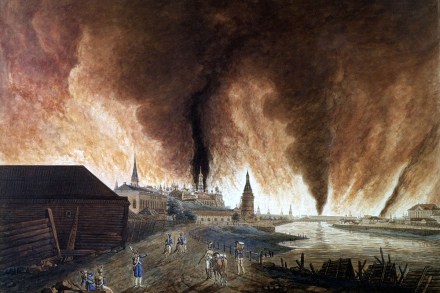
The history of Moscow was one of extreme violence from the start

‘Moscow is hard to love,’ Simon Morrison writes at the beginning of this engaging book, ‘but I love it.’ He deliberately sets out unconstrained by academic pieties, despite holding the post of Professor of Music and Slavic Languages and Literatures at Princeton University. He says he wrote A Kingdom and a Village ‘out of nostalgia for pre-oligarch decrepitude, when the world looked at Moscow with pity’. The Orthodox Church and the security services have been conjoined from the 16th century to the present The book is tripartite. The first part begins in 1147, when a prince named Yuri built a fort on a hill above a river. (When the authorities unveiled a monument to Yuri in 1954, Morrison reveals, a Muscovite yelled: ‘Doesn’t look like him.

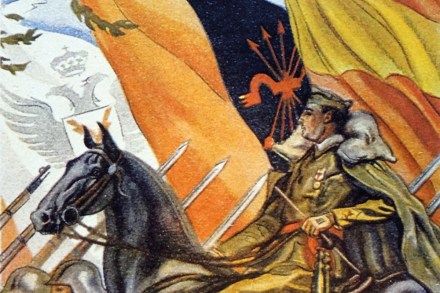
The diminutive dictator who ruled Spain with an iron fist

General Franco died on 20 November 1975, and with the 50th anniversary just passed, this biography – the first in years – of the man who ruled Spain with an iron fist for nearly four decades is timely, incisive and authoritative. Written by a former Madrid correspondent of the Economist, it’s also an up to date and highly accessible introduction to 20th-century Spanish history. Born in 1892 into a middle-class family, Francisco Franco shared a bedroom with his younger brother Ramon, who later won international fame as Europe’s ‘equivalent of Charles Lindbergh’. There were few signs, however, that eminence also awaited Francisco. A weedy child, who dutifully got by at school, he had a difficult relationship with his domineering Freemason father.

A rebellious childhood: Lowest Common Denominator, by Pirkko Saisio, reviewed

How do you dispose of 48 uniform volumes of the collected works of Lenin and Stalin? Pirkko Saisio and her mother hatch a plan. The books are ‘dumped into the trash bin’ by their apartment block, then coated with ‘a week’s worth of eggshells and fish guts and newspapers’. No one will find them, Mother insists. If anybody did, ‘there’s no way they’ll know they’re ours’. So Pirkko no longer has to hide the embarrassing tomes when friends drop round. Executed during true-believing Father’s absence, Lenin and Stalin’s stinky downfall is one of many bittersweet episodes that make Lowest Common Denominator such a piquant account of a childhood and a time.

Misfits unite: The Emperor of Gladness, by Ocean Vuong, reviewed

As a poet, Ocean Vuong has won every prize going. Now here’s The Emperor of Gladness, his second novel. His first, On Earth We’re Briefly Gorgeous, a coming-of-age story, is currently being filmed. This latest oneis wild, unwieldy and too long. It is fiction/autofiction mixed with 19th- and 20th-century warfare, plus contemporary angst and craziness. It has one preposterous scene that you wish were true, and never has a title been so misleading. It’s a book of moral, imaginative ideas with gripping stories, wonderful characters and writing that’s poetic and witty. I loved it. It opens with an introduction to the rural town of East Gladness, Connecticut, its citizens ‘not ambivalent to hope’.

Who started the Cold War?

Over a few short months after the defeat of Nazism in May 1945, the ‘valiant Russians’ who had fought alongside Britain and America had ‘transformed from gallant allies into barbarians at the gates of western civilisation’. So begins Vladislav Zubok’s thorough and timely study of the history of the Cold War – or, as he nearly entitled the book, the first Cold War. For the themes that underpinned and drove that decades-long global conflict – fear, honour and interest, in Thucydides’s formulation – are now very contemporary questions. ‘The world has become perilous again,’ writes Zubok, a Soviet-born historian who has spent three decades in the West: Diplomacy ceases to work; treaties are broken. International institutions, courts and norms cannot prevent conflicts.

The Russian spies hiding in plain sight

In June 2022, Vladimir Putin tipped up at a party at the headquarters of Russia’s foreign intelligence service, the SVR. This was to mark, of all things, the centenary of the country’s programme of deep-cover spies, who live for years abroad under elaborate false identities while passing secrets back to their masters at home. The weirdness of that espionage hoopla, just four months after the invasion of Ukraine, leaves one wondering what other bizarre birthday events Putin might have in his diary. The 85th anniversary of the assassination of Leon Trotsky, perhaps? Ah, you can imagine the banter. The cracker hats. The roll-out noisemakers.

Only Hitler could have brought the disparate Allies together

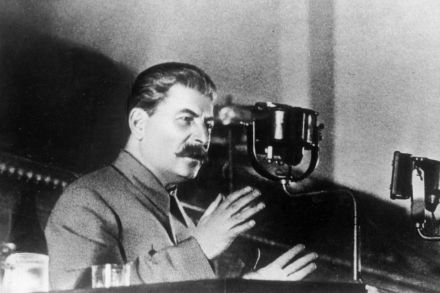
‘Allies,’ declared Stalin on 8 February 1945, the fifth day of the Yalta Conference, ‘should not deceive one another.’ In order to defeat Hitler, Mussolini and the Japanese, the British, Americans, Soviets, French and Chinese had indeed all worked closely together. But in his meticulous, scholarly and highly enjoyable history of the second world war, Tim Bouverie makes plain just what this entailed: a collaboration that was both deep and rivalrous, riven by secret deals, prejudice, changing loyalties and betrayals, conducted by people who at different times admired, feared and despised one another, while in public most often remaining models of civility.

The good soldier Maczek – a war hero betrayed

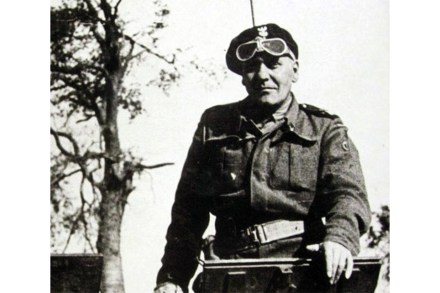
Who could forget the Polish squadrons in RAF Fighter Command when, in the 1969 film The Battle of Britain, a British squadron leader, frustrated by the excited radio chatter on being allowed into action at last, orders ‘Silence! In Polish!’ Or the Polish Parachute Brigade at Arnhem, whose commander, Stanislaw Sosabowski, played by Gene Hackman in A Bridge Too Far (1977), thinking the venture disastrous, growls ‘God Bless Field Marshal Montgomery’ as he jumps from his Dakota? Commander Eugeniusz Plawski, the captain of the Polish destroyer Piorun which first spotted the Bismarck and charged at her to draw fire, might be better known if he had featured in the 1960 film Sink the Bismarck! – but that wasn’t expedient, with the honours going instead to a Royal Navy officer.

Seeds of hope in the siege of Leningrad

The idea was revolutionary – yet there was something ancient at its heart. The scientist Nikolai Vavilov, arriving in Petrograd in 1921 to take the helm of the Bureau of Applied Botany and Plant Breeding, was on a sacred mission: to make, in his words, ‘a treasury of all known crops and plants’. The world’s first seed bank would shape the future of agriculture – possibly even eliminate failed harvests and hunger. This was gleaming scientific idealism, but there was also an element of the Old Testament Ark about it. Throughout the siege, the botanists had to find the superhuman strength not to eat the seeds themselves The vision would collide with the brute reality of Stalin’s own efforts to bend nature to his will, and then the nightmarish Nazi invasion of Russia in 1941.

Were the Arctic convoy sacrifices worth it?

You need only mild interest in the second world war to be aware of the Arctic convoys of 1941-45, escorted by the Royal Navy through savage weather and unimaginable cold to deliver supplies to Russia. Their purpose was to keep Russia in the war; the conditions were such that storms could last nine days, blowing ships hundreds of miles apart and playing havoc with communications. That’s not to mention enemy action by submarine, air attack and large surface raiders such as the Tirpitz and Scharnhorst. Some 4.5 million tons of aid were delivered at the expense of 119 ships and 2,763 lives lost.  Was it worth it? Opinion at the time was divided.

The journalist’s journalist: the irrepressible Claud Cockburn

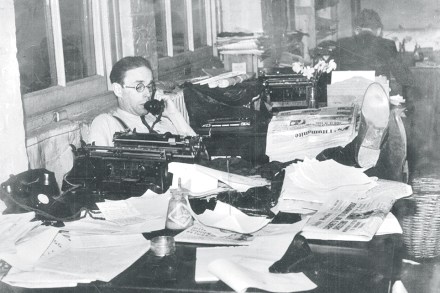
No one should be put off reading Patrick Cockburn’s remarkable biography of his father by its misleading subtitle. ‘Guerrilla journalism’ doesn’t do justice to its subject. The suggestion of irregular warfare from the left underrates Claud Cockburn’s great accomplishments in mainstream politics and journalism and doesn’t begin to embrace the romantic and daring complexity of his life and career. By late 1931, his eyewitness reporting at the start of the Great Depression convinced him that Marx was right Indeed, it is the journalist son’s signal achievement to have surmounted left-wing cliché and written a fascinating and subtle portrait of a paradoxical career.

What do we mean when we talk about freedom?

When the Yale historian and bestselling author Timothy Snyder was 14, his parents took him to Costa Rica, a country lauded for its conservation of natural resources that is rated freer and happier than the United States. He recalls feeling liberated and unfettered as he hiked in cloud forests with his brothers, seeing monkeys, sloths and spectacular birds. One day, a local friend led the boys on a mysterious quest to view something special; after walking for three hours through a maze of paths, they arrived at a cascade hiding a cave, where they could gaze out at the green world through curtains of falling water.

Max Jeffery, Melanie McDonagh, Matthew Parris, Iain MacGregor and Petronella Wyatt

28 min listen

On this week’s Spectator Out Loud: Max Jeffery reports on the rise of luxury watch thefts in London (1:18); Melanie McDonagh discusses the collapse of religion in Scotland (5:51); reflecting on the longevity of Diane Abbott and what her selection row means for Labour, Matthew Parris argues that shrewd plans need faultless execution (10:44); Iain MacGregor reviews Giles Milton’s book ‘The Stalin Affair’ (17:30); and, Petronella Wyatt ponders her lack of luck with love (21:49). Presented and produced by Patrick Gibbons.

China’s role in Soviet policy-making

Why should we want to read yet another thumping great book about the collapse of the Soviet empire? Sergey Radchenko attempts an answer in his well-constructed new work. Based on recently opened Soviet archives and on extensive work in the Chinese archives, it places particular weight on China’s role in Soviet policy-making. The details are colourful. It is fun to know that Mao Tse-Tung sent Stalin a present of spices, and that the mouse on which the Russians tested it promptly died. But the new material forces no major revision of previous interpretations. Perhaps the book is best seen as a meditation on the limitations of political power.

Four dangerous visionary writers

‘The production of souls is more important than the production of tanks... And therefore I raise my glass to you, writers, the engineers of the human soul.’ The quote is usually attributed to Stalin, though the phrase ‘engineers of human souls’ most likely came from someone else. Who’s to argue? Purges, executions, deportations – what’s a little light plagiarism in comparison? Whoever coined the phrase, it certainly struck a chord and indeed continues to ring various alarm bells whenever one comes across writers who deliberately set out to influence politics and ideas – and not just the big beasts, the Nobel Prize winners, say, or the shopfront-filling non-fiction authors hawking their wares, or the endless novelists with their little axes to grind.

In search of utopia: Chevengur, by Andrey Platonov, reviewed

It has been a long journey into the light for the greatest Russian modernist most people have probably never heard of: Andrey Platonov. Born in 1899 in Voronezh, he started professional life as a mechanic and land-reclamation engineer, making him one of those rare writers with an affinity for both people and machines. In the mid-1920s, he was branded an ‘anarchic’ spirit by Maxim Gorky, who nevertheless admired his work. His great early novels were openly critical of the Soviet policy of ‘total collectivisation’ – which, in Platonov’s nightmare scenarios, tends to collectivise people to death.

‘We cannot turn back’ from the League of Nations, said Woodrow Wilson – but did just that

It was a vision that President Woodrow Wilson could not resist. The Treaty of Versailles, and the League of Nations founded during the negotiations, were meant not just to end the first world war but all future wars by ensuring that a country taking up arms against one signatory would be treated as a belligerent by all the others. Wilson took his adviser Edward ‘Colonel’ House’s vision of a new world order and careered off with it. Against advice, Wilson attended Versailles in person and let none of his staff in during negotiations Against advice, he attended Versailles in person and let none of his staff in with him during the negotiations.