Russia

Do Russians support Putin’s war?

Everyone is calling the conflict in Ukraine Putin’s war and insisting that it has nothing to do with the Russians themselves. The nightmare would end – they tell us – if only Vladimir Putin were to disappear in a coup. They used to say the same thing not only about Adolf Hitler but also Benito Mussolini. Yet both the Fuhrer and the Duce would have been as powerless as the speakers at Hyde Park Corner if they had not enjoyed the willing consent of a critical mass of Germans and Italians.

The downfall of Russia’s oligarchs

The normal justification for sanctioning oligarchs is that doing so will cost them money, causing them to put pressure on Vladimir Putin so he stops killing Ukrainians. But this rests on the untested assumption that they are able to put pressure on him, and that is where the plan is currently falling down. Oligarchs are not what they used to be. Our idea of the Russian oligarch was born in the 1990s, when a tiny group of men emerged from the wreckage of the Soviet economy, using their nous to seize anything with real value.

Ukraine and the art of viral war

From our US edition

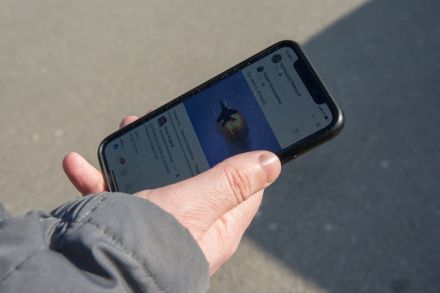
The sky is dull and gray, the sun obscured by clouds. The camera pans down past some desolate Soviet housing blocks. Some wintry, apocalyptic trees line a road. It could be Kyiv, it could be Bucharest, it could be any city where the residents liberally pepper their words with the -sky suffix. Suddenly, a flash of metal across the sky, a fighter plane roars into shot, then out again. The caption proudly declares, “This is the Ghost of Kyiv, the bravest fighter pilot in the Ukrainian Air Force. He has downed six Russian planes just today.” You don’t know that much about Ukrainian fighter pilots, but placed among a million other viral clips of heroic Ukrainians fighting against Goliath, you think it seems believable enough. You retweet it. You send it down group texts.

lindsey graham

Lindsey Graham unites the world

From our US edition

It was a beautiful moment of bipartisan unity when, left and right, American and European, young and old, united to call Lindsey Graham a moron. The South Carolina senator made headlines Thursday night after appearing on Sean Hannity’s show on Fox. He openly called for Vladimir Putin to be assassinated: How does this end? Somebody in Russia has to step up to the plate. Is there a Brutus in Russia? Is there more successful Col. Stauffenberg in the Russian military? The only way this ends, my friend, is for somebody in Russia to take this guy out! You would be doing your country a great service and the world a great service. Graham doubled down on his insanely dangerous comments on Twitter right after. Best to put this kind of stupidity in writing, in case there was any confusion.

european union

Ukraine won’t join the European Union any time soon 

From our US edition

In the wake of Russia’s aggression in Ukraine, President Volodymyr Zelensky has renewed his country’s wish to join the European Union. This week, the European Parliament approved Ukraine’s application to join the EU with an overwhelming majority. But Ukraine will not join the European Union this year, and possibly not even in the next five years to come. The reasons for that lie within the structure of the EU. The closening ties between Brussels and Kyiv had been the reason for Ukraine’s revolution back in 2014. Then Ukrainian president Viktor Yanukovych had rejected the EU-Ukraine association agreement, which tied both partners closer together, politically and economically.

The Russian army is failing – but not enough to lose the war

There have been three major surprises for military analysts since the Russian military invaded Ukraine. The first has been the extent of the difficulties faced by the Russian army in terms of logistics, coordination of forces, morale and mobility. The second has been the failure of the Russian air force to achieve air superiority over Ukrainian air defences, and to operate against Ukrainian ground forces at scale. The third has been the extraordinary unity and effectiveness of the Ukrainian resistance, which has significantly slowed the Russian advance in the north of Ukraine and inflicted major personnel and vehicle losses on Russian forces on all fronts.

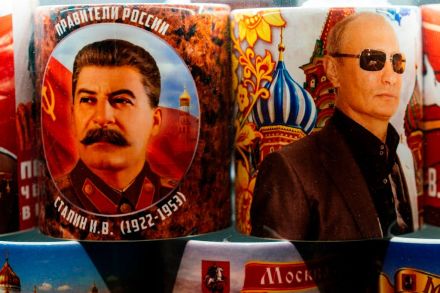
Putin’s Stalinist playbook

From our US edition

Vladimir Putin's actions have shocked many Western observers over the past few days. But his moves bear all the hallmarks of one of his predecessors: Joseph Stalin. Last Monday, the Russian Duma passed a direct appeal to Putin to recognize the Russian-controlled separatist states of Donetsk and Luhansk. The Russian president first said he would not immediately recognize the so-called republics. The reason for this was he wanted it to appear that when he finally did recognize them as independent republics, he was simply reacting to popular pressure from below. This is straight out of the Stalin playbook.

stalin

Russia’s war is not a Trump redux

From our US edition

I hate going back, again, to Orwell, but since the world is intent on using Nineteen Eighty-Four as an instructional guide, I have no choice. So proles, take note: this week's Two Minutes Hate will be split between Vladimir Putin and Donald Trump. They apparently share the goal of destroying American democracy via the invasion of Ukraine. Something very sinister has happened in the American mind-space over the last few days. Ukraine, a country of little importance to the United States, suddenly became the sole focus of most media-consuming Americans. This was constructed to appear organic, but it is impossible not to imagine guiding hands behind the shift of every single media outlet to a single story told in a single way.

trump-russia hoax

Tory pro-Russia lobbying group disbands

The Ukraine crisis has claimed another victim. The Westminster Russia Forum – previously called the Conservative Friends of Russia – has just announced it will be winding up its lobbying operation here in London. As recently as last week, the group were reported to be going ahead with a 'multilateral relations conference', scheduled for tomorrow. But now, following a wave of cancellations, boycotts and sanctions across London and the rest of the western world, the WRF has announced it will close. In a statement to his supporters on Tuesday, chairman Nicholas Cobb announced his resignation and that of the entire board.

America’s long history of sitting out Russian invasions

From our US edition

By now, my colleagues in the media may have convinced you that Russia’s invasion of Ukraine has been a “transformative” event, a challenge by a reactionary dictator to the “liberal international order,” if not an end to one historical epoch and the beginning of a new one. The world has turned upside down, nothing will again be the same, blah, blah, blah. When millennials make such apocalyptic observations, I can understand. Like Founding Father Thomas Paine, they assume that each day marks the “birthday of a new world.” But what about baby boomers like New York Times columnist Tom Friedman, who were in high school in 1956 during the so-called Hungarian Revolution, which was very much like what is happening in Ukraine today?

Macron appears unassailable

Emmanuel Macron, the President of France for whom few voters have expressed much affection, is suddenly the leader of a nation (and by dint of his presidency of the European Council, the EU) in a de facto state of economic war with Russia. He is wiping the floor with his opponents in the forthcoming presidential election, benefiting from the congruence of international events and his refusal to descend into the electoral arena. With 38 days to go before the first round of voting, the oxygen has been sucked out of the campaign. Macron’s efforts to diplomatically defuse the Ukraine crisis plainly failed – yet his approval ratings have skyrocketed, to over 50 per cent in one poll yesterday. His opposition is in danger of being reduced to a state of near irrelevance.

georgia

Pro-Ukraine citizens clash with authorities in Georgia

From our US edition

Tbilisi, Georgia After one week of fighting, Russia's invasion of Ukraine has already caused far-reaching geopolitical consequences, most of which point to gross miscalculation from the Kremlin. Following an arguably hesitant start, the Western world has united to provide Ukraine with lethal and non-lethal aid, as well as economic and humanitarian support. In addition, despite Putin ostensibly launching his war to prevent Ukraine from becoming a NATO member and curtail the alliance's easterly expansion, Kyiv's relations with the West have ironically become closer. Both Sweden and Finland appear to be closer than ever to considering joining NATO.

Could the Ukraine war save Taiwan?

The phrase wuxin gongzuo – ‘working with your mind on Ukraine’ – has been trending on Chinese social media network Weibo. Essentially what it means is ‘distraction from work because you’re obsessed with the war’. One blog that monitors the site, What’s on Weibo, reports that shortly after Russia’s invasion of Ukraine a page with updates on the conflict had received more than two billion views. Censorship, of course, limits what Chinese social media commentators can say, but there is clearly plenty of sympathy for the dying civilians and fleeing refugees.

What does it mean to go ‘full tonto’?

The wild one Defence Secretary Ben Wallace said that Vladimir Putin had gone ‘full tonto’. The word tonto is used in Spanish for ‘stupid’ or ‘foolish’, but one of its suggested origins has a meaning which would perhaps go down better with Putin himself. Tonto was used by Apache Indians as a term for the Western Apaches – mean ‘wild ones’. It went on to become the name of a native-American character in the 1930s radio show The Lone Ranger – later a TV series. The colour of money What will sanctions on the Russian economy mean?

The free world’s new reality

We are about to see brutality in Europe on a scale that will be almost beyond our comprehension. Russia is turning to increasingly indiscriminate bombardment of Ukraine to try to achieve its aims after the failure of its initial military strategy. Vladimir Putin’s invasion has shattered the old belief that the era of wars between European nation states was over because the consequences were simply too grim. The policy of sanctions as a deterrent failed. The assumptions that have driven European geopolitics for a generation are changing before our eyes. Nowhere is this shift more dramatic than in Germany. After reunification, the country’s defence spending plummeted and for decades subsequent governments rejected requests from allies to spend more on military.

My escape from Kiev

I spent my last night in Kiev in the ‘Presidential Suite’ of a city hotel – what used to be known as the underground car park. The general manager, a man whose name I never knew but who I hugged tightly before leaving, had promised to make it a shelter for guests who hadn’t checked out by the time it was clear that war was looming. We stayed there with his staff, their young children and elderly parents, their dogs and cats too. It is still the home of the BBC staff who remain in Kiev: the reporters and presenters you know as well as those whose roles are just as important but whose names you seldom hear.

Germany’s attitude to Russia is changing. Does it go far enough?

It’s hard to overstate the pace of the change now under way in Germany. A country that had been defined by its reluctance to deploy military force is now sending lethal weapons to Ukraine and promising €100 billion more in defence spending. The Nord Stream 2 pipeline, which would have ferried more Russian gas to Germany, has been abandoned. Germany has accepted Russia’s exclusion from the Swift banking system, in spite of the collateral economic damage. All of this adds up to the biggest policy shift that I can remember. Perhaps the most significant change is in the tone of German public debate. Take last weekend’s gathering of 100,000 on Berlin’s streets: it was not your usual anti-war protest.

What the right gets wrong about Putin

A fracture on the international right may seem small fry given everything that is going on right now. But it is worth loitering over. Because in recent years an interesting divide has grown among conservatives on both sides of the Atlantic. On one side are the Cold War warriors and their successors who have continued to view Vladimir Putin’s Russia as a strategic threat. Meanwhile, a new generation has arrived at a different view. While the West has deranged itself with assaults on its own history, on biology and much more, an assortment of conservatives have come to see Putin as some kind of counterweight. A bulwark – even an admirable corrective – to the madness of our own societies.