Bill Wirtz

Bill Wirtz is a journalist based in Luxembourg.

Emmanuel Macron’s fleeting win

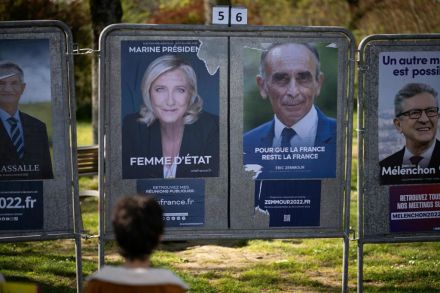
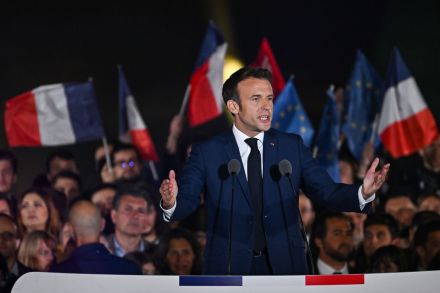
In France’s presidential runoff vote on Sunday, incumbent Emmanuel Macron defeated nationalist contender Marine Le Pen. This makes the center-left Macron the first president since 2002 to get a second term, though he is also one of the least popular politicians in French history. Compared to 2017, Macron dropped by more than seven percentage points from 66 percent to just 58 percent. In turn, contender Marine Le Pen upped her score from 34 percent to 41.5 percent. Meanwhile, the abstention rate is the highest it’s been in more than 50 years, at 28 percent, higher than in the runoff vote compared to the first round. This explains why Macron lost a lot of the lead he had five years ago, and why Le Pen’s National Rally party registered its strongest support to date.
Marine Le Pen takes on the king of Europe

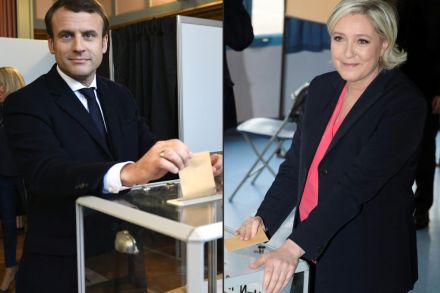
Last Sunday marked the beginning of the French presidential vote; the runoff election will take place on April 24, and incumbent president Emmanuel Macron winning again is no sure thing. If she plays her cards right, challenger Marine Le Pen has a legitimate shot at becoming the next president of France. Macron emerged victorious in the first round with 27 percent of the vote, followed by Le Pen with 23 percent. For the nationalist Le Pen, it is the second time she has qualified for the runoff, and thus the second time she is running against Macron. In 2017, she lost to Macron 66 percent to 33 percent, crushing once again the ambitions of her National Rally party. This year, however, will be a much closer call.

Is France set for another Le Pen-Macron showdown?

The first round of voting in the French presidential election will happen Sunday — and despite expectations of the last few years, the run-up appears increasingly anti-climactic. But not all is said and done in the campaign. Over the last few weeks, Emmanuel Macron has extended his lead in the opinion polls, bolstered by the uncertainty of the war in Ukraine. The most recent poll has Macron ahead at 28 percent, in front of far-right candidate Marine Le Pen at 23 percent, and far-left contender Jean-Luc Mélenchon. Far-right independent hopeful Éric Zemmour (9 percent) and Republican nominee Valérie Pécresse (8 percent) had experienced boosts in the campaign’s early stages, which have both since died down.

Angela Merkel’s legacy crumbles

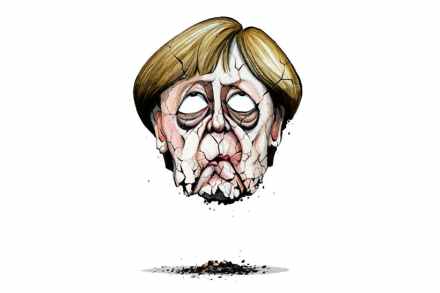
Angela Merkel is one of the most recognizable names in modern politics and probably the only German chancellor since post-war leader Konrad Adenauer that Americans will remember. Merkel was the leader of the center-right CDU party and head of the German government for a full 16 years, making her one of the longest-serving chancellors in German history as well as the first woman to hold the post. Now the full scale of her disastrous reign is becoming clear. Following the nuclear power plant incident at Fukushima in 2011, Merkel began Germany's "Energiewende" (energy shift), intending to phase out of all of Germany's nuclear plants in favor of renewables.

merkel retirement

What Erdogan is thinking about Ukraine

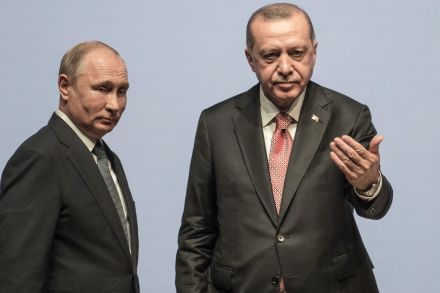
Turkey’s twentieth-century experience was very different from that of most European countries. During World War One, the late Ottoman Empire joined forces with Germany, a decision the sultans not only came to regret but that ultimately led to the fall of their monarchy. The Turkish War of Independence followed, touched off by Mustafa Kemal Atatürk, who transformed the Ottoman Empire into the secular Turkish Republic that still exists today. During World War Two, Turkey remained neutral, because of its previous experiences with joining a German military campaign, but also because it was in dire economic shape. In 1952, Turkey joined NATO, and has since been an ally of the West.

Ukraine won’t join the European Union any time soon 

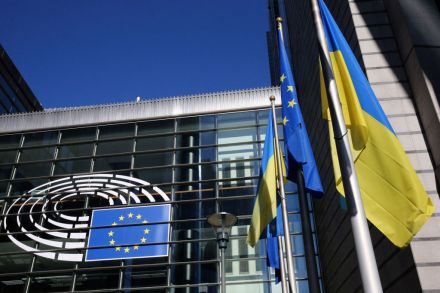
In the wake of Russia’s aggression in Ukraine, President Volodymyr Zelensky has renewed his country’s wish to join the European Union. This week, the European Parliament approved Ukraine’s application to join the EU with an overwhelming majority. But Ukraine will not join the European Union this year, and possibly not even in the next five years to come. The reasons for that lie within the structure of the EU. The closening ties between Brussels and Kyiv had been the reason for Ukraine’s revolution back in 2014. Then Ukrainian president Viktor Yanukovych had rejected the EU-Ukraine association agreement, which tied both partners closer together, politically and economically.

european union

The stakes for Europe are even higher than in 1938

Any analysis of the Ukraine situation risks lagging behind the news. As of the time this article was published, Russia had conquered the former Chernobyl nuclear power plant. Its forces are only about sixty miles away from Ukraine’s capital, Kyiv, which has already experienced shelling. Russians have also attempted to capture Antonov International Airport, just fifteen minutes away from the capital’s ring road. Meanwhile, European leaders are resorting to the usual responses: “concerned,” “strongly condemning." There is even a Twitter account mocking the EU’s approach to all major crises, called “Is EU Concerned?” The response to the invasion of Ukraine is not spared from similar mockery. Here in Europe, it feels like 1938 all over again.

Why does Germany look so weak on Russia?

A recent survey of Germans done by Forsa, amongst the most reputable polling institutions in that country, shows that at least in one way, the Cold War has not quite ended. A majority of West German respondents (52 percent) blame Russia for escalating the conflict with Ukraine, while a plurality of East German participants (43 percent) blame the United States. All respondents, meanwhile, plead for peace in the region and expressed fear of a looming war between Europe and Russia. The political repercussions here are very real. The generation born in the late 1960s, having been completely educated in the East German communist dictatorship, currently constitutes the most significant single voting block in the East.

Greta Thunberg didn’t win the German elections

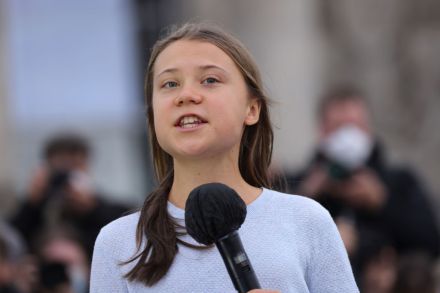
Greta Thunberg is back in business. Previously slowed down by European pandemic restrictions, the Fridays For Future movement has now hit the streets, starting in Berlin. 'We must not give up, there is no going back now,' Thunberg told thousands of local protesters. The appeals and influence of her movement have translated, at least somewhat, into a stronger climate-focused youth vote in last month's German elections. The Green party has made significant advances in Parliament, becoming one of the kingmakers in upcoming coalition talks. Yet Germany’s environmentalists aren’t the only ones who outperformed their previous results. The liberal-democrat FDP scored 23 percent of Germany’s first-time voters, the same amount as the Greens.

greta