Gabriel Gavin

Gabriel Gavin

Gabriel Gavin is a Moscow-based journalist covering central and eastern Europe.

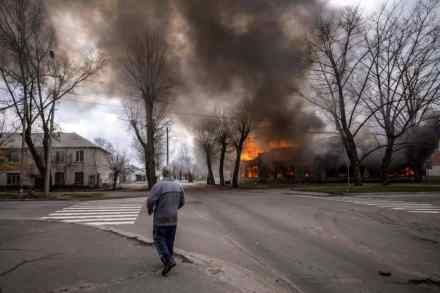
What happens when a state fails

From our UK edition

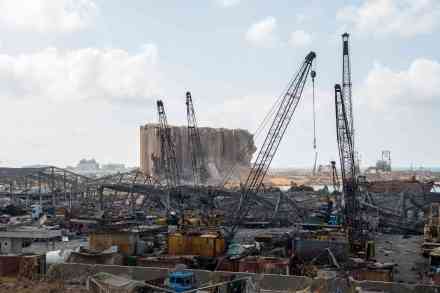
Beirut, Lebanon ‘You can still smell it in the wind,’ says Maria. She points out from the neon-lit bar along Beirut’s shorefront to the dark port area just across the road, where tangled metal and broken concrete jut out into the sky. Maria had been working from home on August 4, 2020, when 2,750 tonnes of ammonium nitrate left to rot in a warehouse on the harbour suddenly detonated, killing more than 200 people and levelling much of the Lebanese capital. Her usual daily drive back from her job as a reporter on a local newspaper – since shuttered due to lack of funding – took her along the seafront. Had she gone into the office that day, she’s convinced she would have died.
Turkey’s earthquake and the growing anger towards Erdogan

From our UK edition

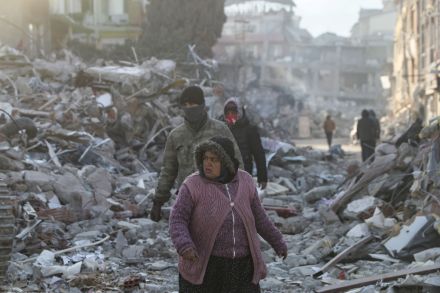
Istanbul, Turkey It’s Monday morning and Sam is late to work. The cafe he owns in a quiet residential area of Istanbul is already busy with émigré Russian IT workers tapping away at their laptops and small groups of locals scrolling through the news on their phones in silence. ‘This earthquake,’ he says, walking around the counter and burying his face in his hands. ‘My best friend from back home is trapped under the rubble.’ Sam is from a city near Gaziantep in the south of the country where, just hours earlier, a colossal 7.8 magnitude earthquake struck, destroying around 6,000 buildings across ten separate regions and leaving tens of thousands of people buried in the ruins of their own homes. At 4am, almost everyone was in bed and few had any chance to get out.

Has a Quran-burning protest ended Sweden’s Nato dream?

From our UK edition

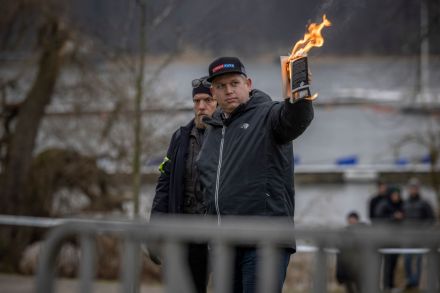
A crowd gathered outside Turkey’s embassy in Stockholm on Saturday afternoon to watch far-right politician Rasmus Paludan burn the Quran. Paludan, who leads the anti-Islam ‘Hard Line’ Danish party, was watched by dozens of photographers, police officers and bemused passers-by. Paludan is no stranger to controversy: he has previously been convicted under racism and defamation law. This latest stunt was called to show his party’s opposition to immigration and, he says, to stand up for free speech. Now, though, the stunt has become a diplomatic crisis for Sweden – and there are fears that its bid to join Nato could go up in smoke.

Russia’s military disaster could lead to famine in the Caucasus

From our UK edition

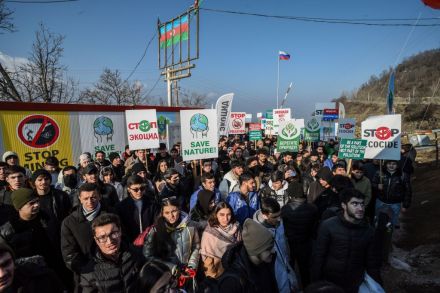
Two years ago, 13-year-old singer Maléna was rehearsing for Eurovision Junior when war broke out. While her rivals battled in Warsaw on stage, she stayed home in Armenia. Young men picked up AK-47s to fight against their Azerbaijani neighbours in the disputed region of Nagorno-Karabakh. More than 4,000 never returned. A year later, Maléna re-entered Eurovision Junior and won, giving her country the right to host Eurovision Junior in December 2022. Armenian authorities staged celebrations in the capital, Yerevan. Crowds huddled around outdoor televisions in the central square to watch the show. A group of young musicians from Nagorno-Karabakh joined the party in Yerevan, coming into the capital on the only road that links the capital to the breakaway region.

The year the Russian empire really collapsed

From our UK edition

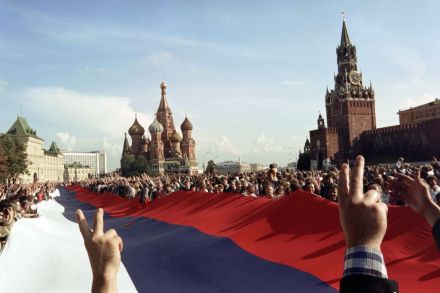
In a quiet suburb of Moscow, a twenty-minute metro ride from the Kremlin, is the Soviet Union’s answer to Disneyland. Between a budget supermarket and a teacher training college is the Exhibition of Achievements of National Economy, known to locals by its Russian-language acronym, VDNKh. The ‘Kh’ is said like you are clearing your throat. Every year, tens of thousands of visitors pass under the triumphal arch that stands at the entrance to the VDNKh. It looks like London’s Marble Arch and is topped with two gold-plated proletarians holding up a bundle of wheat. Past it, there’s stalls selling hot dogs, an imposing statue of Lenin, and a water fountain that plays out old Communist songs. The main attraction, though, is the horseshoe of pavilions around the park.

The Istanbul bombing will deepen Turkey’s rift with the West

From our UK edition

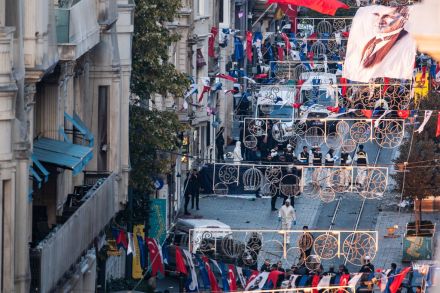
Istiklal Avenue is a picture of chaos at the best of times. Istanbul’s answer to Oxford Street, the bustling pedestrian area is lined with upmarket shops, cafes and overpriced kebab stands. Groups of men sit out till late at night on benches drinking tea and playing chess, while families pushing buggies jostle with tourists for ice cream and pastries. On Sunday, though, that chaos gave way to outright panic when an explosion ripped through the heart of the city, Europe’s largest and home to more than 15 million people. One shopper captured the moment the fireball erupted in the packed crowd, sending women and children scrambling to escape. Meanwhile, pictures taken from offices overlooking Istiklal show mangled bodies and scorched paving stones. https://youtube.

Tensions are growing between Turkey and Greece

From our UK edition

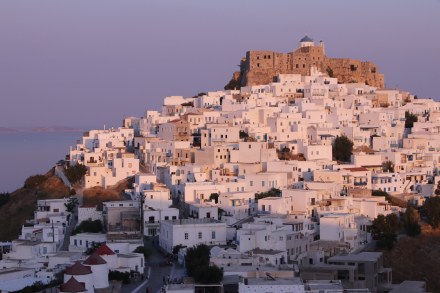
Tavernas along the beachfront are closing for the winter months. Staff stack chairs and fold red and white checkered tablecloths. It’s the end of the tourist season on the Greek island of Astypalaia. ‘This place is so peaceful right now,’ says Christina Koutsolioutsou, a local artist, ‘but we can’t help but think about what would happen if the worst comes to the worst.’ The Greek military is on high alert. They’re worried that Turkey, just 50 miles across the Aegean Sea, could launch an invasion. There have been months of rising tensions. Astypalaia and dozens of nearby islands are at the center of the dispute.  War between the two nations feels close. President Recep Tayyip Erdogan last month accused Greece of ‘occupying’ the Aegean islands.

Life among the Russian refuseniks

From our UK edition

Yerevan, Armenia It was getting dark outside Yerevan Airport when I arrived, but there were still a dozen flights from Russia yet to land. Groups of young men in their twenties and thirties were milling around the terminal building, stacking suitcases onto trolleys, changing money and working out what to do next. Armenia is one of the few countries they can still fly to since much of the western world closed its skies to Russian planes; it is almost alone in not requiring them to have visas. ‘I’m just here for a holiday,’ one weary traveller carrying four heavy bags insists, ‘everything is fine in Moscow.’ Others are more up front about their reasons for leaving.

On the front lines of Europe’s newest war

From our UK edition

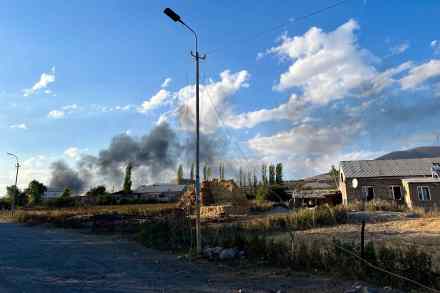
Sotk, Armenia A group of Armenian soldiers stand guard on the road towards the village. ‘It’s not safe to go ahead,’ one says, slinging his Kalashnikov across his shoulder and motioning for our van to pull over. ‘They were shelling the highway just 15 minutes ago.’ In the distance, there’s the unmistakable thunder of artillery and smoke rising from the side of the mountains. Beyond them is the border with Azerbaijan from where, in the early hours of Tuesday morning, a massive barrage was unleashed on towns and cities across Armenia. The offensive is the most dramatic escalation since the two former Soviet republics fought a brutal and bloody war two years ago, leaving more than 5,000 dead on both sides.

Why Erdogan is now happy to snub Putin

From our UK edition

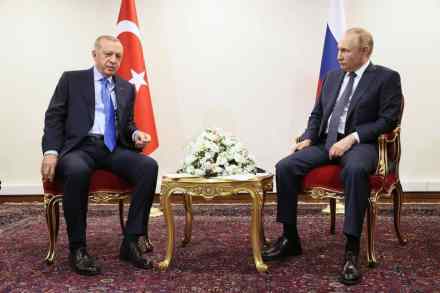
Vladimir Putin’s first trip outside the former Soviet Union since the start of the Ukraine war was supposed to project power. Instead the Russian president appears to have been left red-faced at a summit in Iran this week after his Turkish counterpart, Recep Tayyip Erdoğan, left him waiting in front of the TV cameras. For almost a minute, the man who started Europe’s bloodiest conflict in decades didn’t know where to look as he waited, shifting awkwardly on his feet and pressing his tongue into his cheek, with only the click of camera shutters cutting through the excruciating silence. https://www.youtube.com/watch?

After Boris

From our UK edition

30 min listen

In this week’s episode:After Boris, who's next?On the day the Prime Minister resigns, Katy Balls and James Forsyth discuss the aftermath of Boris Johnson’s premiership. Who might be the next Tory leader? (0.51).Also this week:Who are the wealthy Russian émigrés ready to fight in the war?Sean Thomas talks with Moscow-based journalist, Gabriel Gavin about the Russian émigrés who hate the war, but know they have to win it (19.56).And finally: Are 20mph speed limits causing more trouble than Brexit?Ysenda Maxtone Graham makes this case in the magazine this week. She's joined by Cllr Johnny Thalassites from the Kensington and Chelsea borough. (22.26)Hosted by Lara Prendergast & William MooreProduced by Natasha Feroze.

Turkey is heading for a Nato showdown

From our UK edition

‘Nato is surrounding Turkey,’ reads a banner flying in Istanbul’s Kadiköy district, on the Eastern side of the water that divides Europe from Asia. ‘Let’s get out of it.’ The sign, featuring American flags scattered across Europe and the Middle East, from Greece to Syria, has appeared across the country’s second city in the run-up to next year’s presidential and parliamentary votes. Paid for and promoted by the Patriotic party, a fringe left-wing nationalist group founded by several former Turkish army generals, it looks more like Russian propaganda than election literature, even recognising the independence of Abkhazia, a Moscow-backed breakaway region of Georgia.

Georgia’s unrequited love affair with Brussels is turning sour

From our UK edition

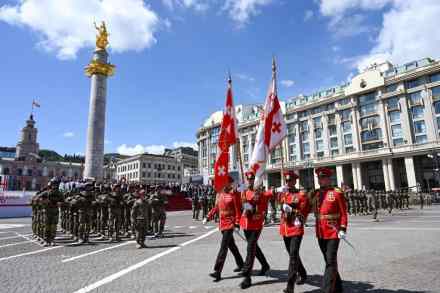
The streets of Tbilisi were closed off just a few weeks ago for Independence Day, celebrating the day Georgia formally left the Russian Empire. Thousands of local families lined the roads, cheering as columns of soldiers marched past, waving not just one flag, but three. As well as the red and white five-cross national banner, hundreds had brought out the gold and blue colours of Ukraine that have been put up everywhere across the capital, hanging from apartment building balconies and shopfronts as a sign of support since the start of the war. Given around a fifth of Georgia’s territory is still under occupation by Russian forces and their proxies following wars in Abkhazia and South Ossetia, many have firsthand experience of Moscow’s divide and conquer tactics.

The death of Russian diplomacy

From our UK edition

‘It's like being part of a cult,’ explains one student of Russia’s elite diplomatic academy. ‘They expect us to learn about diplomacy and the international order like nothing has changed, but everything has.’ Since it was founded by Joseph Stalin in 1944, the Moscow State Institute of International Relations has been a training ground for Russian ambassadors, Kremlin advisors and KGB spies. Now, though, discontent is stirring among the students. In the weeks following the invasion of Ukraine, Russia passed a series of laws that made discrediting the armed forces an offence, punishable with fines and even jail time.

Life in an age of hyperinflation

From our UK edition

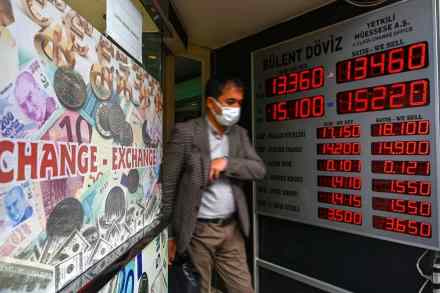
Istanbul, Turkey On Saturday mornings, Istanbul’s markets and greengrocers are packed with housewives in search of a bargain. Anxious women compare cabbages while chefs haggle over bunches of parsley, passing across thick wads of ten Lira notes – equivalent to about £5 a decade ago, now worth just 50 pence. The rising cost of food has become a national obsession in Turkey. Menemen, a staple breakfast dish of scrambled eggs with tomato, onion and fried green peppers, has seen the cost of its basic ingredients shoot up by 132 per cent in a year. Some shops in the big cities have invested in digital price tags – those little grey electronic screens you see in continental supermarkets that can be updated with the click of a mouse.

Could Russia invade Moldova?

From our UK edition

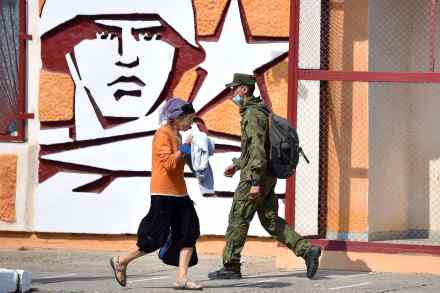
Chișinău, Moldova Armed soldiers patrol the checkpoints along the road into Transnistria, standing guard under a giant Soviet hammer and sickle flag. International law dictates that this thin tract of land along the border with Ukraine is part of Moldova. Yet it feels not just like a different country, but a different decade altogether. Held by Russian-backed separatists since the fall of communism, the region is locked in a bygone era, with its estimated 350,000 residents going about their lives in the shadow of Soviet-era concrete buildings and statues of Lenin. Around 1,500 Russian troops have been stationed here as part of a ‘peacekeeping mission’ since a brief war in the early 1990s, operating alongside the unrecognised region’s own conscript army.

Will Russia sink Le Pen?

From our UK edition

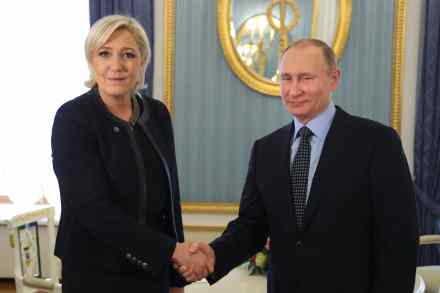
Paris, France Marine Le Pen has changed her image. Five years ago, the veteran far-right leader lost her second bid for the French presidency to a virtual newcomer, Emmanuel Macron, who swept into office with two-thirds of the vote. This time, she has assured her anxious supporters that things will be different. She has retired her policy of pulling out of the EU, calling instead for it to transform into a federation of sovereign states. She has also sought to assuage fears she would bring back the Franc. Gone too are calls to end all immigration to France – legal and illegal – preferring instead a comparatively more mellow line about how open borders are causing ‘anarchy‘.

The Northern Ireland elections could break the Union

From our UK edition

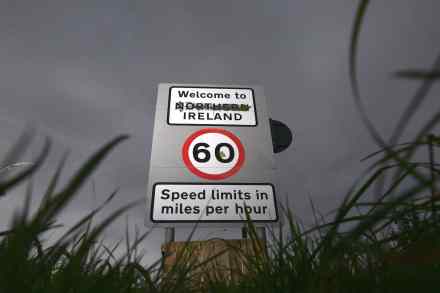
Belfast, Northern Ireland Phillip Brett was just nine years old the night a neighbour called to say his brother, Gavin, had been shot. Their father raced through the streets of their Belfast estate, arriving just in time to cradle his eldest son as he died. The teenager had been celebrating a friend’s birthday at the local Gaelic football club when he was gunned down by a loyalist gang looking for a Catholic to kill. But they got it wrong – Gavin had been raised Protestant, their parents having married across the sectarian lines that once divided Northern Ireland, with friends from all sides of the mixed community they lived in.

Why Russians celebrate monsters

From our UK edition

Nobody knows how long people live in Dzerzhinsk – life expectancy statistics for the Russian city, 250 miles east of Moscow, aren’t released to the public. In the days of the Soviet Union, it was closed to outsiders and left off official maps, but those in neighbouring Nizhny Novgorod joked that residents must have purple skin and second heads because of the emissions from its secretive chemical weapons plants. In recent years, however, it has gained notoriety as one of the most polluted places on the planet, with a study after the fall of the Iron Curtain reporting locals usually died in their mid-forties.

Is Putin using chemical weapons in Ukraine?

From our UK edition

In 1942, as Hitler’s forces swept through the Soviet Union, the Red Army went underground. Outside the city of Kerch in Crimea, 10,000 Russian, Belarusian and Ukrainian soldiers dug into the caves of a limestone quarry, ready to defend their position to the last man. Intent on flushing them out, the Nazis bombed them from the skies, flooded the complex and, according to testimony from survivors, pumped noxious gas into the tunnels. That siege, 80 years ago, would have been the last time that chemical weapons were used in combat in Europe. Until, perhaps, yesterday. Just over 100 miles north of Kerch, in the Ukrainian city of Mariupol, locals have reportedly complained of lung and ear problems after a drone dropped its payload overhead.