Russia

Africa’s lessons for Ukraine

Kenya During Russia’s invasion of Georgia in 2008 I got a close look at Moscow’s troops and their kit. These contractniki were a ragged bunch with rotting teeth, bad boots and homemade tattoos, using weapons and vehicles that seemed like hand-me-downs from a failed state in Africa. I had expected them to be much smarter. Recently my spooky friends told me that Putin’s military invading Ukraine was now a modernised, well-trained force. Instead it appears that Moscow’s generals have stolen the diesel, supplied the mechanised brigades with ageing knock-off Chinese tyres and sacked all the dentists.

Sanctions on Russia will shake the world economy for years

From our US edition

The war in Ukraine will dominate the news for the foreseeable future. But while the bombings will eventually cease, the economic consequences for the world have just begun. That’s because in an era of increasing interconnectedness, economic impacts don’t stop at borders. Most attention has been focused on the immediate impacts of sanctions on Russia, and they are significant. In the past, sanctions have proven largely ineffective at punishing foreign enemies. President Barack Obama, for example, failed to use them effectively in 2014 during the last Ukrainian-Russian dispute. But this time, the actions taken against Russia were largely unprecedented, with even traditionally neutral countries like Switzerland and Sweden calling for restrictions that are “as big as they can be.

economy

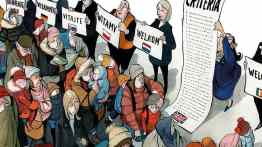
Why is Britain so useless at helping Ukrainian refugees?

Some MPs were in tears yesterday when President Volodymyr Zelensky addressed the House of Commons, and understandably so, given the soaring rhetoric and bravery of a man who knows his days on earth could be numbered.  One kind interpretation is that the caseworkers at the Home Office haven't been trained sufficiently for them to use the initiative But across Westminster over the past few days, MPs and their constituency teams have also been crying tears of frustration at the Home Office's handling of the visa application process. Not only has there been intense confusion between the different arms of government about how many routes there are for refugees – with Home Secretary Priti Patel claiming she was creating a third one, only for No.

British fighters in Ukraine are brave but misguided

The first British volunteers have arrived in Ukraine to ‘do their bit’ in thwarting the Russian invasion. According to reports in this morning’s newspapers, four serving soldiers are among them. Liz Truss must be heartened. The Foreign Secretary recently declared her support for any idealistic Briton wishing to head east to fight ‘for democracy’. Others were less enthusiastic at the prospect of Britons joining the war, notably Ben Wallace, the Defence Secretary, himself a former soldier. Also unenthused was Admiral Sir Tony Radakin, the chief of the defence staff, who cautioned: ‘This isn't really something that you want to rush to in terms of the sound of gunfire. This is about sensible support based in the UK.

Putin is bored

At the beginning of this year, Vladimir Putin was sitting comfortably in the Kremlin: his legacy so far a steady leader who had saved his people from the helter-skelter of robber capitalism in the 1990s and given them a modicum of stability and pride. He must have known that if he waged war on a country of 45 million brother Slavs, he risked losing it all. Liberty and life are now less certain. So why did he do it? Having spent four years in Moscow and more than two decades of Russia-watching, I have never believed that Putin was a chess grandmaster. While his apologists in the West lauded his cunning, I have always seen him as an improviser. Like the best at his favourite sport – judo – he prepares for combat, studies his opponent, and considers various eventualities.

Zelensky’s address was strange, but sensational

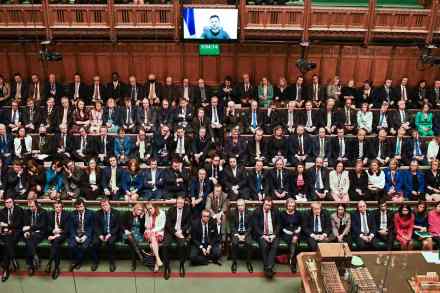
This afternoon, the Ukrainian President Volodymyr Zelensky addressed the House of Commons. A single flat-screen TV broadcast his speech to a packed chamber. Zelensky appeared in plain green fatigues next to Ukraine’s blue-and-yellow flag. He looked pale, tired, fearless and determined. Squads of foreign killers are roaming his homeland trying to find him. His words were spoken in English by a translator who probably had no advance sight of the text. The halting, ungrammatical phrases made the address strangely powerful. ‘I would like to tell you about the 13 days of war. The war that we did not start.’ Zelensky’s goal is simple. ‘We do not want to lose what is ours.

Republican hawks squawk at each other

From our US edition

Cockburn has never been much of a hawk, unless you count his begrudging deficit hawkery over the massive tab he ran up at his local bar. But many elected Republicans are very hawkish on foreign policy, supporting "peace through strength," as Ronald Reagan put it, as well as occasionally war through strength. So how are the GOP's highest-flying hawks handling Russia's invasion of Ukraine? Cockburn was surprised to find them divided. Nearly every Republican lawmaker (and Democrat for that matter) agrees that we need to throttle Russia with economic sanctions. It's on the question of whether the United States should implement a no-fly zone over Ukraine that the cracks begin to show.

Putin miscalculated. Let’s not do the same

Only the Russian people can decide how long Putin remains in the Kremlin, but the invasion of Ukraine will likely shorten his reign. In a lengthy interview when he assumed power 22 years ago, Putin answered a question about the forced resignation of German Chancellor Helmut Kohl by saying that ‘after 16 years, any people – including the stable Germans – get tired of a leader’. Russians have been more patient, but they didn’t expect to be led into pariah status. Change could come from within the political elite, many of whom are aware how counterproductive this war is for Russia, and some of whom feel shame for the suffering inflicted on Ukraine.

Russia’s war on Ukraine: the lessons so far

The sheer complexity – and horror – of Russia’s war on Ukraine makes it difficult to distil the essential points. To take only one example, the battlefront north of Kiev, where the Russian convoy is stalled, is significantly different from that along the Black Sea, where Russian forces from Crimea have made substantial progress. A third front, in the east, is consolidating in Russia’s favour, though the fight was much harder and longer than Moscow expected. Amid this complexity, it is important to summarise what we know so far: 1. Vladimir Putin’s decision to invade Ukraine appears to be the most catastrophic strategic mistake since the end of the Cold War and by far the most dangerous.

How close is Russia to collapse?

Russia is now as closed off to the world as the Soviet Union was before Mikhail Gorbachev made his first tentative steps towards glasnost more than 40 years ago. Pretty much all the progress that post-Soviet Russia had made towards becoming a 'normal' country has been reversed within the space of two weeks. Vladimir Putin’s presumed legacy – of stability, predictability and hugely improved living standards for the vast majority of Russians – is vanishing before their eyes. In recent days, Netflix and TikTok have joined what had already become a mass western boycott of Russia. American Express followed Barclaycard and Mastercard in leaving the Russian market.

Vladimir Putin, deep statist

From our US edition

Vladimir Putin's brutality in Ukraine is only going to get worse. The Ukrainians have fought valiantly, far better than anyone expected, but then that only means the Russians will have to up the slaughter in the coming days. As for Putin, he's reportedly fuming over his army's setbacks, threatening reprisals, while hunkering down in — I'm not making this up — his "mountain lair" deep in the Urals. If that makes Putin sound like a Bond villain, then that's just one of the many images of him that's emerged in recent days (the most popular is Putin as Hitler). The seemingly insane nature of his Ukraine invasion has left observers grasping for a reference point. Is Putin addled by cabin fever? Under the sway of extremists? Mentally ill? Who is this Vladimir Putin anyway?

propaganda

Watch out for Ukrainian social media propaganda

From our US edition

Stop me if you’ve heard the one about the Ukrainian beauty queen who volunteered to fight the invading Russian forces. If you’ve been on social media these past few weeks, you’ve probably seen the striking photo of the woman clad in tactical gear and holding a rifle. “We are living in a materiel world, and I’m a materiel girl,” the stunner says to the viewer through her steely glare. Or the one about the Japanese ambassador to Ukraine kitted out in his ancestor’s samurai gear and ready to defend his adopted homeland? You’ve surely heard about the “Ghost of Kyiv,” a Ukrainian fighter pilot who has been terrorizing his Russian counterparts, accomplishing the feat — uncommon in contemporary air combat — of becoming an ace.

Boris Johnson is operating in a new political reality

Boris Johnson is attempting to carve out a role for himself as the figure who can lead the West in its response to the invasion of Ukraine. Over the weekend, the Prime Minister penned an article for the New York Times – in which he set out his 'six-point plan' to defeat Putin. The points are closer to general principles than firm action. They include forming an 'international humanitarian coalition' for Ukraine and resisting Russia's 'creeping normalisation' of its actions.  Russia's decision to launch a full scale invasion of Ukraine has certainly stopped all talk of an imminent confidence vote in the Prime Minister over partygate Today Johnson will attempt to show he can be the mobiliser when he hosts Canadian Prime Minister Justin Trudeau and Dutch PM Mark Rutte.

Remember the Russians who will really suffer from sanctions

When I was in Russia in the very early 1990s, there was a generic figure who seemed to stand at the entrance to every metro station: an ancient babushka in a headscarf and tatty coat, face creased with age and weather, holding out a flimsy plastic bag rolled into a little triangle, begging for kopeks. The collapse of communism had its winners and its losers – and these old women were the losers. The 'social umbrella' of the necrotic Soviet system may have provided its pensioners with a miserable existence, as a local explained it to me, but it had provided; and these women, having discovered that freedom is all very well but you can’t buy food with it, could be forgiven for pining for Uncle Joe and his grey-hatted successors.

The trouble with boycotting Russian food

As the war in Ukraine worsens, the horrific scenes filling our screens have prompted a visceral reaction from the British public: 78 per cent now support Russian sanctions – up from 61 per cent in late February. Economic sanctions have undoubtedly hit the Kremlin’s spending power ­– and that’s to be encouraged. But what should we make of the broader cultural boycott of Russia that is rapidly gaining pace? So far, Britain's boycotts have had a peculiarly culinary bent. While Putin continues his onslaught, British shoppers have been encouraged to shun vodka and caviar. Lockdown revived an intense interest in cooking amongst the house-bound middle classes.

Putin will escalate

From our US edition

“I can’t tell you how this ends. All I can tell you is that I just hope millions of people don’t die, or that both Ukraine and Russia aren’t both destroyed in some way thanks to this war.” Those words, spoken to me on an encrypted smartphone app yesterday, are from a Ukrainian commander actively fighting Russian soldiers that I have known for years thanks to wargames I helped organize that brought together national experts, military officials, and policymakers from around the world.

Rise of the dimwit vodka dumpers

From our US edition

Passive news absorbers across the nation haven’t been able to avoid this thing they heard about some guy named Poutine, who’s, like, Russia’s Orange Man, invading Ukraine, which is, like, a peaceful society of hunter-gatherers and supermodels who live harmoniously with nature, talk to animals, and invented Democracy. This is a super important, really bad thing. The Crane people have been forced to take up arms and defend their way of life. Now, Americans across social media are also stepping up to let you Cranes know they’re paying attention, they care, and they’re ready to strike back at the invaders. Yellow and blue are this season’s black square.