Russia

Has Putin’s invasion changed the world order?

Is Russia’s invasion of Ukraine ‘a turning point in history’? Does it spell the end of the American era, and the beginning of a new Cold War between the West and a Russo-Chinese axis of authoritarians? Some invoke the image of 1939. After assuring the world that he was interested only in protecting his fellow Germans in the Sudetenland, Adolf Hitler annexed the rest of Czechoslovakia and then invaded Poland, setting off world war two. Are the Russians in the Donbass the modern equivalents of the Sudeten Germans? Where will Putin stop? Others draw an analogy to 1948 and Stalin’s drawing of an Iron Curtain across Eastern Europe, followed by the Sino-Soviet axis in Asia after the Communists took over China in 1949.

taiwan

What does Ukraine really mean for Taiwan?

From our US edition

No one should think that Vladimir Putin’s invasion of Ukraine means that Xi Jinping will decide to use force against Taiwan anytime soon, if ever. China is not Russia, nor Taiwan Ukraine. Yet neither should policymakers presume that Beijing will not be influenced by what happens on the other end of Eurasia. Washington must consider whether and how Putin’s aggression has raised the stakes in defending Taiwan from the People’s Republic of China. At the least, US strategists will seriously have to assess whether a global environment in which norms of international behavior are regressing may serve to spur Beijing to military action that once seemed unlikely.

The GOP isn’t quitting on Trump

From our US edition

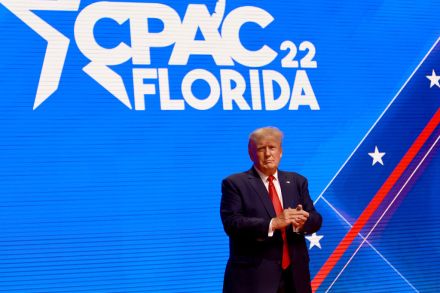
Will he or won't he? Americans tired of the rampant speculation are surely having a relief-filled two months. First Tampa Bay Buccaneers quarterback Tom Brady responded to a hasty ESPN report by announcing his retirement from the NFL. Then, former president Donald Trump told a roaring crowd at CPAC that he intends to run for America's highest office a third time. "We did it twice, and we’ll do it again,” Trump said. “We’re going to be doing it again." Trump's announcement is a gut punch for other 2024 contenders who secretly hoped he'd step back and play kingmaker.

Putin’s endgame is preserving ‘his’ Russia

From our US edition

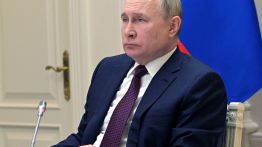
Vladimir Putin’s war in Ukraine does not appear to be going well, and the Russian economy is about to experience the full force of Western sanctions. American social media is already in a celebratory mood. But caution is in order — it’s never smart to underestimate your opponent. Putin was expecting sanctions, and he and his war planners could not have discounted Ukrainian resistance, even if they underestimated its intensity. Maybe they did expect the invasion to be a cakewalk and are taken aback by how difficult it’s proved to be in just these first few days. But as of now the invasion still seems to be on its timetable, and its military objectives are achievable. Russians are surrounding Kyiv.

Liz Truss is having a good war

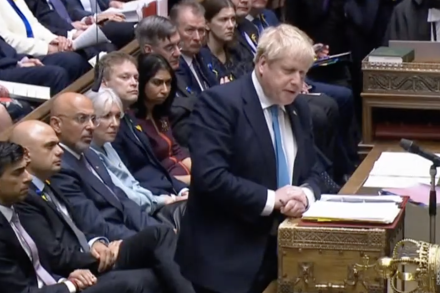
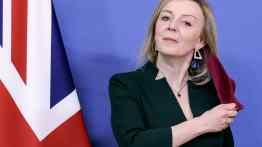
Liz Truss gave a striking statement in the Commons this afternoon on the action the government was taking to respond to the Russian invasion of Ukraine. It contrasted to the approach taken by some of her colleagues, because it contained a number of admissions about the impact of this action. For the first time, the Foreign Secretary stated that Britain would 'have to undergo some economic hardship as a result of our sanctions'. This has been implicit over the past few days, but Truss was the first to say it clearly. She added that 'our hardships are nothing compared to those endured by the people of Ukraine', and also warned that the war could last months or years.

‘Staying Switzerland’ on Ukraine is impossible

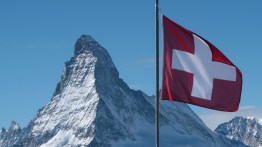
The striking thing about the financial sanctions on Russia is not their severity, but just how many countries are joining in the effort. Switzerland has today announced that it will adopt the EU sanctions on Russia, particularly significant because it has been the biggest recipient of private transfers by Russians in recent years. The fact that such a traditionally neutral country is imposing sanctions will deepen the wedge between Putin and the rest of the ruling elite. Meanwhile in Asia, Japan, South Korea and Singapore have signed on to the economic measures on Russia.

Will Britain welcome Ukrainian refugees?

Immigration used to be the most-discussed issue in British politics. It gets less attention these days, for reasons too varied to go into here. But even though some voters have been focused on other things, there have been significant changes. Some have been good. Others bad. And the bad ones are about to collide with the Ukrainian crisis. The positive bits of the immigration story have mainly been around regulated, economically-driven migration. Britain’s post-EU migration regime is, well, not as bad as it could have been. It’s not as easy as it was for EU nationals to come here to work, but it’s a bit easier for non-EU nationals to enter. The overall effect has been less a tightening of entry rules than a rebalancing.

takes

And now the dumbest takes about Ukraine

From our US edition

If hot takes brought peace, mankind would never know war again. At least, that’s the impression one is left with after spending time on Twitter during Russia’s horrific invasion of Ukraine. Some social media users seem to operate under the understanding that they are legally required to put their first — and often worst — opinions immediately onto the internet for all to see. Many of these tweets reflect the understandable human tendency to grasp at an explanation for terrible events. Laurie Garrett, a Pulitzer Prize-winning writer who is considered an oracle of sorts on the coronavirus pandemic, put forth an interesting theory. “It’s been suggested that #Putin isn’t thinking properly, perhaps due to long #COVID19,” she wrote.

Germany has rejected Merkel’s military legacy

‘We are witnessing a turning point… the world is not the same anymore,’ said German Chancellor Olaf Scholz yesterday in a speech that will be remembered as the country’s biggest military shift since 1945. Staring down the barrel of Putin’s gun, Scholz announced a massive and immediate cash injection for Germany’s armed forces as well as a long-term commitment to higher defence spending. Russia’s unprovoked attack on Ukraine has pulled Germany out of decades of complacency and misguided pacifism. Foreign minister Annalena Baerbock seemed genuinely shocked at the discrepancy between Putin’s words during her visit to Moscow last month and his actions in Ukraine. She has said she feels betrayed: ‘stone-cold lied to.

Has Putin resurrected the West?

I think Putin will have been surprised. I mean: I was surprised. Weren’t you? Not, necessarily, that Ukraine should have been resisting as valiantly as it is; nor even that Russia’s supposedly unstoppable war machine should have found itself out of petrol on a chilly highway from which the road signs have been removed. But surprised by the sheer force and volume and unanimity of the international cry of: no, this will not stand. That is one thing, even amid the unspeakable human cost of the war in Ukraine, to feel encouraged by. If this invasion does, as many have said, mark the beginning of a new order in European security and great power politics, isn’t it a sign that it could be a stronger, better, less complacent one?

Yes, Russia could use nuclear weapons

From our US edition

“Nuclear war is part of our strategic culture. Yes, we would start one if our homeland, our way of life, was threatened, absolutely. Why wouldn't we?” That’s what a retired Russian diplomat told me on the sidelines of a track-two dialogue between US, Russian and Chinese experts back in 2012. And to be honest, for several years, I didn’t believe him. I took his comments as bragging, atomic machismo, if you will. The context of the conversation was a response to a question to my Russian colleague on the subject of Moscow’s nuclear weapons doctrine and thinking. Russia for several years has believed in the concept of escalating nuclear tensions to deescalate tensions, or what defense scholars call “escalate to deescalate.

Biden’s confusion over sanctions

From our US edition

Russia’s military aggression against Ukraine requires a swift and effective Western response. But according to neoconservative and liberal internationalist pundits like columnist Walter Russell Mead, the invasion marks nothing less than an assault on the “world order” akin to Nazi aggression at the opening of World War II. “Not since Hitler attacked the Soviet Union in 1941 has a European leader committed an act of aggression as brutal or as nakedly cynical as Mr. Putin’s unprovoked attack on Ukraine,” Mead writes in the Wall Street Journal.

War in Ukraine has divided Putin’s court

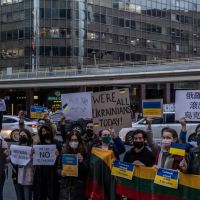
It is striking how little enthusiasm there is in Russia for Vladimir Putin’s war in Ukraine – but for some, it has become an opportunity to steal a march and curry favour with the boss. Thousands of Russians have been out on the streets protesting against the conflict, despite the heavy-handed and unstinting response of the security forces. Journalists and experts, sports stars and cultural icons have been making their opposition clear as well. Even those within the system, including senior diplomats and businesspeople, aren’t trying to hide how far they were blindsided by Putin’s decision to invade, and how little they appreciated it.

The end of the post-Cold War era

Russia’s invasion is not just an effort to retake what was once part of the Soviet Union. It is a push to use military force to overturn the post-Cold War settlement. In fact, the invasion cannot be understood without first understanding what that settlement looked like and why Russia wants to overturn it, despite the high costs. In the 1980s, when Vladimir Putin was a KGB agent in East Germany, the Soviet Union had become an arteriosclerotic state. It was unable to keep up with the US in high-technology arms, unable to legitimate its rule with Marxist-Leninist ideology, and unable to afford the cost of maintaining its empire in Eastern Europe.

A new Europe is emerging from this crisis

With every hour that Kiev holds out, the geopolitics of Europe changes more. Germany, which so values its prohibition on sending weapons into warzones, has just announced that it is sending 1,000 anti-tank weapons and 500 Stinger missiles to support the Ukrainian forces. I expect that defence spending will rise considerably in the coming years Germany is also allowing other Nato members to export arms with German-made parts to Ukraine — which will make a material difference to the supplies that the Ukrainian government receives. Yesterday evening, it was announced that Russian banks are going to be cut off from Swift.

China is tying itself in knots over Ukraine

A few hours after Vladimir Putin sent his tanks into Ukraine, Beijing announced that Russian wheat, previously barred because of fungal contamination, was now disease-free and large scale imports to China would begin. It was a first tangible sign of Xi Jinping’s willingness to cushion the blow of western sanctions on the Russian economy, and in effect underwrite Putin’s Ukrainian aggression. Russia is one of the world’s biggest wheat producers, and trade is highly vulnerable to western restrictions. China’s wheat lifeline followed the signing last month of a 30-year contract for Russia to supply natural gas to China’s north east and a commitment to far greater energy cooperation.

It’s time for Germany to stand up to Russia

In his novel The Loyal Subject, which appeared on the eve of the first world war, Heinrich Mann, the brother of Thomas, satirised Wilhelmine Germany as a hotbed of chauvinistic nationalism. The servile nationalism that Mann mocked could not be further from the ethos of the Federal Republic of Germany today. So pervasive is Germany’s eirenic disposition that on Thursday, as Russian president Vladimir Putin ravaged Ukraine, Lieutenant General Alfons Mais, the head of the German army, took the unusual step of turning to LinkedIn to ventilate his exasperation at the impotence of his own fighting forces. ‘In my 41st year of peace-time service, I would not have thought that I would have to experience a war,’ Mais stated on Thursday.

No, China isn’t about to invade Taiwan

From our US edition

I have a medal for winning the Cold War. And I'm not alone — they were awarded to all members of the military and federal civilian employees who served during the Cold War. That included me, at the tail end, with the State Department. Ironically, my so-called Cold War service was in Taiwan. I probably should return the thing; the Cold War is far from over. Part of the Cold War's real conclusion is playing out in Ukraine in real time. Is Taiwan, another hanging chad from that era, next? Is President Xi watching a weakened America giving in to the Russians and seeing his chance to seize Taiwan? Nope. Taiwan is not Ukraine is not Taiwan. The two places only exist next to each other in articles like this one because both are the results of American policy.

Europe’s ‘green’ transition put it at Russia’s mercy

From our US edition

Germany’s “halt” on the certification of the Nord Stream 2 pipeline on Tuesday is a classic case of too little, too late — a fact made all the more painfully clear in light of Russia’s invasion of Ukraine. Oil and gas still flow through Nord Stream 1 and many other Russian pipelines to Europe, and the continent has no choice but to keep importing the fossil fuels that finance Vladimir Putin’s offensive. We all saw this coming. Europe’s supposed “green” energy transition disregarded energy security and common sense, and Ukraine is now paying the price. The world will never tackle climate change if it's in a constant state of geopolitical energy insecurity, relying on authoritarian regimes like Russia and China to meet its basic needs.