Russia

The true meaning of ’emergency’

Much attention has been paid to how Vladimir Putin has learnt from western weakness over his earlier invasions, including into parts of Ukraine; less to what he has learnt from Syria. He discovered that the West did not have the stomach for intervention there, and found that his own country did. He re-established Russian power in the region, including the power to influence both sides. He seems also to have learnt from his success in backing Assad that extreme brutality is effective. After much initial outrage, the West forgot about its indignation, handing victory to the Assad regime. Putin probably believes the same will happen over Ukraine. Although western anguish in this case surely runs deeper than it did over Syria, Putin might be right.

In Lviv, the mood is inspiring – and fanatical

Lviv, Ukraine On the Ukrainian side of the Polish border, near a place called Shehyni where the refugee crisis is brewing, an old black man approaches us. ‘Am I in Moldova?’ he asks gently in French, pointing to the fence. ‘No,’ I tell him. ‘That’s Poland.’ Moldova is 250 miles away. The man shrugs and returns to the endless queue of North African migrants. Several young men tell us that they have been there for four days waiting to cross. The Ukrainian guards hold baseball bats. British newspapers have reported ‘shocking racism’ at the border, and of course it is easier to get into Poland if you have a European or British passport and white skin. Yet we witness no ill-behaviour. It’s just a very cruel situation.

Letters: How the UK should respond to Russia

Soft options Sir: In relation to strengthening the impact of the Russian sanctions package (‘Tsar Vladimir’, 26 February), please may I suggest three enhancements? Firstly, to encourage the UK’s Dependencies, such as the British Virgin Islands, to enforce the UK’s sanctions on the government target list of Russian criminals who are operating within their corporate jurisdiction. Secondly, to define the Russian state, Putin and his cronies, as terrorists, much like the members of Islamic State. This is appropriate and proportional, and will enable institutions in the City, and elsewhere, to treat the Russians accordingly.

Portrait of the week: Russia bombs Ukraine, MPs get a pay rise and Tube staff strike

Home Boris Johnson, the Prime Minister, said of the invasion of Ukraine by Russia: ‘Never in all my study or memory of politics and international affairs have I seen so clear a distinction between right and wrong, between good and evil, between light and dark.’ He was speaking during a visit to the Ukrainian Catholic cathedral in London, where he lit a candle. He flew off to visit Poland and Estonia, and said he was worried that Vladimir Putin might ‘Grozny-fy’ Kiev, which would be ‘an unalterable moral humanitarian catastrophe’. Britain might take in 200,000 Ukrainian refugees after a scheme for close relatives of Ukrainians in the UK was widened to include other family members.

The Russian Orthodox Church eyes Ukraine

From our US edition

Christopher Hitchens, allergic to the idea that secular regimes might actually be more bloodthirsty than religious ones, infamously attempted to blame the atrocities of Stalin’s Soviet Union on the Russian Orthodox Church. It was an end run worthy of the NFL Hall of Fame, and no doubt Hitch would be attempting something similar if he’d lived to see Russian President Vladimir Putin’s invasion of Ukraine. He would be wrong, but as Putin fights to reclaim territory once held by the Soviet and tsarist empires, the church appears to be conducting its own parallel campaign of spiritual imperialism. There’s little doubt Putin sees the church as politically useful.

The Ukraine invasion is nothing compared to Iraq

From our US edition

Of the war in Ukraine, New York Times columnist Thomas Friedman writes, “Our world is not going to be the same again because this war has no historical parallel.” In the very next sentence, he describes the Russian invasion of Ukraine as “a raw, eighteenth-century-style land grab by a superpower,” thereby acknowledging that the episode actually has innumerable historical parallels — just not ones that Friedman cares to acknowledge as legitimate. Friedman figures prominently among those claiming to have divined the essential character of the present age. His key finding: tech-driven globalization has rendered old-fashioned power politics obsolete. The rules of the game have changed irrevocably. Practically speaking, nations have no choice but to submit.

invasion iraq

Putin understands America’s moral decay

From our US edition

Last October, Vladimir Putin aired a speech to the Russian nation chiding the United States for its moral decay. He observed an America “blotting out whole pages” of its history, pursuing “reverse discrimination against the majority in the interests of minorities,” and renouncing time-honored values in an effort at “public renewal.” “It’s their right, but we are asking them to steer clear of our home,” he warned. “We have a different viewpoint.” This iteration of family values and conservative critique went barely noticed by the American press at the time.

Putin

Are Poles really against immigrants?

Krakow The invasion of Ukraine is being felt across Europe. Already hundreds of thousands of displaced Ukrainians are spilling out west in an attempt to flee Russian hostility. Polish society and the conservative government have, on the whole, supported refugees from their troubled eastern neighbour. A recent poll shows that 53 per cent of Poles are in favour of taking in Ukrainian war refugees, compared to just 22 per cent against. In Germany, attitudes are more divided, with 41 per cent supporting the settlement of Ukrainian refugees compared to 38 per cent against. More than half of the supporters of the radical right nationalist Confederation party, whose detractors have long accused it of being pro-Putin, are in favour of bringing Ukrainian refugees to Poland.

Starmer leads on oligarchs at a strange PMQs

Prime Minister's Questions today had a strange tonal disconnect to it. The session began with a standing ovation for the Ukrainian ambassador Vadym Prystaiko, who was watching from the gallery. Normally, clapping is banned in the Commons, but today the Speaker tore up protocol and MPs from across the house (and journalists, who by convention don't clap anything) stood up to applaud Prystaiko. It was a moving moment. But it was not matched by the tone of Boris Johnson, either in his exchanges with Keir Starmer or indeed in the rest of the session. The Labour leader chose to focus on sanctions and economic crime.

At least BP and Shell tried to teach Russia true capitalism

BP will offload the 20 per cent stake in Rosneft, the Kremlin-controlled energy giant, that is the residue of 25 years’ effort to teach true capitalism in Russia. Shell is ditching a deal with Gazprom, the other state oil and gas major, that includes participation in the stalled Nord Stream 2 gas pipeline to Europe and an LNG project at Sakhalin in the Russian far east. Western companies in many other sectors will abandon their footholds in Putin’s empire in the coming days. Russia’s one-generation dalliance with the western way of business – as opposed to lawless homegrown kleptocracy – is over. But just because Rosneft pays handsome dividends, let’s not vilify BP (or Shell) for trying.

No-fly zones won’t work, but what about aid to Ukraine?

Vladimir Putin's forces are encircling the cities of Kharkiv, Kherson and Mariupol, and a 40 mile-long convoy of Russian armoured vehicles is north of Kiev on the seventh day of fighting in Ukraine. The coming days are likely to see greater barbarity from the Russian President after he failed to get his way in the first few days of the invasion. Those days are also likely to stretch into weeks as Putin lays siege to these cities until they are his. The debate about what the West should be doing to needs to widen out So far the political debate in the West has been dominated by a noisy argument about a no-fly zone: something all leaders have repeatedly ruled out on the grounds that it would lead to direct combat between Nato and Russia.

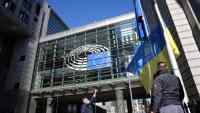
The Putin apologists of the European parliament

Never underestimate Vladimir Putin, and certainly never underestimate his advisers. Well before the first Russian rockets exploded in metropolitan Kiev, he had achieved a major foreign policy success by sabotaging the EU’s ability to present a united front against him. Ever since the days of Gerhard Schroeder, Russia had deftly weaponised German politicians’ commitment to Ostpolitik and German people’s desire for a comfortable bourgeois life, and this undoubtedly paid off. Before the invasion the EU’s paymaster was less than enthusiastic about sanctions when reminded of the sunk costs of Nord Stream 2 and its short-sighted but temporarily lucrative decision to depend both on Russian gas and the profits it made by selling the machinery to extract it.

The creeping authoritarianism of facial recognition

From our US edition

In an effort to lower crime rates, American law enforcement is pushing to combine facial recognition with expanded video surveillance. Politicians worried about their re-election chances due to a perceived crime wave see the expansion as necessary. It’s a sharp swing from 2019 and 2020, when cities like San Francisco and New Orleans were banning or at least enacting limits on facial recognition technology due to privacy concerns. Now, New Orleans plans to roll back its facial recognition prohibition. The Virginia State Senate gave law enforcement a late Valentine’s Day gift by passing a facial recognition expansion bill on February 15 — the Democrats who unanimously approved a ban on facial recognition last year suddenly changed their minds, as did five Republicans.

Putin is making the EU great again

From our US edition

The Europeans have been jolted awake from their deep Pax Americana slumber, when the continent was largely content to eat the spoils of economic prosperity and allow the United States to do the heavy lifting on all things security. And we have Vladimir Putin to thank for it. Russia’s nearly week-long invasion of Ukraine has shocked the conscience of many who believed Europe would never return to the dark days of large-scale land warfare.

Will grandees return their Russian honours?

It's five days since Vladimir Putin invaded Ukraine and there's no sign of the pressure letting up. Arms continue to be exported across Europe to aid Kiev's war effort while financial penalties continue to be applied. The latest sanctions levied against Russian banks include cutting them off from Visa and Mastercard, and consequently Apple Pay and Google Pay.   But it's not just in the military, diplomatic and economic spheres that Moscow is being targeted. Cultural boycotts threaten to wreck Russia's aspirations of World Cup glory in Qatar this summer while Eurovision has also announced the country will not be welcome. One act of individual defiance is the return of honours given by Putin's state to notable individuals across Europe.

Boris rules out a no-fly zone over Ukraine

What can the UK do to ensure that Vladimir Putin fails in Ukraine? The Prime Minister has just given a press conference in Poland with his counterpart Mateusz Morawiecki where he repeated his assertion that 'Putin will fail' and that the West 'will succeed in protecting and preserving a sovereign, independent and democratic Ukraine'. The Russian president, he said, had underestimated the resolve of Ukraine and its allies.

llya Kaminsky

Ilya Kaminsky’s poetry in a time of war

From our US edition

There is currently a poem going viral on Twitter. “We Lived Happily During the War” is by the Ukrainian-American poet Ilya Kaminsky, and it is the first poem of his prize-winning collection Deaf Republic (2019). It is easy to see why it feels particularly relevant: Kaminsky was born in the former Soviet city of Odessa, which is now under attack from Russia. The poem opens: “We Lived Happily During the War” And when they bombed other people’s houses, we protested but not enough, we opposed them but not enough. It is a heart-breaking meditation on the way normal life continues despite crises. The speaker describes how “I took a chair outside and watched the sun.” But he ends with a plea: “we (forgive us) / lived happily during the war.