Law

Dear Mary | 10 September 2015

Q. I regularly travel on the Ashford-St Pancras train and usually put my case on the seat next to me so that passengers can pass along the aisle, after which I put it down by my feet. Last week a woman pointed at it and said loudly, ‘Does that deserve a seat of its own?’ Irritated that my travel etiquette had been called into question, I sought out the woman and tried to explain. She was rude and dismissive, said ‘Have you made your point?’ and told me to go away. I did so, because her two young children and someone I took to be her mother were seated with her and, from their body language, had seen it all before. I fear she is a serial bossy-boots. I am a retired woman of a certain age, far from robust, and feel I was bullied.

The law must recognise that medicine isn’t perfect and neither are our doctors

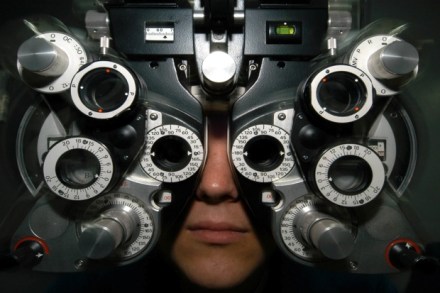
The liberal-left is very rapid to react when a terror suspect faces deportation or an extremist preacher is put under house-arrest. So why isn’t it on the streets chanting the name of Honey Rose? Ms Rose is an optometrist who appeared in court on Tuesday charged with manslaughter by gross negligence after allegedly failing to spot a condition known as papilloedema while examining an eight-year-old boy during a shift at Boots. Sadly, the boy later died. I always used to associate manslaughter with husbands who bashed their wives over the head and whom it couldn’t quite be proven that they had intended to kill them, or with muggers who assailed their victims solely with the intent of grabbing their wallet, not knowing that they had a heart condition.

Students against abortion

In November 2013, the campaign group Abortion Rights announced their first-ever student conference. It was, they explained, in response to ‘many student unions reporting increased anti-choice activity on campuses’. Societies such as Oxford Students for Life, which I’ve been part of for the last couple of years, don’t tend to think of themselves as ‘anti-choice’, but it’s true there are more of us around. The number of young people who are opposed to abortion, or at least worried about it, is growing — this despite the usual hostility from student unions. Just look at the results of a ComRes survey conducted in April.

Barometer | 9 July 2015

Naming terror David Cameron and the BBC argued over what to call the terror group most papers refer to as Isis — with the PM preferring Isil and the BBC continuing to call it Islamic State. Two more terror groups whose names caused problems in Britain: — The Red Army Faction was a German terror group which existed between 1970 and 1998, when it declared itself dissolved. Faced with the acronym RAF, British media preferred to call the group by its nickname the Baader-Meinhof Gang. — In the 1970s Italy was terrorised by a group known as the Red Brigades, most notorious for kidnapping and murdering the former prime minister Aldo Moro in 1978.

Laying down the law

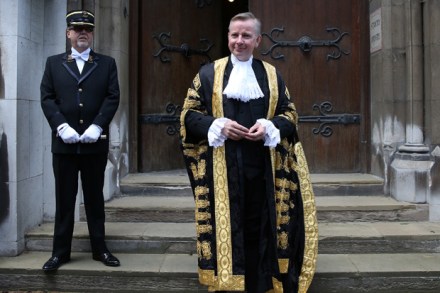
A great test of political leadership is how well you deal with vested interests on your own side. In his first speech as Lord Chancellor this week, Michael Gove has shown himself willing to tackle a profession which has long been comfortable with Conservative governments and whose reform, as a consequence, is long overdue. A legal system designed from scratch would not resemble what we have now. The only thing wrong with Michael Gove’s observation that Britain has a ‘two-nation’ justice system is that he should really have said three nations. Like the central London property market, the courts have become the preserve of the very rich and the very poor. The middle is excluded. The rich can afford to revel in the pantomime.

In praise of charming but pointless laws – like the Magna Carta

If you peer deep into the statute book, you will see that it is still an offence to enter parliament wearing armour. Even more amazing, it has been a crime since 1313. I mention this because the moment has again come for parliament to clear some of the redundant legislative noise off its books. This is a time-honoured process, and one that is becoming increasingly complex thanks to the sheer volume of modern legislation. A cursory wander through a suitable library will reveal that the statutes passed during the reigns of our medieval monarchs are neatly grouped together in a handful of surprisingly slim volumes. Back then, good rule was not measured by the legislative yard. But shuttle forward to today, and libraries need several shelves for every year of parliament’s output.

A warrant for exit

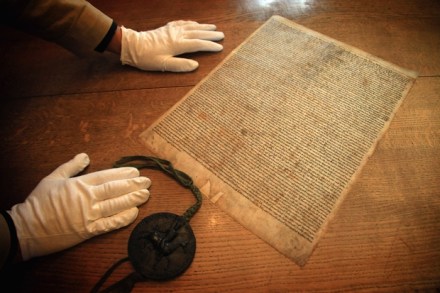
On the 12th of January, 500 of the great and good, or at any rate the well-heeled, sat down to a sumptuous dinner at the Guildhall at a cost of £500 a head. This was to celebrate the 800th anniversary of Magna Carta, widely regarded as one of the most important documents in the world. Celebrate? A funeral procession would have been more appropriate. Clause 38 provided, ‘No judicial officer shall initiate legal proceedings against anyone on his own mere say-so, without reliable witnesses brought for that purpose.’ Yet the British government had given away, less than three months earlier, the protection provided by that clause. It voluntarily ‘opted in’ to the European Arrest Warrant.

Drugs are a waste of time, but so is the Psychoactive Substances Bill

The Conservatives might have gone in softer than Russell Brand and the gang predicted, with very little change announced in the Queen’s Speech last week, but they didn’t fail to cause a stir. The proposed 'Psychoactive Substances Bill' is designed to provide a blanket ban on all substances which produce a mind-altering effect, with several allowances made for booze, fags and chocolate. The idea is to protect the public from any psychoactive substance that ‘affects the person’s mental functioning or emotional state’. Rather than replying to a public demand for such drastic measures, the Home Office stated the purpose of the bill was simply to 'protect hard-working citizens'.

The age of the Skype Dad

Could you be a useful and loving father to your children if you only ever saw them on a computer screen? Most of us would say no. So much of being a parent is about being physically there. It’s curious then that our courts seem to think the opposite — that a chat via Skype or on an iPad is all a father needs to bond with and care for his child. British judges, like American ones, have to deal with increasingly complicated custody cases every year. We travel more these days, and so we meet our partners abroad. When these marriages break up (as four in ten marriages do), a foreign wife often longs to take the kids and head back home.

My request to see my medical notes has sparked all-out panic at my GP surgery

My request to see my medical notes has sparked all-out panic at the GP surgery. ‘What do you mean?’ said the receptionist who answered the phone when I called to ask. She sounded even more furious than the time I rang to ask if I could possibly have an appointment to see the doctor. On that occasion, she affected her best Lady Bracknell impression, ‘The doctor? You want to see the doctor?’ ‘Well, yes if it isn’t too much trouble,’ I spluttered, as she audibly bashed her keyboard in ill-disguised rage at my impertinence. On this occasion, she was horribly icy. ‘I mean,’ I stammered, ‘I want to see my medical notes, as the law entitles me.’ ‘The law?’ she said. A haaaaaaaaaa-aaaaaaand-bag!

I don’t know why I’m against tax avoidance (and I bet you don’t either)

On the face of it, the moral case against tax avoidance seems pretty straightforward. If you’re a UK taxpayer and benefit from public goods and services, then you should pay your fair share of tax. If you’re paying less than that, then you’re a free rider. You’re breaking the social contract. But what do we mean by ‘fair share’? The standard defence of tax avoidance is that it’s perfectly legal — if it wasn’t, it would be tax evasion — and the social contract only obliges people to obey the law, not to pay more tax than they have to. To maintain that people are morally obliged to pay an additional amount of tax, over and above what they’re legally required to pay, is a tricky position to defend.

Ched Evans: law vs people power

‘This was the rule for men that Zeus established: whereas fish, beasts and birds eat each other, since there is no law among them, to men he gave law, which is by far the best thing’ (the Greek farmer-poet Hesiod, 7th century bc). Given the hostile reaction to the convicted rapist Ched Evans’s desire to return to his job as a footballer after serving his sentence, one wonders whether the fish, beasts and birds might not be on to something. The 4th century bc statesman and orator Demosthenes pursued Hesiod’s line of thought when he said, ‘If laws are abolished and each individual is given powers to do what he likes, not only does our communal organisation vanish but our very life would be in no way different from that of animals.

The Krays, Dennis Nilsen – and Chris Grayling: a conversation with Sir Ivan Lawrence QC

I’m standing with Sir Ivan Lawrence QC in a narrow room at his Pump Court chambers, examining an oil painting sent to him from Broadmoor by his former client the late Ronnie Kray. It is a naive depiction of a house in a field which could, at first glance, be the work of a worryingly forceful five-year-old. Yet what it lacks in finesse it makes up for in emphasis: the signature ‘R Kray’ is daubed in thumping capitals. Sir Ivan defended Kray in his 1969 murder trial over the killing of George Cornell in the Blind Beggar pub in Whitechapel. Cornell, a member of the rival Richardson gang, had reportedly called Ronnie ‘a fat poofter’. Although Ronnie was duly convicted and sentenced to life, he retained respect for his counsel.

By caving in to religious misogyny, ‘anti-racist’ liberals reveal their inner racist

Even by the low standards of English lawyers, the men and women who run the Law Society have behaved like shameless hypocrites. Instead of confining themselves to offering professional advice, they set themselves up as Islamic theologians. In a practice note on Sharia-compliant wills, the Law Society advised the 125,000 solicitors in England and Wales to urge Muslim clients to discriminate against women, non-Muslims, adopted and 'illegitimate' children. 'Male heirs [should] in most cases receive double the amount inherited by a female heir,' it said, and 'non-Muslims may not inherit at all'. Likewise 'illegitimate and adopted children are not Sharia heirs' and should not be left a penny.

Fort Lauderdale’s law against feeding the homeless still isn’t America’s dumbest

States of criminality A 90-year-old Florida man feeding the homeless was arrested under a Fort Lauderdale law which makes it illegal to share food with members of the public. Other laws from the 'Land of the Free': — In Indiana you can be arrested for statutory rape if you are caught driving a car with a passenger under the age of 18 who is not wearing socks and shoes. — In Ocean City it is illegal to eat while swimming in the sea. — In New York State it is illegal to walk around on a Sunday with an ice cream cone in your pocket. — In South Dakota it is illegal to lie down and fall asleep in a cheese factory. — In Oklahoma it is illegal to make an 'ugly face' at a dog. — In Nebraska it is illegal to sneeze in church.

Chris Grayling is an advertisement for a Labour government

Thank heavens for Ed Miliband, eh? The leader of the opposition remains the single most compelling reason to hope the Conservatives remain in power next May. A shame, then, that cabinet ministers appear determined to promote the idea that a Labour victory would be garlanded with at least some silver promise. Chiefly, Chris Grayling would no longer serve as Justice Secretary. This is a non-trivial consideration that's worth pondering before anyone casts their ballot next May. There is some dispute over whether the Conservative's plans to rewrite Britain's human rights legislation can really deliver all they promise; some disagreement, therefore, over whether they're as dangerous as they initially appear. Is a half-baked nonsense worse than a fully-baked monstrosity?

Are Syria air strikes legal? Perhaps not, but why should we care?

‘Are Syria air strikes legal?’ asks the BBC as part of its lead story today. The answer is that nobody is very sure. But personally I do wonder: ‘Why should we even care?’ Is beheading people legal? Is crucifying people illegal? Probably not. But aside from some vague talk last month of international inspectors being sent in to Isis-controlled areas to try to collate evidence of war-crimes I have seen very little written about this. This debate over the ‘legality’ of hitting Isis reminds me of nothing so much as the conversation after Osama bin Laden was shot in the head.

Muphry’s Law in action

'Ineptocracy: Noun - A government characterised by incompetent leaders.' A gloriously incompetent attack on incompetence, and the greatest example of Muphry's Law that Mr S has seen in a long time. The old adage is that if you write anything criticising someone else's writing, there will be a fault of some kind in what you have written. On this occasion, Mr S thinks, we can extend that to questions of competence. Do we think the veteran leader of the Labour firebrands perhaps meant 'passport'?

Boris Johnson is not fit to be leader of the Tory party, never mind Prime Minister

Awkward, especially here, I know, but there you have it. But, look, if any other high-profile politician were suggesting the burden of proof in criminal trials should be switched from the accuser to the accused we'd be properly - in both senses - appalled. So we should be appalled that Boris suggests in his Telegraph column today that anyone travelling to Iraq or Syria should be presumed a jihadist unless and until they can prove otherwise. The state will not have to make a case you convict you but you must make a case to avoid conviction. And, lo, centuries of criminal law are undone. Worse still, I think, Boris considers this 'a minor change' to the law. What, one wonders, would constitute a major change? 'It is hard' Boris laments, 'to press charges without evidence'.

The law’s an ass, obviously

‘The award of Queen’s Counsel is for excellence in advocacy in the higher courts,’ says the QC appointments page. ‘It is made to advocates who have rights of audience in the higher courts of England and Wales and have demonstrated the competencies in the Competency Framework to a standard of excellence.’ Given that, earlier today, the relatively unknown MP Jeremy Wright, who was recently appointed Attorney General, was sworn in as QC, Mr S suggests adding a few more lines to that description.