Law

Seduction and the Boris bus

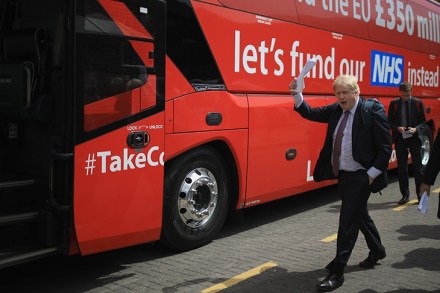
Boris Johnson is to be tried at the Crown Court on the grounds that, during the 2016 Brexit referendum campaign, he crucially affected the referendum result by arguing that the UK paid the EU £350 million a week, ignoring another interpretation that the sum was only £250 million a week. Ancient Greeks knew all about advocating one side of an issue, as a law suit exemplifies. Euphiletus was the defendant in a homicide case brought against him by the relatives of one Eratosthenes. The relatives claimed that Euphiletus had murdered Eratosthenes after luring, or even forcing, him into his house as part of a premeditated plan. But Euphiletus’s defence (we do not possess the prosecution’s case) was that Eratosthenes had been seducing his wife.

By George

At last a podcast that takes the medium to its limit, created by someone who loves listening, understands how it can take the imagination to places visual images alone cannot, and wants to make use of this, not just for fun but with real intent. Have You Heard George’s Podcast? was last week awarded UK Podcast of the Year, and rightly so. I’ve never heard anything quite like it. At times George’s playfulness and gift for exploring the full meaning of the words he uses reminded me of early Tom Stoppard; other episodes were more like a Radio 1Xtra documentary about life on the street or the rise of drill. Each of the eight episodes tackles different themes, from the riots of 2011 to the Grenfell fire via an ideas war inside George’s head.

A bitter pill

I have been a defence lawyer for more than 25 years. I have defended clients charged with almost every crime there is. I have argued against convictions for robbery, rape, sexual assault, murder, manslaughter, copyright theft, perverting the course of justice, perjury, serious fraud, international illegal fishing, money laundering, causing death by dangerous driving, grievous bodily harm, blackmail… and the list goes on. Of all the crimes and misdemeanours I have seen, all the improbable tales and shocking lies in the witness box, what sticks with me most about the criminal justice system is the utter simplicity of the one thing that lies behind almost all of it. People want to take drugs and nothing will stop them.

Shamima Begum has a right to legal aid

Speaking on the radio this morning, the Foreign Secretary refused the temptation to condemn the Legal Aid Authority's grant of legal aid to Shamima Begum. He was right to do so. We give legal aid to those accused of murder and genocide. This is not because we have sympathy with murderers and genocidal killers but because it is overwhelmingly in the public interest that criminal trials are fair, and that people are punished only when their guilt has been fairly established in accordance with the law. Once a crime passes a certain level of seriousness, legal aid for those without the means to pay is automatic. It would be absurd if it were denied to those accused of the most serious offences, or against whom there was particularly strong evidence.

The Spectator Podcast: how Brexit descended into chaos

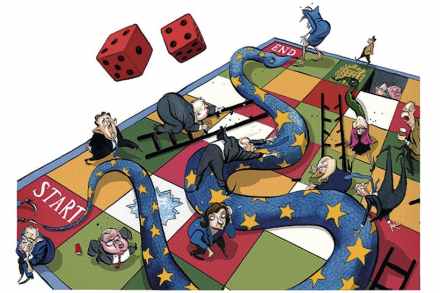
This week we reached a new level of chaos in British politics. With parliament voting down all indicatives vote options, as well as May’s deal for the third time, the Prime Minister was running out of moves. So that's how we find ourselves here: with a Prime Minister reaching out to Jeremy Corbyn. James Forsyth writes in this week’s cover article that the Iraq War, the financial crash, and the expenses scandal may have damaged the public’s faith in their politicians, but the impact of a failure to deliver Brexit will be even worse. The entire process has created an impression of a self-serving enclave of politicians who are interested only in ideological purity – not the interests of the people.

Blurred lines | 4 April 2019

It is late, on a wet Tuesday evening in November, and I am driving home, listening to endless talk of Brexit on the radio. The phone rings in the car and cuts off the news. It’s an unknown mobile number; I press the answer button on the steering wheel. A moment’s hesitation and a woman’s voice comes over the speakers; middle-aged, well-spoken. She’s almost in tears and struggles to get her words out. ‘You don’t know me, and I’m so sorry to ring you this late. I got your number from my lawyer friend Stuart, and he told me you are the person I need to call. It’s about my son. He’s in a police station now. He’s been arrested for rape.’ I have been a criminal barrister for more than 25 years and a QC since 2013.

The real RBG

Ruth Bader Ginsburg is too ill to sit on the Supreme Court. When she saw On the Basis of Sex, a hagiography written by her nephew, she must have thought she had already gone to heaven. Directed by Mimi Leder to the highest TV-movie standards, this prequel to the obsequious 2018 documentary RBG will appeal to all purchasers of the grovelling 2015 biography, Notorious RBG. The real RBG totters across the last frames of this movie like the laminated ghost of American liberalism. Such idolatry diminishes Bader Ginsburg’s achievement, the unpicking in 1971 of the first of 178 laws discriminating against you-know-who on the basis of you-know-what. But this film crackles with nylon, self-regard, and unearned privilege. It’s the 1950s.

There’s no presumption of innocence for the wrongly imprisoned

The greatest criminal barrister of all time, Sir Edward Marshall Hall KC, who probably saved more men and women from the gallows than anyone in English history, was famous for his 'scales of justice' speech, in which, as described in Sally Smith's magnificent biography, he would stand for several long minutes with his arms outstretched at shoulder height and say: ‘It may appear that the scales of justice are first weighed on one side in favour of the prisoner and then on the other against the prisoner. As counsel on either side puts the evidence in the scales, I can call to my fancy a great statue of Justice holding the two scales with equally honest hands.

The traditionalist worldview has gone from orthodoxy to punchline to nostalgia to ‘hate’ in a startlingly short space of time

I recently rewatched The Birdcage, Mike Nichols’ pleasing farce of clashing values, a Hollywood adaption of Jean Poiret’s lighter, sharper 1973 play La Cage aux Folles. The son of drag club owner Armand Goldman (a dialled-up Robin Williams) has proposed to the daughter of Republican Senator Kevin Keeley (Gene Hackman, almost camper than Williams) and tries to arrange a dinner for the two families without Keeley discovering that Armand is gay. In the end, everyone learns to get along and some riotous slapstick disrupts the mildly preachy tone. It’s not Nichols’ best work but in 1996 it was a step up from the Four Fucks and a Funeral movies that monopolised queer cinema.

The £1 billion IT project that has caused chaos in the criminal courts

Between 2010 and 2015 the Ministry of Justice endured amongst the deepest cuts of any government department. Yet even as over £2 billion was saved by closing courts, cutting legal aid and allowing prisons to become dangerous, rat-infested, spice-ridden hell-holes, the Ministry of Justice was powering ahead with a £1 billion plan to 'digitise' the court system. Unlike the cockroaches crawling along the prison landings it sounded slick and modern, and to some extent it was successful. Most criminal case 'papers' are now accessible electronically, a considerable convenience to all concerned, though advocates usually prefer – at their own expense - to print out hard copies for use in court.

Wild life | 10 January 2019

Kampala I am terrified of being with former death-row prisoner Susan Kigula. This is because she qualified for her driving licence only quite recently, after 16 years in Luzira maximum security prison, and she drives like a maniac on Uganda’s roads. From behind the wheel Susan tells me she was sentenced to death for murdering her boyfriend. Her conviction was based partly on the witness testimony of a four-year-old child and she denies committing the crime. Her cell for five inmates in Luzira’s Condemned section, notorious from Idi Amin’s days, was very cramped with no beds, a bucket for a loo, no window — only an air vent — and a light bulb burning dimly from lock-up at 3 p.m. until 9 each morning.

Why are the New York Times’s ‘law professors’ pretending the Kavanaugh hearings weren’t partisan?

From our US edition

The FBI’s additional background check on Brett Kavanaugh isn’t the only document regarding President Donald Trump’s Supreme Court nominee being presented to the Senate today. On Wednesday night, the New York Times published online a letter headlined ‘The Senate Should Not Confirm Kavanaugh, Signed, 650 Law Professors.’ By Thursday, the number of signatories had jumped to more than 1,700. The letter comes as Senate majority leader Mitch McConnell set in motion events that will likely result in a final vote on Kavanaugh’s appointment early Saturday evening. Word had it that the FBI hadn’t found any additional evidence to corroborate Christine Blasey Ford’s allegation that Kavanaugh attempted to rape her when they were high school students.

new york times 650 law professors

Letters | 31 May 2018

What the NHS needs Sir: James Forsyth and Fraser Nelson are right (‘The great Tory health splurge,’ 26 May): an extra 3 per cent will not solve the Tories’ political problem. Labour will still trumpet NHS deficiencies, waste will continue and the NHS will demand ever more resources. Only structural change will solve the problems inherent in our state healthcare monopoly. First, we need to set sustainable limits on what the NHS should provide, learning from other countries how to restrain demand responsibly. Second, we need to look beyond how adult social care is funded, to how it should fit with the NHS. Third, we must slash the top-heavy bureaucracy and split NHS England into manageable units (the size of NHS Scotland, say).

No, minister: the John Worboys case should stay closed

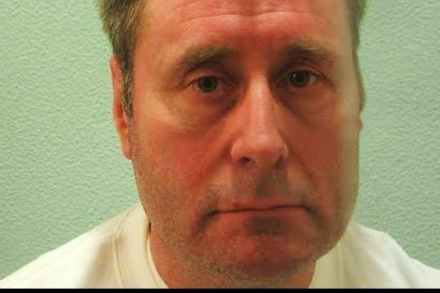
Hard cases make bad law. The release on parole of the ‘black cab rapist’, John Worboys, is a hard case. But ministers should not be panicked into throwing open parole board decision--making to public inspection. The police have blundered, the sentence was surely too lenient, and the failure to inform his victims was disgraceful. But it was not upon some careless whim that Parliament barred parole boards from giving reasons, and the new Justice Secretary, David Gauke, should think hard before reversing the interdiction. Much of the furore provoked by the release of this serial attacker of women after ten years in prison really arises not from the parole board’s decision but the original sentence and the flawed prosecution process which helped produce it.

The panic about a Brexit legal limbo isn’t justified

In widely reported remarks earlier this week, Lord Neuberger, the outgoing President of the Supreme Court, called for Parliament to tell our judges very clearly how rulings of the Court of Justice of the European Union (CJEU) are to be dealt with after Brexit. Lord Neuberger’s concern is to avoid judges being left without guidance, required simply to do as they see best, which might invite the unfair charge that they are choosing to make law, whereas in fact they would have been left with no alternative. This concern to leave political questions to the political authorities, echoed in a recent speech by the outgoing Lord Chief Justice, Lord Thomas, is welcome.

No ordinary judge

Justice McCardie was anything but a conventional High Court judge. He left school at 15 and was called to the bar at 25. After ten years of provincial practice he turned down the offer from Joseph Chamberlain of a safe Conservative seat, although politics was then the conventional highway to the bench (unlike now when it is a cul de sac). He also rejected an offer of silk, after withdrawing an earlier application which he thought the lord chancellor had been too slow to consider, and was, on the initiative of H.H. Asquith, the then liberal prime minister, appointed to the bench at 47 — the youngest of his generation — and the first junior to receive such promotion for over a century.

Law in action

It’s like Raging Bull. The great Scorsese movie asks if a professional boxer can exclude violence from his family life. Nina Raine’s new play Consent puts the same question to criminal barristers. We meet four lawyers engaged in cases of varying unpleasantness who like to share a drink after a long day in court. They gossip about the more horrific behaviour of their clients with frivolous and mocking detachment. But when their personal relationships start to falter under the strains of infidelity, they’re unable to relinquish their professional expertise, and their homes become legalistic battlefields. This sounds like a small discovery but Raine turns it into a grand canvas.

Does the truth about Trump’s art of the deal really matter?

How good a businessman is Donald Trump? Maybe the answer doesn’t matter, since barring death or impeachment he’ll be the most powerful man in the world until January 2021, or even 2025, come what may. Or maybe it does matter, in the sense that the only positive spin to be put on his otherwise ridiculous presidency is that the irrepressible cunning of the real-estate tycoon will eventually win through for the good of America — and thereby, we must hope, the good of the free world — against opponents who have smaller cojones and less dealmaking prowess than the Donald does. ‘He’s the closer,’ declared White House spokesman Sean Spicer, shortly before his boss failed to close his biggest political deal so far, the American Health Care Act.

Thank God for overpriced lawyers!

When you buy a house in Britain, there is an extensive and well-established series of checks you must perform to ensure the property is suitable for habitation. When undertaking a survey, you should ensure that the boundaries of the property conform to those recorded at the Land Registry, and that the property does not lie on a flood plain or risk structural damage from coastal erosion or subsidence. Unfortunately, there seems to be no mechanism to protect householders from the worst possible eventuality — which is to find out that you have a lawyer living next door.

War and law

From ‘The confiscation of enemy property’, The Spectator, 17 February 1917: It is perfectly possible to remove German influences without confiscating German property. This, as far as can be gathered, is the policy which the French have followed, and in their interest as well as in our own we ought also to follow it. The Germans, to give them in this matter the full credit which is due to them, have been very slow to take any steps against British property held in Germany… We do not wish to give them an excuse for fresh crimes. Our business is to punish them as a nation for the crimes they have already committed. In order to effect this object we have to concentrate all our energies upon beating our enemy in the field and on the sea.