Law

Britain has very little to fear from the ECHR. So why are so many Tories so afraid of it?

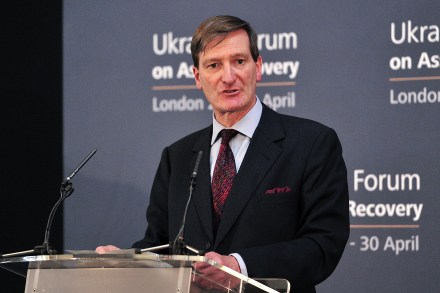
On matters domestic (England and Wales division) I was sad to see Dominic Grieve turfed-out of the cabinet in last week's reshuffle. Today he pops up in the Times to remind us (well, me) why his departure has lowered the average level of decency in the cabinet. According to the former Attorney-General, the Prime Minister's plans to rework Britain's relationship with the European Court of Human Rights are the kind of cockamamie scheme that would, quite correctly, be considered laughable if it were copied by, say, Vladimir Putin.
Celebrating diversity means imposing misogyny

People talk about their commitment to equality and diversity so readily they must assume there is no conflict between the two. The phrase falls off the tongue as if it were an all-in-one package, and people can 'celebrate diversity' and support equal rights without a smidgeon of self-doubt. Until, that is, they have to make a principled choice. Then, whether they admit it or not, they find that they can believe in equality or they can believe in diversity, but they cannot believe in both. If this sounds like the start of a patient exploration of a delicate philosophical distinction, don't be deceived. There is nothing difficult to understand, and my patience with the double standards of multi-culturalism snapped long ago.

Lady Butler-Sloss should not lead the child abuse inquiry

Last week, Nick Cohen suggested that Lady Butler-Sloss was not the correct person to lead the child abuse enquiry. She has now resigned from her role.  The Guardian says today that Lady Butler-Sloss cannot be the right person to lead the inquiry into alleged child abuse. ‘Not only was her brother, Lord Havers, attorney general – and briefly lord chancellor – at the time of some of the allegations of cover-up. She is also of the same generation as those around whom rumours swirl. If she were still sitting as a judge, she would never contemplate being involved in a case that might touch, however remotely, on family or friends.’ Unfortunately, this isn’t true.

How should we describe ‘assisted dying’?

There is, I realise, no perfect, neutral way of describing ‘assisted dying’, the substance of Lord Falconer’s bill which comes up for its second reading on 18th July. ‘Right to die’ is a bit tricky; dying is one of those rights that are thrust upon us without our even asking. It’s part of the human condition; just wait long enough, and it’s yours. And as Jenny McCartney eloquently makes clear in her piece on the subject, it’s actually assisted suicide — the assistance being provided by a doctor – or if you prefer, killing by request.

If you thought this World Cup was weird, take a look at Brazil 1950

Old world Brazil has struggled to get ready for the World Cup, even though it hosted it before, in 1950. Some oddities of that tournament: — There was no final, as such. The winner was to be decided by a second group stage. But it came down to the last match, Brazil vs Uruguay, in which Brazil needed a draw and Uruguay a win. Uruguay won 2-1. — That match, at Rio do Janeiro’s Maracana stadium, still holds the record of the best-attended match in World Cup history, with 199,954 spectators. — Only 13 out of 16 teams who qualified turned up. Scotland could have gone but stuck to their manager’s promise that they would only attend if they beat England in qualifying. India withdrew supposedly because banned from playing barefoot.

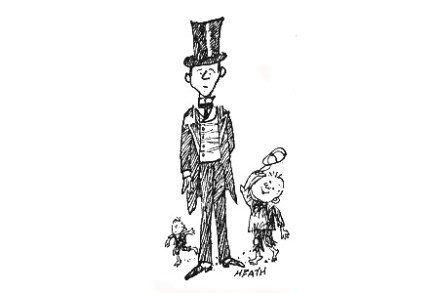
The starchy, conservative lawyer who freed every slave in England

Americans make movies about slavery and its abolition. In the past two years we’ve seen the Oscar-winning Twelve Years a Slave, based on a 19th-century slave narrative, and Django Unchained, with Christoph Waltz as a bounty-hunter who, uniquely among bounty-hunters of the period, did not make his living from capturing fugitive slaves. Spielberg’s Lincoln was about the Great Emancipator himself, as was the less historically rigorous Abraham Lincoln: Vampire Hunter. But the abolition of slavery in England has never received the same attention. Perhaps it is because abolition here came not through blood and glory, but through the common law; or perhaps because emancipation does not frame constitutional debates here in the same way it does in the States.

Clement Attlee’s conversion

In the early 1960s, The Spectator ran a series called 'John Bull's first job' – reminiscences by various prominenti about how they started out. One of the most startling, published in the 13 December 1963 issue, was by the former Labour prime minister Clement Attlee, respectfully bylined 'Lord Attlee', on his time as a young barrister. His verdict on himself was characteristically terse and frank, and gives a vivid impression of a turning point in his life: 'I got very few briefs and occasionally devilled for someone else, but made very little headway. I was at the time ridiculously shy. I was not really much interested in law and had no ambition to succeed.   'Furthermore by 1906 my interests had changed.

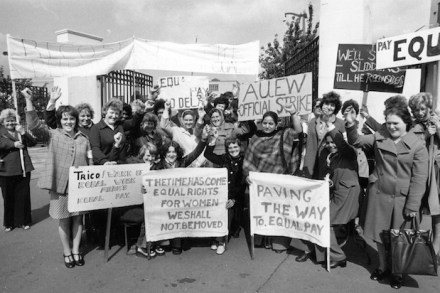
The equal pay bomb that could wipe out public sector jobs

I have just decided that my work is of equal value to that of the feminist supermodel Cameron Russell. Neither of us, admittedly, is quite as useful as a plumber, and I can’t claim to be of much use promoting swimwear. But otherwise I reckon we are a pretty close match. We both tart ourselves around and while my work doesn’t involve a lot of physical input, I would like to think that it requires a slightly higher contribution from the brain department. There then arises the question: should I not be paid as much as she is? Ludicrous? Perhaps, but no more so, I think, than what is going on in Birmingham, where council taxpayers are facing a £1 billion bill for a mass equal pay claim on the part of 11,000 female staff.

Who judges the judges?

I like Jonathan Calvert and Heidi Blake of the Sunday Times. I will not pretend they are anything like close friends or family. I doubt if I see them more than once a year. But before you read any further you should know about our acquaintance. It is important for journalists to declare their interests. Readers must be free to make up their own minds, even if I believe – especially if I believe – that a friendship or family bond could never influence my writing. In a few days, the Sunday Times will apply for the right to appeal against a decision by Mr Justice Tugendhat from July last year. Peter Cruddas, a former co-treasurer of the Conservative Party had sued the Sunday Times after it sent undercover reporters – Calvert and Blake – to interview him.

A prenup undermines a marriage before it has even begun

A friend of mine, quite a distinguished lawyer, takes the view that marriage ceased to make sense after no-fault divorces came in. What, he says sternly, is the point of a contract when there’s no sanction if you break it? Well, quite. But if no-fault divorce pretty well invalidates marriage after the event, prenups do quite a good job of undermining it beforehand. The point of marriage is that it’s meant to be a lifetime affair – the hint being in the ‘til death do us part’ bit – and the point of prenups is that they make provision for the thing ending before it even gets underway.

How legal aid reforms are clogging up the courts

Litigants in person – individuals representing themselves, rather than relying on a lawyer – have always been a feature in courts, and are the source of the aphorism ‘a lawyer who represents himself has a fool for a client’. While the profusion of courts means there are no easily available statistics as to their numbers, as late as 2011, about one fifth of cases featured litigants in person. Since the government slashed legal aid in April of last year, the number of them has exploded. While the funding for these cases has vanished, the right to go to court has not. The most recent set of figures is for autumn 2013 - before many cases under the new regime were launched.

Being assaulted nearly put me on trial

Way back in the late 1990s, I spent a lot of time in court. What happened, see, was that in the wee small hours of a drunken Edinburgh morning, my friend Jonny and I took a shortcut home through the disused railway tunnel that runs under Holyrood Park. I’d been through it many times, being enraptured with the magic of abandoned urban spaces and, perhaps more to the point, stupid, but never before had it contained a gang of pissed-up youths on a rampage. This time it did, and they put us in hospital. Various arrests followed pretty swiftly.

Will the women apologise to Rennard?

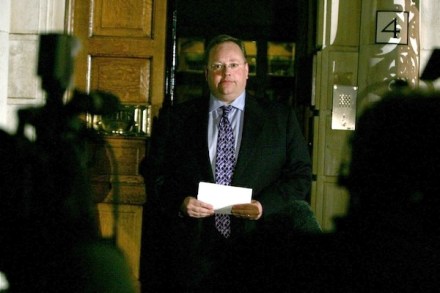
Well done Lord Rennard for not saying sorry. I thought at first that he should, just to get the whole thing over with, to partially placate those monstrously transgressed women who may once have had their personal space ‘violated’ by the bloke. But that was wrong. Stick to your guns and tell them to get stuffed. The Met Police found no case to answer when they investigated these allegations. An internal Lib Dem inquiry headed by a QC found similarly, despite Nick Clegg's hope that it would nail the poor bugger and give him a convenient escape route. Now that the inquiry has said no action should be taken against Rennard, perhaps the women might say sorry to him for dragging him through the mire. But hell will freeze over before that happens.

Courtroom drama in 1828 – courtesy of The Spectator

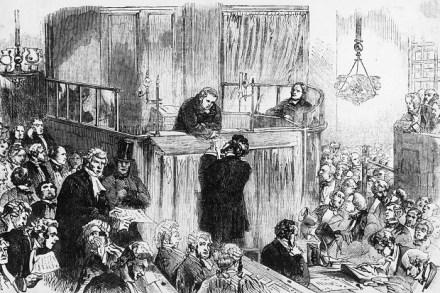
It’s a real pleasure looking through the first few editions of the Spectator from 1828, where the police reports and brief news items conjure up the England of Dickens and Trollope. There’s a man who comes before the court for throwing his wooden leg at people and is reprimanded by the judge. In a riotous atmosphere in court, the pauper explains that he can’t very well work with a leg that’s a foot and a half too short. Eventually, the Lord Mayor intercedes: ‘Defendant, I have prevailed upon the parish to put you once more upon your legs properly; and let me entreat you never to throw away an old leg until you get a new one."— (Loud laughing.

If we don’t want prisoners to have the vote, then we’re going to have to leave the European Court of Human Rights

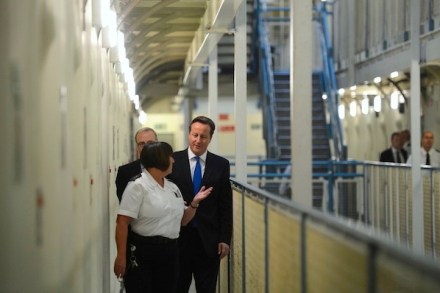
David Cameron’s declaration that prisoners "damn well shouldn't" have the right to vote is a reminder that this issue hasn’t gone away. Cameron was emphatic that the final verdict on this question should rest with the British parliament not the European Court of Human Rights. But this is not the current situation as Cameron admitted with his line that “we need to clip [the court’s] wings". But it is hard to see how Cameron can do that while keeping Britain under the jurisdiction of the court. The attempt to reform the court that Ken Clarke launched as Justice Secretary didn’t get very far. So, it is hard to see what other option there is beyond removing Britain from its jurisdiction.

The segregation of women and the appeasement of bigotry at Britain’s universities (part two)

On the Today programme this morning Justin Webb covered the decision by Universities UK to allow fundamentalist speakers to segregate women from men at public meetings. With a characteristic disdain for accepted standards of behaviour, Universities UK refused to go on air and answer his questions. Webb had to 'put the other side of the story' himself. He told a Palestinian woman demonstrating outside Universities UK headquarters in central London, [1hr 36mins in] 'What Universities UK say is, if non segregated seating is also provided, it could be all right.' Put like that it can sound just about all right. Men and women who want to sit apart can do so. Meanwhile there will be mixed seating for students who find the notion of sexual apartheid as repellent as racial apartheid.

Are Parliament’s select committees working? – I say no

Our parliamentary select committees need to be taken seriously. Yet, for them to be so, we need to clarify their legal powers, use wider expertise and practice what we preach. Select committees have recently been in the spotlight, and Parliament’s liaison committee — made up of the chairs of all the select committees — has announced a detailed review as doubts over effectiveness have grown. Last week the Energy and Climate Change Committee examined the spiralling cost of energy; but, despite the fact that price hikes for millions of homes is a top political priority, only one of the big six energy companies thought the occasion worthy of sending their CEO.

Should Saudi men be allowed to drive?

It’s important that newspapers make themselves sounding boards for unpopular opinions, especially in an age when identity is sacred and people are judged by having the right views rather than the right behaviour. But we still reserve the right to mock if they are badly argued, such as this Guardian piece arguing that since most Saudi women oppose lifting the driving ban, we should not be campaigning for it. It concludes: ‘People in Saudi Arabia have their own moral views and needs. What works in other societies may not fit in Saudi, and the reverse.

Is Sunny Hundal the best person to lecture on journalism?

Farewell then Sunny Hundal. The libellous blogger and tweeter has announced that he is no longer going to keep up his self-published website ‘Liberal Conspiracy’. One reason – far beyond satire – is that he is going to go to the University of Kingston to lecture on journalism. Sunny is perhaps not best placed to inform them on basic journalistic standards. As I have written here before, some years ago Sunny had to pay out and publish a wholesale apology to me after libelling me on his website. On that occasion he published outright falsehoods, though his more typical style has been to settle for selective quotation, misquotation and misrepresentation.

Sir Brian’s PR offensive continues

Sir Brian Leveson, who has ascended from his inquiry podium to President of the Queen’s Bench Division and Chairman of the Sentencing Council, seems to be getting a taste for public appearances. Last week he frustratingly stonewalled two parliamentary committees who had the temerity to ask for some post-publication thoughts on his report into the press, saying 'I am a serving judge. It would be absolutely inappropriate for me to come back into the question of my report or regulation of the Press.' A parliamentarian, Philip Davies, called him a ‘berk’ in consequence. Mr S has heard a few of the good judge's learned friends express a similar view over the years.