Law

Real life | 26 January 2017

The problem holding up my house move turns out to be a wiggle. Have you ever had a wiggle? It sounds jolly enough but, believe me, you don’t want to go there. If you have a wiggle in your garden, you had better be prepared for the worst. I had no idea about this wiggle, because when I bought the flat I only had my lawyer scrutinise the Land Registry documents to a normal degree, which is to say I asked him if everything was broadly all right, and when he confirmed that it was I told him to proceed. I have lived in the flat quite happily since 2002 and I have never had any trouble at all with the boundary lines. I fix the garden fencing one side, the neighbour takes care of the other.

Killer plots

We all love to mock Bond villains for their hilarious ineptitude at killing the hero. The ‘genius’ Dr No has a tarantula placed in Bond’s bed — though as it happens, tarantula bites do not kill humans except via anaphylaxis; he tries to have Bond run off the road, irradiated, and boiled alive in a nuclear cooling tank. Time and again, Bond is in the clutches of Smersh or Spectre or that chap with three nipples, and time and again they pass up the obvious bullet to the head in favour of crowd-pleasing stunts involving sharks, poison--tipped shoes, alligators, and men with giant metal teeth. Such things would never happen in the real world, we think.

Season’s beatings

My colleagues at the commercial and chancery bar are all at their chalets in Gstaad, funded by the endless fees from Jarndyce and Jarndyce, and the family bar are out en famille in Mustique, awaiting the festive fallout — there’s something about turkey, port and the Queen’s Speech that pulls marriages apart like a pound-shop cracker, and divorce doesn’t come cheap. But for we poor criminal hacks, it’s business as usual: crime never sleeps, and never less so than when Santa Claus is coming to town. As a junior barrister I made out like a bandit. Booze flows, blood follows; office parties are a magnet to drug dealers keen to ensure that all enjoy the right kind of white Christmas.

Mob law

Frenzied outrage from Leavers and comical paeans of praise from Remainers greeted the High Court’s decision to instruct government that Parliament had to agree to the triggering of the clause that will initiate the UK’s exit from the European Union. In 406 BC, the Athenians demonstrated just how dangerous such hysterical reactions could be. The Athenians had defeated the Spartans in a sea battle off Arginousai, with the loss of 25 ships. Against all usual practice, their sailors had been left to drown, either because a storm had made it impossible to pick them up, or those in charge were at fault. The eight generals were dismissed, and six of them returned to Athens.

Have gun, will kill

Woody Allen said of crime that the hours were good and you meet a lot of interesting people. I don’t know about the hours, but you do come across some fascinating types in my line of work. Among the strangest are those who resort to extreme violence at the flick of a mental switch — people whom, if they possess a gun, simply cannot avoid firing it. I’m a criminal barrister, and I remember a case in which a man changed his baby’s dirty nappy and went to put it in the bin. It was raining, and he was barefoot, so he lobbed it from a distance. Unfortunately, it sailed over the bin, and the fence, and landed messily on his neighbour’s doorstep.

Will Michael Gove dare to bring Christianity into his prison reform plans?

This April, Michael Gove wrote in The Spectator: 'To call yourself a Christian in contemporary Britain is to invite pity, condescension or cool dismissal.' Certainly, the titters it provoked in the more left-wing corners of Twitter rather proved his point (a white man? complaining of prejudice?). On faith, as in everything else, Britain today erodes into fragments, small landscapes inhabited by the mutually deaf. I carry no brief for the man: my instinctive sympathy with his school reforms is matched only by my frustration with what Ian Leslie, in a profile published this week, calls the temperament by which Gove 'is drawn irresistibly to the theatre of battle'. But even his greatest enemies don't deny that Gove is a man of conviction. (Indeed, many use it as an insult).

Haunted by an honourable member

I was awoken late on Monday night by a horrible nightmare, one of those dreams where you cannot be entirely sure if you are asleep or not. I dreamed I was lying exactly where I was, in my bed, and this torpedo-shaped, phantasmagorical thing was zipping about around the bedroom, diving behind the wardrobe, reappearing and hovering for a moment by the window, and then shooting off towards the landing. Then it would dive at great velocity towards where I was lying, before suddenly veering off. What was this chimeric object? I realised immediately, with a chilling clarity — it was Brooks Newmark’s penis, jubilantly detached from the rest of Brooks Newmark.

The turf | 15 September 2016

Say what you like about the St Leger — and I like it a lot — Doncaster’s finale to the British Classics rarely fails to provide a story. In 2012 it was Camelot’s narrow failure to become the first Triple Crown winner of the 2,000 Guineas, the Derby and the Leger since Nijinsky in 1970. Last year the filly Simple Verse was disqualified after being first past the post and then reinstated. This year it was both the dramatic tumble of the odds-on favourite Idaho mid-race and the last-gasp victory of Harbour Law, trainer Laura Mongan’s first-ever entry in a Classic.

Archers abusers

It’s been going on for months now and I must make a confession. I secretly endure a nightly battering in the privacy of my home; it’s been relentless, torturous and psychologically damaging. But before anyone rushes to rescue me or phones a government helpline, fearing I am the victim of some dastardly wife beater — I should explain that the culprit is Radio 4’s The Archers and its relentless and addictive domestic abuse storyline. My torment was supposed to end last Sunday night, with the conclusion of Helen Titchener’s trial for stabbing her bullying, much-hated husband Rob. When the jury foreman announced not guilty, I was with the rest of the nation, roaring ‘Yes!

Above the law

Because no country can interfere in another’s legal system, there is little the UK can do to help the six Britons jailed in India for possessing ‘illegal’ firearms which were, in fact, fully authorised for the protection of shipping against piracy. Where David Cameron failed, Boris might try an appeal based on ius gentium, ‘the law of nations’. Cicero was the first Roman to discuss the idea. He talked of societas (‘the state of association between people’) having the ‘widest possible application, uniting every man with every other man’. The jurist Gaius (c.

When more data makes you more wrong

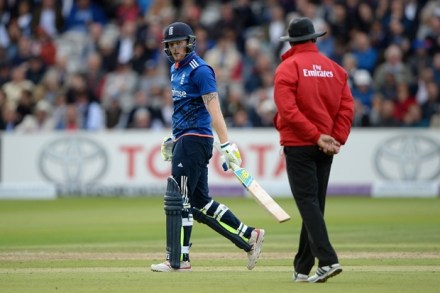
In a one-day international against Australia last year, Ben Stokes was dismissed for ‘obstructing the field’, a rule rarely invoked in-cricket. The bowler had thrown the ball towards the wicket (and hence near Stokes’s head) in an attempt to run him out. Stokes raised his hand and deflected the ball. After some discussion between the two on-field umpires, and a referral to the third umpire, Stokes was given out. What was most interesting was the difference in the conclusions people reached depending on whether they watched the replay in real time or in slow motion (you can find both on YouTube). Seen at speed, his raising of his hand looked nothing more than an involuntary and instinctive act of self-defence.

A vote of confidence

During the referendum campaign, it seemed at times as if a competition was on to issue the most hyperbolic claim of what might happen should the British public vote to leave the European Union. Now politicians and commentators are competing to come up with the most hysterical assessment of the British decision to leave. Leading the field is Mark Rutte, the Dutch Prime Minister, who declared that ‘England has collapsed: politically, monetarily, constitutionally and economically.’ In other words: without us, you’re nothing. Politics in collapse?

Hollande equals Thatcher? Not quite, Monsieur le President, but keep trying

Have you ever tried discussing the merits of gun control with a Texan, or of deregulated labour markets with a Frenchman and his Belgian cousin? The prejudices involved are much the same. Many Americans believe that guns in the home and the pick-up truck are their best protection against violent attack, and that the 13,286 US gunshot deaths last year would have hit an even higher number if gun ownership was more restricted. Likewise, French trade unionists believe a 35-hour working week combined with laws restricting any company that is a going concern from making redundancies are the best protection of their economic wellbeing, rather than a root cause of the fact that more than 3.5 million of their compatriots are unemployed. That’s 10.

A QC’s guide to cocaine

As a defence silk, I come across some surprisingly intelligent drug dealers. Many of them are highly entrepreneurial and driven, and I’m often left wondering what they might have achieved if only they’d chosen a different career. Sharp operators are drawn to the narcotics trade because vast profits can be made in very little time. But then the consequences of failure, especially at the heavyweight end of the market, are rather worse than a tumbling share price. And we all make mistakes. I was recently involved in a case where a criminal mastermind had been jailed for 15 years for heroin importation, but had kept on running his empire from behind bars using a prison phone.

Henry III vs EU law

It is no surprise that the laws imposed on the UK by a European parliament in Brussels should so infuriate the ‘Leave’ campaign. England has form here going back 750 years. Roman law has been one of the wonders of the world since its codification in the Twelve Tables (449 BC). But it is not the laws themselves that are the real point. The key lies in the way that laws were later argued over by the ‘jurists’. These started out as private, freelance legal consultants, simply earning respect for the legal advice they offered.

No hiding place | 17 March 2016

My first courtroom murder case could have come straight from one of Andrew Taylor’s novels. A gruesome crime — the death of a child. And the murderer was brought to justice by exquisite detective work: police established that the killer had dug a grave but then abandoned it. They also found a witness. That was 20 years ago. The prosecution for cases that I’m involved in now have changed beyond recognition. Take number-plate-recognition technology. Most murderers drive to their victim, but now cars are tracked by cameras across the country. The police can list vehicles seen near a crime scene, then trace them back. That’s how, in 2006, they caught Steve Wright, the man who killed five prostitutes in Ipswich.

Barometer | 11 February 2016

Matters of life and death Lord Lucan is now officially presumed dead. How do you have someone declared dead? In England and Wales, under the Presumption of Death Act 2013… — Anyone can apply to have anyone else declared dead, but if the applicant is not a spouse, civil partner, parent, child or sibling of the presumed deceased they must show they have a significant interest. — The person should have been missing for at least seven years, but it is possible to have someone declared dead earlier if the court is convinced they have died. — It costs £480. — An order can be revoked if the person later turns up alive, but that will not reinstate a marriage or civil partnership. — The act cannot be used in the instance of a missing monarch.

France’s civil war…

In the wake of the massacre in Paris, President François Hollande said that France was ‘at war’ — and that it must be fought both inside his country and outside in the Middle East. As the French air force began dropping bombs on Raqqa in Syria, another operation was under way in towns and cities across France: 168 raids in two days. A battle on two fronts has begun. Chartres cathedral is one of the great monuments of western civilisation, but Chartres was also home to one of the Bataclan theatre suicide bombers. A man from the same area died last summer in Syria, fighting for Isis. In Lyon, theraids turned up a rocket launcher. On Tuesday night, a large-scale counter-terror assault was launched in St Denis in Paris.

Why it’s important to ignore ‘international law’

Last week, I wrote about the controversy caused by the government’s revision of the ministerial code which guides ministers’ conduct. In its Blair-era version, the code said that ministers had an overarching duty ‘to comply with the law including international law and treaty obligations’. The Cameron-era version has deleted the last six words, leaving simply ‘…to comply with the law’ . This has outraged lawyers who work in this field, but what the change exposes is that international law and treaties should never have been slipped into the rubric in the first place.

A Supreme Court justice and the scary plan to outlaw climate change

How do you make an imaginary problem so painfully real that everyone suffers? It’s an odd question to ask, you might think, but it’s one that has been exercising some of the brightest minds in the legal firmament, led by no less a figure than Lord Justice Carnwath of the Supreme Court. Last month, at an event whose sinister significance might have passed unnoticed had it not been for the digging of Canadian investigative blogger Donna Laframboise, Carnwath contrived to nudge the world a step closer towards enacting potentially the most intrusive, economically damaging and vexatious legislation in history: an effective global ban on so-called ‘climate change’.