History

Almost all against all

Early one morning in September 1986 three gunmen patrolling Beirut’s scarred Green Line came across what they believed would be easy pickings. Early one morning in September 1986 three gunmen patrolling Beirut’s scarred Green Line came across what they believed would be easy pickings. David Hirst the diminutive, silver-haired and donnish veteran correspondent was stranded by the side of the road in one of the most notorious areas of the city. Scores of Westerners had already been seized by militant groups allied to Iran and Hirst was pushed at gunpoint into the back of a BMW for what should have been the start of several miserable years handcuffed to a radiator in Beirut’s southern suburbs.

Not as bad as the French

This is a long book, but its argument can be shortly stated. Anthony Julius believes that anti-Semitism is a persistent and influential theme in English history, which is all the more dangerous for being unacknowledged by most anti-Semites and concealed behind a facade of complex, subtle and hypocritical social convention. He sustains the argument over nearly 600 pages of densely annotated text, in a book which is in equal measure wonderful and infuriating. It is immensely learned. It is thorough. Its patient accumulation of detail challenges conventional English images of their own society. Much of the analysis is observant and shrewd. But much of it is also laboured, sanctimonious and lacking in any real sense of proportion.

Why we should give the Elgin Marbles back to Greece

While we’re talking about countries on the brink, it’s worth taking a look at Greece – which has probably passed beyond it.  The government has published its package of austerity measures – aiming to reduce its deficit to 8.7 percent of GDP by the end of 2010 – and the markets are deciding what they think. But, in the meantime, the country faces strikes; the Euro is taking a pummeling; there are fears that problems may spread to countries like Portugal and Spain; and Greek foreign policy – particularly with regard to Macedonia and the Balkans – is stalling.  Nobody is through the woods yet. All this mean that George Papandreou's problems are also the EU's problem.

Apart from the Slavery, the Peasantry was Free, You Know…

More on this essay on American exceptionalism in due course, but first Conor Friedersdorf: In a post on President Obama and American exceptionalism, Victor Davis Hanson explains why he thinks our nation is different from all the others: Perhaps it would be better, when speaking of an early rural society, to talk of an absence of peasantry: We had no concept of a large underclass of only quasi-free people attached to barons as serfs; instead, yeomen agrarians were the Jeffersonian ideal, a nation of independent farmers rather than peasants. Odd that a historian should forget about American slavery! Quite.

Method in his madness

The car manufacturer Henry Ford dominates this remarkable book, managing, like Falstaff, to be its tragic hero, villain, and comic relief all at the same time. A gaunt, pacing figure, he conducted interviews while standing, believed in the values of small Main Street America (though his methods of industrial mass production destroyed these), and in pacifism, fitting out a ship to sail to Europe in an attempt to stop the Great War (though later he made billions out of armaments, and had machine-guns mounted on his factories while his paid thugs shot down hunger-marchers).

The greatest rogue in Europe

On 11 November 1743, the most sensational trial of the 18th century opened in the Four Courts in Dublin. The plaintiff, James Annesley, claimed that his uncle, Richard Annesley, the sixth earl of Anglesey, had robbed him of immense estates in England and Ireland worth £10,000 a year. The scale of the theft and the rank of the alleged thief would by themselves have made the case exceptional. According to Viscount Perceval who was present, it was ‘of greater importance than any tryall ever known in this or any other kingdom.’ But what really attracted attention was James Annesley’s allegation that in 1727, the year he became heir to the earldom, his uncle had had him kidnapped and shipped to America as an indentured servant, and thereby stolen the title.

Cast a long shadow

Many years ago I invited a young student of mine to see Psycho, a film of which she had never heard, made by a director (Hitchcock) with whose name she was unfamiliar and shot in a format (black-and-white) whose apparent old-fashionedness so mystifed her she wondered aloud why no one thought to complain to the projectionist. Yet, shrieking on cue at all the spooky moments, she ultimately admitted to having been so bowled over by the film that she asked what other Hitchcocks she ought to see. I recommended North by Northwest — only subsequently to learn, to my stupefaction, that she had found it boring. Boring? The most euphoria-inducing comedy thriller in cinema history? I asked her why. ‘Well,’ she replied. ‘I was under the impression he made horror movies.

Not ‘a boy-crazed trollop’

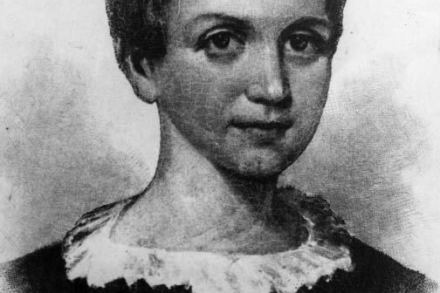
For someone who barely left the house, Emily Dickinson didn’t half cause a lot of trouble. For someone who barely left the house, Emily Dickinson didn’t half cause a lot of trouble. Lives Like Loaded Guns — which combines biographical material, critical readings, and an assessment of the history of her reputation — tells a completely hair-raising story. The Dickinsons were one of the first families of respectable Amherst. Emily and her sister Lavinia — ‘Vinnie’ — lived in one house, Homestead, right next door to her brother Austin, the head of the family, and his wife Sue. Susan Dickinson was a highly intelligent and sensitive woman, bosom friend to Emily. The poet called her ‘Sister’.

Riding for a fall

Many attempts have been made to portray the ‘Roaring Twenties’, or the ‘Gilded Nineties’, or the something-or-other sometime-else, but in truth the 1930s is one of the few decades that fits neatly into a nice round summary, with the Great Depression at one end, the second world war at the other. Many attempts have been made to portray the ‘Roaring Twenties’, or the ‘Gilded Nineties’, or the something-or-other sometime-else, but in truth the 1930s is one of the few decades that fits neatly into a nice round summary, with the Great Depression at one end, the second world war at the other. The 1920s had seen a sharp recovery from a war in which 30 per cent of all men aged 20–24 had died.

The ghost of an egoist

Very long books appear at intervals about Fidel Castro and Che Guevara. Rarely do they contain anything both significant and new, and they get longer and longer. This one too is a long book, though it is mercifully an abridgement of the original Spanish edition, which ran to over 1,400 pages. Anything in it both significant and new has escaped me. Most of it is about Castro’s childhood, youth, the overthrow of Batista and the early years of the revolution: Castro gave up smoking many years ago, but here he is still puffing away. All the same, it provokes thoughts. The first is that it confirms the view that history or biography is best written straight, and that funny business should always be avoided.

A dangerous fellow

Do we need another huge life of Arthur Koestler? He wrote a great deal about himself, including three autobiographical works: Spanish Testament (1937), describing his experience as a death-row prisoner of General Franco, Arrow in the Blue (1952) and The Invisible Writing (1954). He also contributed to The God that Failed, the fascinating collection of testimonies by former Communists which Dick Crossman edited in 1949. He and his last wife wrote an unfinished joint memoir, published a year after their deaths as Stranger on the Square (1984). An ex-wife, Mamaine, contributed a volume, Living with Koestler (1985). Then a quarter-century after his death came a large-scale 640-page biography entitled Arthur Koestler: The Homeless Mind by David Cesarani (1998).

Survivor syndrome

In late middle age, William Styron was struck by a disabling illness, when everything seemed colourless, futile and empty to him. In fact, as he recalled in Darkness Visisble (1990), he was suicidally depressed. So when he died in 2006, at the age of 81, it was assumed he had taken his life. His father, a Virginia-born engineer, had, moreover, been a depressive himself, and maybe a suicidal tendency had transmitted down the generation, like a dangerous gene? In reality, the author of Sophie’s Choice had died of pneumonia, complicated by alcoholism and addiction to tranquilisers. A lifelong malcontent, Styron indeed had few reasons to be cheerful.

Before she was a novelist

‘It’s hard in letters quite to hit the mean between being earnest and sounding damn silly’ — as Iris Murdoch admits on page 205 of this book. ‘It’s hard in letters quite to hit the mean between being earnest and sounding damn silly’ — as Iris Murdoch admits on page 205 of this book. It is extraordinary to read these journals and letters written by Murdoch in her very early twenties. Her tone of voice, and the preoccupations, and the turns of phrase are exactly as they were when I, a shy teenager, first met her in her late forties. Even her handwriting — reproduced in the end papers — is the same as it was then.

An affable tour guide

In mentioning Heinrich the Fowler, 10th-century King of the Germans and one of the many obscure figures who appears in his book, Simon Winder describes a painting in the Hall of Electors in Frankfurt. A product of the historicising 19th century, it is part of a series of German monarchs stretching from Charlemagne to 1806, the first seven centuries of which are ‘simply fantasy’.

No example to follow

Ahundred years ago, a character in a novel who was keen on music would, like E.M. Forster’s Lucy Honeychurch or Leo- nard Bast, be as apt to stumble through a piece at the piano as listen to it at a concert. Ahundred years ago, a character in a novel who was keen on music would, like E. M. Forster’s Lucy Honeychurch or Leo- nard Bast, be as apt to stumble through a piece at the piano as listen to it at a concert. Given the relative- ly rare opportunities to hear a Brahms or Beethoven symphony before the invention of the LP, the easiest way to enjoy one was probably to play it in piano duet reduction.

Double vision | 30 January 2010

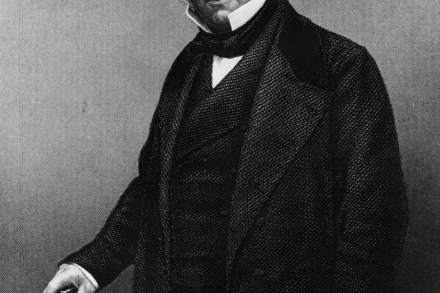
Thomas Babington Macaulay’s early essays in the Edinburgh Review were an immediate success, and soon made him a respected figure in Whig society. Thomas Babington Macaulay’s early essays in the Edinburgh Review were an immediate success, and soon made him a respected figure in Whig society. In 1830 Lord Lansdowne offered him a seat in parliament for the rotten borough of Calne. In 1848 he published the first volume of his History of England from the Accession of James II. It was an instant bestseller. He gave his readers a flattering image of themselves. The Whig Revolution of 1688 had made the English ‘the greatest and most highly civilised people that ever the world saw’. By 1857, when he was raised to the peerage, he had become a National Treasure.

A society celebrating itself

The years between the middle of the 18th century and the middle of the 19th century, argues Holger Hoock, ‘saw Britain evolve from a substantial international power yet relative artistic backwater into a global naval, commercial and imperial superpower as well as a leading cultural power in Europe. The years between the middle of the 18th century and the middle of the 19th century, argues Holger Hoock, ‘saw Britain evolve from a substantial international power yet relative artistic backwater into a global naval, commercial and imperial superpower as well as a leading cultural power in Europe. These developments … were not unrelated.’ Wowsers.

The grandest of old men

Mr Gladstone’s career in politics was titanic. Mr Gladstone’s career in politics was titanic. He sat for over 60 years in the Commons, was in the cabinet before he was 35, was four times prime minister, almost solved the Irish question, set new standards for the conduct of public business and of foreign policy, and took a leading part in the disruptions both of the Conservative and of the Liberal Party. The post office did get round to issuing a commemorative stamp for his bicentenary, which fell on 29 December; but the press, which used to publish every day in the 1880s a note of his doings, close to the court circular about the Queen’s, has taken it more quietly.

Paris of the gutter

Port-au-Prince, the Haitian capital, lies on a marshy bay encircled by mountains. It was founded in 1749 by the colonial French and named after a vessel, Le Prince, which anchored there about 1680 (and not, as the dictator ‘Papa Doc’ Duvalier apparently liked to believe, after The Prince by Machiavelli). Thousands subsist in shanties built on landfill at the harbour’s edge; even a light rainfall can put their homes under flood. Uptown, an illusion of space prevails. The presidential palace, a vast lair of power, stands at one end of a palm-fringed plaza. On Tuesday, 12 January, Port-au-Prince teemed as usual with cigarette vendors, bootblacks and marchandes. On the Rue du Commerce, office workers were making last-minute purchases before returning home. It was 4.