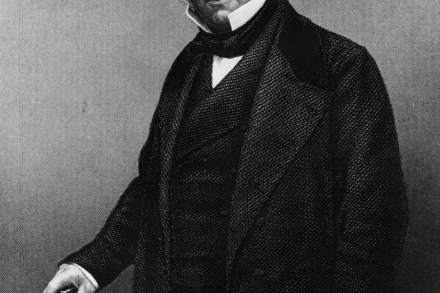
Raymond Carr

A split personality

From our UK edition

By the 1970s Ronald Fraser had established himself as an expert on modern Spain and an authority on its oral history, when that discipline was an exotic new concept. As a radical socialist, and a friend of the Marxist historian Perry Anderson, he published a series of distinguished books on popular risings and guerrilla warfare in 19th-century Spain. It was society seen from below. But no one reading the first edition of Fraser’s memoir, published in 1984, would have guessed any of this. Only in a new introduction does he mention his friendship with Gerald Brenan, whose The Spanish Labyrinth was a sacred text to all of us who wrote on 20th-century Spain.
Built for eternity

From our UK edition

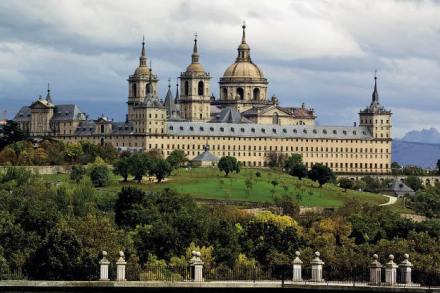
The Escorial, as a monastery and a royal palace, was the brain child of Philip II of Spain. Built in the latter half of the 16th century, about 30 miles north-west of Madrid, the huge granite complex with 4,000 rooms, 16 courtyards, a basilica, a library and picture gallery as well as the king’s private apartments, came to be regarded as the creation of a cold-hearted despot cut off from the outside world. For Richard Ford, whose 1850 Handbook for Travellers in Spain is the most learned guidebook ever written, the Escorial ‘was as cold as the grey eye and granite heart of its founder’.

The pride of the Sackvilles

From our UK edition

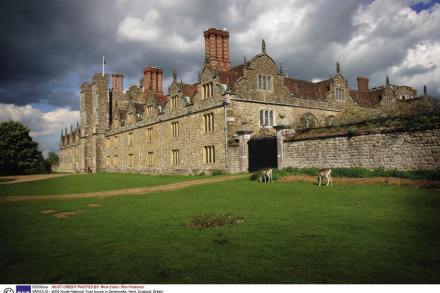
Knole is a country house the size of a small village in the Kent countryside. For the past 400 years it has been inhabited by 13 generations of a single family, the Sackvilles. The present Lord Sackville, Robert Sackville-West who lives with his family there, has written a scholarly book on Knole’s effect on the family and vice versa. It was Thomas Sackville who in the 1590s transformed a late medieval manor house into the Renaissance mansion that has become today’s tourist attraction. Like the Cecils, who were his colleagues in government, he made little distinction between enriching the crown and his own family, just as today’s MPs fiddled expenses to feather their own nests.

Faith under fire

From our UK edition

Giles St Aubyn, in this long, scholarly book, sets out to chronicle the shifts in the Christian churches from the scientific revolution of the 17th century, and the Enlightenment of the 18th, to the apparent triumph of secularism in the 20th. H. H. Asquith, as leader of the Liberal party, was not an enthusiastic Christian. Nor did the Labour Prime Minister Clement Attlee waste much time on religious concerns, which bored him. What mattered was the NHS and the welfare state, which saved men’s bodies rather than their souls. The Reformation had shattered the universal Catholic church of the Middle Ages, leaving in its wake what the Catholic apologist Blaise Pascal called ‘the thousand bizarre sects of Protestantism’.

Double vision | 30 January 2010

From our UK edition

Thomas Babington Macaulay’s early essays in the Edinburgh Review were an immediate success, and soon made him a respected figure in Whig society. Thomas Babington Macaulay’s early essays in the Edinburgh Review were an immediate success, and soon made him a respected figure in Whig society. In 1830 Lord Lansdowne offered him a seat in parliament for the rotten borough of Calne. In 1848 he published the first volume of his History of England from the Accession of James II. It was an instant bestseller. He gave his readers a flattering image of themselves. The Whig Revolution of 1688 had made the English ‘the greatest and most highly civilised people that ever the world saw’. By 1857, when he was raised to the peerage, he had become a National Treasure.

A return to the grand themes

From our UK edition

Between 1975 and today, under the direction of Professor Wm. Roger Louis, the British Studies Seminars of the University of Texas has organized 60 seminars on the modern history of Britain and has published a selection of the lectures in five volumes of which this is the most recent. It includes personal reminiscence. Graham Greene, the publisher not the novelist, relates his experiences in the book trade as modest English publishers are drawn into the financial arms of giant international corporations. There are scholarly specialist studies, one of which has 65 footnotes.

Looking back in anger

From our UK edition

Portugal has given the world two distinguished novelists. Eça de Queiros, is the Proust of Portugal. His masterpiece, The Maias, describes the decline of an aristocratic family in the late 19th century. Whereas Eça was a member of the Portuguese intellectual elite, José Saramago was born in a wretched shack in the the rural hamlet of Azinhaga. When he was two, his family moved to a series of two-roomed flats in the poorest quarters of Lisbon. I cannot think of any writer of consequence who endured such grinding poverty in his childhood and youth. His grandfather was a foundling and both he and his wife illiterate peasants. In an early essay I compared Saramago to Thomas Hardy, as a village boy who had made a career as a writer. This was a grave mistake.

From Russia with love

From our UK edition

In the last couple of decades or so, a plenitude of biographers have provided us with studies of 20th-century literary celebrities, from Thomas Hardy and George Bernard Shaw to Evelyn Waugh and T. S. Eliot. Roland Chambers now treats the life and works of Arthur Ransome, a lesser mortal than these grandees. Ransome was born in 1884, the son of a professor at what would become Leeds University. Chambers gives a clear account of Ransome’s driving ambition to be a writer. After leaving Rugby he took a job as an office boy in a publishing house at eight shillings a week. Within a few years he had become a figure in London’s literary Bohemia.

Depression and dictators

From our UK edition

For Professor Overy Britain between the two world wars was, as his title proclaims, a morbid age. There was a general view among intellectuals that civilisation — itself a creation of intellectuals — was in crisis, and society in danger of collapse. There was an ‘institutionalised pessimism’ that became ‘an overriding intellectual fashion’ that spread throughout society as a whole. Overy examines the elements of this general crisis: the death of capitalism, the decline of rationalism, the possibility of annihilation in a world war, the advance of political extremism in the form of Oswald Mosley’s fascists and communist revolutionaries.

Heroes and villains

From our UK edition

This book falls into two distinct parts. The first is the author’s account of his own life until he left Oxford in disgrace. John Joll- iffe, the son of Lord Hylton, passed his childhood and youth at Mells, in Somerset, the home of the Asquith family, and at neighbouring Ammerdown, the seat of the Hyltons. Children in large houses were shoved upstairs to the nursery. In his father’s world, Jolliffe writes, the gap between generations ‘was deep in a way that would be unthinkable today, where parents and children live at such close quarters from the start’. This may have been a sea-change in the mores of the upper class, but the less privileged have lived at such close quarters for centuries.

Behind the fighting lines

From our UK edition

M. R. D. Foot confesses that he has always endeavoured to follow Whistler’s counsel, ‘Not a day without a line’. His written output is impressive and his judgments severe on those who do not come up to his standards. Heinz Koeppler, his boss at a Foreign Office study centre, with his fawning on his superiors and bullying of his staff, turned out not to be a gentleman. Foot makes clear in his first chapter that he himself comes of gentleman stock and is proud of it. True, his father married a Gaiety Theatre chorus girl; but his grandfather had married an heiress, retired as a general from the army to set up as a country gentleman.

Horses decline, dogs advance

From our UK edition

The Dog: 5000 Years of the Dog in Art, by Tamsin Pickeral Dogs: History, Myth, Art, by Catherine Johns The Horse: A Celebration of Horses in Art, by Rachel and Simon Barnes These three books are concerned with the representation in art of man’s most successfully domesticated wild animals,: the dog and the horse. Dogs, as carnivores, domesticated themselves as early as 14000 BC, picking up scraps of meat left lying around by our prehistoric ancestors. Horses, as herbivores, were not attracted to such scraps. They were captured in the wild and broken in. Dogs were Jacks-of-all-trades.

Chalk and cheese

From our UK edition

The British in France: Visitors and Residents since the Revolution, by Peter Thorold Peter Thorold has not written an orthodox history of French and British political cultural and social relations. He sees them through the eyes of Britons who settled in France or tourists who trod its soil for a brief holiday. French aristocrats who had seen their friends’ and relations’ heads stuck on poles and paraded through the streets of Paris sped to Britain. When the Terror passed, they returned to France and showed little propensity to settle in or revisit a cold climate. Most Britons came to stay. Why did they come? Some were successful economic migrants. Charles Worth, ‘a native of bucolic Lancashire’, came from a ruined middle-class family.

A city frozen in time

From our UK edition

Pompeii, by Mary Beard In the early morning of 25 August AD 79 Mount Vesuvius blew its top. First came a rain of pumice stones; the roofs of Pompeii collapsed under their weight. Worse was to come: a burning lava, flowing at great speed against which no living being could survive. Pompeii was a city in flight, all normal occupations hastily abandoned. The majority, especially the rich, escaped to the countryside. Those who left it too late were incinerated, unable to make their way through streets filled with pumice. The city in flight became a city of the dead buried under thick layers of volcanic dust. It was not rediscovered and excavated until the late 18th century.

Our modest contribution

From our UK edition

St Petersburg and the British: The City Through the Eyes of British Visitors and Residents by Anthony Cross To early English visitors St Petersburg seemed an ‘abstract’, artificial city with no roots in the past. It was the creation of one man, Peter the Great, determined to replace Moscow as the capital of his empire by a new city on the banks of the Neva ‘where there was nothing to be seen but marsh and water’. By 1774, for Sir Nathaniel Wraxall, the first tourist to publish an account of St Petersburg, a settlement of mean wooden houses in 1703 had been transformed into ‘one of the most magnificent cities on earth’.

The sins of the son

From our UK edition

In the spring of 1865 Washington was celebrating victory in a bitterly fought civil war. It had begun in 1861 when six southern states had seceded from the Union, setting up the separate Confederate state with its capital in Richmond. For Southerners, the Union threatened to abolish the ‘peculiar institution’ of slavery without which, they held, the whole agrarian society of the south would collapse in ruins. They were fighting for survival. On 9 April 1865 the main army of the Confederates surrendered. Abraham Lincoln, the President of the United States, was seen by Confederates as the political architect and living symbol of their defeat.

Sound and fury, signifying nothing

From our UK edition

In exile on St Helena, Napoleon brooded on the cause of the failure of his bid for the mastery of Europe. He confessed that ‘accursed Spain was the primary cause of my misfortunes’. Ronald Fraser’s book of over 500 pages may be seen as a commentary on this confession. Fraser made his name as the oral historian of Francoism and its opponents. Without the voices of the living, for his description of Spain from 1808 to 1814 Fraser has ransacked the archival sources and contemporary accounts. It is a fine example of what he calls history as seen from below. Whereas after Austerlitz the Austrian state survived defeat, and resistance in the Tyrol and in Naples were ‘minor surmountable regional affairs’, Spain was an exception.

Pistols at dawn

From our UK edition

Early on the morning of 21 September 1809 two ministers of the crown in the Duke of Portland’s cabinet met to fight a duel on Putney Heath: they were George Canning the Foreign Secretary and Lord Castlereagh who was what we would now call Minister of War. Castlereagh the challenger was a crack shot; Canning had never handled a pistol in his life. As his letter to his wife settling his affairs makes clear, he believed he stood a good chance of being killed. Giles Hunt extends his account of the duel to embrace the study of the personalities of the two combatants and the political system within which they operated.

Portrait of a lady

From our UK edition

Clarissa Eden’s father was the younger brother of Winston Churchill. Her mother was the daughter of the seventh Earl of Abingdon. She was born into an upper-class society which still, as in Trollope’s novels, was organised to bring daughters into contact with eligible husbands at summer balls. A beauty, with her mother’s blue eyes, she would have triumphed as a debutante. But she soon got bored with the social rituals of the season; ‘one dance,’ she wrote, ‘was very much like another’. Always independent-minded, Clarissa struck out on her own and sought her chosen friends among artists and writers. She attended Ben Nicolson’s parties where a drunken Philip Toynbee sang communist songs.

The teddy bares his teeth

From our UK edition

Ever since he could read and write John Betjeman felt himself destined to become a poet. Later he wrote, ‘I have always preferred it [poetry], knowing that its composition was my vocation and that anything else I wrote has been primarily a means of earning money in order to write poetry.’ In so doing he wrote a great deal of prose. Stephen Games gives a superb selection of his journalism, his correspondence, the texts of his broadcast talks and the scripts of his television appearances. By the1960s his radio talks and TV appearances had made him a familiar figure. To his fans he was a national treasure rightly created Poet Laureate in 1976. Games writes that Betjeman was ‘far from immune to the lure of the popular press’.