Dan Jones

The difficulties of writing historical fiction

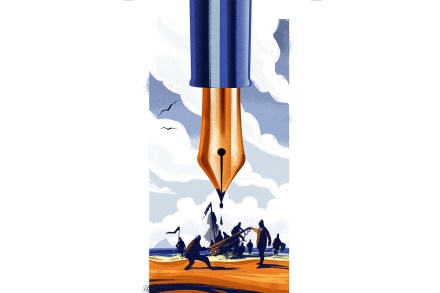
I was dozing, a little hungover, on the morning flight from Prague to London, when I saw them for the first time. Ten men on a beach, dragging a landing craft up the sands. Where? Can’t tell yet. When? The fourteenth century. Who? Don’t know, but they look like trouble. I woke up. Through my AirPods I heard the Blur singer Damon Albarn growling the final song from their 1997 album Blur. “In these towns, the English army grinds their teeth into glass / You know you’ll get a kicking tonight...” I opened my laptop and started making notes. The men came surprisingly well-formed. They were soldiers of fortune in the Hundred Years’ War. They already had names. Faces. Talents. Foibles. Yearnings. Secrets. I wrote down as much as they could tell me before the plane landed.
historical fiction

The return of Cormac McCarthy

After sixteen years of silence, Cormac McCarthy has literally written a novel and a half. That’s the good news. Perhaps less-good news is that about half the longer novel depicts conversations between a mad person and an imaginary deformed imp called The Thalidomide Kid, while all of the half-novel is a dialogue between the same mad person and her psychiatrist. The unequivocal bad news is that quite a lot of both is about quantum physics, by way of ruminations on the Manhattan Project and a JFK conspiracy theory: an unholy trinity of literary red flags. I do not mean to dissuade anyone from reading a rare new work by one of America’s finest living writers. Parts of The Passenger and its “coda,” Stella Maris, are very funny. Parts are even brilliant.

cormac McCarthy

When boxing ruled the world

From our UK edition

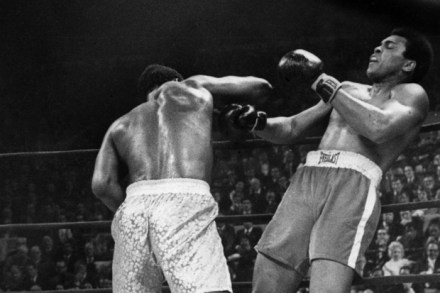
The early 1970s was a good time for heavyweight boxing. Indeed, it was probably the last truly great age for the sport. Flamboyant fighters contested brutal matches in exotic locations, from the Philippines to the Caribbean. The world watched open-mouthed. The marketing slogans attached to some of those fights remain instantly recognisable: who has not heard of the Rumble in the Jungle or the Thrilla in Manila? During these years boxing, and particularly American heavyweight boxing, was the most prominent and glamorous sport on the planet. Boxing in the early Seventies was also culturally important in a way that it is not any more. The sport was briefly about more than money and pain. It spoke to the politics of war, race, religion and international diplomacy.

English embroidery: the forgotten wonder of the medieval world

From our UK edition

Think of an art at which the English have excelled and I doubt you would come up with the word ‘embroidery’. As I muttered when my agent asked whether I should like to make a film for BBC4 about the golden age of this forgotten but brilliant native art form: ‘Embroidery? What, like sewing?’ But no, not like sewing. Or, actually, only a little bit. During the ‘high’ Middle Ages, English embroidery was one of the most desired and costly art forms in Europe. It was known as opus anglicanum or ‘the work of the English’ — a generic name that instantly conjured notions of craftsmanship, beauty, luxury and expense in the minds of those who heard it.

Bookends: Terribly Tudor

From our UK edition

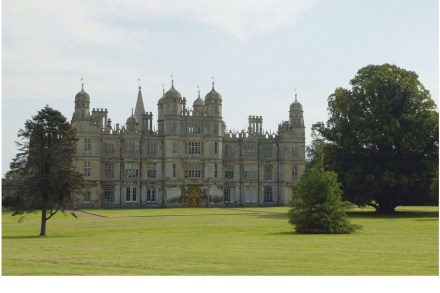
History publishers like a gimmick, so I assumed Suzannah Lipscomb’s A Visitor’s Companion to Tudor England (Ebury, £12.99) must be a cheeky rip-off of Ian Mortimer’s Time Traveller’s Guide series. Not so. In fact this is a rich, meticulously plotted field guide to the surviving architectural treasures of Tudor England: the houses, fortresses, palaces and battlefields that were trodden by our most famous royal dynasty, from Westminster Abbey and Windsor Castle to Kett’s Oak and Burghley House (pictured).But it is more than just historical I-Spy. Lipscomb is an eloquent tour-guide, and each of her 50 destinations allows her deftly to unfold a different chapter of Tudor history.

When treason was the last resort

From our UK edition

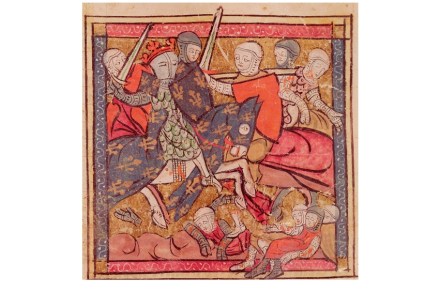
One hundred and fifty years after Anglo-Saxon England was invaded by the Normans, Anglo-Norman England was invaded by the French. On 21 May 1216 King Philip Augustus’ eldest son, Louis the Lion, landed at Stonor on the Isle of Thanet, kissed a crucifix, planted it in the ground and began an 18-month war for the English crown. He had been invited to England by a group of barons who wished to replace King John as punishment for repudiating the terms of Magna Carta. The war Louis waged, although ultimately unsuccessful, was a damned near thing. Sean McGlynn’s new book calls this England’s ‘forgotten invasion’, although in recent years Hollywood has been trying to remind people about it.

A beautiful bloody world

From our UK edition

The half-millennium or so that followed the division of the Carolingian empire in 843 AD was a time of profound social and political change in Europe. Kingdoms were established, new forms of law and theories of power were developed and military technology and tactics were revolutionised. Relations between church and state were transformed. The emerging European states developed new cultural identities, while western Christendom as a whole also began to define and assert itself against the Islamic states in the Middle East and north Africa, and the ailing remnants of the Byzantine empire to the east.

Sad, not mad

From our UK edition

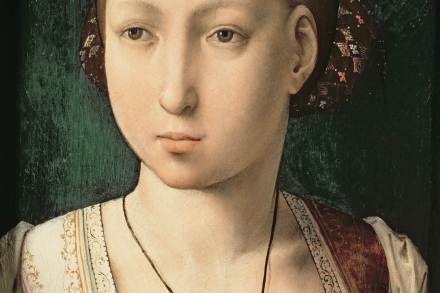
The Catholic Monarchs — Ferdinand II of Aragon and Isabella I of Castile — had five children together. The Catholic Monarchs — Ferdinand II of Aragon and Isabella I of Castile — had five children together. Each child was married off to a promising European neighbour, thereby acting as a diplomatic tool in the Monarchs’ reassertion of royal authority over Spain. Two of those children remain famous today, chiefly for their reputation as the 16th century’s most wretched doormats. Katherine of Aragon was the youngest child. As we know, her first marriage was to Henry VII of England’s eldest son, Prince Arthur. When he died, her second marriage was to the man who would become Henry VIII. The rest barely needs rehearsing.

Enduring love

From our UK edition

Just over two years ago, Barack Obama delivered a calculated insult to Britain. He returned the Epstein bust of Sir Winston Churchill that had been loaned to America by the British government as a token of solidarity following the September 11 terrorist attacks. Churchill had pride of place in the Oval Office between 2001 and 2009, a symbol of the tight-knit transatlantic relationship that had flourished under Tony Blair and George W. Bush. The rejection of the greatest Anglo-American in modern history in favour of a bust of Abraham Lincoln therefore seemed to mark a profound moment.

Gym junkie

From our UK edition

A trip to the local bodybuilders’ gym under the influence of muscle drugs If you want to get ahead in sports, there’s nothing better than a nice big helping of performance-enhancing drugs. Just ask the guys on the Tour de France. At the end of last month the Spanish cyclist and three-times Tour winner Alberto Contador was banned from cycling after testing positive for the illegal anabolic agent Clenbuterol. He says that he accidentally ate it in a steak his mate brought him from Spain. You have to agree it’s a great excuse. I have a feeling I wheeled out that line, or a very similar one, to my appalled mother after returning green-faced and soused in my own bile from a house party in the mid-1990s.

The match that sparked the Civil War

From our UK edition

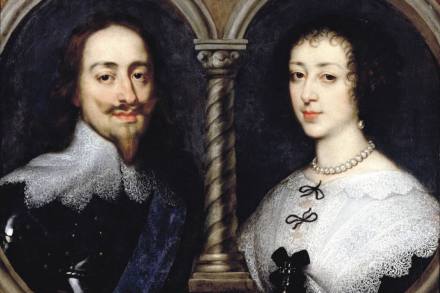
There are turbulent marriages. And then there are turbulent marriages in which the husband ends up getting beheaded on a stage. This book describes the latter. One doesn’t normally need to encourage publishers to hyperbole, but in the case of Katie Whitaker’s subtitle, there might have been a case for giving it a bit more welly. The story begins with a prissy 15-year-old French princess being taken to England, to a husband whom she’d never seen. It ends with that husband losing his crown and his head to Oliver Cromwell’s Parliamentarian taleban. The sad coda is the princess living out her days back in France, estranged from most of her children: older, wiser, but not much happier.

A rather orthodox doxy

From our UK edition

‘His cursed concubine.’ That was the imperial ambassador Eustace Chapuys’ judgment on Henry VIII’s second wife, Anne Boleyn. ‘His cursed concubine.’ That was the imperial ambassador Eustace Chapuys’ judgment on Henry VIII’s second wife, Anne Boleyn. And that was mild. The abbot of Whitby called Anne a ‘common stud whore’. The judge Sir John Spelman noted during her trial that ‘there never was such a whore in the realm’. And, of course, Henry VIII beheaded her. Anne, rather like our own Diana, caught some heavy flak for having a sexy reputation.

Becoming a Victorian

From our UK edition

Winston Churchill was a racist. He said things like ‘I hate people with slit eyes and pig-tails. I don’t like the look of them or the smell of them’. Winston Churchill was a racist. He said things like ‘I hate people with slit eyes and pig-tails. I don’t like the look of them or the smell of them’. In 1931 he described Gandhi as a seditious Middle Temple lawyer, a half-naked fakir and a ‘malignant subversive fanatic’ and in 1954 he told the white Kenyan settler Michael Blundell that he ‘did not really think that black people were as capable or as efficient as white people’, although he said that ‘if I meet a black man and he’s a civilised educated fellow I have no feelings about him at all’.

A society celebrating itself

From our UK edition

The years between the middle of the 18th century and the middle of the 19th century, argues Holger Hoock, ‘saw Britain evolve from a substantial international power yet relative artistic backwater into a global naval, commercial and imperial superpower as well as a leading cultural power in Europe. The years between the middle of the 18th century and the middle of the 19th century, argues Holger Hoock, ‘saw Britain evolve from a substantial international power yet relative artistic backwater into a global naval, commercial and imperial superpower as well as a leading cultural power in Europe. These developments … were not unrelated.’ Wowsers.

It’s Gin Lane all over again

From our UK edition

Hogarth’s satire is as appropriate now as it was 250 years ago, says Dan Jones. What we need is a new approach to our age-old drinking problem In 1751, as the great Gin Craze was winding down, William Hogarth produced a series of six prints. It included ‘Gin Lane’, his cruel masterpiece. In the foreground a syphilitic old slapper lolls across a dirty flight of steps, pinching from the snuffbox as her baby tumbles to its death in the cellar of a gin shop. Behind her kale-eyed rioters tear themselves and their surroundings to pieces. Brawlers wield furniture as weapons. As Hogarth later wrote, ‘In Gin Lane...

The new age of enlightenment

From our UK edition

God’s Philosophers: How the Medieval World Laid the Foundations of Modern Science, by James Hannam We all have our hobby-horses. James Hannam’s is the abuse of the word ‘medieval’. Hats off. As I have written in this magazine before, using the term as shorthand for anything you consider cruel, arcane or barbarous (be it the Taliban, the hunt, the House of Lords, or whatever) is ignorant and unhistorical. If I had my way, all offenders would get a long spell in the village stocks.  In God’s Philosophers, Hannam has pursed his cheeks and attempted to puff away the common notion that nothing of scientific significance happened in Christendom between the fall of Rome and the birth of Galileo.

Free for all

From our UK edition

I normally make it my policy when writing book reviews never to read anyone else’s. I normally make it my policy when writing book reviews never to read anyone else’s. It clogs up your mind with someone else’s prejudices and wrong opinions,where- as in fact you are being paid to bang on about your own. This week I broke my rule and read the Guardian review of Ben Wilson’s new book. It was by some sort of lawyer chap and it was very serious. It made me remember why I gave up the Guardian, which is a news- paper for quinoa-eaters and Arsenal fans. But I digress. I read their review because I had heard a disturbing rumour that the reviewer had accused Wilson of touting in his book for a job as David Cameron’s next speechwriter.

Running on envy

From our UK edition

Please, someone give me a pound for every PR floozy who’s told me over breakfast that she’s ‘writing a novel’ about the dirty world of, er, PR. One minute you’re sucking up a nice creamy plate of scrambled eggs at the Wolseley, the next you’re trying to control your acid reflux. (But control it you must; she’s paying.) I have spent so much time shuddering at the very thought of these ditzies’ unwritten books that to read Nicholas Coleridge’s splendidly realised tale of sexy beastliness in the world of corporate communications — and to find it captivating, pacy and scandalous — was a blessed relief. I cackled like a zany as I flipped the pages late into the night. Miles Straker is a tyrant and a snob.

All hands on deck at Westminster

From our UK edition

Dan Jones on how the Armada tapestries, destroyed by fire, are being recreated Anthony Oakshett points to a palette and shows me a colour called ‘sea-monster grey’. The tall and genial artist is guiding me around his cool, airy temporary studio in an outhouse at Wrest Park, the Bedfordshire country house. Around us stand six vast canvases depicting scenes from the failed attack of the Spanish Armada in 1588. There are indeed a number of sea monsters in various stages of completion, their terrible mouths yawning and their tails thrashing as English and Spanish ships give battle around them. Oakshett is the artist leading a two-year project to recreate the Armada tapestries, a largely forgotten glory of the pre-Victorian House of Lords.

Only a mediaevalist can understand the present

From our UK edition

‘It was an age of apocalypse. People across the world lived in fear of a new pandemic disease that leapt with ease from animals to humans, which spread on the breath and moved across borders with alarming freedom. Howls of protest carried through the smashed streets of Europe’s cities as they fell to popular rioting, the citizens and rabble alike provoked to violence by economic catastrophe and widespread political disenchantment. Long and wearisome wars weakened the finances of the world’s most powerful countries, their societies already threatened by global climate change and an unstable food supply. If people did not quite think they were living in the Last Days, there was at least a common feeling that the end of the world was not ever so far beyond the horizon.