Daniel Korski

Poland, 1968: the last pogrom

From our UK edition

‘Are you Jewish?’ the officious-looking Dutch diplomat asked my dad. ‘Yes’, he said, realising at that very moment, everything had changed. He was no longer Polish; the culture he had been born in, the citizenship he held, the language he spoke, the country he loved – it all meant nothing. He was just Jewish. He couldn’t be both. The diplomat stamped my father’s papers and he left for a new life in western Europe. Up to 20,000 Jews, including my mother, were hounded from Poland at the end of the 1960s. They were accused of supporting Israel in a virulent anti-Semitic campaign led by the communist government. This anti-Jewish campaign was ostensibly sparked in 1967 by the Six-Day War between Israel and its Arab neighbours, supported by the Soviet bloc.


Making a call on Qatada

From our UK edition

The Prime Minister, we are told, has been trying to reach the King of Jordan to see if some kind of arrangement can be made so that Abu Qatada can be deported legally and that no forms of torture-gained evidence will used against him in a Jordanian court. This seems like a sensible thing to do. But it is important that the government balances its counter-terrorism policy with its foreign policy.   Here is what I mean. Jordan is a friend of Britain, but the King is under tremendous pressure to reform. There are daily demonstrations against his rule and the protests are gathering pace. His reforms, meanwhile, have been limited and the country is running out of money. It is no longer unfeasible that Jordan could face what many other countries in the region has seen.

Stopping Assad

From our UK edition

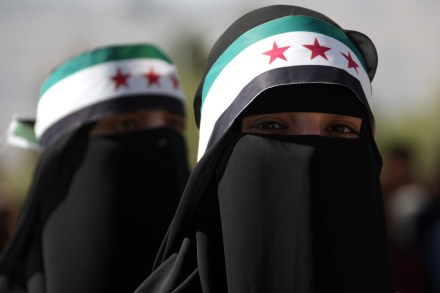
The situation in Syria grows worse by the minute. President Assad seems to have taken the UN Security Council’s deadlock as carte blanche to launch an all-out attack on Homs. Russia looks like she wants to mediate, while Turkey is preparing a new initiative with countries who oppose the Syrian government, a sort of anti-Assad group. Meanwhile, the Gulf States have expelled all Syrian ambassadors.   The chances of a ceasefire are low, as are the prospects of a military intervention. Russia has an interest in persuading Assad to abdicate, but can Assad be persuaded? Syria still has friends in Iraq and Iran, where the governments are supporting the regime both materially and financially.

Where has the pro-EU camp gone?

From our UK edition

Did you see that amazing article by a group of pro-EU businesspeople? What about that clever ad paid for by ‘Better To Be In’, the new pro-EU lobby group? Nope, me neither. The reason we haven't seen anything like that is because the pro-European camp in Britain is in total disarray. Like a beaten army, it is withdrawing in a state of confusion, while some diehards stage energetic but un-strategic counterattacks against the advancing Eurosceptic forces. A letter from pro-EU businessmen was, frankly, unimpressive: the signatories were hardly a who's who of Britain's business community, and even included some former officials. Hardly a show of strength.

Putin’s end

From our UK edition

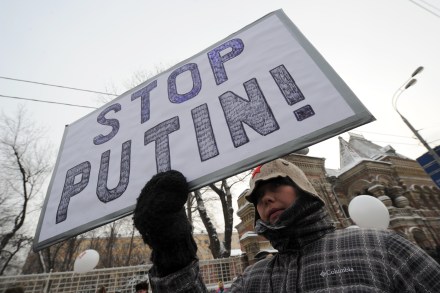
This weekend, thousands of people defied the cold and the control in Moscow to show their dislike for Vladimir Putin and what Russia has become under his leadership: corrupt, energy-reliant, centralised, and uncompetitive. It is now a country that must win externally because it can't help but lose internally. ‘Post-BRIC’, as a new report has it. My guess is that Putin will ‘win’ the presidential election, and will ensure that a sufficient number of counter-protests make it look as if he has more support than he actually has. That's exactly the kind of ‘virtual politics’ that Moscow excels at and which Ukraine expert Andrew Wilson has described so well in a book on the subject.

Storm in an Indian teacup

From our UK edition

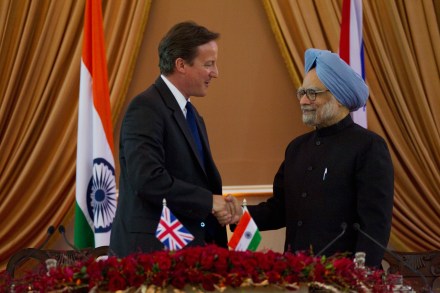
So, does India want the UK’s aid or not? If you believe the Indian finance minister, Pranab Mukherjee, the funds are unnecessary, ‘peanuts’ even. The Daily Telegraph reports that British ministers ‘begged’ the Indian government to take the money. The story is likely to garner attention, especially as aid to a growing power like India is a contentious proposition. But before taking the Indian Finance Minister's word — and the Telegraph's reporting — as truth, it is worth looking at a few facts. First, Mukherjee made the statement in 2010, as reported in the Financial Times at the time.

A Syrian Srebrenica?

From our UK edition

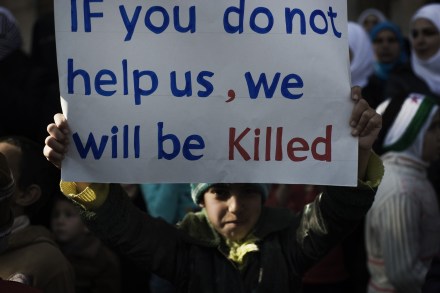
Every day things are getting worse in Syria. Today the Syrian regime started what looks like an all-out assault on the key city of Homs, reportedly killing at least 55 people. The attack took place as the UN Security Council prepares to vote on a draft resolution backing an Arab call for President Bashar al-Assad to give up power. The problem has been the lack of information about events on the ground. Though the Syrian government has failed to quell the uprising, it has succeeded in limiting access to information by the outside world. So a lot remains unknown, unreported or clouded in pro-regime propaganda. But speaking to people in Syria, some things appear clear. First, there is now a guerrilla war of popular resistance against the Syrian regime.

An Israeli strike on Iran?

From our UK edition

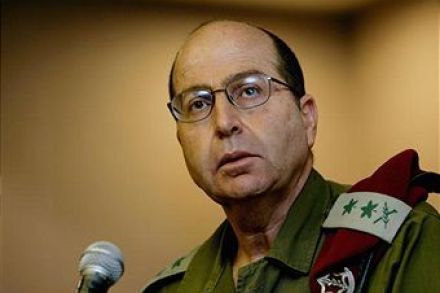
Will they or won’t they? Most political parlour games involve a question of this kind and the one about whether Israel will strike Iran – played out regularly in Washington, London and Paris – is no exception. The last couple of days have seen more sabre-rattling than before. Israeli Vice Premier Moshe Yaalon, who heads the Strategic Affairs Ministry, and is a former commander of the Israeli military, said all of Iran’s nuclear installations are vulnerable to military strikes while the US defence secretary was quoted as saying he thought Israel was likely to bomb Iran within months. They may or may not, but it is unlikely they will communicate through the voice of Leon Panetta or even in the pages of US newspapers.

Don’t expect repatriation in this Parliament

From our UK edition

When David Cameron wielded his veto at the European Council in December many Tories thought this was the beginning of a process of repatriation of powers from the EU. Myself, I thought it would be the high water mark of the government’s Euro-scepticism — and so it has proven. But things are about to get even worse for the Bill Cashes of this Parliament. In the short-term, at least.   Why so? Well, the government appears to be concluding that it will not get a receptive ear from its European partners on any repatriation bid. The other European leaders are simply too busy fixing the euro to even read any UK proposals. And what's clear already is that they will remain too busy not just for another few months, but for another year or more.

Moving on up

From our UK edition

If Muhammad won't come to the mountain, the mountain must come to Muhammad. Or so goes a saying popularised by Francis Bacon. It seems Andrew Mitchell, the Development Secretary, has taken this to heart and decided to move his entire Department — DfID — closer to the Foreign Office, MoD and, of course, No 10. After years of relishing its location — both geographically and functionally — a distance away from Whitehall, where all the other government departments are located, DfID will, I'm told, move to 22-26 Whitehall, next to Horse Guard's Parade. The key point is the cost saving involved — at the moment DfID's current building at 1 Palace St costs around £10m a year whereas 22-26 Whitehall will cost around £3.

Uncertainty reigns in Syria

From our UK edition

The Syrian situation is worsening by the day. Now the Arab League has pulled back its monitors in recognition of their failure to ease the violence. Foreign Secretary William Hague has said he is ‘deeply concerned,’ while the Gulf states are pushing for the whole mater to be referred to the UN Security Council. But the chances of a ceasefire and the start of a transition are low. The Russian government is growing tired of Bashar al-Assad but does not want to condone any kind of intervention, which they think is likely if the matter is referred to the UN Security Council. Russia still regrets backing the Libya resolution, believing they were hoodwinked by the West into allowing a military intervention against Muammar Gaddafi.

‘Let everyone live happily…’

From our UK edition

Created to remember one of the darkest chapters in mankind's history, Holocaust Day is for many people an occasion for unadulterated discomfort. Most of my family perished in the Holocaust and those who survived either hid in occupied Poland, pretending to be Catholics, fled to Uzbekistan in the then-USSR or, like Marcel Rayman, fought the Nazis. Today I re-read a letter Marcel sent to his family the night before he was executed by the Nazis for trying to kill the German commander of Paris: Little mother, When you read this letter, I'm sure it will cause you extreme pain, but I will have been dead for a while, and you'll be consoled by my brother who will live happily with you and give you all the joy I would have liked to give you.

Let’s talk about Qatar

From our UK edition

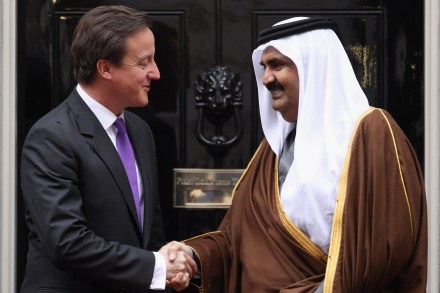
The rise of Qatar has been one of the most remarkable developments in the recent history of the Middle East. How this small, oil-rich Gulf state built Al Jazeera and parleyed the TV station's influence into a diplomatic role across the region is an insufficiently explored issue. The list of the monarchy's achievements is impressive, even putting aside how they secured the football World Cup for 2022. Qatari diplomats have mediated in Lebanon, helped rejuvenate the Arab League, led condemnation of Bashir al-Assad and joined the fight against Libya's Muammar Gaddafi. In a way, Qatar has become one of the region's lynchpins, second only to Saudi Arabia as the West's go-to country.

Would Iran block the Strait of Hormuz?

From our UK edition

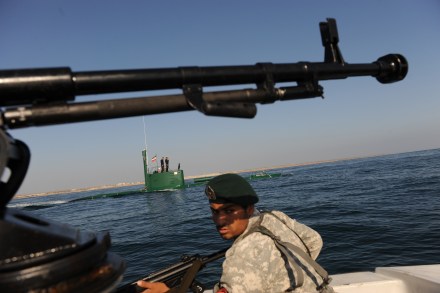
With the EU agreeing a new round of sanctions on Iran – outlawing European oil and gas purchases from Iran in six months, freezing Iran's Central Bank and banning trade in gold and other precious metals with any state-related bodies – tensions between Iran and the West are increasing. An Iranian MP has – again – warned that Iran will close the Strait of Hormuz and the US administration has – again – said that such an action will be countered. But what would happen if Iran carried out its threat? Iran has noteworthy littoral warfare capabilities, including mines, anti-ship cruise missiles, and land-based air defence.

Welcome, Croatia

From our UK edition

Croatia's EU referendum was overwhelming — more than two-thirds of voters favoured the young state's accession to the European Union. This is an important moment. For it shows that another part of Yugoslavia is intent on leaving its violent past behind and move into the European mainstream. Croatia and its newly-elected government still faces many problems — corruption, judicial favouritism and xenophobia among them — but the journey to a milder and more moderate society can now continue.   When Croatia accedes to the EU, probably next year, it will be an example to those states in the Balkans, like Bosnia, Albania and Serbia, that wish to join the EU but not undertake the hard, reformist work that's required.

Uncivil service

From our UK edition

Political cultures differ. In Iran, for example, hyperbole is expected in all political conversations. So slogans always call for ‘Death to the US’, and nothing less. In Britain, of course, the use of language is more even-tempered, but other rules apply. Blaming the civil service for failure is considered OK, but charging an individual official, even a Permanent Secretary, for the same is considered off-limits. If a minister were to try it, then he'd be accused of trying to pass the buck on towards defenceless officials. But, as Camilla Cavendish points out in today's Times (£), failure is often also the fault of senior officials who, despite problems in the past, move seamlessly from job to job and from Department to Department.

A taxing kind of spin

From our UK edition

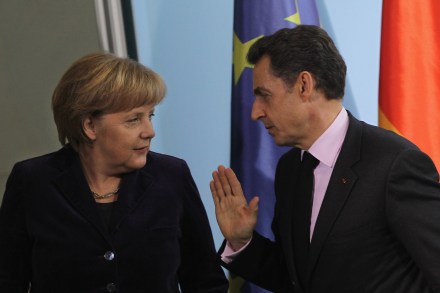
The story being briefed out of the year’s first Franco-German Summit is that President Nicolas Sarkozy won the backing of Chancellor Angela Merkel for a tax on financial transactions, a levy that the British government objects to and that Ernst and Young say would leave a €116bn hole in Europe’s public finances. But before the City begins building barricades and the PM puts on his bulldog mask, it is worth taking another look at the news from Berlin. For no sooner had the agreement been announced than the tax was rejected by Chancellor Merkel's junior coalition partner, the pro-business Free Democrats, who say they will only back a Europe-wide tax scheme. They are not alone. The Netherlands and Ireland feel the same.

The Burma trail

From our UK edition

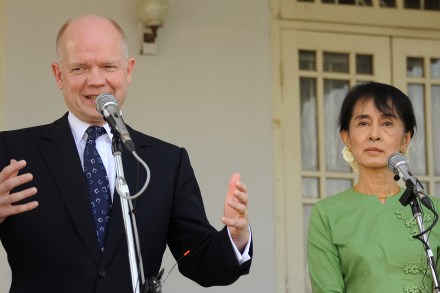
Foreign policy specialists have been confused about how to categorise the coalition. Is it neoconservative, given its backing for the Libyan rebels? No, says no less a figure than the Prime Minister. Is it realpolitical, given the PM’s willingness to make up with Russia and court China? Most No.10 officials would wince at such a description. So what is it? To answer the question, look no further than William Hague's trip to Burma last week. Not only was it the first visit by a British foreign minister since 1955, but it was also the culmination of little known, high-level, behind-the-scenes outreach to Aung San Suu Kyi by No 10 and concomitant pressure on the Burmese junta. And it seems to be paying off.

Dire straits

From our UK edition

The situation in the Strait of Hormuz continues to intensify, with Defence Secretary Philip Hammond showing that, like his predecessor, he is not shy of pushing back when he gets a shove. Today he warned Iran that any attempt to block the straits, a key shipping lane, would be ‘illegal and unsuccessful’, and would be countered militarily if necessary.     In truth, any conflict over the straits would be very costly for both sides. Iran is likely to have the capacity to strike, in a shock-and-awe attack, at US and British bases in Kuwait, Bahrain and Oman. But this would be a dramatic escalation of events which would — Tehran must realise — see the leash come off Israel, and probably lead to an all-out aerial attack on Iran.

Libya still hasn’t found peace

From our UK edition

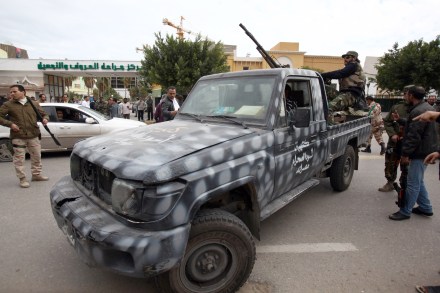
Guns blazing, Libya’s various militias are showing little sign of laying down their arms and giving authority to the Libyan state. Even Mustafa Abdul Jalil, chairman of the National Transitional Council, has said that Libya faces a risk of widespread conflict, after a gun battle between militias in one of Tripoli's busiest streets killed four fighters. Publicly, the militiamen are reluctant to lay down arms for fear of a rearguard pro-Gaddafi takeover. In reality, they like their newfound power and want to ensure that they swap their weapons for status and influence. How many of these groups exist is not clear — some estimate 100, with over 125,000 armed Libyans making up their numbers.