Judith Flanders

Beer and skittles and Lucian Freud and Quentin Crisp – a Hampstead misery memoir

From our UK edition

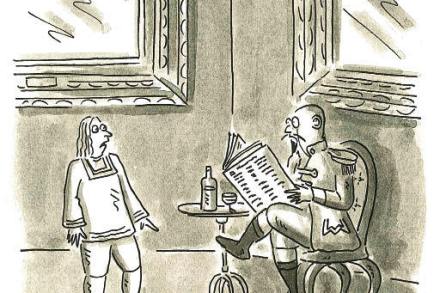
The rise of the ‘misery memoir’ describing abusive childhoods, followed by the I-was-a-teenage-druggie-alkie-gangbanger-tick-as-appropriate memoir, pushed into the shadows an older tradition, the memoir of childhood pleasure, of charm and humour. Some of the greats — Gwen Raverat’s Period Piece, Diana Holman-Hunt’s My Grandmothers and I — continue to be enjoyed; others every bit as good — Joan Wyndham’s Love Lessons trilogy — must be snapped up secondhand. Marjorie Ann Watt’s Slideshow never quite reaches these heights, but is nevertheless a welcome addition to this genre. Watts herself is a painter and illustrator, and here she uses words to depict the lost world of the prewar bohemian Hampstead upper-middle-classes.

The pen was mightier than the brush

From our UK edition

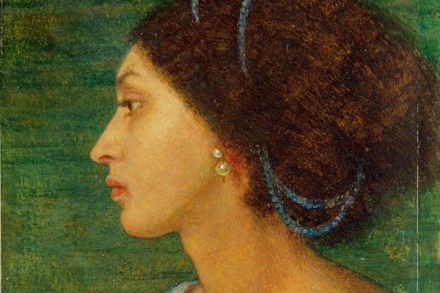
Of the making of books about the Pre-Raphaelites, it appears, there is no end. Like the Bloomsberries, most of the PRB are more interesting to read about than the study of their work would suggest: a few towering talents stalk the mountaintops, while many lesser ones lurk in valleys and foothills. George Boyce was one of those lesser talents — a watercolourist of some small fame among his colleagues (although he was 52 before he was elected to full membership of the Old Water-Colour Society). His friend Henry Tanworth Wells had more worldly recognition, if not the esteem of the avant-garde: as a portraitist he painted the great, the good, the socially eminent or the just plain rich. The two men were also connected through a third painter, Boyce’s sister Joanna.

Making sense of a cruel world

From our UK edition

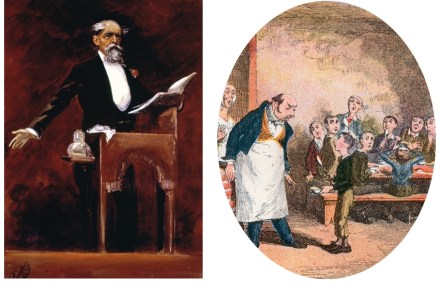
The actor-biographer Simon Callow has played Dickens, and has created Dickensian characters, in monologues and in a solo bravura rendition of A Christmas Carol. Now he suggests that the theatricality of Dickens’s own life is a subject worthy of exploration in book form. So it is, and if Callow had done so, it might have made a useful addition to what he rightly identifies as the ‘tsuanami’ of books that are appearing for Dickens’ bicentennial. But in this cursory biography, he merely makes token gestures in that direction: we learn rather a lot about Charles Mathews’ one-man shows; and Callow describes the theatrical impulses behind some of the novels.

The odd couple | 24 September 2011

From our UK edition

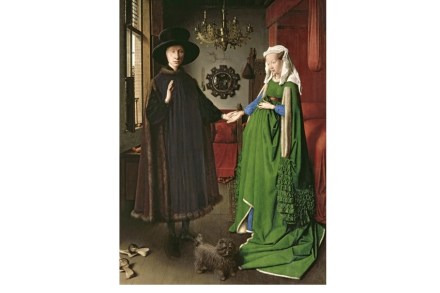
Carola Hicks was an acclaimed art historian, and, as she phrased it, a biographer of objects, exploring the ‘lives’ of art-historical subjects from the Bayeux tapestry to the stained-glass windows of King’s College Chapel, and now Jan van Eyck’s ‘Arnolfini Wedding Portrait’, deftly weaving together the history of the times in which the objects were created, art-historical analysis and a study of their afterlife, both how the pieces were treated by successive generations and what the cultural resonances of those treatments might tell us today.

An upside-down world

From our UK edition

Last year, with William Ryan’s The Holy Thief, detective-fiction aficionados welcomed the thrillingly horrific first instalment in a new series set in 1930s Moscow. Last year, with William Ryan’s The Holy Thief, detective-fiction aficionados welcomed the thrillingly horrific first instalment in a new series set in 1930s Moscow. In his first outing, Alexei Dmitrievich Korolev, a detective in the Moscow militia, managed to navigate the murky waters following the fall of Yagoda, head of the NKVD, and the onslaught of Stalin’s Great Purge.

Pearls before swine

From our UK edition

The story of Harry the Valet is the stuff of fiction. He was a dazzlingly adept, smooth, glamorous jewel thief, who never stooped to petty crime but carried off the kind of robberies more commonly found in novels and films: huge ruby necklaces, diamonds and pearls all poured out, pirate-treasure fashion, into his waiting hands. The Valet was the son of a successful lower-middle-class tradesman, a picture-framer, who died when he was a young man, leaving his widow to carry on his business, unsuccessfully. Harry meanwhile bet on horses, drank and smoked and revelled in bad company, soon finding himself with no money and no profession. He took the easy way out, deciding to steal a living, rather than earn one.

Massacre of the innocents

From our UK edition

‘La justice flétrit, la prison corrompt et la société a les criminels qu’elle mérite’ — Justice withers, prison corrupts, and society gets the criminals it deserves. ‘La justice flétrit, la prison corrompt et la société a les criminels qu’elle mérite’ — Justice withers, prison corrupts, and society gets the criminals it deserves. With that terrifying and depressing thought, the fin-de- siècle criminologist Jean-Alexandre-Eugène Lacassagne summed up his views at the end of his long career.

A palace in miniature

From our UK edition

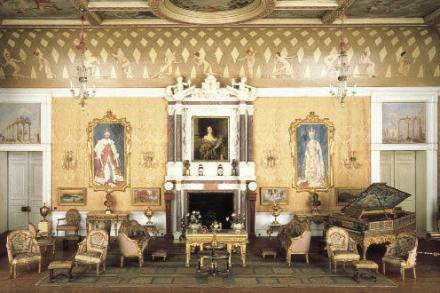
There’s nothing like a really good wallow in nostalgia. There’s nothing like a really good wallow in nostalgia. And if it can be arranged so that the nostalgia is for a time that never was, that’s even better. So it is hardly surprising that when, after the horrors of the first world war, Princess Marie Louise, Queen Victoria’s granddaughter, approached Sir Edwin Lutyens to design a dolls’ house for Queen Mary, they settled stylistically on creating a house firmly rooted in that semi- mythical long Edwardian pre-war summer, when God was clearly an Englishman, his home was his (miniature) castle, and his servants were, decently, not only omnipresent but also invisible.

Lurking beneath the surface

From our UK edition

One’s past life is, usually, comfortably past. One’s past life is, usually, comfortably past. Susan Morrow’s first husband, Edward, is so firmly in her past that his second wife even sends her Christmas cards, signed ‘love’. Apart from that once-a-year token, she hasn’t heard from Edward in two decades. Their early marriage had been brief, and at cross-purposes: she had wanted a conventional bourgeois life, while he wanted to write — worse, he wanted to be a writer. Now, out of her past, comes a novel from Edward, with a note saying ‘Damn! but this book is good.’ But it’s still missing something, he fears, and he asks his long-ex-wife to read it, and tell him what.

Life beyond the canvas

From our UK edition

Angela Thirlwell’s previous book was a double biography of William Rossetti (brother to the more famous Dante Gabriel) and his wife Lucy (daughter of the more famous Ford Madox Brown). Angela Thirlwell’s previous book was a double biography of William Rossetti (brother to the more famous Dante Gabriel) and his wife Lucy (daughter of the more famous Ford Madox Brown). Now she has once again turned her attention to the margins of the Pre-Raphaelite group, with a joint portrait of the four women who influenced Ford Madox Brown: his two wives, Elisabeth and Emma, and two women for whom he had spiritual affinities, and (probably platonic) romantic yearnings. Elisabeth was, in reality, the least influential, for her life was pathetically brief.

Riding for a fall

From our UK edition

Many attempts have been made to portray the ‘Roaring Twenties’, or the ‘Gilded Nineties’, or the something-or-other sometime-else, but in truth the 1930s is one of the few decades that fits neatly into a nice round summary, with the Great Depression at one end, the second world war at the other. Many attempts have been made to portray the ‘Roaring Twenties’, or the ‘Gilded Nineties’, or the something-or-other sometime-else, but in truth the 1930s is one of the few decades that fits neatly into a nice round summary, with the Great Depression at one end, the second world war at the other. The 1920s had seen a sharp recovery from a war in which 30 per cent of all men aged 20–24 had died.

Not perfect freedom

From our UK edition

‘Servants’ and ‘service’ have not always meant ‘servility’. ‘Servants’ and ‘service’ have not always meant ‘servility’. From the Middle Ages right through to the 16th century, everyone was servant to someone: a lord was servant to the king, a lesser lord to a greater. Children likewise served in the households of their parents’ equals: service was what one did before God, and before one’s superiors, in class, or age. And many servants were for display as much as utility: as the consumer durables of their time, their number gave their masters’ prosperity in physical form.

Ten minutes that shook Europe

From our UK edition

Wrath of God: the Great Lisbon Earthquake of 1755, by Edward Paice Portugal in the 18th century was at once a mystery and deeply familiar to the British. Deeply familiar, as one of Britain’s most enriching trading partners, providing Brazilian gold in exchange for British textiles and other manufactured goods. A mystery, because Portugal appeared to be hundreds of years behind the rest of Europe.

Out of the frying pan . . .

From our UK edition

Stranger in the House: Women’s Stories of Men Returning from the Second World War, by Julie Summers The second world war is big business. Television, film, novels — whole industries have evolved to bring home to us the images of a ‘just’ war. Then there are the thousands of books, on politics, economics, Hitler and Churchill, Rommel and Monty. Too few of these, however, give us authentic voices, telling their own stories. Further, most end with VE or VJ Day, with happy crowds dancing down the Mall. But what came after? How did families reconnect after six years of separation, privation, horror and fear?

A dying fall

From our UK edition

Judith Flanders reviews Stephen Galloway's novel about the siege of Sarajevo  Many novels about war deal with the horrors of the front line, of the terrors of battle. Steven Galloway, in this accomplished, gripping book, instead explores what happens to people who are caught up between warring factions. What happens when you wake up one morning and find that everything in your safe, ordinary, middle-class life has just vanished without warning. A small, true incident during the siege of Sarajevo is his starting point. In a day of death and horror like any other, a mortar shell fell on a group of men and women waiting outside a bakery — a bakery without bread but where the hope of bread was enough to draw a crowd. Twenty-two were killed and many dozens more wounded.

When pink was far from rosy

From our UK edition

J. Robert Oppenheimer, ‘the father of the atomic bomb’, remembered that when he saw the first mushroom cloud rise in its terrifying beauty above the test site in New Mexico, a line from the Bhagavad-Gita came into his head: ‘Now I am become death, the destroyer of worlds.’ According to a colleague, however, what he actually said was, ‘Now we’re all sons-of-bitches.’ Oppenheimer the legend vs. Oppenheimer the man. Kai Bird and Martin J. Sherwin, in this magisterial reconstruction of the rise and fall of America’s first great theoretical physicist, are careful to give both sides, the Sanskrit-reading mystic and the down-to-earth pragmatist.

Beautiful Victorian behemoth

From our UK edition

It would take a heart of stone to contemplate St Pancras station and its appended Midland Grand Hotel without laughing, such is the brio, the swagger, the sheer in-your-faceness of its high Victorian Gothic. Yet it has not always been so appreciated. In the 1950s the distinguished architectural historian Sir John Summerson confided to Sir John Betjeman that he found the design both ‘nauseating’ and unworthy of governmental heritage protection (it was listed anyway, in 1967). The building was in its pomp for a relatively short time; its life as a shabby office or a shuttered, gloomy no-go area lasted much longer.

Pea-soupers and telegraphic paralysis

From our UK edition

Lee Jackson is the creator of that cornucopia of Victorian delight, the Victorian London website (www.victorianlondon.org). From Mogg’s Strangers’ Guide to London, Exhibiting All The Various Alterations & Improvements Complete to the Present Time, produced in 1834, to mortality rates in various parishes in London in 1894 (26.8 per thousand in the overcrowded slums behind the Strand, 12.2 per thousand in salubrious Hampstead), his website is a constant series of discoveries and delights. But, while it is wonderful, it is not always convenient. Dorothy Parker once described the perfect bathtub book as one that balanced neatly behind the taps, and was easy to read through before the water got cold.

The bad old East End

From our UK edition

‘The past is a foreign country: they do things differently there.’ L. P. Hartley’s famous opening is used by Gilda O’Neill as an epigraph to her delightful foray through 19th-century murder and mayhem, but in truth, as she shows in The Good Old Days, the past is our native country. Things were not different then: they were exactly the same. Mass murder has not disappeared; nor has the sale of women and children for sex; nor has robbery, nor street crime, nor mindless violence. The East End of London is O’Neill’s real focus, and she writes of it with the passion and understanding of an insider. She was born there, as were her parents, themselves the children of Victorian East Enders, with a great-grandmother working in the Whitechapel music halls.

The Boogie and Ginnie double act

From our UK edition

Relationships between mothers and daughters are sometimes harmonious, often troubled, and always contradictory. Daughters want to break away, be independent, yet have the approval and advice of their mothers; their mothers, in turn, want to protect and defend their daughters, while willing them to stand on their own feet. This push-me-pull-you dynamic frequently remains unresolved. Virginia Reynolds (nicknamed Boogie) was born in Richmond, Virginia, in 1883, the daughter of former slave-holders and transplanted New Englanders (she was, proudly, a second cousin once-removed of Emily Dickinson).