Richard Beeston

Almost all against all

From our UK edition

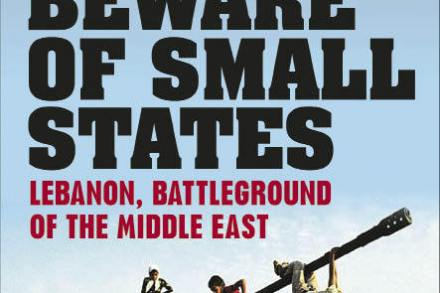
Early one morning in September 1986 three gunmen patrolling Beirut’s scarred Green Line came across what they believed would be easy pickings. Early one morning in September 1986 three gunmen patrolling Beirut’s scarred Green Line came across what they believed would be easy pickings. David Hirst the diminutive, silver-haired and donnish veteran correspondent was stranded by the side of the road in one of the most notorious areas of the city. Scores of Westerners had already been seized by militant groups allied to Iran and Hirst was pushed at gunpoint into the back of a BMW for what should have been the start of several miserable years handcuffed to a radiator in Beirut’s southern suburbs.
An appeal from beyond the grave

From our UK edition

In 1988 I arrived in Pakistan a few hours after the assassination of Zia ul-Huq, the military dictator whose aircraft had been blown to pieces by a bomb. In most countries the violent death of a leader, who had dominated politics for more than a decade, would trigger soul-searching, or at the very least a determination to find out who had killed him and why. But within days of the assassination it was clear that there was little appetite to probe the latest chapter in Pakistan’s violent history. Zia was given a state funeral and quickly forgotten by his countrymen. Twenty years after his murder, the circumstances of his death remain a mystery.

The rules of the meddling game

From our UK edition

Paddy Ashdown was standing by a muddy roadside in mid-winter outside Sarajevo enduring the daily humiliation of the assembled members of the international community in Bosnia. The civil war was at its height. Sarajevo was under siege. The first horror stories of rapes and massacres were beginning to surface. And yet to gain access by the only road open to this desperate European capital, UN troops, aid workers, journalists and even the then Liberal MP had first to be subjected to an intrusive search by the very Serb soldiers responsible for tearing the country apart. They not only had a stranglehold on the city, but they also demonstrated their control over the feeble representatives of the weak and divided world powers.

The voice of moderation

From our UK edition

Abu Suleiman looks back on his time in al-Qaeda as a reformed drug addict in Britain might consider his past life as a junkie. Speaking English, learnt from his American jailers at Guantanamo Bay, the young Saudi is now a respectable member of society and has a wife and a job as a stock market analyst in Riyadh to prove it. Like other Muslim men recruited by militant Islam to the cause of jihad, he knows that he is lucky to be alive, and fortunate to be given a second chance. Most others who made the trek to join Osama bin Laden in Afghanistan or his associates in Iraq have been captured, killed or ended their lives as suicide bombers. The story of what happened to his generation of young Muslim men across the world over the past decade and a half is only now being told.

Time out in Cuba

From our UK edition

For three years Moazzam Begg, former DHSS officer, one-time Birmingham estate agent and top al-Qaida suspect, survived at the sharp end of America’s war on terror. Seized in the middle of the night from his home in Pakistan, Begg was taken through grim makeshift prisons, endured hundreds of hours of interrogation and ended up one of the faceless caged figures in Guantanamo Bay, the US detention facility in Cuba. Thanks to a campaign by Western human rights lawyers and the fact that he is a British citizen, Begg emerged from captivity last year to be reunited with his family. He has now produced the first authoritative version of conditions in Guantanamo and the legal no-man’s-land where hundreds of terrorist suspects are trapped.

Great reporter, lousy prophet

From our UK edition

Eavesdrop on any gathering of Middle East correspondents huddled by the poolside of the Hamra Hotel in Baghdad or enjoying a late supper at Cairo’s Greek Club and the name Robert Fisk will inevitably enter the conversation. For three decades the reporter and author has energetically criss-crossed the Arab world and beyond, generating respect and loathing in equal measure from his colleagues and readers. For some Fisk is the apologist for every dictator and fanatic from Belgrade to Bagram, a prophet of doom with a giant ego who blames all the region’s ills on American arrogance, Israeli conspiracies and Western meddling.

The terror, the terror

From our UK edition

Baghdad You might have thought that sitting down to watch a series of filmed executions would become tedious after the tenth unfortunate victim is dragged before the camera to be slaughtered like a sheep. After all, most of the characters do not change much. There are the hooded Islamic holy warriors standing to attention, as the charges are read out to the accused, usually a man in an orange jumpsuit kneeling and blindfolded on the floor before them. The sets are the same too, often a dingy cement backroom in a house probably on the outskirts of Baghdad. The build-up is tedious. A martial song in Arabic exhorts the faithful to fight and then the commander reads out a statement, often a hammy delivery that even a B-movie Egyptian actor would not get away with.