Book review

A good editor and a good man

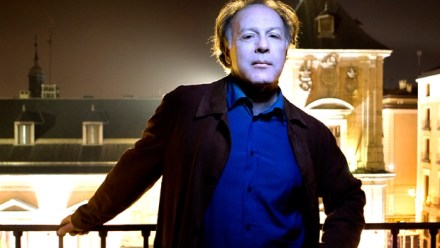
Before embarking on this book, Jeremy Lewis was told by his friend Diana Athill that his subject, the newspaper editor and philanthropist David Astor, was too ‘saintly’ for a lively biography. As a publisher, she had worked on an earlier authorised tome, and thought she knew. Lewis, and Astor, proved more resilient. There are always column inches in a well-connected plutocratic clan such as the Astors. And Astor’s mother, Virginia-born Nancy, was the gold-plated battle-axe who made Cliveden, the family house in Buckinghamshire, the centre of 1930s appeasement. The story is really how Astor (born in 1912) took on his Christian Scientist mother, threw off the trappings of privilege, and became the owner and editor of the Observer during its mid-20th-century heyday.

Purifying the gymnasium

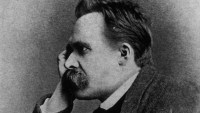
When Friedrich Nietzsche was offered a professorship in classical philology at the university of Basel in 1869 he was so happy he burst into song. He was only 24 at the time — a year younger than Enoch Powell, who became a professor of Greek at the university of Sydney aged 25 — and looked forward to a brilliant academic career. Three years later, when he delivered the six lectures contained in this book, he was already showing signs of disillusionment. His teaching duties included six hours at the local gymnasium — the German equivalent of a secondary school — and he wasn’t impressed by what he found there.

A disarming heroine

The name Freya is derived from the old Norse word for ‘spouse’, perhaps Odin’s. As a goddess she is variously responsible for birth, death, war and beauty, which seems to cover a fairly wide range of human endeavour. It is a name befitting the ardent heroine of this old-fashioned novel with a distinctly contemporary bearing. An initial irritation at the use of a literary pun (the first of the three parts of the book is called ‘At Swim, Two Birds’ for no very obvious reason) and a sprinkling of period props (powdered eggs always pop up in the late 1940s) soon gives way to the pleasurable anticipation of a long tale well told.

‘Excess is obnoxious’

When the German doctor and botanist Leonhard Rauwolff visited the Syrian city of Aleppo during an eccentrically Teutonic herb-hunting mission across the Middle East, he was instantly impressed by the thriving trade he encountered. It was ‘admirably great’, he wrote, ‘for great caravans of pack-horses and asses, but more camels arrive there daily from all foreign countries’. The year was 1573 but the description might have been written at any point during the past several thousand years. For Aleppo, trade and cosmopolitanism were always two sides of the same coin. They were seared into the city’s character long before the Muslim conquest of 637.

An electrifying politician

Just who was Benjamin Franklin? Apart, that is, from journalist, statesman, diplomat, founding father of the United States, inventor of the lightning rod, the Franklin Stove, the milometer, swimming flippers and the flexible catheter, the man who engineered the America postal system, who established the first lending library, who wrote one of the finest autobiographies in the language, and who schooled us in soundbites such as ‘Let all men know thee, but no man know thee thoroughly.’ Amen to that. Despite being the subject of a steady flow of worthy biographies, of which this is the latest, Franklin remains as cunning in heaven as he was on Earth. A master manipulator, people saw in Franklin what he wanted them to see.

Doomed youth

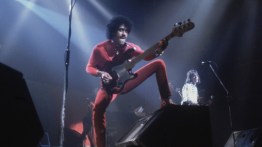
It’s often said that there are only seven basic plots in literature. When it comes to biographies of rock stars who died young, by contrast, there’s usually just the one: somebody mysteriously talented emerges from an unlikely background to achieve stardom, before being destroyed by drink, drugs and fame. Yet, as the film Amy proved last year, it’s a plot still capable of packing a real emotional punch — and, as Cowboy Song proves now, the life of Phil Lynott from Thin Lizzy embodies it more vividly than most. Certainly, there’s no faulting the unlikeliness of his background.

Life in a glass house

‘First and last I was, and always would be, an American,’ Jeremy O’Keefe, the professor narrator of Patrick Flanery’s new novel, insists, with just the kind of pedantic over-emphasis that makes the reader suspicious. Equally dubious is the way he talks. Having spent the last decade at Oxford teaching and writing a book about the Stasi, O’Keefe’s speech is now an odd mixture of affectation and deracination (‘helicoptering’, ‘faux-artisanal’). On his return to New York he finds that he is ignored or mistaken for an Englishman — something which affronts him as much as his Oxford colleagues, with ‘their exclusionary quality’, refusing to accept him as one of their own. His memory, too, is in doubt.

The Mann who knew everyone

Thomas Mann, despite strong homosexual emotions, had six children. The two eldest, Erika and Klaus, born in 1905 and 1906 respectively, were delinquent almost from the word go: shoplifting, prank phone calls, trickery on old ladies, special schools. They were also artistically precocious; the frantic pair took German Expressionist cabaret to Berlin, Paris, Amsterdam, London, New York and Moscow. By the time Klaus reached 21, he and his sister had frolicked right round the globe. Klaus never stopped travelling, and this biography is a feverish sequence of arrivals and departures. Erika was more the performer, Klaus more the writer. Both were openly gay. Klaus explored his homosexuality in his first book, published in 1925, and in many works thereafter.

War on Mount Olympus

It is a curious fact that the modern Hebrew for ‘atheist’, Tim Whitmarsh notes in passing, is apikoros. The word derives from Epicurus, who set up shop as a philosopher in Athens around 306 BC, but it became so domesticated in Hebrew that the medieval thinker Moses Maimonides, till he found out better, thought it was of home-grown Aramaic origin. In ancient Jewish usage, however, I think apikoros meant someone who denied that God takes care of the world, which was indeed the claim of Epicurus. Though Whitmarsh sets out to show that atheism was quite normal in ancient (Greek) history, atheism turns out to be a slippery notion. Epicurus declared that the whole boundless world was made up of an infinite number of indestructible atoms in unpredictable motion.

In the wrong club

Groucho Marx was delighted when he heard that the script for one of his old Vaudeville routines was being reprinted in H.L. Mencken’s The American Language. ‘Nothing I ever did as an actor thrilled me more,’ he said. Indeed, argues Lee Siegel in his brief biographical study of the most verbal Marx Brother, Groucho’s ‘greatest regret in life … was that he had become an entertainer rather than a literary man’. How else to explain that excruciating evening in June 1964 when Groucho and his wife dined at the home of Mr and Mrs T. S. Eliot and Groucho thought to lecture Eliot on King Lear? To be fair, it was Eliot who, three years earlier, had written to the then 71-year-old Groucho requesting a photograph of his favourite funnyman.

One man’s war through 45 objects

Attempts by soldiers themselves to describe to us our 21st-century wars have come, so far, in a few recognisable varieties: the movie-ready tactical accounts narrated by infallible tough guys, grading into versions of what one Iraq war veteran-writer, Roy Scranton, has termed the ‘myth of the trauma hero’: those dramas of personal suffering that ignore, or even presumptively redeem, a war’s wider consequences. Certain more or less lachrymose recent Navy Seal memoirs, for example, have synthesised these two modes; more gifted introspections like Kevin Powers’s The Yellow Birds, with its callowly incontinent lyricism (‘fires on the hillsides… like a tattered quilt of fallen stars’), take the second as far as it can go.

Muses, nurses and punch-bags

The conceit of this book — the author’s third on Robert Lowell — is strong, although its execution is less successful. Lowell made his love life central to his aesthetic project, especially in For Lizzie and Harriet and The Dolphin, and so it makes sense to read his work through his major emotional attachments.

All things to all men | 25 February 2016

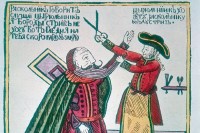
The ocean that Christopher Oldstone-Moore has set out to chart is as broad as it is shallow: what it has meant to be bearded or shaven in the western world, from before Alexander the Great until the present day. Practicalities — shaving technology and the like — are mentioned from time to time, but only so that their importance can be minimised. His thing is the semiotics of beards. And the range of signals that a beard could send out, over so many years, is bewildering. To be clean-shaven is to be a god, a priest, Louis XIV, a French conservative of the early 19th century or a 20th-century organisation man. To be bearded is to be a philosopher, a warrior, a Renaissance prince, an extreme French radical of the early 19th century or a respectable Victorian paterfamilias.

Ruling the digital waves

Everyone, we hear these days, must learn to code. Being able to program computers is the only way to be sure a computer can’t steal your job. So doctors, dancers, drivers and dieticians must all acquire programming skills, and coding needs to be at the centre of modern secondary education. Well, evidently it is in the interests of giant technology corporations to have future generations of employees educated to their precise specifications at the public expense. The message is amplified by journalists anxiously extrapolating from their own predicament. (Generating ‘content’ is an increasingly unrewarded dead end; the cool things are data and ‘sharing’.) But the all-must-become-programmers idea does imply a rather weird future culture.

Waspish traditionalist

Randolph Schwabe (b. 1885) was a measured man in art and in life. His drawings are meticulous, closely observed models of draughtsmanship and represent a school of art that has now largely been lost or dismissed as irrelevant. To some, though, Schwabe seemed old-fashioned even in 1930 when he ascended to the position of Principal of the Slade school of art, taking over from the formidable Henry Tonks. The publication of his diaries from 1930 until his death in 1948 offers a welcome insight into the divergence in British art between the traditionalists and the new breed of modernists. Schwabe was emphatically of the former camp, and never lost his scepticism about the merits of the latter.

‘Existentialism? I don’t know what it is’

I’m certainly the wrong person to be reviewing this book, never having succeeded in understanding anything that a philosopher said about anything — but particularly the collected utterances of the existentialist school. Nevertheless, I think it fair to say that between the ages of 15 and 18, I had the wardrobe down to a T. In Yorkshire in the early 1980s, if you wanted to be existentialist, you wore duffle coats and drainpipe jeans and, of course, the famous black polo-neck. I knew kids who smoked Gauloises and one who actually went in for smoking a pipe. Your spectacles were those NHS free type popularised by John Lennon; your shoes might be Hush Puppies. (A little later they were black Doc Martens with thick rubber soles.

Escaping the Inferno

I read this, Meg Rosoff’s first novel for adults (though her previous fiction, aimed at teenagers, is widely enjoyed by older readers), curled up with my beautiful lurcher, Una, twitching her ears beside me. Appropriately so, as the novel concerns the relationship between a young man and two dogs, super-intelligent collie Dante and devoted spaniel Sissy. All dog-owners will recognise how Rosoff describes their interactions: Jonathan worries about ‘the practical and spiritual difficulties of caring for other sentient beings’, and spends hours imagining ‘the Byzantine quality’ of their inner lives (when I read that sentence, I exchanged glances with Una; she lifted her tail as if to say, You didn’t know?