Book review

About a boy

A boy, a car, a journey, a question: the first sentence of Elizabeth Day’s new novel goes like this: From the back seat of the old Chevette, heading north, the boy asked his question into the restless air. The restless air? The reader makes the mental adjustment: it’s not the air that’s restless, it’s the boy and probably his whole family. So why the transferred epithet at this early stage? It sets the tone for a transferred-epithet-filled novel so full of anguish and poetic touches that you’ll find yourself reading it in a hushed voice. Jim, the boy in question, ‘read the air around people, the calm or seasick air’. His mother, Nancy, notices how ‘the sun was warming his sunrise bones’.
An innocent abroad | 10 March 2016

For those who read the weekly music press during the 1980s, David Quantick’s was a name you could rely on. Unlike some of the more Derridean elements at the NME, his reviews of new bands and LPs were both comprehensible and authentically funny. He has gone on to become a successful comedy broadcaster and writer for radio, TV and film: The Day Today, The Thick of It, Harry Hill’s TV Burp. Recently he was part of the team that won an Emmy for the US political comedy series Veep. The Mule is Quantick’s second novel (his first, Sparks, came out in 2012).

Away with the fairies | 10 March 2016

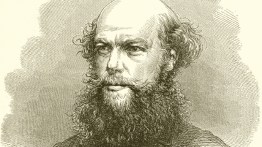
As an erstwhile obituarist, I pity the poor hack who had to write up the life of Laurence Oliphant — adventurer, diplomat, war correspondent, mystic, spy (and the subject of Bart Casey’s biography) — when he died, aged 59, in 1888. The first paragraph should (according to the well-seasoned formula) contain some characterising incident or achievement, giving the measure of the man, the impact he made on the world and those around him, and an indication of his interior life. The anecdote must — like cherry-picked quotations for a Shakespeare exam — inform more than one facet of a broader narrative. Any runner-up contenders can be dropped into paragraphs four, eight and 12.

A topsy-turvy world

‘A crane fell on top of me in Kladno in 1952, after which my writing got better,’ Bohumil Hrabal (who died in 1997) once wrote, with typical self-deprecation and comic timing; but there are other versions of what made him change from being an almost rococo engineer of magic realism (‘building my house from the roof on down’, as he put it) to the flawlessly brisk comic writer he became. (Another story: a dry-cleaner’s receipt which said ‘some stains can be removed only by the destruction of the material itself’). He was sent, along with tens of thousands of other white-collar workers, to a factory; in his case, the steel mill in Kladno (named, curiously enough, after Wittgenstein’s mother).

Fifty shades of blue

Like a lot of people, Olivia Laing came to New York to join a lover. Like a lot of people, she soon became unjoined. She stopped eating and drifted, moved from sublet to sublet, wandered the streets in a desperate daze. She craved intimacy and shied away from it, was painfully self-conscious but also anxious that she was in danger of vanishing. What does loneliness feel like? It feels, she says, ‘like being hungry when everyone around you is readying for a feast. It feels shameful and alarming, and over time these feelings radiate outwards, making the lonely person increasingly isolated, increasingly estranged.’ The Lonely City is memoir, art criticism and a portrait of the Big Apple seen through the eyes of an accidental flâneuse.

Rich and fruity

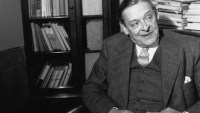
F.R. Leavis once denounced the Twickenham edition of Pope’s Dunciad for producing a meagre trickle of text through a desert of apparatus, the trickle sometimes disappearing altogether. In this volume of T. S. Eliot’s letters, from 1932–1933, the footnotes, the infantry and the grunts, are the stars — shooting stars, flares with flair, illuminating apparently unpromising basic materials. For example, this is a letter to Auden in April 1932 in all its Spartan amplitude: Dear Auden, The modifications of the few passages which I discussed with you the other day have been agreed upon.

A leap in the dark

The first and most important thing to say about The Drowned Detective is that it’s a very good novel and (which is not always the same thing) a pleasure to read. After that, it gets more complicated. The book defies tidy categorisation. Set in a nameless eastern European country, it opens in the literary territory of the crime thriller, with private investigators on the trail of a government minister on the way to visit his rubber-clad mistress. One of them, the narrator Jonathan, is English. He’s furiously jealous of his employee Frank, a hunk who has had a fling with Sarah, Jonathan’s archaeologist wife. In another case, the parents of a missing girl have retained Jonathan to search for their daughter, Petra.

The ultimate nightmare

On an April morning in 1999, two teenagers, Eric Harris and Dylan Klebold, walked into Columbine High School in Colorado and murdered 12 fellow students and a teacher, wounded many others, then turned their guns on themselves. Among the many questions fired at Klebold’s stunned parents in the wake of this appalling event, two were especially hard for them to hear. Did they ever hug their kids? And — this from one of the many bereaved — ‘Were you a family that ever spent much time at the dinner table together?’ When brutal and frightening things happen, people want brutal and frightening explanations: the need for causality becomes paramount. If this family bred a monster, then they must have done something monstrous.

Foreign body count

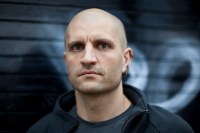
China Miéville’s work is invariably clever, inevitably dense and usually interwoven with hard-left political and social concerns, but its author rarely loses sight of the delightfully mind-warping possibilities of his chosen genres. Last year’s story collection, Three Moments of an Explosion, offered brief slices of imaginary futures in which icebergs floated above London streets, archaeologists hauled crystal statues from the Mediterranean earth and urban hipsters attended parties wearing the heads of butchered animals.

A choice of first novels | 10 March 2016

At the beginning of this year I underwent a complete literary detox: an absolute, cold-turkey abstention from cutting-edge fiction of every stripe. I subsisted on police procedurals and grown-up Ladybird books, and watched a lot of TV. It was tough, but you’ve got to defrag the old hard drive once in a while. And it was worth it: when this new batch of first novels was helicoptered in, I felt ready to approach the gig in a spirit of optimism and can-do. I’m not even going to rant about the tendency of publishers to overmarket new writers, to box them up, underplay their strangeness and render them safe and familiar. Love Me Back by Merritt Tierce (Little Brown, £14.99) and Your Heart is a Muscle the Size of a Fist by Sunil Yapa (Little, Brown, £12.

Wonderful waffle

It is hard to explain the contents of Karl Ove Knausgaard’s vast series My Struggle because not much happens. Or rather: a lot of things almost happen. In these strange and unquantifiable books, which feel like a spiritual autobiography but read like trashy fiction, Knausgaard recounts his ambiguous relationships with his brother and parents and wives; he describes terrible-sounding meals which he cooks (he eats a lot of pasta with dubious sauces) and the rambling, incomplete conversations he has with acquaintances. He discusses books he has read and books he would like to write. He goes out, meets girls, gets drunk, feels sorry for himself, and then goes back to his desk.

Fighting for progress

It is very difficult to uncover accurate connections between ideas and events in history. A.C. Grayling is a philosopher and polemicist with a particular story to tell about the rise of freedom in the 17th century. In the introduction to his new book he writes: I hope the sketches offered here will illustrate the claim that the 17th century is truly the moment that history changed course so profoundly that everything before it is another world, and that it and the times since are our world. He replaces the conventional division of history into everything that happened before the birth of Christ and everything that has happened afterwards, with a new bifurcation: everything that happened when humans thought the world was the centre of the universe, and everything that has happened since.

A host of unquiet spirits

As its title suggests, Julie Myerson’s tenth novel is about stoppage: the kind that happens when one suffers a loss so absolute and cataclysmic that there seems no possible way forward; when the future seems not merely unthinkably disrupted but also irrelevant. For the majority of people lucky enough to live out their days beyond war zones, barbaric regimes and disaster areas, such events usually come no closer than a news item; but even — perhaps especially — when the calamity is near at hand, we so often find ourselves at once desperate to empathise and yet incapable of imagining. Mary, whom we gradually discover has lost both her young daughters, understands that people can’t understand; often, she can barely understand herself.

Strangers in their native land

Though it seems to begin as an affectionate memorial to his maternal grandparents, a testimonial to a rare and perfectly happy marriage, Their Promised Land by Ian Buruma has a deeper purpose. The cache of letters to and from Winifred (‘Win’) and Bernard (‘Bun’) Schlesinger is the pre-email, daily correspondence of two people who could not bear to be apart, yet were separated for years at a time by both world wars. Although his grandparents died in 1984 and 1986, this artful volume reveals a good deal about the world we live in today.

Mr Spock and I

For a show with a self-proclaimed ‘five-year mission’, Star Trek hasn’t done badly. Gene Roddenberry’s ‘Wagon train to the stars’ is celebrating its 50th anniversary, although, as Marcus Berkmann’s entertaining and irreverent history points out, things could have been very different. Roddenberry’s initial idea was for a troupe of disparate 19th-century adventurers to explore the undiscovered corners of the New World in a grand airborne dirigible. While the prospect of Leonard Nimoy arching an eyebrow in a flimsy, flying gondola is irresistible, it’s hard to imagine such a concept proving as enduring as Roddenberry’s eventual brainchild.

Reds against Whites

On the 24–25 October 1917 (according to the Julian Calendar, or 7–8 November according to the Gregorian) the political disputes which had shaken the Russian empire reached a peak. The provisional government, or All-Russian Soviet of Workers’ and Soldiers’ Deputies (which had been formed in the wake of the February revolution and abdication of Tsar Nicholas II) was stormed by the Bolsheviks. These men and women — whom Churchill later described as ‘swarms of typhus-bearing vermin, vampires, troops of ferocious baboons’ — quickly consolidated power in Petrograd, now St Petersburg.

Putting the sun in the shade

About a century ago, scientists started meddling with an unfamiliar force of nature and the rest of us were terrified. That force was called electricity and nowadays we’re all fine with it. What Timothy Jorgensen wants to know is: why don’t we feel equally relaxed about radiation? After all, electricity is just as dangerous, but only if you’re very unlucky or very stupid. As his sparky book explains, radiation is really much the same. So why are we so scared of it, even when we’ve (usually) no need to be? Cards on the table: I know nothing about science. But that’s OK, because this book is meant for Luddites like me.