Book review

Body language

Others goes straight to the head. Things start like this: with an article on a website called ‘Women and Film’, by someone called Meadow Mori. Meadow reveals that when she was fresh from her LA high school, she had an affair with a mountain-sized filmmaker, who ‘sounds like the voice of America’, and whose career was marked by genius and frustration. It is, of course, Orson Welles; but there’s more here than scrupulous cinematic referentiality. Is Meadow’s relationship with the F is for Fake filmmaker a truth or an untruth? And if it’s an untruth, does that make it a lie? A lie of invention, a lie about yourself, should not be called a lie, she says in the essay. Perhaps it is a kind of wish-story.

Only obeying orders | 12 January 2017

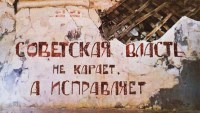
Spare a thought for the poor Gulag guard: the rifleman standing in the freezing wind on the outside of the wire, almost as much a captive of the Stalinist prison machine as the inmates he’s guarding. Alexander Solzhenitsyn, Evgeniya Ginzburg and Varlaam Shalamov have left the world a rich, searing portrait of the Gulag from the point of view of the prisoner. But the diary of Ivan Chistyakov is unique — a narrative of the brutal conditions in Stalin’s Gulag, told from the point of view of one of the captors. Chistyakov was a senior guard at the Baikal-Amur Corrective Labour Camp or BAMLag, and he wrote his personal diary in 1935–6, just as Stalin’s henchman Naftaliy Frenkel was putting his scheme for mobilising convict labour into high gear.

Restoration man

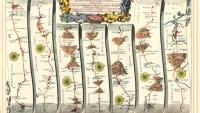
Given that he wrote and published some of the most stunningly handsome books of the 17th century, John Ogilby has not been served well by literary history. The Fables of Aesop (1651), the first complete English translation of Virgil (1654), a two-volume edition of the Authorised Version of the Bible (1660) plus vernacular versions of the Iliad (1660) and Odyssey (1665) were all magisterial folios, produced with the clearest of type, the widest of margins and on the heaviest of paper. Ogilby wrote specifically for those with deep pockets and fine libraries, an elite book-buying public who could afford translations illustrated with copious and expensive engravings.

An astronomical feat

Think of a computer and your mind might conjure the brushed steel contours of the latest must-have laptop or, for those of a certain age, a room full of whirring cabinets and reel-to-reel tape decks. The era of electronic computing has its roots in the code-breaking exploits of Bletchley Park; but the need for repetitive and reliable number-crunching did not suddenly begin with the wartime threat of Nazi submarines. For centuries, such everyday activities as banking, commerce, engineering and navigation have all relied on computing to manipulate large amounts of numerical information. But before there were machines to do the mathematical donkey-work, there were human brains, and in the 19th and early 20th centuries a computer was not a device but a person.

Emile in exile

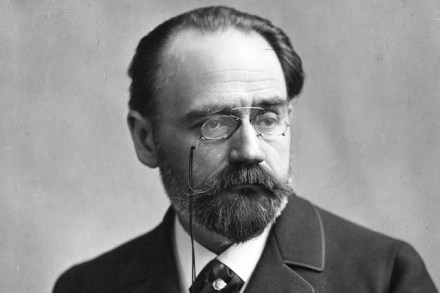
Michael Rosen, a poet, journalist and prolific author of novels for children, has written an account of Emile Zola’s year’s exile in England between July 1898 and June 1899, as a result of his involvement in the Dreyfus Affair in France. It is not a dispassionate work of history but a homage to Zola, ‘a hero in my eyes’, for his fight against anti-Semitism. Zola not only made ‘a brave, unpopular, self-sacrificing decision to support a wrongly convicted man’, but also persuaded the socialist leader Jean Jaurès to join the fight against anti-Semitism: at the time of Dreyfus’s conviction in 1894, both Jaurès and Georges Clemenceau had called for him to be shot.

Power to the people | 5 January 2017

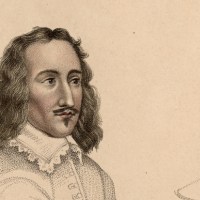
Jeremy Corbyn will probably enjoy this book — which doesn’t mean you won’t. Asked to name the historical figure he most admired when first standing for the Labour leadership, Corbyn answered that in English history a very interesting character is John Lilburne.Very interesting character, because of the way he managed to develop the whole debate about the English civil war into something very different. Lilburne, who should certainly be better known, was a leader of a group that came to be called the Levellers, which flourished at the height of England’s civil strife in the 1640s, and whose radical, democratising politics has sporadically appeared on the agenda of the left, invoked as the ‘Good Old Cause’, ever since.

A gentle reproach to Shakespeare

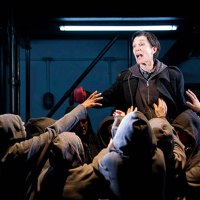
A few years ago, I fell hopelessly in love with Harriet Walter. It only lasted an hour or two: she was playing Brutus in Phyllida Lloyd’s all-female production of Julius Caesar, and there she was, aloof, damaged, burning with pride and suppressed sorrow. The Donmar theatre’s production was set in a women’s prison, as if performed by inmates. In Walter’s mind, we learn in her latest book, she was not playing white, older, educated Brutus, but ‘Hannah’, a long-term prisoner whose presence in the jail she based on the story of Judith Clark, an anti-capitalist revolutionary imprisoned for driving the getaway car at a fatal bank robbery.

From Balzac to the Beatles

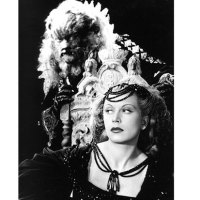
All biography is both an act of homage and a labour of dissection, and all biographers are jealous of their subjects. Most keep it cool, but some like it hot and have created a distinct category in which jealousy becomes murder followed by necromancy: the one they hug is asphyxiated — but lo! — they breathe their own air back into it. Sartre’s book on Jean Genet is such a work, as are Brigid Brophy’s on Ronald Firbank and Roger Lewis’s on Anthony Burgess. Claude Arnaud’s on Jean Cocteau is yet another. Its approach is intensely romantic. Everyone is heaving in lurid colours.

Hit for six | 5 January 2017

Frankie Howerd, the great, if troubled, comedian, was once asked whether he enjoyed performing. ‘I enjoy having performed,’ he replied. Many top-level sportsmen would say something similar. The satisfaction often comes from having done, not always from doing. Performing offers great rewards, but it can also leave scars that heal slowly, and sometimes not at all. Jonathan Trott was a good cricketer in a strong England team that beat Australia in three successive series between 2009 and 2013. Batting at No. 3, he made a century on his Test debut, and became a dependable, if minor-key player in the side that vanquished the Aussies Down Under two winters later. Then, frightened by the view, he fell off that high wire.

An unmagnificent seven

One of the most interesting developments in modern publishing has surely been the revival of interest in women writers of the past. Beginning with Virago Press, publishers have delved back and rediscovered exceptional female writers from the 17th century onwards. These have either been rescued from oblivion, or from the frequent fate of being dismissed as middle-brow and narrowly domestic. Editors and a new generation of scholars have unearthed excellent writers, from Fanny Burney to Elizabeth Taylor, and have changed literary taste forever. The success of the enterprise probably means that it is now easier to find a new readership for a once-popular female author than for a largely forgotten male author.

Cuckoo in the nest

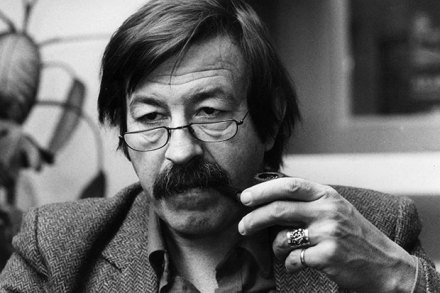
‘Light as a feather, free as a bird.’ Günter Grass starts this final volume of short prose, poetry and sketches with a late and unexpected reawakening of his creative urge. After peevish old age had brought on such despondency that ‘neither lines of ink nor strings of words flowed from his hand’, he was gripped — out of the blue, and to his evident relish — by the impulse to ‘unleash the dog with no sense of shame. Become this or that. Lose my way on a single-minded quest.’ It makes for an invigorating opening: a three-paragraph paean to the unruly and questioning spirit which drove Grass’s writing throughout his hugely productive career.

A fresh start

Most of us lead lives of quiet desperation. So we’re told. Frits van Egters apparently leads a life more desperate than most. He lies in bed too long. He eats green pickled herrings and brown onions. He turns the radio on. He turns it off. Half the day gone already. He squeezes his spots. He tells bad jokes. He takes cod-liver oil. He makes custard from packet powder. He obsesses about going bald. He is annoyed by his parents: his mother darning socks, the warts on the back of his father’s neck. He has nightmares. He wakes the next morning and starts again. In Gerard Reve’s The Evenings: A Winter’s Tale, we spend ten days and nights at the end of 1946 with 23-year-old Frits as he picks up and drops books and newspapers, and walks circuits of Amsterdam.

A truly monstrous regiment

When George Omona first saw soldiers in the infamous Lord’s Resistance Army, he was amazed. The scary fighters who had terrorised people for decades across a big chunk of Africa turned out to be emaciated teenagers with dirty clothes who could hardly hold the big guns they carried. Some were unarmed children, barely ten years old. He felt sorry for them. ‘They could not have known anything else but living in the forest like wild animals.’ Soon he had joined their pack, a reluctant member of one of the world’s most notorious rebel groups. A bright boy who dreamed of becoming a teacher, George ended up a bodyguard to one of the world’s most bloodstained killers.

Put out more flags

Did you know that 190 out of 200 nations in the world have either red or blue on their flags? (The wheel in the middle of India’s flag is blue, for example, and the Vatican flag has a red cord hanging from the keys.) Did you know that four of those 190 — Andorra, Chad, Moldova and Romania — have pretty much the same blue-yellow-red tricolour? Or that the stripes of the French flag are not of even width, but are proportioned 30-34-37? It’s an optical illusion: if the red, white and blue are of equal breadth, the flag looks curiously unbalanced. These are among the facts that you won’t find in Tim Marshall’s Worth Dying For, a vexillological miscellany. I bring them up in no carping spirit.

Homage to Mad Madge

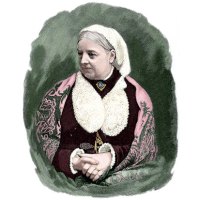
There has never previously, I believe, been a novel about Margaret Cavendish, Duchess of Newcastle, one of the 17th century’s foremost female authors, philosophers and eccentrics. But there have been several near misses. Virginia Woolf’s Orlando tips its cap to her: Orlando, just like Cavendish, is a feverishly imaginative, androgynous aristocrat afflicted by the ‘honourable disease’ of writing, filling folios with the speed of an addict. Writers from Pepys to Lamb have tended her flame, as have two recent biographies. Siri Hustvedt paid extensive homage to Cavendish in her 2014 novel set in New York’s art scene, The Blazing World — a title, devotees of the Duchess will notice, appropriated from Cavendish’s fantasy novella of 1666.

Whisper who dares

Stand aside, Homer. I doubt whether even the author of the Iliad could have matched Alexis Peri’s account of the 872-day siege which Leningrad endured after Hitler’s army encircled the city in September 1941. I never knew, for example, that if an adult starved for months on a few ounces of bread daily, a sip of soup and very little water — if they were lucky enough to get their daily rations — you couldn’t tell when they were naked whether they were male or female. I wouldn’t have believed that starving parents might eat their dead children, or vice versa; yet 1,500 Leningraders were arrested for cannibalism.

A marvel and a mystery

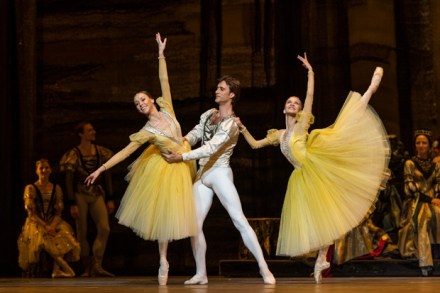
In 2013, Pavel Dmitrichenko, disgruntled principal dancer of the Bolshoi, exacted a now infamous revenge on the company’s artistic director, Sergey Filin, for overlooking his girlfriend in casting the starring role in that most Russian of ballet classics, Swan Lake. The circumstances surrounding the acid attack, which seemed to combine ballet’s glamour with a murky underworld of intrigue, conspiracy, villains and victims, quickly became a contemporary metaphor for the Bolshoi itself. It’s irresistible as a lens through which to consider this intriguing institution at the heart of Russian politics, culture and life.