Book review

When will we ever learn?

In 2012, sugar became more dangerous than gunpowder. According to the historian Yuval Noah Harari, of the 56 million people who died that year, 620,000 did so by the hand of their fellow humans: 120,000 in war and 500,000 from crime. By contrast, 1.5 million died from diabetes. Harari’s wry observation adds weight to Steven Pinker’s assertion in The Better Angels of Our Nature (2011) that humans are on a trajectory towards peace and non-violence. But wars in the Middle East, Afghanistan, across the Sahel and Yemen; Russian and Chinese irredentism; nuclear threats from North Korea; Trump’s belligerency, not to mention the asymmetry of terrorism, render urgently relevant the continued study of war. In War: An Enquiry, the philosopher and ethicist A.C.

Burning issues | 4 May 2017

Set discreetly into a wall in Smithfield, amid the bustle and bars of this rapidly gentrifying part of London, is a memorial raised by the Protestant Alliance in 1870 commemorating the men and women who died agonisingly nearby, roasted alive for refusing to abjure their new-found reformed religion. Nimble intellectual footwork was needed across the 16th century of Tudor rule to keep the fires of Smithfield at bay. In the reign of Henry VIII, orthodox Catholicism was temporarily set aside to allow the monarch a divorce, in order to get his thigh across the reform-minded Anne Boleyn. Henry himself, however, remained resistant to the new faith.

Cinderella in China

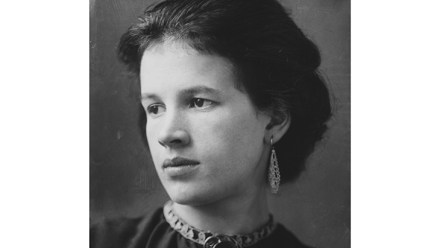
She was a foundling in her own family, shunted to adoptive parents for two years, then to the edge of China, to a fishing village on the East China Sea, and to a furious, alcoholic grandfather and a grandmother sold at 12 into marriage for some pottage, and never given a name. Is that colourful enough for you? But there is more: the life story of the young Chinese filmmaker and novelist Xiaolu Guo makes Cinderella’s seem bland. The hovel she lived in until she was seven was on Anti-Pirates Passage. Her grand-father, a failed and bitter fisherman, lost his livelihood in the 1970s, when the Chinese state collectivised fishing and stole everyone’s boats.

Appointment with death

It’s reassuring that of Ed Docx’s three admirably eclectic, though sometimes uneven, previous novels, Let Go My Hand most resembles the capacious, Booker long-listed Self-Help. Like that book, this is fiction with heft and moral nuance; a novel that gets its hands dirty in the soiled laundry basket of family secrets and resentments. As such, it’s his most universal, moving and resonant work to date.

Climb trees and grow a beard

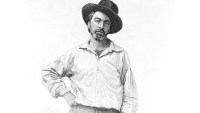
A few years after Walt Whitman brought out the first edition of Leaves of Grass (it didn’t do well), he wrote a column on ‘Manly Health and Training’ for the New York Atlas. His pieces were published under a pseudonym, Mose Velsor, and have only recently been connected to Whitman by a graduate student at the University of Houston, who discovered them on microfilm. (Unless this whole thing is a joke — it’s a little hard to tell.) Boxtree has cherrypicked from over 47,000 words of manly advice to produce a cod-retro book along the lines of the Ladybird Book of the Hangover or the Ladybird Book of the Midlife Crisis or the Ladybird Book of the Hipster. In fact, the Manly Health guide is a bit like all of them.

Suspension of disbelief

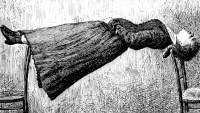
The history of modern medicine is a roll call of brilliant minds making breakthrough discoveries. We rarely hear about the losers, but Wendy Moore has chosen to write the extraordinary story of a massive medical fiasco: the craze for mesmerism which gripped Victorian London in 1838. The practice of using the ancient technique of hypnosis for medical purposes takes its name from the 18th-century German physician Franz Mesmer. The mesmerist of Moore’s story was a society doctor called John Elliotson, a man who has been almost forgotten today. Elliotson was a self-made physician who rose quickly to the top of his profession. Clever, tough and ambitious, by the age of 40 he was professor of medicine at London University.

The fearful forties

In an early chapter of All Grown Up, the narrator Andrea says to her therapist: ‘Why is being single the only thing people think of when they think of me? I’m other things, too.’ ‘Tell me who you are, then,’ says the therapist. And so Andrea tells her that she’s a woman, a New Yorker, that she works in advertising as a designer, that she’s a daughter, a sister and an aunt. In her head, she adds: ‘I’m alone. I’m a drinker. I’m a former artist. I’m a shrieker in bed. I’m the captain of the sinking ship that is my flesh.’ We meet Andrea when she’s 39, asking herself, with increasing desperation, ‘What next?

On the trail of a lost masterpiece

On 27 May 1939, the German liner St Louis docked in Havana with 937 passengers on board: all but a handful of them were Jews in flight from the Third Reich. After a dismal farrago of diplomatic obstruction, bare-faced corruption among local officials and the incitement by Nazi propaganda of anti-Semitic prejudice ‘even’ (as Leonardo Padura sorrowfully puts it) ‘among the open and happy Cubans’, only a score of refugees could disembark. The US refused entry to the rest. Their ship of despair sailed back to Europe.

Fighting talk, but little action

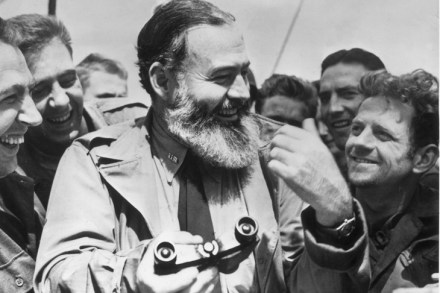
On 11 May 1937, at the Gare St-Lazare in Paris, Ernest Hemingway said goodbye to a friend who was leaving Europe. Like Hemingway, John Dos Passos had been in Spain to support the Republic in its civil war against the fascist Franco. But he became disillusioned when the Soviets (also fighting against Franco) murdered someone he knew. As the train was about to leave, Hemingway asked Dos Passos not to report the event. Dos Passos refused: what was the point of fighting a war for civil liberties if you destroyed those liberties in the process? ‘Civil liberties, shit,’ replied Hemingway. ‘Are you with us or are you against us?

Europe’s best hope

Go into any high street bookshop and find the European history section. There’s usually a shelf or two on France and about the same on Germany, but the difference between these two categories is apparent straight away. The French stuff spans several centuries, whereas German history is confined to just 12 years. Yes, a lifetime since the death of You-Know-Who, Britons are still obsessed with the Third Reich, and who can blame us? It remains the most bizarre and awful epoch in European history and we’re still reeling from its consequences. What’s less forgivable is our wilful ignorance about anything that came before (my son learnt all about the Nazis for his history GCSE, but it wasn’t until he did A level that he got onto Bismarck).

Boxing clever

Thirty years ago, Russell Davies wrote a weekly sporting column in the New Statesman. It proved unsustainable and was soon discontinued, but not before Davies had described a boxer ‘genuflecting through the ropes’ — an image I have coveted ever since. Boxing is ‘a standing challenge to [a writer’s] powers of description’, according to Carlo Rotella and Michael Ezra in their preface to The Bittersweet Science. They are right. All physical action is a challenge to writers: YouTube can repair deficiencies, and is invoked several times in this anthology; but it is no substitute for writing, because writing adds focus to reality.

The gangster life of Ryan

Lisa McInerney found a brilliant way to turn heads and hone her craft as the ‘Sweary Lady’ behind the ‘Arse End of Ireland’ blog. Taking a gonzo approach to the life she knew — first a council estate in Co. Galway, then a selection of much nicer houses in Cork — she let rip as an ‘amplified, wittier, crankier version of myself’. She took that mood of wild pace and confidence into her first novel, The Glorious Heresies, and it paid off. Her boisterous tale of Munster drug dealers, nailed as ‘Trainspotting with a heart’ by online magazine The Pool, won both the Baileys Prize for women’s fiction and the Desmond Elliott Prize for debut novels.

On the way to a lynching

Southern trees bear a strange fruit in Laird Hunt’s seventh novel, a dark historical fiction filled with dreams and visions that has one very disconcerting trick of style to play on the reader. The setting is Indiana in 1930, where a white woman called Ottie Lee Henshaw is on the way to a lynching in the town of Marvel with her lecherous boss Bud and her redneck husband Dale. They stop to feed Dale’s pig; they stop at a church supper and a Quaker prayer meeting; they stop at a backwoods still; they stop to forcibly relieve a black family of their buggy. They meet a Klansman, an elderly acrobat and a man on a bicycle. They never make it to Marvel, because this is a book about journeys, not destinations.

A cuckold’s revenge

Perhaps the least necessary piece of advice ever given to a Hanif Kureishi protagonist comes in 2014’s The Last Word. ‘Harry,’ a wise old writer tells the main character, ‘always put your penis first.’ It’s a suggestion, needless to say, that Harry has no trouble accepting — not least because, like so many Kureishi protagonists, he shares the belief that ‘the body of the young woman is the world’s most significant object’. (Or as the narrator of 1998’s Intimacy puts it, ‘women’s bodies… are at the centre of everything worth living for’.) Admittedly, Kureishi’s men do occasionally agonise between betraying their partners and betraying themselves — i.e.

Dark secrets of village life

Jon McGregor’s first novel, If Nobody Speaks of Remarkable Things, a surprise inclusion on the 2002 Booker longlist that went on to win the Somerset Maugham and Betty Task Awards, captured 24 hours in the life of a suburban street. Fifteen years later, his fourth novel, Reservoir 13, has a similarly concentrated focus, but this time on a village in the north of England and the lens remains open for 13 years. McGregor’s portrait of a village is an astonishing feat.

The wondrous cross

How did the cross, from being such a loathsome taboo that it could scarcely be mentioned, change into an image thought suitable viewing for all ages in public art galleries? There is no doubt about its early despicable reputation. A hundred years before the birth of Jesus, Cicero declared that ‘the very word cross should be far removed not only from the person of a Roman citizen but from his thoughts’. It was the cross that gave rise to the word excruciating. It makes me feel rather queasy to envisage the slow death by suffocation of the crucified man, left without the strength to draw breath, so I was glad that Robin M. Jensen trotted fairly briskly through the forensic evidence, which includes a first-century heel bone with a nail through it.

Golden opportunities

Tudor merchants — shivering in furs in tiny creaking ships, sailing through the ice of unknown winter seas — knew something that today’s careworn EU and civil service officials might be irritated to hear: that despite all travails, trade deals can sometimes be sexy, thrilling and epic. In 16th-century London, plans to open up fresh trading routes across the world were also about vaulting leaps of fantastical imagination, and naturally also about slavering greed. Down by the Thames, men of property would dream of alien Cathay, and of realms where the beaches, they thought, would glitter brilliant red and green with loose rubies and emeralds.

Anything for a good story

When I was at boarding school in the early 1970s, the Durrells, or at least Gerald, were immensely popular. My Family and Other Animals made us laugh out loud; we squealed as the scorpions skittered across the family’s dining table and groaned empathetically when Margo kissed the mummified feet of St Spiridion in an attempt to banish her acne. ‘Gerald Durrell was my ideal man,’ recalls one animal-loving friend. Those of us with intellectual pretensions tackled Lawrence’s Alexandria Quartet, with mixed success. Now a popular TV series has brought the family, and Corfu, into the lives of a new generation. But how literally should we take the tales of colourful chaos from these ‘masters of fabulation’?