Book review

A unique literary phenomenon

The Argentinian writer César Aira is a prodigy: at the age of 68 he has published, according to a ‘partial bibliography’ on Wikipedia, 67 novels (plus non-fiction, plays and translations into Spanish from four languages). It’s a record made only slightly more believable by the fact that the novels are mostly around 100 pages long. ‘Automatic writing’ is often mentioned in the books themselves (Aira supposedly doesn’t revise much, or at all). In 1992, for example, he published five novels — a personal best which he nonchalantly repeated in 2011. Certainly, he glides through — or over —his stories, with the light irony and digressive versatility of Ovid, poet of the Metamorphoses.

Bird thou never wert

The most appealing phoenix in literature is surely the eponymous bird from E. Nesbit’s 1904 classic, The Phoenix and the Carpet. A mysterious egg arrives in the children’s nursery on Guy Fawkes night (J.K. Rowling’s phoenix, ‘Fawkes’, is the clear literary descendant), and the five children, whose adventures unfold in an atmosphere of benign neglect, manage to set fire to the nursery — involving paraffin and fire-crackers — and trigger the rejuvenation of the mythical bird.

The saddest show on earth

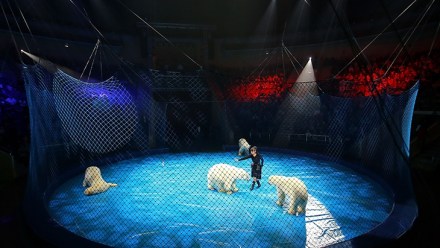
It’s the early 20th century, and two strange-looking boys, purportedly twins named Iko and Eko, are playing in a circus band in one of the many stopovers on the freak-show circuit running from Ohio to Texas. The brothers are ghostly pale, with thick white dreadlocks and red eyes — natural albinos who, when they are introduced by the sideshow huckster, are described as ‘ambassadors from Mars’ — and this makes them fairly valuable. Not as valuable as Grady the Lobster Boy, say, or Zip-the-What-Is-It?, a pinhead who had reputedly been found walking on all fours in Gambia (he was actually from New Jersey), but these ‘ambassadors from Mars’ are up there in the second tier of sideshow stars, above the giants and the dwarfs and the fat ladies.

Furry fury

Thanks to Henry Williamson and Gavin Maxwell I have spent hours in the company of otters, though I have only seen two. The first was harried, fleeing towards us along a shoreline, apparently pursued by spirits. From The Otters’ Tale I now know that was a period, the late 1980s, when the otter was heading for British extinction. It was a young adult, menaced by hunger and the weather. The second otter, a decade ago, was one of a resurgent population, erupting out of the river Teifi, in Wales. A whiskered face popped out of the torrent and stared. ‘Otter!’ we shouted, delighted. The animal’s expression suggested ‘Humans!’ — but that is the danger of otters.

Who’s the expert now?

The title might be taken as a provocation. In the compressed language of digital media, white tears, like first-world problems or man flu, are an ersatz version of the real thing. More plainly, the gripes and complaints of white people are, according to certain social codes, unearned and inauthentic. This zeitgeisty novel gives us two men who are preoccupied to the point of mania by the question of authenticity: young white New Yorkers obsessed with the blues. They work as music producers, but this being the post-pop 21st century they are stuck with white novelty rappers. Carter, the richer of the two, prefers old black music, the more ancient-sounding the better. To his ears, the earliest stuff is ‘more intense and authentic than anything made by white people’.

Dreaming of wide open spaces

On the website of the Australian National University in Canberra, emeritus professor of history Barry Higman lists his research interests as food sciences, cultural studies and historical studies, with a particular interest in The world history of food over the last 5,000 years; the global history of domestic servants in the modern world; the history of the Jamaican landscape; the history of Australia as a flat place; and the history of islands and insularity. This rather unusual breadth of interests suggests either that Professor Higman is a very curious man indeed or a complete academic fraud. Fortunately, for the sake of the future of higher education in south-eastern Australia, it’s the former. Flatness is the uneven, fascinating work of a true scholar enthusiast.

The sweet life turns sour

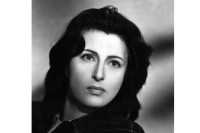
Shawn Levy specialises in chronicling 20th-century hotspots such as London in the Sixties and Sinatra’s Vegas. Here, he turns his attention to the regeneration of post-war Rome. How did the Eternal City erase the memory of its defeat? The answer is as layered as a Cassata cake. The sponge is the commitment that saw new film-makers bringing the struggling proletariat to the screen; the cannoli cream is the cultural flowering that emerged; the rum syrup the intoxicating beauty of frankly erotic leading ladies; and the whipped froth on top the frenzy of the new media stars, the paparazzi. The whole makes for a palatable and stimulating engagement with an era that still functions as a powerful marketing tool for Italian exports. There is, however, a story that clouds the scene.

A choice of recent thrillers | 30 March 2017

A young Norwegian police officer finds a rusting vintage car inside a locked and disused barn, and the presence of bullet holes in the bodywork intrigues him enough to start an investigation in his spare time. This is the central puzzle of Jorn Lier Horst’s When It Grows Dark (Sandstone Press, £7.99), and it offers a perfect introduction to his Detective Wisting series. Who owned the vehicle? Why was it abandoned? Was somebody murdered in the car? This is a case without a corpse, without suspects, and Wisting has to piece it together from the tiniest scraps of information, uncovering secrets and emotions kept hidden for decades. He can ill afford the time: his wife has just given birth to twins, and he tries his best to help around the house.

Out of hot water

During and after the second world war the Fourteenth Army in Burma became famous as the Forgotten Army, almost as famous for being forgotten as for its great victory. More truly forgotten, however, despite its great strategic achievement in keeping open the lifelines to the eastern empire, is the role of the Royal Navy in those warm and contested eastern waters. Typically, the only events most of us hear of are the disastrous losses of Singapore and of the warships Prince of Wales and Repulse, the latter blamed on Winston Churchill. We read of ossified naval thinking in the 1930s, of inadequate preparation and procurement muddle, symptomatic of inevitable national decline and imperial overreach, and shake our heads and agree.

The man who’s read everything

According to Martin Amis in The Information, the last person to have read every book ever published was Coleridge. Faced with More Alive and Less Lonely, though, you might wonder whether there’s a new candidate in town. Certainly, Jonathan Lethem’s mind seems not so much well-stocked as bursting at the seams. A few of the 70-odd pieces gathered here do concern such mainstream figures as Dickens, Kafka and Melville (where Lethem appears to know all the books not just by, but also about, them). But many of the others may have even the most erudite of readers heading sheepishly for Google, as he considers the work of say, Russell Greenan, Bernard Wolfe or Tanguy Viel.

Welsh wizardry | 30 March 2017

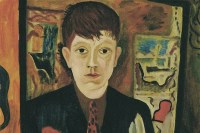
When Stravinsky visited David Jones in his cold Harrow bedsit, he came away saying, ‘I have been in the presence of a holy man.’ Other admirers included T.S. Eliot (his publisher) and the Queen Mother (who wrote asking if she could buy some of his work). Harold Bloom, Kenneth Clark and W.H. Auden were all not merely admirers, but passionate in their admiration. Auden thought Jones’s long Eucharistic poem ‘The Anathemata’ the ‘finest long poem written in English this century’. Yet Jones remained completely his own man, belonging to no ‘set’. He had very little money and has never, as far as one can tell, been part of the Eng. lit. mainstream.

The man and the moment

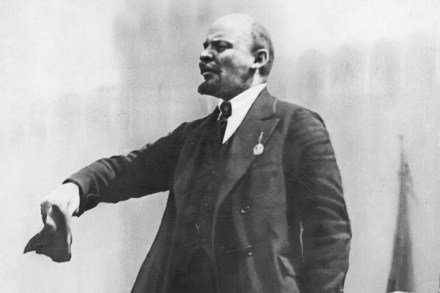
The centenary of the Russian Revolution has arrived right on time, just as the liberal democratic world is getting a taste of what it’s like to feel political gravity give way. In 2017, Lenin lives. ‘In many ways he was a thoroughly modern phenomenon,’ writes Victor Sebestyen in Lenin the Dictator, the kind of demagogue familiar to us in western democracies, as well as in dictatorships. In his quest for power, he promised people anything and everything. He offered simple solutions to complex problems. He lied unashamedly. He identified a scapegoat he could later label ‘enemies of the people’. He justified himself on the basis that winning meant everything….

Holy heroes

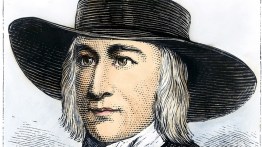
The Reformation is such a huge, sprawling historical subject that it makes sense, in this the 500th anniversary of Martin Luther producing his 95 Theses, to break it up into bite-size pieces in order to sample its distinctive local flavours. Eamon Duffy, emeritus professor of Christian history at Cambridge, takes England as his territory, and quickly deprecates the very word Reformation as an ‘unsatisfactory designation concealing a battery of value judgments’. Instead, he sets out to investigate what he characterises as largely a series of homegrown reformations and counter-reformations. So far, so sensible, but the process of reduction is then taken a step further.

Beautiful thoughts for all occasions

Kahlil Gibran was 40 years old, a short — he was just 5’3” — dapper man with doleful eyes and a Charlie Chaplin moustache, and in the first throes of the alcoholism that would result in his early death, when in 1923 he published The Prophet. A collection of 26 prose-poems, written in quasi-Biblical language, the book takes the form of sermons by a fictional sage named Al Mustapha, on the big questions of life: family, friendship, love, work and death. These range from the profound to the banal. ‘Love gives naught but itself and takes naught but from itself. Love possesses not nor would it be possessed; For love is sufficient unto love.’ And who could argue with that? But then again.

Changing lanes

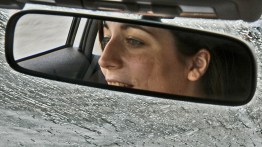
It’s fair to say Sonja Hansen’s life has stalled. Forties, tall and ungainly, veteran of failed relationships, she’s an uncomfortable fit for modern life in bustling Copenhagen. Geographical, spiritual and emotional immobility is expressed in her physical lack of ease, including ‘positional vertigo’ which renders the manoeuvre of the title difficult. Not without a certain quiet defiance, she still feels unable to fire her driving instructor, aggressive, non-stop-nattering Jytta, who won’t let her shift the gears herself. In between bouts of gossip and racist abuse of other drivers, Jytta bellows instructions at her cowering pupil: ‘GREEN ARROW, TURN GODDAMMIT, BIKE!’ In this short novel Nors manages to condense the essence of a life.

Charming old fox

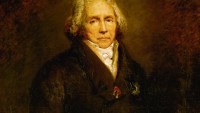
Talleyrand was 76 when he took up the post of French ambassador in London in 1830. Linda Kelly deals only with the last phase of Talleyrand’s long and tumultuous career, but this short book brings him marvellously to life. He was not an impressive figure. Little over 5’3” in height, he walked with a limp —one leg was in an iron brace. ‘Always dress slowly when you are in a hurry,’ was one of his maxims, and each morning during his lengthy toilette his valet coiffed his long, straggly white locks with curling tongs. One wag described him as ‘a big packet of flannel enveloped in a blue coat and surmounted by a death’s head covered in parchment’.

The best sort of magic realism

Michael Fishwick’s new novel tells the story of a young man called Robbie, who has been uprooted from his London home after his mother’s death. He finds himself in rural Dorset, where he inhabits a capacious present that has ample room for the intrusions of the mythic past. Struggling with his loss, Robbie has taken to using arson to express his rage — which is why his father, having rapidly acquired a new partner and a couple of stepdaughters, has moved the family to his old childhood home to make a new start. But it’s an ancient start that this landscape has on offer.

An epic for our times

Trailing rave US reviews, fan letters from Yann Martel and Khaled Hosseini and a reputation as ‘Doctor Zhivago for the 21st century’, comes this outstanding historical saga from debut novelist Sana Krasikov. It’s a dazzling and addictive piece of work from an author born in the Soviet Republic of Georgia whose family emigrated to New York when she was eight. Not only is this novel accomplished and packed with believable detail and entertaining dialogue, it also feels curiously relevant, tip-toeing around the complicated relationship between the United States and Russia during and after the Cold War. Raised in 1930s Brooklyn, Florence Fein escapes a stifling existence with a seemingly glamorous job entertaining Soviet dignitaries on business trips to the US.