Robert Carver

Iron in the soul

From our UK edition

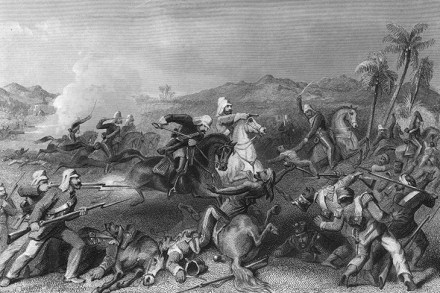
‘I hate Indians. They are a beastly people with a beastly religion’, said Winston Churchill as prime minister in 1942, to his secretary of state for India, Leo Amery. Like John Nicholson, Churchill had soldiered on the subcontinent as a young man, and both men saw fighting on the North-West Frontier. Nicholson was a career officer in the East India Company army. ‘I dislike India and its inhabitants,’ he said as a young man, and never changed that opinion. Duty, obligation and a career kept both men in a country they loathed; the graves of more than two million Britons in India demonstrate that it was not simply a place to get rich in, but a place, too often, to die in at an early age.
The roots of witchcraft

From our UK edition

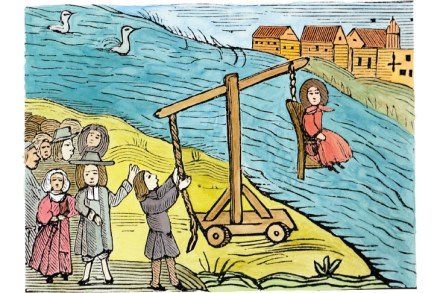
Until the mid-1960s many historians believed witchcraft was a pre-Christian pagan fertility ritual, witches worshipping the Horned God, whose consort was the Triple Goddess. The most notable advocate of this theory was the Egyptologist Margaret Murray. Then came revisionists led by Norman Cohn. Examination of witch trials suggested there had been no witchcraft: it was a ‘social construct’ of the Christian patriarchy persecuting innocent women, as it had innocent Jews indicted for the same satanic practices. Professor Hutton is a follower of Cohn.

Nazis and the dark arts

From our UK edition

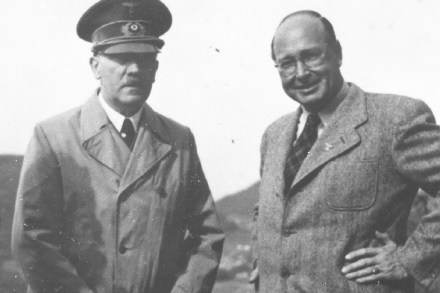
When he came to power Hitler had a dowser scour the Reich Chancellery for cancerous ‘death rays’. Before flying to Scotland Rudolf Hess had his horoscope drawn up by a personal astrologer. Himmler backed research on the Holy Grail and medieval devil worship (‘Luciferism’) and sent an SS expedition by the explorer Dr Ernst Schafer to Tibet in 1938 to investigate the ancient Indo-German ‘Aryan’ origins of Buddhism. Himmler also founded the SS Witches Division, which collected evidence in eastern Europe in the second world war that Teutonic ‘wise women’ had been persecuted and burnt in a Jewish-Catholic Inquisition plot against volkisch German culture and blood.

Short Walks from Bogota, by Tom Feiling

From our UK edition

Ten years ago a cartoon appeared in the Independent showing the New World Order — Bush and Blair peering at a distorted global map with only one entry for South America: over Colombia was written ‘Coke-snorting bolshie gorillas’. Back then the Farc guerrillas were on the edge of the capital Bogotá, the country had the world’s highest kidnap rate and ‘failed state’ was considered its next realistic destination. Then even the title of this book would have been ironic, as to walk anywhere was to risk mugging or murder. Tom Feiling, a British journalist and film-maker who has written a previous book on the cocaine trade, knew Colombia in the bad old days.

Waltzing with your aunt

From our UK edition

‘It’s not what’s here — it’s what’s not here’ is the reason given by a voluntary exile in the Alaskan wilderness to the author’s question. ‘It’s not what’s here — it’s what’s not here’ is the reason given by a voluntary exile in the Alaskan wilderness to the author’s question. ‘What keeps you here?’ Space, lack of people, freedom, and personal indepen- dence compensate some for the cold, isolation and loneliness.