David Goodhart

David Goodhart is Head of Policy Exchange's Demography, Immigration, and Integration Unit

Reasons to be optimistic | with Michael Gove, Tim Stanley, Steve Baker & David Goodhart

From our UK edition

40 min listen

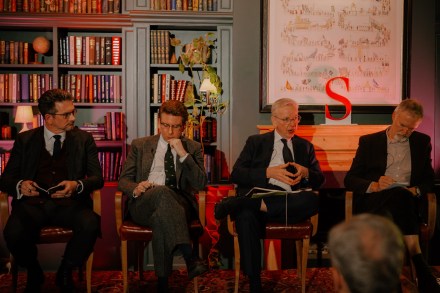
Post-holiday depression, failed New Year’s resolutions and battered bank balances: January’s Blue Monday has long been branded as the most miserable day of the year. Headlines warn of ongoing war, political turmoil and economic gloom – but could they be mistaken? Join The Spectator and special guests as they defy the doomsters to deliver an optimist’s guide to 2026. Almost three-quarters of people worldwide believe that this year will be better than the last. Are they right?

Is Shabana Mahmood Labour’s Iron Lady?

From our UK edition

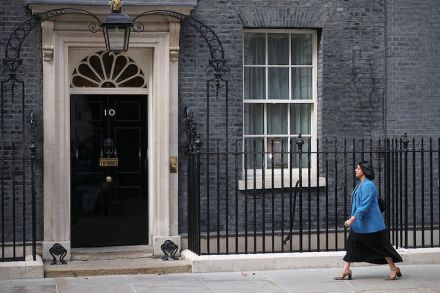
Has the Labour party finally found its answer to Margaret Thatcher? Shabana Mahmood’s withering response to Lib Dem MP Max Wilkinson's po-faced complaint about her language in the asylum debate this week must rank as the most devastating, and justified, playing of the race card in recent parliamentary history. Opposition to using every legal means to stop the boats, she implied, is a kind of luxury belief enjoyed only by those who aren’t at risk of being called a 'F***ing P***' in the street. Has the Labour party finally found its answer to Margaret Thatcher? Turning the tables on the racial justice panjandrums on her own side by citing her personal experience of racial abuse felt very Thatcher vs the wets.

‘It can be done!’: David Goodhart on how to stop illegal immigration

From our UK edition

58 min listen

This week Winston speaks to David Goodhart, author of The British Dream: Successes And Failures Of Post-War Immigration, which celebrates its 10 year anniversary this year. On the podcast they discuss the state of immigration in the UK. Is home secretary Suella Braverman right to suggest that immigration an existential threat to the West? Has multiculturalism failed?

Ukraine’s next move

From our UK edition

39 min listen

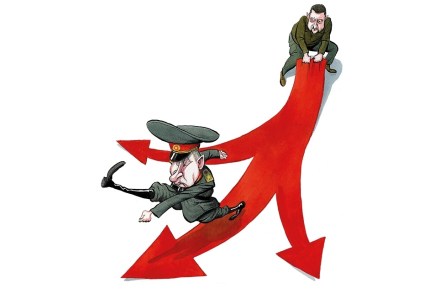
This week: In his cover piece, journalist Mark Galeotti asks whether Putin can be outsmarted by Zelensky’s counter-offensive. He is joined by The Spectator’s own Svitlana Morenets to discuss Ukraine's next move. (01:08) Also this week:  Journalist David Goodhart writes a moving tribute to his friend Jeremy Clarke, The Spectator’s much-missed Low Life columnist who sadly passed away earlier this week. David is joined by Cass Pennant and Freddy Gray, The Spectator’s deputy editor, to remember the life and writing of Jeremy Clarke. (12:52)  And finally: The Spectator’s deputy features editor Gus Carter writes this week about the curious business of fertility.

The reactionary bohemian: Jeremy Clarke was one of a kind

From our UK edition

A world without Jeremy Clarke is a glummer place. The author of this magazine’s Low Life column for 23 years, who died on Sunday morning, was a spirited writer of the old school. He loved a rollicking good time, a beautifully turned phrase, a good gossip, casting an observant eye over life’s absurdities, and England. He despised the hypocrisy of the progressive middle classes, big egos and TV boxsets. He had quirkily conservative views, but friends of all classes and races, a deep knowledge of an unusual range of subjects, including rural matters, and a cheerful modesty that belied his talent as a writer.

Has Keir Starmer found the sweet spot in British politics?

From our UK edition

Are the final obstacles in the way of a comfortable Labour victory at the next election being swept away? The dirty little secret of British politics is that there is now a large amount of consensus on most big policy issues between the two main parties: the differences are largely in the detail.  The most recent citadel to fall is what one might call the cultural issues of immigration and national identity. Labour appears to be flirting, again, with Maurice Glasman’s Blue Labour, the left on economics/right on culture combination, which was also the mood music of the 2019 Tory blue-collar conservatism election.

How to fix Britain’s broken asylum system

From our UK edition

Asylum is often seen as a simple morality tale—the generous spirited are in favour of it, the hard-hearted against. And we certainly read plenty of high moral dudgeon directed at the Home Office’s pedestrian response to the Ukraine refugee crisis. Much of that criticism was deserved. The lack of preparedness and then the inability to adapt quickly under pressure and allow in anyone with a Ukrainian passport, especially those with relatives here, while sorting out the bureaucracy once they arrived, was indeed dismaying.

Getting down to levelling up

From our UK edition

It is often assumed that Britain’s Conservatives are on the same journey as the US Republicans, shifting their voter base and political priorities downwards from the comfortable to the coping. There are certainly overlaps but the Republican shift seems driven more by culture, even ethnicity, than it is here. Indeed, the difference can be summed up in those two words Boris Johnson keeps repeating: levelling up. Trumpism, the erratic billionaire populism, did not seek to level. Leaning left on economics was briefly a plausible direction in the Steve Bannon era. But it never materialised. By contrast, the Tory tilt towards Brexitey, just-about-managing Britain, appears to be led as much by economics as by commitments to national sovereignty and mainstream values.

Can we stop migrants crossing the Channel?

From our UK edition

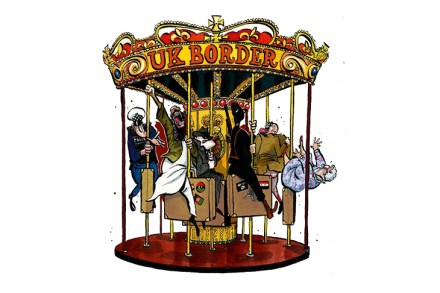
How do we stop those pesky boats from crossing the English Channel? How about yet another reorganisation of the Home Office, that most reorganised of all Whitehall departments, as the government announced this week? This is not actually as silly as it sounds. Since the last round of reorganisations, and reorganisations to the reorganisations, the immigration side of the Home Office has been divided into three ‘directorates’: UK Visas and Immigration (UKVI), Immigration Enforcement and Border Force. It is now proposed that UKVI and the passport office will form a Services Directorate, that directly interacts with the public, and that the Enforcement and Border Force directorates will be re-merged.

Let’s use this crisis to tackle Britain’s woeful skills shortage

From our UK edition

Training. What a turn-off. The very word casts a shadow over the page. That is partly because it has become such a specialised field, awash in hundreds of different programmes producing less and less of what we need as a society. Most policy makers don’t understand it, let alone citizens. The Covid-19 crisis is a chance to change this. The economy is on the point of a great reshaping and if the state can pay the wages of millions it can support the retraining of millions. Too much of our education and training spend now goes on 18 and 19-year-olds in higher education doing full-time residential three or four year courses. This means we over-produce then grade-inflate too many bachelor degrees.

The age of incivility

From our UK edition

How long ago it now seems that the big political worry was apathy. Today, wherever you look — Brexit negotiations, US politics, the latest news from Europe — the talk is only of polarisation, division and a coarsening of political behaviour and language. According to a Ipsos MORI survey, most Europeans believe their countries are more polarised than ten years ago. But are we really as divided as the new consensus presumes? What if recent political trends represent instead a long overdue rebalancing of interests after nearly 30 years of liberal domination — both economic and social — favouring the affluent and educated, and so a case of democracy not failing but working (albeit not to the taste of most of the political class)?

Notes on a scandal | 3 May 2018

From our UK edition

The idea that left vs right has been replaced by open vs closed is one of the most self-serving conceits of contemporary politics. I have never met anyone who wants to live in a closed society, but I have met plenty of people who think that the forms of openness of the past couple of decades have not served their interests. Factories and offices have moved abroad. EU free movement has brought a new workforce to compete with the one already here, and an extra four million people overall have arrived in the past 15 years, while wages have barely grown. Combine that with open public services and an estimated illegal migration population of at least 500,000 and you can see why so many people have not needed Nigel Farage’s help to worry about borders.

Continental divides

From our UK edition

What do Europeans really think about Brexit? Do they secretly admire our unexpected decision to walk away from all those pesky regulations and sub-committees? Or are our former ‘European friends’ relieved the arrogant, entitled Brits are leaving them alone? The official response of the European political class is one of regret combined with studied indifference and a determination not to let Brexit weaken the project. That, broadly, seems to be the unofficial response too. The EU, after a couple of decades of declining popularity and a rising populist challenge, has actually seen a small up-tick in popularity since Brexit, according to the Eurobarometer polling organisation. Trust in the EU stands at 42 per cent, ten points up since 2015 and the highest level since 2010.

Europe remains remarkably free of racism

From our UK edition

This book is an exercise in crying wolf that utterly fails to prove its main thesis: that Europe is abandoning its core liberal values under threat from a resurgent populist right. It is a largely fact-free polemic that passes itself off as an open-minded work of interview reportage. Yet if you can ignore the author’s sly interventions on behalf of his left-liberal premises, he does introduce the reader to a fascinating cast of characters, mainly from the European populist right.

Racism is a grey area

From our UK edition

This book is an exercise in crying wolf that utterly fails to prove its main thesis: that Europe is abandoning its core liberal values under threat from a resurgent populist right. It is a largely fact-free polemic that passes itself off as an open-minded work of interview reportage. Yet if you can ignore the author’s sly interventions on behalf of his left-liberal premises, he does introduce the reader to a fascinating cast of characters, mainly from the European populist right.

Middle May

From our UK edition

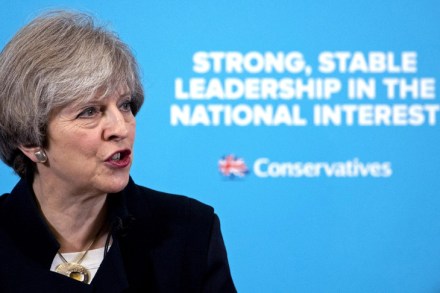
Once, politicians remained in their safe spaces and elections were fought in a handful of swing seats. This time Theresa May is campaigning in Labour heartlands, pitching herself at people who have never considered voting Conservative before. Tories are targeting seats they have not held since the 1930s and social class seems almost irrelevant. Pollsters YouGov recently observed that class now tells us ‘little more about a person’s voting intention that looking at their horoscope or reading their palms’. As Tony Blair might have put it, the political kaleidoscope has been shaken and the pieces are in flux. A picture of a Britain with new fault lines is emerging.

Is the Front National the acceptable face of populism?

From our UK edition

Is the Front National the acceptable or the unacceptable face of populism? It was one of the few points of contention in an absorbing 90 minutes of discussion about the meaning of the French presidential election, expertly conducted by Andrew Neil. The day before Wednesday’s Spectator debate I had heard the celebrated French intellectual, Bernard Henri-Levy, regretting the fraying of the 'Republican front' against the 'fascist' Front National. On Wednesday night at The Spectator event, Dominique Moisi used the same term. Fascist? Could more than a third of French voters be about to vote for a fascist party? At least one man in the audience who, daringly, confessed to being a Front National supporter challenged this view of the party.

Does Brexit mean England can have Englishness?

From our UK edition

Brexit is often said to be driven by English nationalism. In recent decades England has certainly become a less shy country, made aware of itself thanks to the growth of Scottish and Welsh national consciousness and the banal fact that we now talk about the English NHS, English schools, and so on, in a way that we never used to prior to devolution. Yet on today's English national day I saw not a single flag of St George flying on the train journey from London to Cambridge and back (travelling through Essex, supposedly one of the heartlands of English nationalism). And when I opened my Sunday papers I found no reference to it at all. (Though Jeremy Corbyn did briefly grab the lead item on the BBC News with his suggestion of a national holiday on St George’s day.