Book review

Shadows of the past

The Shangri-Las’ song ‘Past, Present and Future’ divides a life into three, Beethoven-underpinned phases: before, during and after. Each section turns in on the next, binding them together with devastating effect. It is one of the oddest and most radically structured moments in pop, and one that came to mind when reading these three very different debut novels. With similar temporal concerns to the Lieber-Butler-Morton lyric, each traces the implications of past action on the present —and how these in turn could shape the coming years. The future is most notably explored in Danny Denton’s brilliantly conceived The Earlie King & the Kid in Yellow, a polyphonic trawl through the murky waters of a permanently raining Irish dystopia.


A time for reflection | 8 March 2018

The precarious stasis of late pregnancy offers the narrator of Jessie Greengrass’s exceptional first novel a space — albeit an uncomfortable one — for reflection. She sifts through her own immediate and past experience: caring for her dying mother in her early twenties; her relationship with her partner Johannes; her childhood; the birth of her first child. This fragmented narrative is intercut with the stories of Wilhelm Conrad Röntgen, the inventor of the X-ray; Sigmund and Anna Freud; and the 18th-century anatomist, surgeon and empiricist John Hunter — along with other brief cameos from the history of science, from the Lumière brothers to the engraver Jan van Rymsdyk.

Flitting from flower to flower

‘I am interested only in stretching myself, in living as fully as I can.’ Lara Feigel begins her thoughtful book with this assertion by Anna Wulf, the protagonist of Doris Lessing’s The Golden Notebook, and it rather sums up the whole endeavour of the volume. Feigel weaves close readings of Lessing’s prose, both fiction and non-fiction, with accounts of her own self-stretching. Feigel, an academic, had read Lessing as an undergraduate, but, returning to her in her thirties, she discovered in the books a stimulating discussion about ‘how as a woman to reconcile your need to be desired by men with your wish for sexual equality’. She is particularly interested in the way Lessing ‘placed sexual fulfilment at the centre of women’s lives’.

They fill you with the faults they had

You attempt to write a review with a stiff dose of objectivity, but it’s hard not to start with a degree of fondness for an anthology put together by a magician who has performed in North Korea. Dale Salwak also has a sideline as a professor of literature at Citrus College in Los Angeles, and Writers and their Mothers is a collection of 22 pieces he has edited, by novelists, poets and literary critics, some biographical and analytical, some autobiographical. In his introduction, Salwak makes reference to an assertion by Georges Simenon that writers are ‘united in their hatred of their mothers’, an assertion, I’d suggest, that tells you much more about the whore-mongering Simenon than about writers in general.

Going down in glory

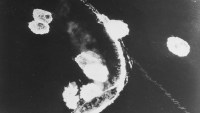
In April 1945, the Japanese battleship Yamato — the largest and heaviest in history — embarked upon a suicide mission. The ship sailed to Okinawa, where a huge American assault was taking place. Under extensive enemy fire, it sank, as was expected, to the bottom of the Pacific. With it, it took 2,280 of its crew. Survivors’ accounts exist and continued to be taken until very recently. They describe seamen lost even on board, unable to find their living quarters because of the sheer size of the vessel; arrows painted on decks to indicate the direction of the bow or stern; and the testing days before what the crew knew would be the battleship’s last mission. Jan Morris, however, does not include the human stories of the Yamato.

Getting so much better all the time

Steven Pinker’s new book is a characteristically fluent, decisive and data-rich demonstration of why, given the chance to live at any point in human history, only a stone-cold idiot would choose any time other than the present. On average, humans are by orders of magnitude healthier, wealthier, nicer, happier, longer lived, more free and better educated than ever before. Moreover, as Bill and Ted’s Excellent Adventure noted: ‘Bowling averages are way up, minigolf scores are way down, and we have more excellent waterslides than any other planet we communicate with.’ Some of the many graphs in this book slant from the bottom left towards the top right, showing the rise of Good Things, and some of them (charting the decline of Bad Things) go the other way.

Delusions of the deserters

‘Keep my name out of it’, was the fairly standard reply when Matthew Sweet started researching the story of the GIs who deserted from Vietnam. People’s concern, it turned out, however, was not about being associated just with desertion, but with a more complex story of duplicity, abuse and insanity. Over time, the American Deserters Committee (ADC), the welfare group established to support the deserters in neutral Sweden, developed into a series of increasingly militant organisations. These were then infiltrated by the CIA. Sweet tracks the changing nature of desertion ‘from an individual act of conscience or cowardice to a political step that GIs could take together’.

A man, a boy, a bed

Stephen Bernard has led an institutionalised life. Behind the doors of the church presbytery, at public school, on hospital wards after repeated suicide attempts, in therapists’ offices, at Oxford University — he has sought protection and cure. Some institutions woefully failed, while others revived Bernard from the appalling child abuse inflicted by Canon T.D. Fogarty, Latin teacher, priest and rapist. An account of the open wounds left by years of assault, Paper Cuts is also a memoir about the anxiety of seeking to belong, yet as a survivor never quite finding a part. We follow Bernard for a day, now aged 40 and an Academic Visitor at Oxford’s Faculty of English. He has a looming deadline to finish an article for the TLS.

Polemicist of genius

‘We have it in our power to begin the world over again.’ Ronald Reagan made this most unconservative of lines a leitmotif of his 1980 presidential campaign, knowing its radicalism would highlight his energy, personal optimism and desire for change. As it duly did. The astonishing power over words of its author, Thomas Paine, persists to this day. In a letter of 1805, the former president John Adams said of Paine that there can be no severer satyr on the age. For such a mongrel between pig and puppy, begotten by a wild boar on a bitch wolf, never before in any age of the world was suffered by the poltroonery of mankind, to run through such a career of mischief.

Riding for a fall | 8 March 2018

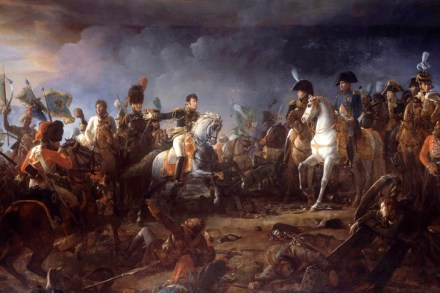
On 20 July 1805, just three months before the battle of Trafalgar destroyed a combined French and Spanish fleet, the Emperor Napoleon ordered his chief-of-staff to ‘embark everything’ for the invasion of England that he had been dreaming of for two years. ‘My intention is to land at four different points,’ he explained to Berthier, ‘at a short distance from one another... Inform the four marshals there is not an instant to be lost.’ While there is possibly no saga in his whole astonishing career — Russia included — that so vividly exposes the curious and almost wilful blind spots in Bonaparte’s make-up, his enemies would have done well to pay closer attention.

An insight into the medieval Muslim mind

  At a press conference in October 1981, Ronald Reagan quoted Ibn Khaldun (1332–1406) in support of what is known as supply-side economics. Although the 14th- century politician and thinker wrote extensively about economics and was almost unique among medieval Arab writers in so doing, it is quite ‘marvellous’ writes Robert Irwin, the author of a new intellectual biography of this famous North African, that he ‘should have anticipated American Republican party fiscal policy’.

Should he stay or should he go?

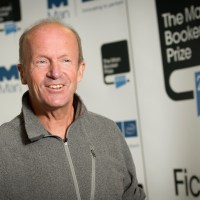
This remorselessly slow-moving, hazily allegorical drama about ageing and xenophobia is Jim Crace’s 12th book, and the first to appear since he announced his retirement from writing in 2013. Like much of his other work, it lays its scene in a topographical and temporal bubble of the author’s own devising, where recognisable aspects of society and geography are almost imperceptibly twisted away from true.

A drizzle of nature writers

A parliament of owls. A gaggle of geese. A convocation of eagles. But what is the generic term for the army that has recently advanced over the literary landscape? Perhaps a drizzle of nature writers? Here they come, heads down in the rain, turning out their pockets for the samples of fungi and moss they have collected on the outskirts of our cities. Bookshops now have whole tables dedicated to contemporary British nature writing. The first wave of this literary phenomenon was far more cheerful: the late lamented Roger Deakin sitting in his pollarded hornbeam and imagining himself at sea; Richard Mabey, the godfather of it all, with his wonderful Flora Britannica; Robert Macfarlane striding across wild places with lyrical intensity; Helen Macdonald eulogising her hawk.

Carry on spying

That there’s a direct correlation between sex and spying is probably Ian Fleming’s fault. Hard to think of Bond without thinking about his women. For Charlotte Bingham, though, the connection occurred at a deeper level. When her father, John — legendary spook, long believed to be the model for George Smiley — called her into his study to reveal that he worked for MI5, she was terrified that he was about to explain the facts of life, many of which had already been revealed to her by a friend on Bognor beach: ‘I thought I was going to pass out with the horror of what was to come.’ But the particular facts he reveals are no less life-altering.

Cutting up rough

Powerful memoirs by such eloquent doctors as Oliver Sacks, Atul Gawande, Henry Marsh, Gabriel Weston and Paul Kalanithi have whipped the bed curtains open on a previously secretive profession. Steeped as medicine is in uncomfortable facts about debilitating illness, pain and the stress of treating intractable conditions, it was a subject ripe for exposure. Under the Knife and Anaesthesia admit to the fallibility of medicine and the responsibilities, flaws and complex emotions of its practitioners. Arnold van de Laar does not rely on personal experience. Instead, he explores the world of surgery through 28 clinical conditions; its historical scope makes for a fascinating book.

Biografiends

I saw a biopic about Morecambe and Wise recently. The actors impersonating the comedians were not a patch on the originals — how could they be? You need a genius to play a genius. I often wonder if my own HBO Peter Sellers movie would have been improved if someone fiery, of the calibre of Gary Oldman or Sacha Baron Cohen, had been cast instead of Geoffrey Rush, who was muffled under prosthetic make-up. But my point is, biopics seldom come off, and nor do biographies. Indeed, it is a reprehensible and misguided genre. Privacy is violated, creative achievements are explained away, and great men and women are unmasked as sneaky, predatory, cruel and ordinary. Humphrey Carpenter wrote all his biographies — of Auden, Britten and Ezra Pound — in this way.

Angels with dirty faces

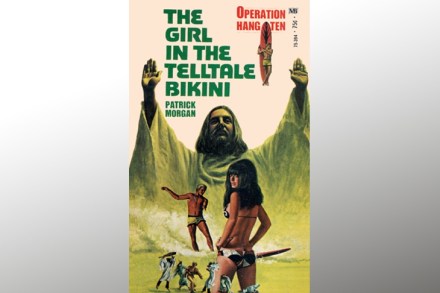
The year 1971 was a busy one for Mary Whitehouse, self-appointed ‘Clean-up TV’ campaigner. Not only did she help establish the Nationwide Festival of Light, making religious inspired protests against the so-called permissive society, she also wrote an autobiography, Who Does She Think She Is?, published by New English Library. Thus her thoughts regarding the impending moral collapse of the nation were brought to the public by the same outfit responsible for a comprehensive range of sinew-stiffening pulp fiction delights such as The Degenerates by Sandra Shulman, Bikers at War by Jan Hudson and Gang Girls by Maisie Mosco.

Nazi gamesmanship

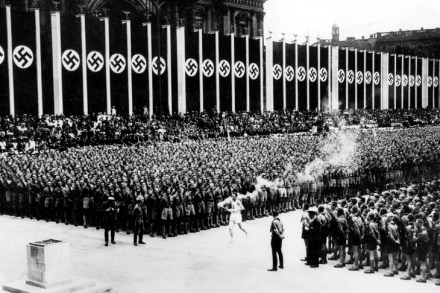
The British diplomat Robert Vansittart had been warning against Nazism for years, so it was a surprise when he and his wife showed up in Berlin for a two-week ‘holiday’ during the 1936 Olympics. ‘Van’ was impressed by German organisation. ‘These tense, intense people are going to make us look like a C nation,’ he wrote in a confidential report. The anti-appeaser had meetings with Hitler and the principal henchmen, and took a particular shine to Goebbels: ‘a limping, eloquent, slip of a Jacobin… My wife and I liked him and his wife at once.’ Van even came to think he might have misjudged the Nazis, though a lapse by the newly appointed ambassador to London, Von Ribbentrop, gave him pause.