Book review

Into the heart of Bow

Cockney feet mark the beat of history, sang Noël Coward, as if he had ever been east of Holborn. Yet the sugary wartime sentiment finds a moving and resonant echo in Melanie McGrath’s new work of social excavation. The past casts an unusually deep shadow over Bow. And, cleverly, she has found a fresh means of exploring these striated layers of heritage: through the enduring local appetite for minced beef pie, mashed potatoes, and side orders of stewed eels. G. Kelly’s Pie and Mash is the 100-year- old restaurant in question, on the Roman Road in Bow (there are branches elsewhere). Pie and mash served with ‘liquor’ (parsley sauce) and eels might be described as the forerunner of fried chicken: comfort food devised at a time when comfort was badly needed.
Children and slaves first

In the reign of Constantine, whose conversion to Christianity in AD 310 set the entire Roman world on a course to becoming Christian, a Palestinian scholar named Eusebius pondered the reasons for the triumph of his faith. Naturally, he saw behind it the guiding hand of God; but he did not rest content with that as an explanation. The purposes of heaven were to be traced in the patterns of earthly history. ‘It was not merely as a consequence of human agency that the greater part of the world’s peoples came to be joined under the sole rule of Rome — nor that this should have coincided with the lifetime of Jesus.’ A global faith, Eusebius argued, had been rendered possible by a globalised age.

A sea of troubles

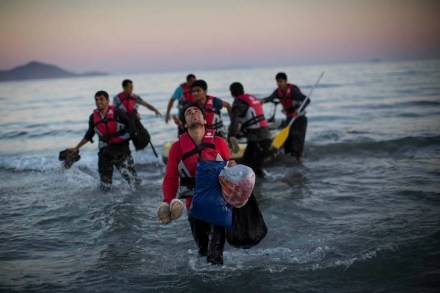
Donal Ryan is one of the most notable Irish writers to emerge this decade. So far he has produced five volumes of fiction set in post-millennial Ireland. What sets him apart is a striking facility for narrative voice as well as a startling diversity of protagonists. His first novel, The Spinning Heart — about a town’s slump when the Celtic Tiger died — had no fewer than 21 narrators, mostly speaking in effervescent vernacular. His latest work revisits tragedy and loss with just four narrative perspectives. With the first, however, he puts aside Irish provincial life to tackle global tragedy. Farouk is a Syrian doctor who is working in a local hospital after his family drowned during a desperate sea crossing to Europe.

The priest’s tale

Samantha Harvey is much rated by critics and those readers who have discovered her books, but deserving of a far wider audience than she has hitherto gained — so much so that just before Gaby Wood’s appointment as literary director of the Booker Prize Foundation, the critic wrote a lengthy exploration of Harvey’s prodigious qualities, describing her as ‘this generation’s Virginia Woolf’. The reasons for her relative neglect are not complex: her work is deeply serious, her novels rarely mining the same seam; she has featured on numerous long- and shortlists but failed to scoop any major awards; and we don’t see her on the telly or at the head of newspaper columns.

Bird of ill omen

With bird books the more personal the better. Joe Shute was once a crime correspondent and is today a Telegraph senior staff feature writer. It is his investigative journalism, a series of meetings with people who deal with ravens first-hand, which provides novelty. Historical, mythological and other diversions add ballast. In the prologue he writes: ‘I was born in 1984, making me the flag-bearer of a strange generation.’ Raised comfortably and lovingly in London, his future seemed serene. Then ‘came the financial crash of 2007; and with it the collapse of all the misplaced entitlement of my youth... Rather than better, it was going to get far worse’. At this juncture, he found solace in birds in the Yorkshire countryside.

Corpses, clues and Kiwis

Publishing loves a brand. Few authors of fiction create characters who reach this semi-divine status, but when they do, even death cannot part them from their fortunate publishers. Sherlock Holmes, Hercule Poirot, Bertie Wooster and James Bond are among those who have survived their creators’ deaths, thanks to the assistance of living authors. Now Roderick Alleyn, the ineffably posh Scotland Yard detective created by Dame Ngaio Marsh, returns for a posthumous outing with the help of Stella Duffy, herself a distinguished crime writer. It’s an inspired pairing — Duffy, like Marsh, is a New Zealander with a professional interest in the theatre.

The road to Damascus

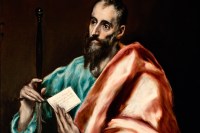
Saint Paul is unique among those who have changed the course of history — responsible not just for one but two critical historical developments 15 centuries apart. First, he persuaded the early followers of Jesus of Nazareth that gentiles as well as Jews could belong to their nascent church. This enabled its spread throughout the Roman empire, until Christianity become the state religion under the Emperor Constantine, and remained the official creed of all European nations until the French revolution. Second, there was his teaching on justification by faith alone —a ticking time bomb detonated by Martin Luther in the 16th century.

The cosmic made comic

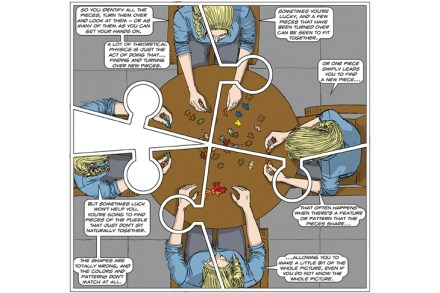
We all know that physics and maths can be pretty weird, but these three books tackle their mind-bending subjects in markedly contrasting ways. Clifford V. Johnson’s The Dialogues is a graphic novel, seeking to visualise cosmic ideas in comic-book style. Darling and Banerjee’s Weird Maths is a miscellany of fun oddities, ranging from chess-playing computers to prime-counting insects. Philip Ball’s Beyond Weird argues that we’ve got quantum mechanics all wrong: it’s not so weird actually, but quite sensible. All three books do a fine job for their respective audiences. Just make sure you know which target group you’re in.

Pandora’s Box

On 25 April 2005, Jawed Karim sent an email to his friends announcing the launch of a new video site — intended for dating — called youtube.com. Within 18 months, the site was being used to view 100 million videos a day. Last year it had more than a billion users, watching five billion videos every day, with creators uploading 300 hours of video to YouTube every minute. Given this almost incomprehensible scale, it’s fitting that the word Videocracy — the title of YouTube Head of Trends Kevin Allocca’s history of the site — evokes the idea of an authoritarian dystopia. Like any approved account from such a regime, its analysis never strays far from the realms of the vapid or tepid.

Princesses of Parallelograms

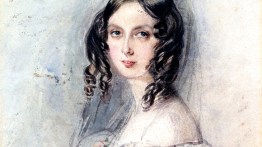
It’s more than 160 years since the death of the computer pioneer Ada Lovelace, Charles Babbage’s ‘enchantress of numbers’ and self-proclaimed ‘bride of science’. Not the least of Lovelace’s fascination is the way in which her reputation and the claims for her significance have fluctuated so wildly during that time. She’s been hailed for her understanding of the potential of Babbage’s unbuilt Analytical Engine and for her far-reaching vision of the role of the technology of the future. This has unfortunately led to her being credited with everything from the invention of the CD to the foundation of Silicon Valley.

Unusual motives for murder

Donald E. Westlake wrote crime books that were funny, light and intricate. Help I Am Being Held Prisoner (Hard Case Crime, £7.99) was first published in 1974. The protagonist is Harold Künt. (That umlaut, as you can imagine, is very, very important.) In reaction against his name, he’s become a serial prankster. After one of his jokes goes badly wrong, he ends up in prison. Here he falls in with the Tunnel Gang, a group of inmates who use a secret tunnel to escape into the nearby town. But they only go there for a few hours at a time before returning to prison to serve out their sentences. Künt strolls around town, chats to locals, even falls in love, and then heads back to his cell. It’s a perfect life.

Yet more ponies for Jean

After three hot-water-bottle-warmed evenings of highly satisfying bedtime reading, I can confirm that, even in a world where Francis Spufford’s superb The Child that Books Built exists, we need this new memoir by Lucy Mangan, about her childhood of being a bookworm. It’s enchanting.

In vino veritas

Taste has a well-noted ability to evoke memory, so it is curious how infrequently most wine writers mine their pasts for inspiration. You wouldn’t think that some had ever fallen in love, read a novel or even got drunk. Instead they obsess over scores, sulphur and diurnal temperature variation. Thank heavens for Nina Caplan, who brings a bit of hinterland to this often dry subject in her weekly New Statesman column. Characteristically, The Wandering Vine, her first book, is about much more than wine. It’s a heady blend of travel, literature, memoir, history and what I can only describe as psychogeography, though don’t let that put you off. The publishers have given the book a whimsical cover, which is misleading, because this is not a lightweight read.

A thing of shreds and patches

On the wall of her tumbledown house in central Baghdad, an elderly Christian widow named Elishva has a beloved icon of St George with his lance raised. She chats with the saint like an old friend, but wonders why, in the picture, he stays frozen mid-thrust and why ‘he hadn’t killed the dragon years ago’. As her ravaged city suffers an interminable ‘binge of death and devastation’, Elishva frets that ‘everything remained half-completed’, three years after the Anglo-American invasion of Iraq in 2003. During the blood-soaked interregnum, which continues to this day, monsters breed.

An unprincipled Principal

‘Dreaming spires’? Yes, but sometimes there are nightmares. Brian Martin, awarded the MBE for services to English literature, is at home in Oxford, where he spent most of his career teaching, and seems to know all about the professional and psychological complexities of the university. Holt College, his fourth novel, written with dedicated probity and Baedeker thoroughness, is a suspenseful tragedy without a hero — just a few men and women who mean well. Concerned with the administrative deliberations and manoeuvrings of the fellows of a respected, ancient college, the story serves analogically to show how an unscrupulous individual of obsessive ambition and manipulative cunning can turn even the most idealistically conceived democracy into a dictatorial hierarchy.

Ankle-deep in LSD

‘And this is good old Boston/, The home of the bean and the cod,’ John Collins Bossidy quipped in 1910, ‘Where the Lowells talk to the Cabots/, And the Cabots talk only to God.’ Also home, in 1968, to Mel Lyman, a folk musician turned LSD guru who believed he was God, and to Van Morrison. The music business abounds with stories about Morrison being grumpy. In my experience, he’s perfectly reasonable. You’d be grumpy if your job obliged you to consort with thieves, liars and drummers who can’t keep time. You’d be especially irritated by people asking how you wrote Astral Weeks. Sensibly, Morrison explains that Astral Weeks was written by a different person living, as its title song says, ‘In another time/ In another place.

Pirates of the Southern Ocean

Sea Shepherd is a radical protest group made famous — or notorious — by the American cable TV series Whale Wars and by the support of numerous Hollywood celebrities and rock stars. Having previously concentrated on obstructing whale-hunting from Japan to the Faroe Islands, it now focuses on other devastating acts of marine plunder. In Catching Thunder, written with Sea Shepherd’s active co-operation, the Norwegian journalists Eskil Engdal and Kjetil Sæter tell the story of a 10,000-mile sea chase, lasting 110 days, in which the organisation sought to bring to justice a Spanish vessel illegally trawling for highly endangered toothfish in the Southern Ocean.

Thomas Paine: spendthrift, scrounger and polemicist of genius

‘We have it in our power to begin the world over again.’ Ronald Reagan made this most unconservative of lines a leitmotif of his 1980 presidential campaign, knowing its radicalism would highlight his energy, personal optimism and desire for change. As it duly did.The astonishing power over words of its author, Thomas Paine, persists to this day. In a letter of 1805, the former president John Adams said of Paine thatthere can be no severer satyr on the age. For such a mongrel between pig and puppy, begotten by a wild boar on a bitch wolf, never before in any age of the world was suffered by the poltroonery of mankind, to run through such a career of mischief.