James Bloodworth

Too much learning is a dangerous thing

From our UK edition

It is often said that the left does not understand human nature. Yet it is difficult to think of anything as antithetical to Homo sapiens as the notion, popularised by free marketeers during the 1980s, that people would willingly evacuate those parts of Britain where ‘market forces’ had decreed that collieries and steelworks were no longer profitable. People did not ‘get on their bikes’ — in Norman Tebbit’s notorious phrase — once industry was shut down; instead they grew resentful at a world they felt had little respect for their lives or communities. We often refer to these people as ‘left behind’ — or as the journalist and author David Goodhart calls them, ‘Somewheres’.
Return of the infamous five

From our UK edition

It has become fashionable since the fall of the Soviet Union to diagnose communist fellow travelling as a form of Freudian neurosis. Where class resentment exists it is said to emanate less from angry young proletarians than from well-spoken youths intent on garrotting their dividend-drawing fathers. Most contemporary accounts of the Cambridge spy ring, which passed top secret information to the Soviet Union during the Cold War, draw heavily on this cliché. Kim Philby, Donald Maclean, Guy Burgess, Anthony Blunt and John Cairncross are typically portrayed not only as highly privileged men who rebelled against their upbringings, but as an upper-class clique who got away with what they did because they were sheltered under the protective wing of the establishment.

Visit Cuba – it’s the perfect holiday destination for poverty fetishists

From our UK edition

Since last December, when officials from Cuba and the United States announced that the two countries, locked in a Cold War stand-off for 54 years, would seek to normalise relations, the tourist industry has been admonishing us to travel to Cuba ‘before it changes’. Despite Cuba’s listless youth being well-versed in American culture - be it the latest fashions, pop songs or movies - on the surface Cuba remains stuck in a time warp. For tourists, the museum piece aspect of Cuba is a big part of the appeal. Thus visitors to Havana can go for a ride in a Cadillac, take in the neo-classical architecture (along with the smoke from a good cigar) and sip a mojito at Ernest Hemingway’s old drinking spot.

So what if the Canadian terror attacks are blowback?

From our UK edition

Anti-NSA crusader Glenn Greenwald published an article on Wednesday morning where he explained that the recent murder of a Canadian soldier by a radicalised Muslim convert was down to Canadian foreign policy. The important sentence in Greenwald’s piece is this one: ‘A country doesn’t get to run around for years wallowing in war glory, invading, rendering and bombing others, without the risk of having violence brought back to it.’ To put it another way, it was inevitable that the jihadists would come after Canadians, given that Canadians had meted out some fairly ripe treatment to the jihadists – first in Afghanistan and now against the Islamic State in Iraq and Syria (I’m being generous to Greenwald here, I grant you).

I’ve just seen Nazi banners in Trafalgar Square. Well, almost

From our UK edition

Picture the scene. Skinheads march through Trafalgar Square wearing SS uniforms and holding aloft portraits of the Fuhrer. They bring along a few right-wing Members of parliament who deliver comradely speeches and swear, arms raised in a sieg heil, to stay faithful to the party and the 'race'. Thankfully, there would be universal outrage at such a spectacle. Having gone through the bloody 20th century to reach a point where even a nod towards fascism is political and social suicide, we don't need a debate on the nature of Hitlerism nor to 'put it into context', as the effete academics like to say.

Where Boris was right on inequality

From our UK edition

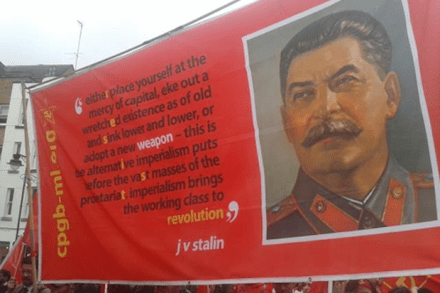
Hold the front page, Conservative Mayor of London Boris Johnson has made a startling confession: he’s not a communist. Well not quite, but almost. Boris in fact said in a speech to the Centre for Policy Studies yesterday that he does not believe economic equality is achievable, and that natural differences will always result in some people rising to the top of society ahead of others. So yes, in other words we can ascertain that the Tory Mayor of London is not a Marxist-Leninist. Judging by much of the reaction to his comments, though, some were apparently under the impression that he was. According to the Guardian, Boris 'invoked the spirit of Thatcher' and delivered a 'greed is good speech'.

Venezuela: a shining example of how not to help the poor

From our UK edition

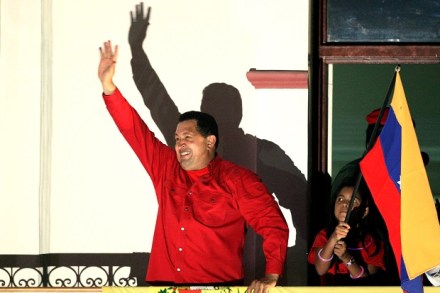
No serious person today views the Cuban Revolution as anything other than an impoverished tyranny – up to and including the leaders of that Revolution, who have been hastily turning toward capitalism since learning in 2009 that the island was on the brink of insolvency. It remains much easier to find useful idiots willing to defend Venezuela’s so-called ‘Bolivarian revolution’, however, which until recently was supposed to promise something better than its ossified Caribbean neighbour. Not for much longer, perhaps; for Venezuela is on the brink of a social explosion after 15 years of economic incompetence by Islington’s favourite petrocrat. It was reported this week that, absurdly, the most oil rich country in the world is facing food shortages.

Mother Agnes has pulled out of the Stop the War conference. And yet she would have fitted in so well

From our UK edition

The Stop the War Coalition is a curious organisation. It isn’t so much opposed to war as has accrued a sorry reputation for supporting the other side in every conflict it has pretended to oppose. Whereas at one time you would be barred from speaking-platforms if you supported a fascist regime, because of the peculiarities of anti-imperialist politics you are likely today to receive top billing at a StWC event not in spite of your atrocious politics but because of them – so long as you are sufficiently bien pensant about United States foreign policy. In this respect, Mother Superior Agnes Mariam de la Croix fitted the bill to a tee.

Russell Brand: The Jeremy Clarkson of the left

From our UK edition

Until Wednesday I couldn’t decide whether Russell Brand was a fatuous buffoon or a misunderstood genius. But then nor, I think, could he.  I’m still unsure, although I suspect that he is a lot smarter than some of those who were going into raptures on Wednesday evening because Newsnight featured a guest who was spouting a few banalities about revolution. If this seems like sour grapes on my part then so be it; but considering Brand apparently wants to be taken seriously then I think it’s only fair that his ideas are scrutinised on their merits, rather than on the fact that they came out of the mouth of a celebrity comic named Russell Brand.

Mass immigration or the welfare state? Because we may not be able to have both

From our UK edition

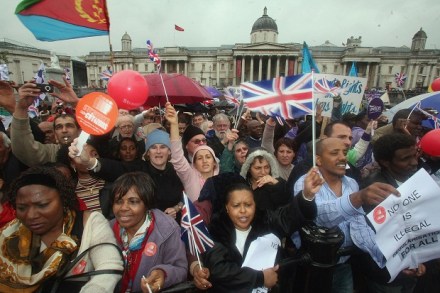
Formulating policy on the back of what you believe human beings ought to be like rather than what they tend to be like can have serious consequences. Mass immigration is a case in point. I have tended to accept the proposition that immigration (the more the merrier) is an inherent good on the grounds that the economic case for it is strong. After all, migrants tend to put more into the pot than they take out and a rapidly ageing population means we require a young and dynamic workforce to pay for pensions further down the road. It is the economic case that explains why, as well as the bleeding heart left, the CBI and the Economist are enthralled at the prospect of greater mass migration to the UK. Economics should not be determinative of policy, however.

It’s fine to be a ‘new’ atheist, so long as you don’t object to Islam

From our UK edition

Rationality can be an overrated quality in politics. Communism was, after all, so rational that it imagined humans as lumps of clay to be moulded at will – with unsuitable ‘elements’ consigned to the Gulag. The attempt to apply rational political criteria to the actions of psychopathic movements has also historically led to erroneous political decisions at home: appeasement in the case of Nazi Germany and a frivolous desire to find materialist ‘root causes’ of Islamic extremism. As the great documenter of Stalinism Robert Conquest put it: Reliance on reason alone is itself irrational: It neglects the instinctual and deep-set elements of the real human being.