Notes on...

Indoor gardening

A year or so ago, I inherited a cardboard box filled with plants. It was an offshoot from an enormous collection that belonged to a young botanist from Stockwell. He was about to be turfed out of the derelict building he lived in and hundreds of plants were being spread across London. I offered to rehome a few. My only outdoor space is a window box, so most of the plants had to face life indoors. Some were happy; others withered. I enjoyed having them, though, so I replaced the dead and began a collection. My one-bed flat now contains more than 20 plants. The window box is bursting with herbs — parsley, sage, rosemary and thyme. I’ve also added some mint. More knowledgeable friends tell me that it has aggressive roots and will soon turn into a despotic ruler.
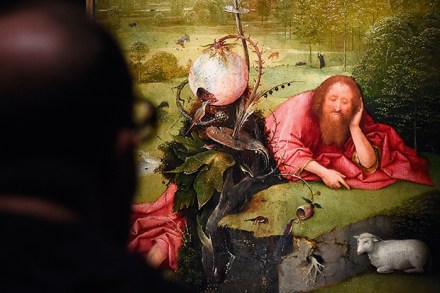
The delights of Hieronymus Bosch

If you hope to inspire an appreciation of Renaissance art in your children, look to Hieronymus Bosch. Ideally, your children will not be sensitive types, nor prone to nightmares, but if they can handle a little, or indeed quite a lot, of fantasy, Bosch will blow their tiny minds. My four-year-old lad, Luca, definitely not a delicate chap, was deeply impressed by ‘The Garden of Earthly Delights’ when I showed him reproductions. He remains unmoved by Leonardo and bored rigid by Giotto, but Bosch snared him. I should hunt down a full-size poster and hang it in his room. I read somewhere that Leonardo DiCaprio snoozed beneath one as a boy, and look where it got him. Bosch fascinates everyone though, not just impressionable infants.

Tarot reading

It’s 8.57 on a Friday evening and I’m at home, waiting for an obscure American radio talk show to come online. For the next hour I’ll be answering listeners’ love queries with the aid of my Tarot-reading skills, and out of respect to all the lovesick Americans out there I’ve made a real effort to stay sober. Which is quite an achievement because, downstairs, my friends are slugging it out over the EU referendum. Nobody understands what they’re talking about, as usual, but I’m feeling left out. So I lay three cards on the table and ask the Tarot: ‘Who’s going to win?’ Do read on… The radio show’s a one-off. Normally, I sit in a darkened booth somewhere in Chelsea and wait for punters to walk in off the street.

Downtown Los Angeles

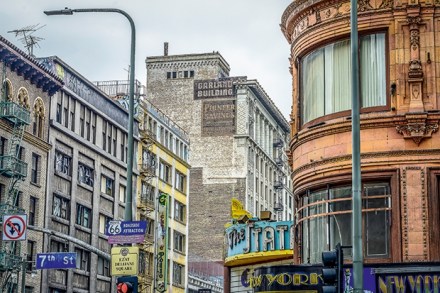
There’s a certain kind of Englishman who falls hard for Los Angeles. Men such as Graham Nash, who swapped the Hollies and rainy Manchester for Joni Mitchell, David Crosby and Laurel Canyon. The LA of beaches, semi-rural hills and freeways can work wonders on an English heart. But the city has another side — a place most Angelenos never venture. Downtown. The old heart of the city is a vision of how LA might have turned out. It has skyscrapers, art deco buildings and even an underground railway. It feels like Chicago, except that even on a Saturday afternoon, many streets are deserted. Some of those gorgeous pre-war buildings are dilapidated or boarded up. The shops sell cheap jewellery and Mexican food. There’s destitution on every corner.

Florence | 31 March 2016

Once, it seems, Sandro Botticelli played a trick on a neighbour. Next door was a weaver who possessed eight looms. He and his assistants kept these in constant use, creating such a judder-ing racket that the poor painter was unable to concentrate on his pictures. Botticelli implored this fellow to reduce the noise, but to no avail. So eventually the artist carried an enormous rock on to his roof, poised so the slightest vibration would bring it crashing through the noisy weaver’s premises. The man then saw reason. You can easily imagine the problem today as you walk down Botticelli’s street, Via del Porcellana. It’s a long, narrow thoroughfare running down to the Arno, tightly packed with three- and four-storey buildings.

St Petersburg

Looking across the wide Neva from Vasilyevsky Island, the Palace Embankment shimmers in the river, suspended between water and sky. Raised on a marsh by violence and sheer force of will, there are few cities more impossible, and more beautiful, than St Petersburg. It’s worth going for the view alone, and you should — now, while the rouble is weak. Thrown up in only 50 years in the 1700s, St Petersburg is a vast stage-set upon which imperial society played at being European. Nowadays, you too can choose your role. Would-be Romanovs can take a box at the Mariinksy and spend one day at the Hermitage, and the next day out at Tsarskoye Selo and the Catherine Palace.

The London Library

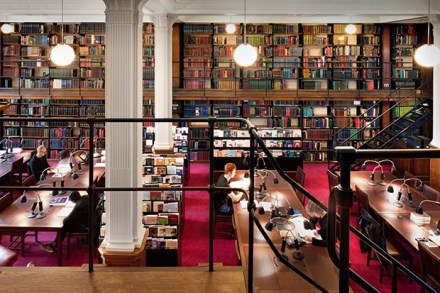
Some rogue has been writing in my bedside book. A fastidious hand has crossed out misspelled words and written neat pencil corrections in the margin. ‘Dennis’ has become ‘Denis’, quotations have been reattributed and dates amended. More than one book scribbler has been at it. At times, the pedantic pencil becomes a biro, thrilled to have spotted mistakes the first reader missed. The book is The Golden Echo, memoirs of the Bloomsbury novelist David ‘Bunny’ Garnett, a scattershot speller and fact-checker. I say it is my bedside book. Really, Garnett belongs to the London Library. But for the two months that a London Library book is allowed to me, I am possessively attached to it, and aggrieved when it is due for return.

New Zealand

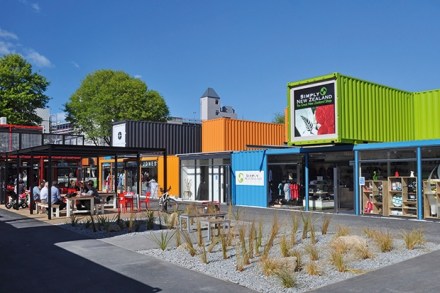
On my first night in Christchurch, I woke at 3.32 a.m. to what felt like an explosion. My bed was rocking, and a few things fell off the shelves. After my initial panic, I realised what it was: an earthquake, of course. The next question: what to do? Being an earthquake virgin, I had no idea if this was a big ’un or a small one — so I stayed put. I would listen to what was going on outside, I decided, and if people seemed to be panicking or moving, I’d join them. Fortunately the shaking soon subsided, so I resorted to Google. It was true. On Sunday 28 March, there had been a ‘rather strong’ 4.27 magnitude earthquake just outside town. Welcome to New Zealand. Given where I was, I should have worked out more quickly what was going on.

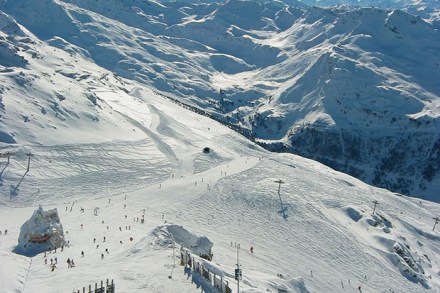
Courchevel

The last time I stayed in Courchevel it was in a tatty roadside chalet a long way down the mountain. One detail sticks: pickled cockles piled high on a platter at the closing banquet, à la Fanny Cradock. That was more than a decade ago. This time, we were staying at 1,850 metres, which is another world. The resort, always chichi up top, has undergone a kind of wholesale rebranding in recent years and now the high end of Courchevel is ridiculously high-end. There’s Prada and Chanel and Gucci and Cartier. Three of France’s 16 ‘palais’-designated hotels are here. There are 12 Michelin stars (more per square metre than anywhere else in the world), dished out among seven restaurants, including two for Pierre Gagnaire at Les Airelles.

Bangkok

Last time I went to Thailand, there’d been something of a misunderstanding about accommodation, and my friend and I ended up in a dive on Khao San Road. In a grim room with stained mattresses and peeling paint, the thud of beats from the disco made everything vibrate gently. Stalls outside offered fake IDs, tatty souvenirs and novelty edible insects. I’m not averse to eating crickets, but these ones needed embalming fluid, not cooking oil. So we took a tuk-tuk across town to the Grand Palace, just seeking a break from sunburned students in short shorts drawling about full-moon parties. Instead, what happened next was one of the highlights of the trip.

British Columbia

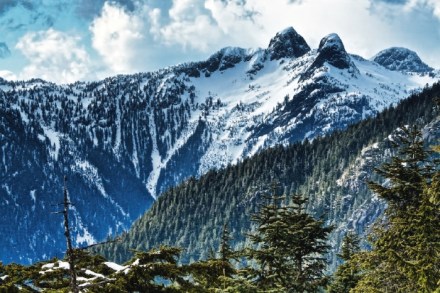
When people hear I’m from rural British Columbia, I know what their reaction will be: rhapsodic. ‘BC’ is their favourite place on earth — they had a life-changing encounter with nature there, and only their marriage/job/children stopped them dropping everything and moving there for ever. It may be one of the most beautiful corners of the Earth, but it’s also the place I grew up. In other words: I’ve always found it kind of boring. Marrying someone whose parents retired to Canada’s west coast gave me more reason to keep going back, and being there with people who aren’t blasé locals has given me a new perspective.

Six Nations rugby

Back in 1882, exactly 100 years before I was born, the Four Nations rugby competition was formed. It was originally contested between England, Wales, Scotland and Ireland, and the fortunes of the different teams have varied through the years. Scotland and England shared early successes, but with the turn of the century came numerous changes. Four became five with the addition of the French — but the team didn’t have the same flair that we know well from the modern game. The French struggled, winning only once in their first five years — how my heart bleeds for them! War left the Five Nations on the sidelines, but when it resumed in 1947 there was a slight change of the guard.

South Africa

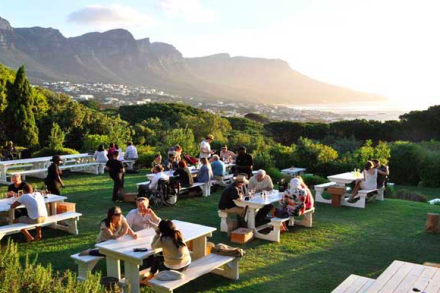
There are plenty of places to fly to for winter sun, but only one place that offers five-star hotels for the price of a B&B in Lyme Regis. South Africa has always been good value for British visitors, even five years ago when there were 11 rand to the pound. Now that figure is closer to 23 rand. For visitors, an entire country is half price. This freak situation may not last; so there might never be a better time to visit. The choices are almost overwhelming — safaris, Anglo-Zulu battlefield tours, scenic drives in the Drakensberg mountains — but Cape Town is a wonderful place to start. There’s a comfortingly British feel to the city: the surfer dudes and the beachside bars and restaurants of Camps Bay wouldn’t look out of place on Cornwall’s north coast.

The Venice Accademia

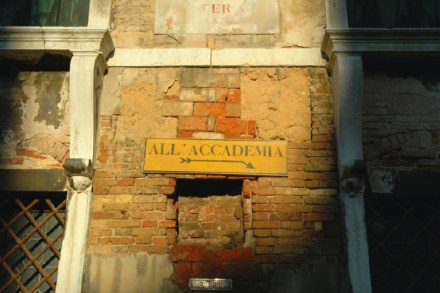
The Accademia is one of the smallest of the world’s great art galleries, and picture for picture perhaps the most concentrated collection of masterpieces anywhere — though its rambling layout may surprise first-time visitors. But there are changes afoot as it expands into spaces once occupied by the Venice Fine Arts Academy. This means more works on permanent display and larger special exhibitions. In the days of the Venetian Republic, the city saw no reason to have a public picture gallery. Paintings were everywhere: in the Doge’s Palace, administrative buildings, churches, chapels, monasteries, convents, hospitals, orphanages, confraternity houses and in hundreds of private palazzi.

The Clare Valley

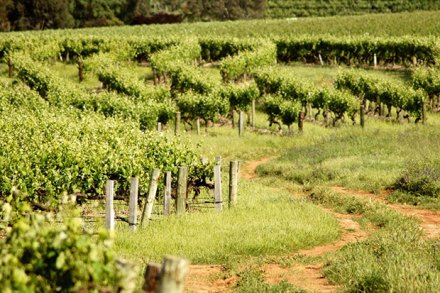
It is a century and a half since The Spectator noted the exceptional qualities of South Australia, a colony of free settlers untainted — unlike the rest of the continent — by the convict stain. ‘Everywhere … the enclosures over miles of plain, the hedged gardens, the well-grown orchards and well-appointed homesteads, proclaim the possession of the land by an industrious and thrifty yeomanry,’ wrote a Mr Wilson in these pages in 1866. ‘It is England in miniature, England without its poverty … with a finer climate, a virgin soil … more liberal institutions and a happier people.

Lake Iseo

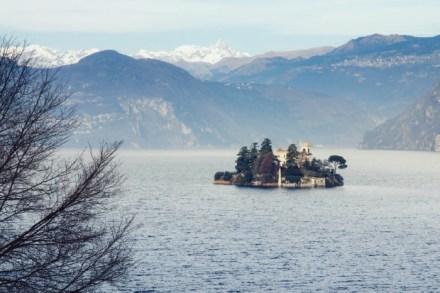
If you’ve never heard of Lake Iseo, you’re not alone. Nestling shyly between chocolate-box Como and glamorous Garda, the smallest of Lombardy’s four major lakes has quietly resisted the limelight over the centuries. Fashionistas may frolic on photo shoots in Garda’s ritzy spas, while excursion boats patrol Como’s west bank in the hope of spotting George Clooney in his front garden. But pint-sized Iseo shelters beneath cascades of forest, her charms undisturbed by tourist hordes. Iseo’s waters shimmer benignly amid nothing more disruptive than birdsong, the splashing of traghetti boats and the occasional peal of church bells. Inevitably, a few cognoscenti have rumbled Lake Iseo’s unique brand of magic over the years.

Cirencester

Everywhere you look in Cirencester there’s another animal: a cockerel, a hare, a sheep or a skulking lioness. I rather fancied the big beasts that chase each other lustily around the Roman mosaics in the Corinium Museum, home to one of the liveliest archaeological collections I’ve ever seen. The Romans of first-century Cirencester (Corinium) strike me as having been a fun-loving, optimistic bunch — so much of what they left behind honours Bacchus, the wine god, and Mercury, god of commerce. They made some fantastically modern things. One could easily mistake the model of Mercury’s cockerel (the herald of a new day), found in a Roman grave, for a Picasso. Beyond cockerels, historic Cirencester owed much of its success to its sheep.

Albania

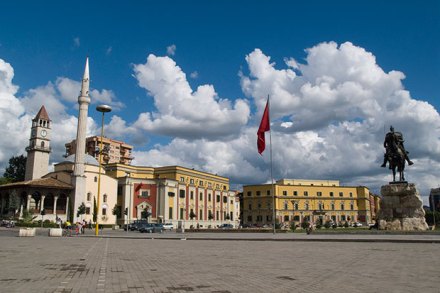
Seferis’s line about his native Greece, ‘Our country is a closed in place, all mountains’, haunted my mind as I traversed Albania. I had gone in the hope that Albania now would be like the southern Europe of my student days. The news in brief is: it is, and it isn’t. First impressions of Tirana, the capital, were that it was a city in a hurry to expand. Despite being badly damaged in 1944, it retains an unexpected charm, perhaps because of Mussolini’s pine-lined boulevards and green spaces.

The Grand Tour

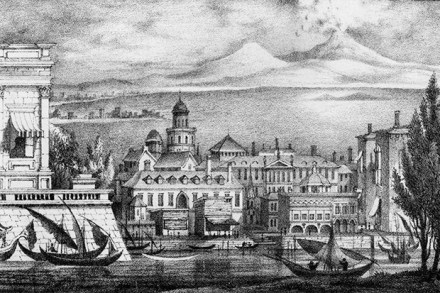
The Grand Tour usually culminated with Naples, ragamuffin capital of the Italian south, where Vesuvius offered a visual education in the grand style. Some Grand Tourists, among them Lord Byron, got as far as Greece; but Italy was coveted as the glittering birthplace of the Renaissance — a haven of art on the Arno. In some ways, then, Britain became civilised through its contact with Italy. ‘A man who has not been to Italy,’ Samuel Johnson observed in 1776 (perhaps ironically), ‘is always conscious of an inferiority.’ The grand habit of touring the Continent for its art and classical antiquity flourished from the mid-17th century until the advent of rail transport in the 1840s.

Secret ski resorts

Skiing holidays have a problem. They’ve lost their sense of adventure. Yes, the first flurries of winter which arrived recently provoke excitement, and the lure of the mountains is still strong. What’s lacking, however, is the sense of discovery, anticipation, and of reaching dizzying new heights. This is no surprise, for the Alps have been entertaining winter tourists since 1864 when a group of Englishmen visited St Moritz ‘out of season’ as a bet. In its infancy, skiing was the preserve of the aristocracy, who holidayed only in the most chic resorts — the likes of Courchevel, Cortina and St Moritz — perilously hurling themselves down the mountains wearing plus-fours.