Notes on...

London’s lost rivers

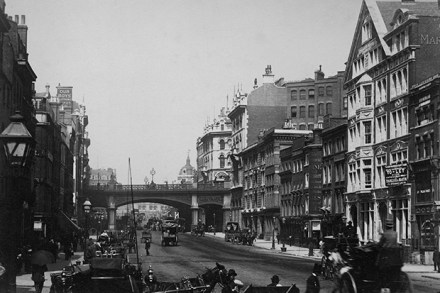
I found my first of London’s many lost rivers when I walked across Holborn Viaduct, looked down at the sweep of Farringdon Road below and realised that it had to be the path of a river, not just a road. Indeed, I was soon to learn that the river Fleet runs directly beneath, coursing down to meet the Thames by Blackfriars Bridge. The Fleet is perhaps the most famous of London’s lost rivers; it was once large enough for boats to navigate it, and an anchor has been discovered as far up as Kentish Town.
The Douro Valley

They’re called quintas, Joana tells us, because the rich families who owned the land along this stretch of the Douro river used to let others work it in return for a fifth of the profits. And in this part of northern Portugal, ‘work’ means only one thing: wine. We’re here in the Douro Valley to learn more about it all, including this trip to Quinta do Bomfim, the winery where Dow’s port is made. The valley also produces Cockburn’s — but don’t worry, the Portuguese needed those TV adverts telling them that the Scottish name is pronounced ‘Co-burn’ too. The Americans just dispense with the ‘ck’ — hence James Coburn, who was of Scottish descent.

Bare ruined choirs

We’re so used to looking at the abbeys smashed up by Henry VIII — particularly Rievaulx and Byland, in north Yorkshire — that we forget quite how odd they are. It’s not just that they’ve been preserved as ruins for 500 years, although that’s odd enough in a country that’s only saved ruins properly for a century. What’s odder is that these vast structures were built in such remote spots. It’s like finding a ruined Westminster Abbey in the middle of nowhere. When the Cistercians left Clairvaux in Burgundy, they were so desperate for peace that they came all the way north to found Rievaulx in 1132, and Byland a few years later.

Mussolini at Lake Como

If your destiny is to be shot dead with your mistress, where better than Lake Como, which, in the words of Shelley, ‘exceeds anything I ever beheld in beauty, with the exception of the Arbutus Islands in Killarney’? It was in Giulino di Mezzegra, a tiny village in the mountains above the lake, that a handful of communist partisans executed the Fascist dictator Benito Mussolini and his mistress Claretta Petacci on 28 April 1945. The Duce was 61 and his amante 33 — two years older than his daughter Edda. The partisans loaded their corpses and those of other Fascist leaders — executed separately down by the lake — on to a lorry and drove the 70 miles to Milan where they dumped them in Piazzale Loreto.

Peggy Guggenheim

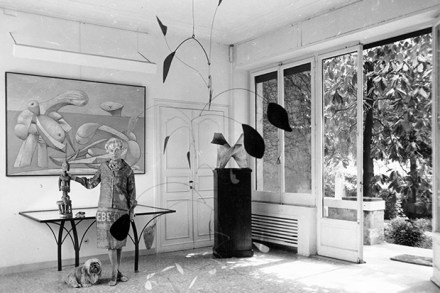
She had come a very long way from the shtetl, but Marguerite ‘Peggy’ Guggenheim was still the poor relation of her fabulously wealthy family. Although these things are, of course, relative. It was her uncle Solomon, enriched by mining, who first made the family’s name. Peggy’s father sank with the Titanic in 1912. Eventually Solomon’s museum, a Frank Lloyd Wright design as magnificent as it was absurd, became a New York landmark. Peggy never much cared for it, so she built her own elsewhere. Guggenheim was no one’s idea of a great beauty, but possessed enough lust, fortune and ambition to compensate. She moved to France just as traffic on the New York–Paris axis was becoming the standard model of the history of modern art.

The first favela

Where are you going?’ demanded the boy on the wall. A walkie-talkie clipped to his denim shorts crackled, but there was no sign of a weapon. ‘The English Cemetery,’ I answered. He slid down. ‘You need to go back that way. Take the road on the right.’ The street in question was a dustbowl where diggers flattened the ground for the tramlines that should have arrived in time for the Olympics. But no, he insisted, there was no way of reaching the cemetery through the favela. There are favelas and there are favelas, and the mesh of houses, shacks and alleys that extends across Morro da -Providência, above the English Cemetery close to the heart of Rio, is no ordinary one.

Skye

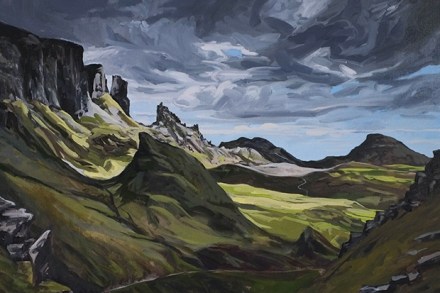
Glamour. It’s Marcello Mastroianni drinking negronis on the Via Veneto; it’s Audrey Hepburn, George Clooney, Sinatra on the Vegas Strip in ’59… and a composting toilet on the west coast of Scotland. The latter was the only one available when I went glamping in Skye. Glamping is a neologism, an awkward portmanteau word that seeks to persuade us there really can be a satisfactory crossover between glamour and camping, even though most reasonable people have these two concepts pegged in different stratospheres. You can ‘glamp’ all over the place these days, in everything from yurts to airstream caravans, but to do it in Skye you must head to Skye Eco Bells near Dunvegan.

Ice cream

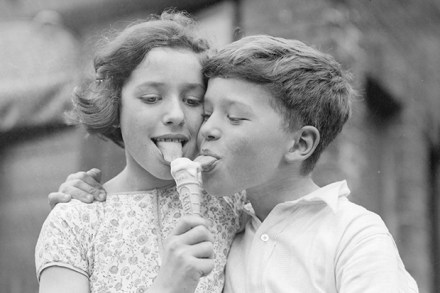
It was a mistake to tell us about the gelati-to-sightseeing ratio. This was the formula my father, his younger sister and brother came up with when being dragged round Italian churches as children. The ideal was 3:1, that is: three ice creams for each dreary chiesa. My grandparents thought it should be the other way around: three improving historic sights for every one ice cream. Of course, once my brother and I knew about the gelati ratio — and what an astonishing thought it was that our father had once been young and had sat mutinous on the steps of the Parthenon — we knew not to be fobbed off with one lousy scoop of choc chip. We wanted a 1:1 ratio or bust. In England, slopping around the Lost Gardens of Heligan in wellies and waterproofs, we settled for hot chocolates.

The gardens of Ninfa

I’ve just been given a personal tour of Ninfa by Monty Don. True, I had to share the thinking woman’s TV gardener with a number of others, but I’m convinced his attention was focused solely on me. The occasion was a visit to three outstanding gardens outside Rome — Ninfa, Villa d’Este and Landriana — to celebrate a quarter-century of Gardeners’ World magazine in the company of its editor, Lucy Hall. Monty was an added inducement for the tour of Ninfa, after which he was to give a talk on the evolution of Italian gardens. Rather like a gentleman’s club, Ninfa satisfies one’s inner snob. The eight--hectare garden, within 105 hectares of parkland 40 miles south-east of Rome, is open to the public for a handful of days each year.

Holiday reading

Holidays are a welcome chance to lose ourselves between the covers of a book, especially for those of us who struggle to find time to read amid the assorted tyrannies of daily life. So the book that ends up in your suitcase had better be a worthy companion. The disorganised need not fear: you could do worse than grabbing a paperback at the airport. A holiday is a great time to read an easy new bestseller, not least because your friends are likely to have read it, so you can all discuss it over the third bottle of rosé during a long lunch. Just one note of caution: time tells. Many current bestsellers will have all but disappeared within a few years, whereas a classic endures for a reason. So to avoid your reading being too forgettable, for each new book, take an old one, too.

Passing through Bologna

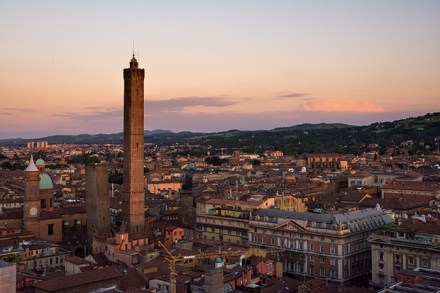
Sooner or later, no matter where you are travelling on Italian railways, you are likely to pass through Bologna Centrale. The city is the main junction between the north and south of the country, close to the route through the mountains. It always has been. The teenage Michelangelo stopped off while journeying between Venice and Florence, and — after a contretemps at the customs office, since Bologna was then a city state — carved some small sculptures for the Basilica of San Domenico. In 1786 Goethe spent a few days in this ‘venerable, learned’ place, ‘thronged with people’. It still is all those things. In the 21st century, however, not too many linger — as Goethe did — to look at the paintings or eat the marvellous food.

The Tour de France

On Saturday at Mont St Michel, the 103rd edition of the Tour de France begins, and the favourite to win is again British. As a long-term cycling fan, even typing those words gives me a frisson. When I started watching in the 1980s there were few British riders to cheer on — and none challenging for overall victory. Bradley Wiggins became the first Briton to win in 2012. He was followed by Chris Froome in 2013 and 2015. The French haven’t won since 1985. Britain is now a cycling superpower and cycling has become a popular sport. So why aren’t I celebrating? The problem is the lingering doubt that none of this is real. There’s no reason to question Froome’s performances, except that there are few champions who we can confidently say never took drugs.

The misery of black tie

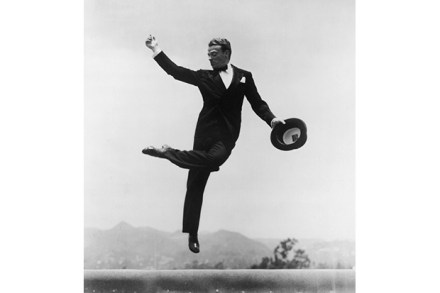
Men don’t look good in black tie. They might think that they look like Sean Connery in Dr No, but they end up looking like David Brent at the Wernham-Hogg annual Christmas do. Black tie doesn’t lend parties glamour; it just makes them depressing. The one good thing about black tie is that it is an invariably reliable pointer to a terrible evening. Agonising teenage balls, with adolescents clashing braces in dark corners? Black tie. Boorish sports club dinners at university? Black tie. Prize-giving evenings in cavernous hotel ballrooms? Black tie. Business conventions with an after-dinner speech by Jeffrey Archer? Black tie. The words ‘black tie’ on an invitation hope to raise the spirits with suggestions of luxury and class.

Gatton Park

Gatton Park is probably Lancelot ‘Capability’ Brown’s least famous landscape. It is tucked away near Reigate Hill, just beyond the M25, and even in the 300th anniversary year of Brown’s birth it is an unlikely place to visit. Because it shares its plot with a school and stables, you can only go on the first Sunday of the month or if you arrange a tour in advance. A bother, I grant you, when there are so many glorious landscapes to explore elsewhere. But Gatton Park has other attractions, too. For more than 50 years, from 1888, this was the estate of the ‘Mustard King’, Sir Jeremiah Colman.

Royal Ascot

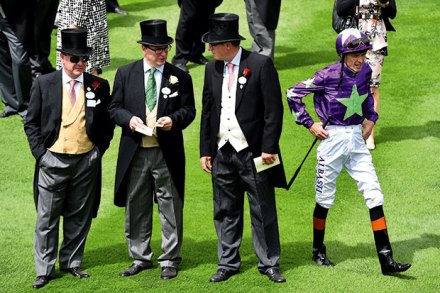
It’s time to scuttle under a rock if you are a Folkestone or Cornish crab: 7,000 of them will be consumed in Royal Ascot week, along with 2,900 lobsters, 160,000 glasses of Pimm’s, 51,000 bottles of champagne and 30,000 chocolate eclairs. Better get your chopper booking in fast, too: 400 helicopters will descend on to the Berkshire course during the week. In purely racing terms, Royal Ascot isn’t quite yet a Dubai with rhododendrons. Invitational events like Sheikh Mohammed’s World Cup in March and the Hong Kong International race day in December pull in more worldwide equine stars, and Ascot doesn’t have a centrepiece race like the Derby, Grand National or Cheltenham Gold Cup.

Brodie Castle

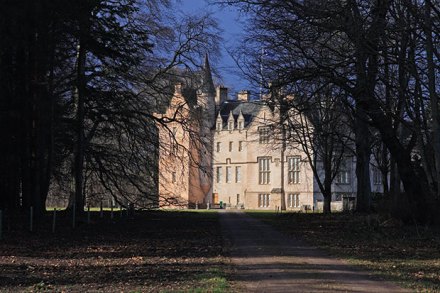
Is there a more forlornly romantic spot in Britain than the moors east of Inverness where the Jacobite dream died? There is surely no more romantic location from which to explore the area than Brodie Castle, a turreted fortress looking out towards the Moray coast. Now owned by the National Trust for Scotland, Brodie Castle allows groups of up to 14 to live like a laird, playing croquet on the lawns, eating in the grand dining room, spotting red squirrels and generally absorbing the dark history that culminated on the moors of Culloden. The adventure has to start at Euston. You could fly to Inverness and arrive with the taste of Gatwick coffee still in your mouth, but what would be the point? The Caledonian Sleeper, especially with kids, is an essential part of the Brodie experience.

The Romantic poets

People can be mightily protective of their Romantic poets. When I worked at the Keats Shelley House, overlooking the Spanish Steps in Rome, one of my colleagues developed a callus on her hand where the daily task of locking the museum door — emphatically — caused the key to abrade her skin. And when I last visited Keats’s grave, with a friend, in the city’s Non-Catholic Cemetery, a middle-aged Italian woman snapped at us to shut up as she muttered through a printout of ‘To Autumn’. It’s strange in a way that Keats should inspire such devotion in Rome, since he wrote no poetry in Italy and only a handful of letters survive from the four months that he spent dying there.

Verdi

Verdi has a peculiar if not unique place in the pantheon of great composers. If you love classical music at all, and certainly if you love opera, then it is almost mandatory to love him. The great and good of the musical world, the kind of people who sit on the boards of opera houses and other cultural institutions, go out of their way to advertise their adoration of Verdi, usually at the expense of the other considerable operatic composer who was born a few months before him in 1813, Wagner. In fact, Verdi’s status and stature are often established by comparing the two.

Bullfighting

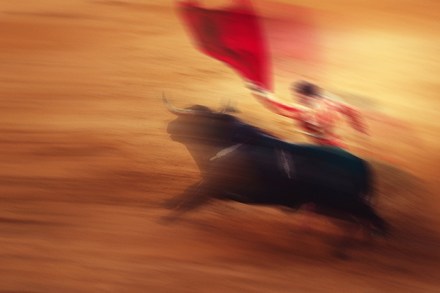
Looking at the programme for the feria of San Isidro in Madrid this month (bullfights are being held on 31 consecutive days), it may be hard to believe that there is any threat to the future of the spectacle — it is not a sport — of what in Spain is called la corrida (the running of the bulls). But its popularity has undeniably been declining in recent years, due to two factors: growing opposition, in the sometimes spurious name of animal welfare, and Spain’s economic crisis. The decision taken in 2010 to ban bullfighting in Catalonia had considerably less to do with the welfare of bulls than with the Catalans’ wish to distance themselves from the rest of Spain and Spanish traditions.

Clumber spaniels

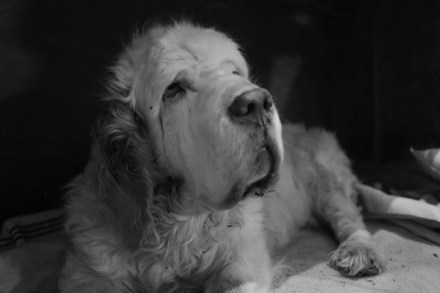
For the first time in more than 30 years we have no Clumber spaniel. We have had five: Henry, Judith, Laurie, Persephone and Wattie. The last of them, Wattie the gentlest and sweetest of dogs, died a few months ago. We feel bereft. Clumbers are special: beautiful, affectionate, wilful, sometimes difficult, never dull. They take their name from Clumber Park in Nottinghamshire, once the seat of the Dukes of Newcastle. Different in appearance from other English spaniels — heavier, low-slung, with large sagacious heads — their origin is uncertain. According to one story, they came from France, being a gift from a French friend, the Duc de Noailles, to his fellow duke.