Notes on...

Rodin at 100

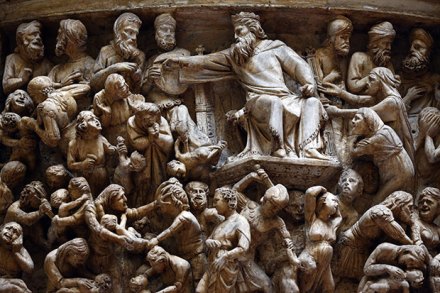
The girl who posed for Auguste Rodin’s figure of Eve on the ‘Gates of Hell’ was, the sculptor said, a ‘panther’. She was a young Italian, pregnant, but barely showing. Not a professional artist’s model. He found the girls who modelled for the Academy painters too affected. He liked stretchers, yawners, fidgeters, jitterbug girls who couldn’t sit still. His figures in plaster, bronze and marble have a pretzel suppleness. They do the splits, lie curled and foetal, fold at the waist, and crouch doubled like Atlas. His sibyls hold yoga poses. His prodigal son has a six-pack. A sketch might take only three, four, five charcoal or gouache strokes. Then: new pose, new page.

Dogs for children

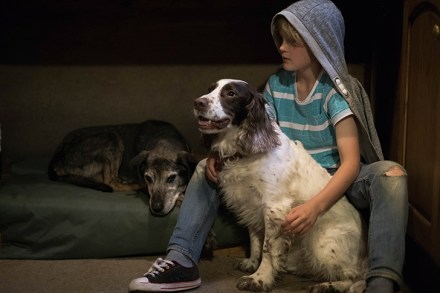
Henry, our springer spaniel, has died, suddenly and prematurely. With the passing weeks, we are becoming accustomed to the strange stillness his absence has left behind, and I no longer expect to meet him hurtling around the house in motiveless delight or to find him sidling against my leg as I sit in the kitchen. We do adapt quite quickly to life post-dog, though the sadness lingers. Sir Walter Scott knew this. ‘I have sometimes thought of the final cause of dogs having such short lives,’ he wrote, ‘and I am quite satisfied it is in compassion to the human race; for if we suffer so much in losing a dog after an acquaintance of ten or 12 years, what would it be if they were to live double that time?

British placenames

British placenames are so good you can read the map for entertainment rather than navigation. Hardington Mande-ville, Bradford Peverell, Carlton Scroop — they sound like characters in a novel. In fact, P.G. Wodehouse often raided the atlas when writing: Lord Emsworth is named after a town in Hampshire, while a village in the same county gave Reginald Shipton--Bellinger his surname. There’s plenty of silliness out there — Great Snoring in Norfolk, Matching Tye in Essex, Fryup in Yorkshire. Some good old-fashioned smut, too: Lusty Glaze, Pant, Bell End and a couple of Twatts. Kent boasts a Thong — and it’s only a mile or so from Shorne. But enough of your sniggers. Our placenames are educational, telling the history of who was where, when.

Corduroy

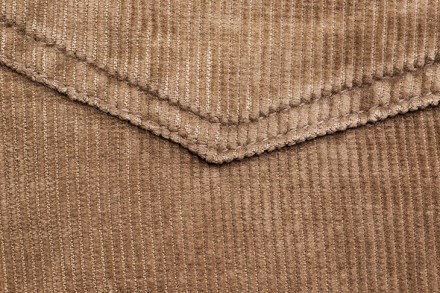
Every Christmas, I ask my loved ones for at least two pairs of corduroy trousers. Off with a sigh tramps my girlfriend, who knows that fashion cycles dictate that corduroy will be ‘in’, and therefore purchasable, only every fourth or fifth year or so. For three or four years corduroy will be invisible. Shop assistants will look askance at anyone who dares even mention it. Then corduroy is rediscovered by whoever decides these things, and it’s everywhere. Cushions are in corduroy. Dogs wear corduroy. I saw a corduroy tie the other day. At such times we corduroy lovers stock up, conscious of the long corduroy-free winter that will inevitably follow. I bought my first two pairs of corduroy trousers in 1979, when I was at university.

Late-season skiing

There’s trouble brewing in the Alps. Skiers arriving in the mountains over Christmas were greeted, not by snow-clad chalets and oodles of fresh powder, but by thin ribbons of artificial snow snaking down green mountainsides. For the fourth time in as many years, the ‘white gold’ had failed to materialise. Whether climate change is to blame is anyone’s guess (I’m no scientist), but it’s certainly a worrying pattern. Parts of the Alps experienced their driest December in 150 years, and in many French resorts the only snow for Christmas was artificial. Initially it looked as though holidaymakers had learnt their lesson.

Not owning a car

On two occasions, sainted members of my family have offered me a car for nothing. Both times, I turned them down — and not out of selflessness or for green reasons. I said no because I knew it would mean me sitting still in a metal box for hundreds more hours every year. If I were the only driver in London, I’d have accepted the free cars in a second. Even if I could have been transported back to 1970s London — when in my memory the streets were largely empty — I’d have said yes. But driving in London — and in British cities, generally — has now got so popular that it’s become a victim of its own success.

Pub quizzes

For more than 20 years now, I have been trudging up the hill to the Prince of Wales in Highgate on Tuesday evenings to take part in that tiny pub’s venerable weekly quiz. Each evening promises something different and yet somehow the same: ferocious competition, ridiculous arguments over the answer to question four, several glasses of red wine and usually, during round three, a few packets of Sweet Thai Chilli Sensations crisps. The quiz is unusual in that it is set by its regulars, and my next turn behind the microphone will be on St Valentine’s Day. (This is always a good night for us; most people will do anything to avoid it.) It will be the 178th quiz I have hosted there. That’s more than 8,000 questions, allowing for the odd repeat. Why do we do it?

Seaham Hall

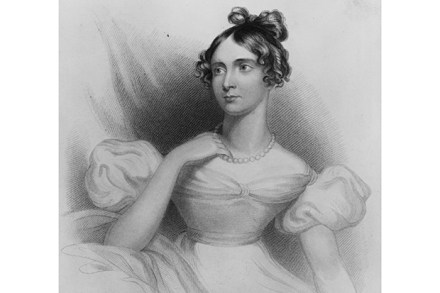
I’m standing in milady’s boudoir, a room which would have delighted Liberace. Here, nothing is de trop and everything is geared towards lavish indulgence. Two enormous freestanding baths face the window, giving exhibitionists a heaven-sent opportunity to disport in the altogether. The upstairs bed could comfortably accommodate four adults. Portraits of Ada Lovelace — who has given her name to the suite — festoon the staircase, and a half bottle of Taittinger champagne begs ‘Drink me’ in an ice bucket. It’s somewhat strange to think that amid this bling lies a sad and brutal history. The small coastal town of Seaham in County Durham, contains the house in which Lord Byron contracted the 19th century’s most bizarre marriage.

Hangovers

Although drinking excessive levels of alcohol is up there with Olympic cycling and democracy as things the British excel at, the same cannot be said for dealing with the aftermath. Over the festive season we splash more than £2 billion on trips to the pub as punters take exhortations to have a merry Christmas a bit too literally. But our subsequent hangovers cost the economy almost £260 million through sick days and a lack of productivity. A night on the tiles tends to leave people feeling a little defenceless the next day. However, for those of us who have no option but to be bright-eyed and bushy-tailed in the morning, there are measures that can be taken to limit the pain. As a former newspaper diarist, I’ve learned what to avoid when presented with trays of booze.

A good night’s sleep

Have you, on hearing the story of the princess who felt a pea through 40 feather mattresses, ever thought that she was, well, a bit of a wet blanket? One measly dried pea through all that padding and she wakes up black and blue with bruises? ‘I can’t tell you what I’ve suffered!’ she quivers in an 1846 English translation from the Hans Christian Andersen original. Ah, but you don’t know the whole story. Go back to Andersen and you discover it was three peas. Poor princess. Now I understand. Imagine fidgeting in the night, feeling a lump under the mattress, and rolling over to the cool side of the bed and finding another pea — dastardly pea — and curling up miserably at the foot of the bed only to discover a third pea-hummock.

Zurich’s wild side

On the green edge of Zurich, where this neat and tidy city melts into neat and tidy countryside, an icon of Zurich’s hedonistic heyday has been reborn. The Atlantis Hotel reopened last December, restoring an old landmark to the city and reconnecting prim and proper Zurich with its rebellious past. If you’ve only ever been to Zurich on business, you may find it hard to think of this staid city as rebellious, but bear with me: Zurich really does have a wild side, and in the 1970s and 1980s the Atlantis was where it could be found. From Eric Clapton to Elton John, from Freddie Mercury to Frank Zappa, the hotel’s guest list reads like a Who’s Who of the golden age of rock. The Atlantis opened in 1970, and it made a big splash from the start.

National Hunt racing

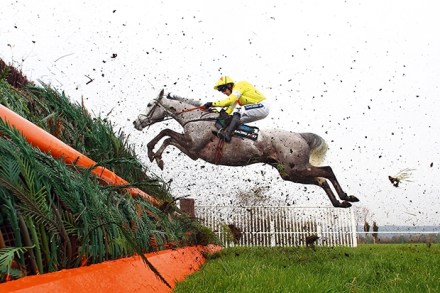
‘A more thrilling, uplifting, glorious way of living has yet to be invented,’ the jockey John Francome said of National Hunt racing. Watching last weekend’s action from Cheltenham racecourse, it was easy to see what he meant. Now is when the National Hunt — or jump — season really gets under way. The summer months are about flat racing, although these days flat racing goes on through the winter, too. There are now six all-weather racetracks in the UK; the latest, Newcastle, opened earlier this year. Of course, it’s not quite the same (floodlights are no replacement for long summer evenings), but it does enable flat horses, trainers and jockeys to stay in business all year round. For most racing aficionados, winter is about the jumps.

The Marx Memorial Library

There’s a small corner of Clerkenwell where the communist dream never died. The Marx Memorial Library has been in its big, classical 1738 building — originally a school for children of Welsh artisans living in poverty — for 83 years. The library was set up in 1933, the 50th anniversary of Karl Marx’s death. British Marxism and communism have faded, but the library still has a brigade of staunch supporters. Jeremy Corbyn, whose constituency is just up the road in Islington, is a regular visitor. To tour the library is to return to the 1930s when communism was at its height — when Philby, Burgess, Maclean and Blunt were full of gleaming-eyed optimism about the wonders of Soviet Russia.

Notes on California

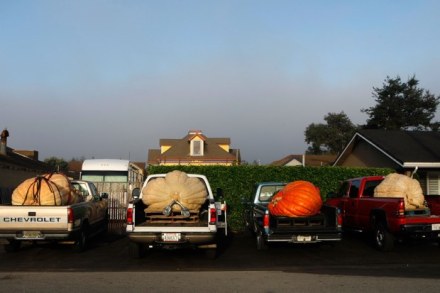
The mood in California was apologetic. Most people we met seemed embarrassed that their country’s dirty laundry was being aired quite so publicly. Hillary or the Donald? It will have to be Hillary, they sighed. Few seemed stirred by the prospect, but it was hard to avoid the subject. In Half Moon Bay in San Mateo county, we stayed at the Ritz-Carlton, perched on top of the cliffs. While salty mist drifted across the Pacific and pods of whales floated by, the second presidential TV debate rumbled on in the hotel bar. As the two candidates sparred, guests tut-tutted over their gin fizzes and tried not to look entertained. It was pumpkin season and the fields were dotted with swollen, pimply gourds.

Burlington Arcade

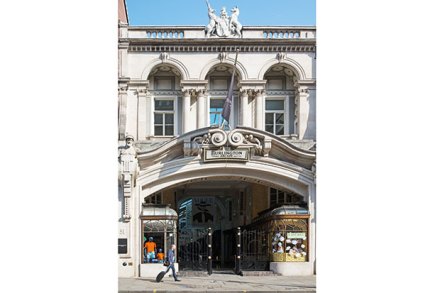
It all began with oysters. Londoners used to eat them as they walked along, throwing away the shells much as they do burger wrappers now. Lord George Cavendish, owner of Burlington House on Piccadilly (now the Royal Academy), was sick of shells littering his garden, and so in 1819 decided to open a shopping arcade down that side of his property to protect it from the ‘tossers’. Nearly 200 years later the place is thriving. You can buy expensive watches and shoes, perfumes and scarves, wallets and pens. Fred Astaire would get ‘lost for days’ in the Burlington, having discovered it when an admirer bought him nine pairs of gold striped slippers there.

Notes on… Champagne

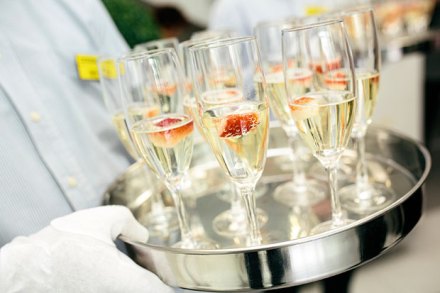
The British are notoriously cheap when it comes to wine; the average bottle price is around £6. On one wine, however, we’re happy to spend five times that: champagne. We love champagne, and champagne producers love us: Britain is their biggest export market and it’s only getting bigger: up by 4.5 per cent last year. In fact, champagne as a dry sparkling wine was created specifically for us. Until the mid-19th century, most production from the Champagne region was still red wine. French connoisseurs thought the fizzy stuff rather vulgar. Bertin du Rocheret, a wine merchant, compared it to ‘beer, chocolate and whipped cream’. It would have been a rich yellow wine fortified with brandy; a sort of sparkling sweet sherry, beloved by Russians in particular.

Mississippi hospitality

Driving into Greenwood after dark, we pull into a gas station and ask directions to a late-night grocery store. ‘Sir… I have a suggestion,’ says a young man in the queue. ‘I’ll be going that way in this big old box.’ He waves towards a magnificently clapped-out Chrysler at the fuel pumps. ‘Y’all just follow me.’ Our convoy proceeds to the store at 25mph with no turn signals. Then, with another wave, our Good Samaritan turns and rumbles back towards the gas station. He wasn’t really going our way at all. A little later the Crystal Rooms restaurant reopens its just-closed kitchen for our small party. ‘We’ll feed y’all… come right in,’ says the owner Johnny Ballas.

A pint of Landlord

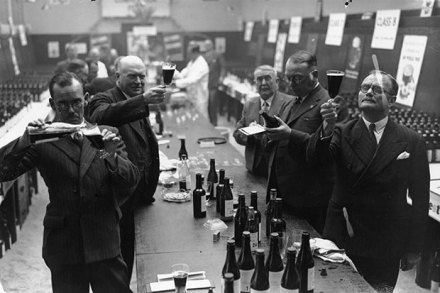
Down a lane in Keighley, in the old West Riding of Yorkshire, they brew the greatest ale in the world. Timothy Taylor, the brewery is called, or Timmy Taylor’s, should you feel sufficiently familiar. And if you are not familiar with the ales brewed by these modest Yorkies, you’re clearly not an ale-drinker. And if you’re not an ale-drinker then you’re not properly English. Modest Yorkies, you may say: that’s a new one. Well, they are. If you excel as they do, you don’t need to blow your own trumpet. Paul Tortelier, the great French cellist, was once asked to nominate his favourite composer. ‘Bach,’ he replied. ‘And if any musician tells you different, he is lying.

Croatia

Advocates of New Zealand often boast that the country is like Britain was in the 1950s. This is all well and good if 1950s Britain is where you want to go on holiday, but it’s not for everyone. In fact, some might argue the main purpose of the past half-century has been to make Britain less like Britain was in the 1950s. What, then, are the options for those who would rather go on holiday to the Italian Riviera of the 1950s? The answer, it turns out, is Croatia, which has pleasant weather late into the autumn, idyllic coastlines and a laidback glamour that seems like a distant memory on the French coast, with its terror worries and burkini bans.

The Victoria and Albert

Thomas Hardy, while still married to his first wife Emma, but arranging assignations in London with Florence, his second-wife-to-be, used to ask her to meet him at the Victoria and Albert Museum by the great, towering plaster cast of Trajan’s column. Really, Thomas? Trajan’s column? How obvious can a man be? Knowing what I know about Hardy’s column, and with the added burlesque of the modesty fig leaf that was cast for Michelangelo’s plaster David, I cannot now keep a straight face in the Cast Courts at the V&A and have to take myself off upstairs to look at silver salt-shakers the minute I get the sniggers. What a lot of things the Victorians had.