Notes on...

From fist-bumps to bows: how to avoid shaking hands

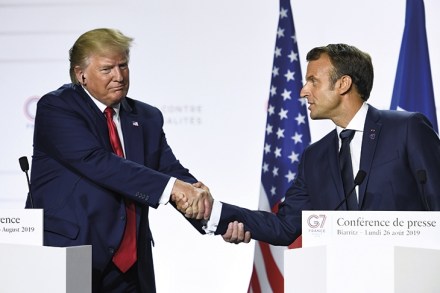
The government wants us back in the office — catching trains, buying sandwiches and actually seeing colleagues and clients rather than video facsimiles. But if we’re going to meet in person, we need agreement on a professional nicety more substantive than the feeble wave that has passed for a Zoom greeting. Unless you’re fearless or forgetful, the handshake has been mothballed since March. What Masons now do is anyone’s guess (and their closely guarded secret). It’s probably been disarming for Donald Trump, who had weaponised press-fleshing even with allies — witness that 30-second shake-off with Emmanuel Macron and extended grip-and-grins with Justin Trudeau. In business too, mano-a-mano extremists are often American.
The bliss of proper bread

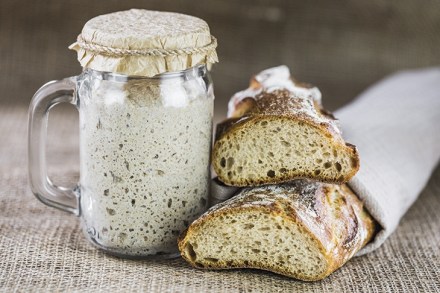
I cannot claim the gift of prophecy, but early this year — before lockdown panic-buying and the warnings of a dire wheat harvest causing bread price rises — I became a bread-maker. I dug around on the internet for a good recipe for sourdough, and found one padded out with the usual bloggery and waffle. Absent the philosophy and the pious musings, it gives a clear, sensible route to bread self-sufficiency. Sourdough doesn’t need bought-in yeast, only a ‘starter’ of flour and water. This is often called a ‘mother’, and attracts wild yeasts as it develops; after five days in the jar it is a gently bubbling ferment of living yeasts, and you keep it going by adding flour and water to it day by day.

The problem with pretty floral face masks

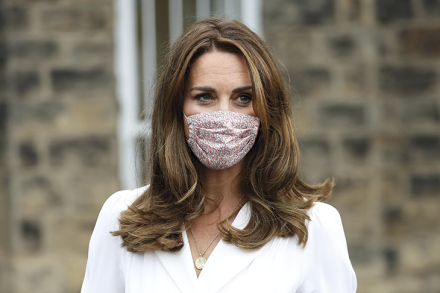
Now that we must all wear face masks, it is hardly surprising that they have started to become a fashion accessory. An Israeli jeweller has created a gold and diamond-encrusted mask that is said to be worth $1.5 million. According to the designer, the man who commissioned the extravagant mask — which weighs nearly 100 times as much as a typical surgical mask — had two demands: that it be completed by the end of the year and that it be the most expensive mask in the world. Diamond-encrusted face masks may not yet be everywhere, but floral ones certainly are. Once you start spotting them, you will see them all over town, normally covering the faces of women between the ages of 30 and 50.

The joy of an illegal rave

Every time I read that Britain’s anti-coronavirus measures are being jeopardised by a ‘small minority of senseless individuals’ holding illegal raves, my heart soars. Maybe there’s hope for the youth after all! I’d been beginning to wonder. In my experience, kids of about university age have been priggish and obedient about the government’s rules during lockdown. ‘Why can’t they just get off their faces on drink, drugs and repetitive beats, like my generation did at that age?’ I’ve often mused. Well, thank goodness that’s exactly what some of them are doing. Last month alone, the Metropolitan Police claim there were as many as 500 illegal raves across London.

Why Florence’s ‘wine windows’ are making a comeback

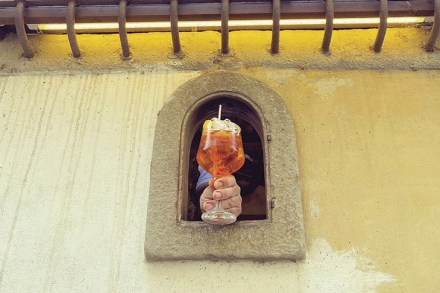
Stroll around Florence and you’ll notice little ornate openings embedded in the walls of Renaissance palazzos. They look like doorways for tiny people, though they would have to be quite athletic tiny people, as the openings are three feet off the ground. But they’re not entrances for Tuscan pixies — they’re for selling wine. There are more than 150 buchette del vino dotted around the city and they date back to the 17th century. You’d knock on the door, hand over some money and a bottle, and the mysterious person behind the wall would fill it full of wine.

The rise and fall of amusement parks

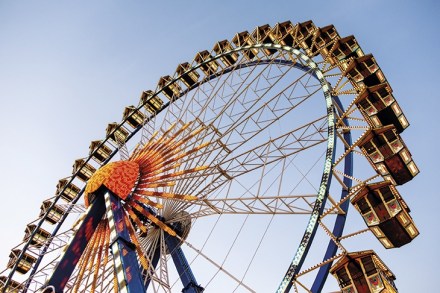
August, as usual, will be the busiest month for Britain’s amusement parks — which is odd when you consider that this will mean thousands of people who have been sitting indoors trying to avoid sickness now lining up for seats expressly designed to induce nausea. There are amusement parks and there are theme parks. The latter often have rides named after movie franchises — or perhaps Peppa Pig — and can charge more for merchandise. Otherwise, the g-force and junk food experiences are similar and there’s one common theme: waiting. I took my teenage daughter to Surrey’s Thorpe Park shortly after its recent re-opening in the stupid belief that the cap on visitor numbers would easily compensate for socially distanced seating formations.

The curious history of Britain’s last circus building

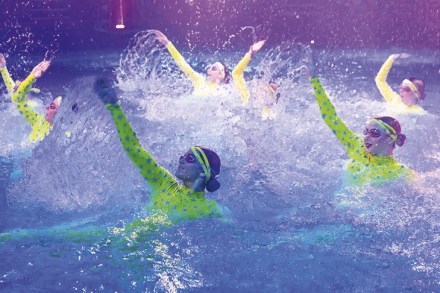
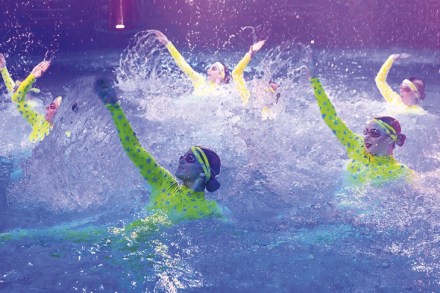
Guess which theatre is the first to open to the paying public post-Covid? Not Lloyd Webber’s London Palladium, where small audiences have been invited on trials, nor any of the other West End giants. This weekend the Great Yarmouth Hippodrome — Britain’s last stand-alone circus building — is welcoming audiences to its ringside seats for the first time since March. The Hippodrome is tucked behind a row of kerchinging arcades on Great Yarmouth’s decaying, half-lit seafront. But its imposing red brick facade, built by legendary showman George Gilbert in 1903, leads into a lobby glinting with art deco-glass. Its performance space is a traditional 42ft diameter sawdust ring that can be flooded and filled with water like a pool.

The 747 was the last moment of romance in air travel

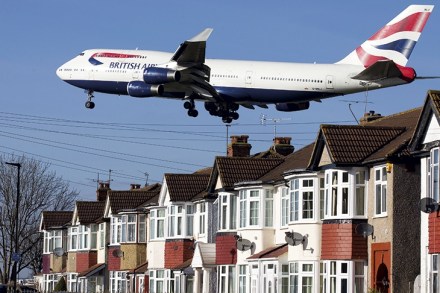
I felt a genuine pang when British Airways announced that it was retiring its fleet of Boeing 747s, the largest remaining in the world. But the jumbo’s final approach to the elephants’ graveyard in the sky was a long time coming. In the US, United and Delta retired their 747s three years ago. With a mixture of frugality and sentimentality, BA kept them long after new technologies and new demographics made their huge capacity redundant. But the 747 was and remains a favourite of pilots and passengers. It was a friendly machine. Half a century after its first commercial flight, we can see, elegiacally, that it was the end of something old rather than the beginning of something new.

Mugs game: what does your cup say about you?

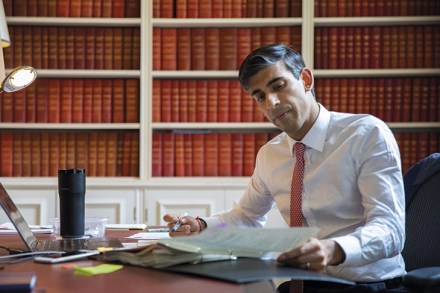
Rishi Sunak found himself in hot water last week, though fortunately it was not too hot. Just the right temperature, in fact. The Chancellor was photographed at his desk with a £180 ‘smart mug’, which keeps his drink somewhere between 50°C and 62.5°C for up to three hours on the move or indefinitely if placed on its charging coaster. Very sensible, you might think; but some thought the picture was revealing. Labour MP Beth Winter was quick to point out that her mug, turquoise and shaped like a dinosaur, had cost just £3. ‘No wonder,’ Winter tweeted, ‘he said no when I asked him this week about a wealth tax.’ Sunak is not the only politician to have had their mug scrutinised as a supposed extension of their personality.

How dangerous are cricket balls?

The Prime Minister recently blamed the delay in the resumption of amateur cricket on the ball itself, calling it ‘a vector of disease’. Happily, tests have disproved this. Balls contaminated with Covid-19 showed no trace of it 30 seconds later — and recreational cricketers will be allowed to return to the field from this weekend. Much of the complexity of cricket comes from the interplay between wood, turf and the leather of the ball. Bats have changed greatly over the centuries, from curved to straight, from thick to thin and back to thick again, but the ball has remained much the same. A core of rubber and cork wrapped tightly with string, then encased in leather, stitched in a way to create a prominent seam running around the ball.

Online chess is the ultimate lockdown sport

How have you been filling these listless homebound hours we’ve been given by the government? I’ve been frittering them away playing online chess, and it seems I’m not alone. The Economist reports that traffic on chess.com, the leading chess website, has more than doubled during lockdown. Log on at any time and you’ll find tens of thousands of games in progress. Once upon a time, in that lost age before the world wide web, chess players had to get dressed and leave the house to feed their habit. Now, in our brave new virtual world, those days are long gone. Today anyone with an internet connection can play ad infinitum, against an endless array of players from all around the world. Simply fire up your computer and away you go.

Where’s the fun in football without the fans?

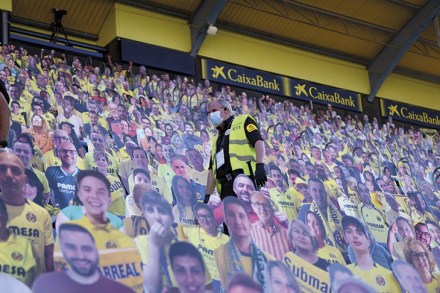
Football is back — but the fans aren’t. Covid means that clubs have to play their games behind closed doors. Which is a pity, as at dull games (far more common than pundits admit), the fans are the best thing. Their chants are works of genius. When Rio Ferdinand was banned for eight months, opposition supporters adapted Duran Duran: ‘His name is Rio, and he watches from the stand…’ After Andy Goram was diagnosed with mild schizophrenia, Kilmarnock fans sang: ‘Two Andy Gorams, there’s only two Andy Gorams…’ And when successful teams inspired renditions of ‘It’s just like watching Brazil’, fans of lesser clubs serenaded match-day police with ‘It’s just like watching The Bill’.

Was Baden-Powell a Nazi sympathiser?

Police were no match for the Black Lives Matter mob that pulled down a statue of Edward Colston last week and threw it in Bristol harbour. But the Scouts are evidently a force to be reckoned with. No sooner had Bournemouth, Christchurch and Poole Council announced that it was planning to take down a statue of Lord Robert Baden-Powell on the harbour front at Poole than the Scouts had mobilised themselves to defend it, setting up camp at its base. The council decided to board it up instead, to protect it from protestors. The ‘Topple the racists’ website had identified Baden-Powell among its targets, claiming that the creator of the Scout movement had ‘committed atrocities against the Zulus in his military career and was a Nazi sympathiser’.

The festival where Henry VIII and Francis I made their peace

This week marked 500 years since the beginning of the two-week festival of jousting, feasting and general splendour that came to be known as the Field of the Cloth of Gold. Henry VIII, accompanied by a retinue of more than 5,000, had set out across the Channel from Dover for the small town of Guînes. There he was to meet Francis I, king of France since 1515, 25 years old to Henry’s 29, and seen by Henry as a rival. On this occasion, however, Henry came to make peace, not war, at a meeting organised by Thomas Wolsey — Lord Chancellor and the rising power in England. The ostensible goal was to cement the goodwill so painstakingly established two years before in the Treaty of London. This too had been Wolsey’s brainchild.

Nothing brings people together like a coach holiday

Amid all the Covid-19 coverage, it’s hardly surprising that the collapse of a coach-tour operator last week didn’t make too many headlines. But the end of Shearings, the largest such operator in Europe, could mean the end of coach holidays in the UK, and if that happens, something very special will have been lost. Coach holidays are unique. They engender a sense of camaraderie which is so hard to find nowadays in our very atomised world. You begin the week as strangers, waiting for the departure bay number of your coach to be called out, and end it exchanging addresses.

Canned fish, nickels and Swindon pools – the unlikely origins of band names

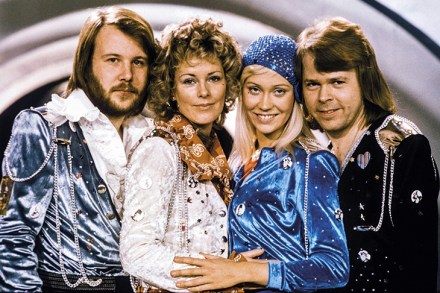
You wouldn’t have thought that Starbucks’s pricing policy could influence rock history, but that’s what happened. In the early 1990s, when Mike Kroeger was working in one of its Canadian stores, a cup of coffee cost $1.95. So Kroeger spent all day handing customers their five cents change, saying: ‘Here’s your nickel back.’ When he later joined a band, and it needed a name, he simply combined the last two words into one. Neil Tennant and Chris Lowe, on the other hand, had some friends who, because of their place of employment, were known as the ‘pet shop boys’. The band themselves don’t use the ‘the’, though of course everyone else does.

Bats don’t deserve all this bad publicity

‘You’d like me to write about bats? I’ve not held one in earnest for years,’ I said, although I did break what I reckoned was about 24 years of cricket abstinence by opening the innings for the Lord’s Taverners in Cape Town shortly before lockdown. For the record, I was just getting the hang of it again when I dragged one back on to my stumps for 5, confirming that it is indeed a cruel game and that giving up had been the right thing. Anyway, it transpires that the topic was actually the other bats: little flying things, sometimes big flying things (I’m always amazed at the sight and size of the fruit bats, or ‘flying foxes’, in Sydney).

Is pasta puttanesca the perfect lockdown dish?

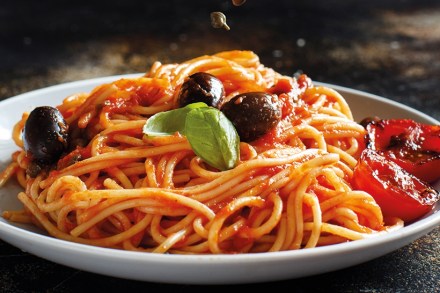
The lockdown could have been the moment I was waiting for: a chance to make those long, slow recipes whose immense time commitment has previously wrong-footed me. Briskets. Cassoulet. Anything that involves soaking a dried bean. Alas, all that must be saved for the next pandemic. This one has so far been devoted to pasta puttanesca. For the uninitiated, it’s simple. Heat oil. Add chilli flakes. Add a tin of tomatoes. Add half a tin, or a tin, of anchovies to taste. Add olives and capers. Stir into pasta. Consider that recipe. It hits, with masterly economy, all five ‘taste groups’. Sweet tomatoes. Salty capers. Sour olives. Hot chilli. The umami of the anchovies. And whatever taste group pasta belongs to. It is the complete package.

Even the owl in my garden is self-isolating

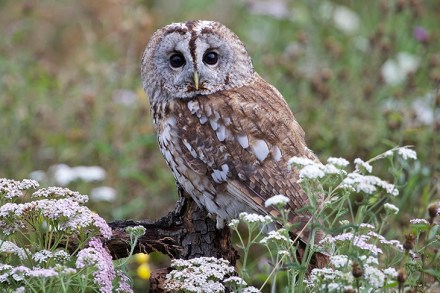
My tawny owl has been self-isolating. I say mine but in truth she chose the nest box in my neighbour’s garden rather than the one I almost killed myself to install, balancing it on my head as I scaled a rickety old ladder. A couple of months ago I spotted the owl, happily sitting in the box’s entrance in the weakening sun. A pattern was established. Every evening as day drained away, I went into the garden, balancing my old Zeiss binoculars alongside a glass of white. The owl would fly in silently from the south, sit around for a while and then disappear into the box. These regular sightings stopped six weeks ago, and I have been worried since. But early this morning I saw her again.

What do your lockdown slippers say about you?

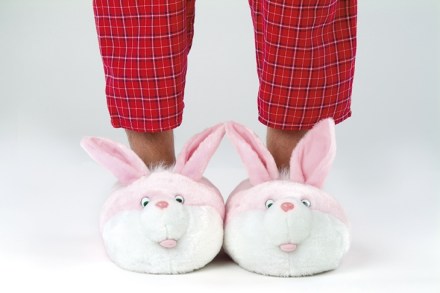
Tartan, monogram, moccasin, clog. What do your slippers say about you? Trick us all you like with your office Manolos, your Loake loafers, your Louboutin mules, it’s the shame-making slippers that will tell us the truth. Fleece-lined slob or kittenish slip-on? Millennial Mahabis or ancestral tapestry? Japanese zori or plaited huarache? In George Bernard Shaw’s Pygmalion, when Henry Higgins returns from the opera and exclaims ‘I wonder where the devil my slippers are!’ the stage directions note: ‘Eliza returns with a pair of large down-at-heel slippers.’ In My Fair Lady they become, under Cecil Beaton’s instruction, a pair of black velvets.