Benedict Spence

Diogo Jota’s death is unspeakably tragic

From our UK edition

Diogo Jota's death at the age of 28 is unbearably tragic and has prompted an outpouring of grief in the football world and beyond. The Liverpool forward lost his life in the early hours of this morning when his Lamborghini careered off a road in Spain and caught fire. Jota had married his childhood sweetheart, Rute, a few days earlier in their home city of Porto. His brother, Andre Silva, 26, also died in the crash. Jota’s last goal for Liverpool came in May against the club’s ancient and bitter local rivals, Everton We don’t expect our friends to die. We expect young men in the peak of physical health, like Jota, to do so even less. As Jurgen Klopp, Jota's former manager at Liverpool said: 'This is a moment where I struggle. There must be a bigger purpose.

Prague by design

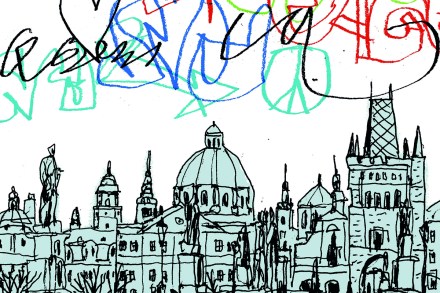
Prague has a graffiti problem. This becomes apparent as the train pulls towards the nineteenth-century Masarykovo Nadrazi station, through the old industrial east of the city. Huge derelict warehouses, some from the communist era, others much older, are covered top to bottom in scrawls and daubs amidst collapsed roofs and glassless windows. It’s unlikely to stay this way for long, though; Prague’s answer to gentrification is swiftly transforming previously rundown areas of the city, making it worth a venture off the beaten track. For all the genteel architecture at its heart, the graffiti is a sign of a city unafraid to show discontent. Trapped behind the Iron Curtain for so long, progress was, for decades, conducted at the whim of communist governments.

prague

Euros 2021: can Scotland beat England?

From our UK edition

If you’d like some idea of how Scotland’s long-awaited return to an international football tournament is going, consider this: it took less than an hour of play before the image of goalkeeper David Marshall leaping, despairingly, into his own net in a doomed effort to stop the Czech Republic’s Patrik Schick scoring a goal from the halfway line became a meme trending worldwide. Marshall can now be found soaring from the top rope of wrestling rings, swinging through the air like Spiderman, sprinting past Usain Bolt to win the 100 meters, and, of course, you can relive what is already the goal of the summer to the Titanic soundtrack.  There’s little time to dwell on the highland horror-show, though, with the auld enemy England next, dauntingly, at Wembley.

The secret to beating Croatia

From our UK edition

First things first: don’t get your hopes up. England don’t have a bad team. In fact, this year they’re pretty good; not quite the 'golden generation' of 2006, but good enough to win the tournament. That very fact ought to sound a note of caution: we’ve been down this weary road before. After the year we’ve had, we could use something to celebrate, but another crushing disappointment after foolishly allowing ourselves to believe would be too much.  With that in mind, it would be jolly sporting of England if they didn’t win their opening game too easily. No 7-0 demolition jobs for us, thanks; what we need is a cagey, narrow win, or maybe even a credible draw, full of pluck, blood and thunder, to set us off on the right path: under no illusions.

What should go in the Brexit museum?

From our UK edition

Have you ever wondered what happened to Boris Johnson’s Brexit bus? One might think such a large, controversial item would be too conspicuous to vanish into the ether, but for the life of me, I have no idea where it is. Yes, I know, red buses aren’t exactly a novelty in the UK, being the favoured mode of transport of Liverpool footballers, the loud actor fellow who was in Lewis, and most of the city of London. Perhaps it’s decided to leave its infamy behind and hide in plain sight, and is currently ferrying people from Hammersmith to Chiswick. But that particular bus shouldn’t be left to a quiet, mundane life out of the spotlight.

The art of the public apology

From our UK edition

If your genetic code survived the Pleistocene epoch, and prospered sufficiently that you find yourself reading this, I feel I ought to warn you that you are in great danger. For though the woolly marmoset and sabre-toothed sloth may be extinct, a new apex predator has emerged: human beings, or more specifically, other human beings. In this latest evolutionary cycle, they have turned cannibalistic, traversing great swathes of the webosphere at high speed to feast on their favoured delicacy: you and your opinions. Far from becoming a more civilised species, we are in the midst of an epidemic of cancellations. We have no dinner dates to bail on, so we cancel each other instead. It can be for almost anything — a racist sneeze here, a transphobic pair of shoes there.

The sad decline of The Simpsons

From our UK edition

In the latest episode of 'Americans Do the Funniest Things,' it has emerged that The Simpsons is to replace the white voice actor for the character of Dr. Julius Hibbert with a black actor.  Hibbert, for those who don’t know him, is a mainstay of the show — a family doctor recognised by his white lab coat, gentle manner and signature chuckle. He is perhaps the least offensive character, despite being a Republican, a suspected morphine addict, and a member of Mensa, who revised his official position on the safety of binge eating after buying a 12 per cent stake in an all-you-can-eat restaurant, and who won’t conduct unethical procedures himself, but is more than happy to give you the number of a doctor who will.

Carrie Symonds and the cult of rewilding

From our UK edition

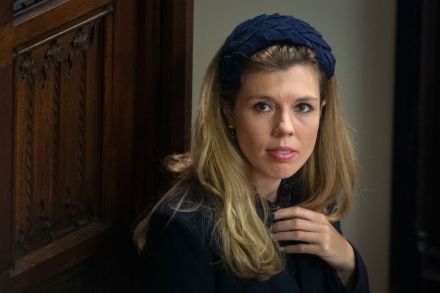
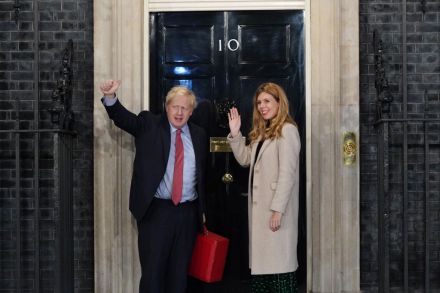
Carrie Symonds is to join the Aspinall Foundation as its new head of communications, in a move very much on-brand for the Prime Minister’s squeeze. Symonds has been credited with Boris Johnson's metamorphosis from pro-liberty, free market Brexiteer to environmentalist — a strategy that she may have spotted as working rather well for disgraced former Italian PM Silvio Berlusconi, who changed his image from that of a love rat to rat lover, frequently sharing snaps of himself with adorable animals on Instagram.  So what will Carrie's call to the wild entail?

The strange case of Colombia’s cocaine hippos

From our UK edition

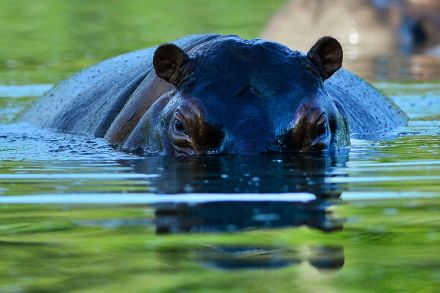
When I first heard the expression ‘cocaine hippo,’ my initial thoughts were that it must either be a reference to some sort of industrial scale drug mule operation, or that someone was being rude about Mitch McConnell.  In fact, the origins of the cocaine hippo aren’t far from the former, but are even more outlandish than you might expect.  In the 1980s, when he wasn’t becoming the world’s richest drug kingpin or going to war with the government, Pablo Escobar indulged his various passions: he bought a football team, grew Colombia’s most lustrous moustache (no mean feat in those days) and opened a private zoo on his estate outside Medellin, Hacienda Napoles.

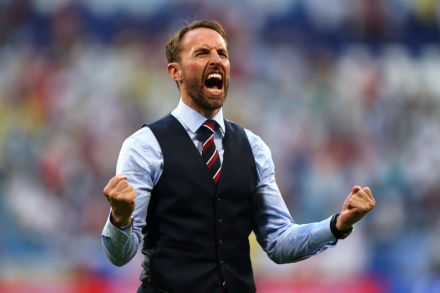
Why ban goal celebrations?

From our UK edition

Football is an emotional sport, as anyone who has ever had the misfortune of being in Glasgow on derby day will attest. When your team wins, or even just scores a goal, that emotion can be hard to contain. Players, on occasion, have been known to celebrate such occurrences; sometimes they even make physical contact with each other. And why not?  The FA has announced that it will take a dim view such behaviour from now on, after criticism from politicians that some players have reprehensibly been breaching social distancing guidelines that the wider public have to follow.

‘I wish her well’: inside Westminster’s secret language

From our UK edition

An Apology An apology is a series of words strung together to absolve one of sins committed in private or in one's professional life, usually uncovered by a newspaper, which allows one to carry on one’s duties as if nothing had happened, and very often to repeat the sins for which one has apologised. It needn’t be sincere — indeed, that is considered rather poor form — and it is only ever to be used as a measure of last resort. If in doubt, simply apologise for how you have made someone feel rather than the action itself.

Diego Maradona, a god of football

From our UK edition

Argentina has announced three days of national mourning after the death of Diego Maradona. Take a second and think about that. Who in Britain, beyond the Queen, might command such nationwide grief? Despite his untimely death, Maradona will never truly die. Gods never do.  Naples is able to marry the divine and the devil like no other city; a rough, tough, crumbling beauty that seats opulence in the midst of teeming poverty. Fitting, then, that it became Maradona’s own home for so long. He arrived to the wild fanfare of 75,000 people when he signed his contract at the Stadio San Paolo in 1984. Maradona cut a mixed figure in the 80s. After starring for Boca Juniors, he arrived at Barcelona in ’82 for a world record fee. He was a rare talent.

12 items to stockpile for a No-Deal Brexit

From our UK edition

When you hear the word ‘stockpiling’, the first thought that pops into your head is probably the image of forest-dwelling folk in remote reaches of the US, usually bearded, always armed, with hunting vests, baseball caps, a few tonnes of canned food buried beneath their shack and enough kerosene to defrost Svalbard. Yet with the prospect of a hard Brexit edging ever closer, stockpiling has become a major pastime of businesses across the UK. The Economist have set aside 30 tonnes of paper to print their magazine, whilst Majestic have secured up to 1.5 million bottles of wine (should the worst happen, I know which warehouse I’ll be looting). Medicines and food are also being stored in bulk.

With Leo Kearse

From our UK edition

29 min listen

Leo Kearse is a Scottish comedian and writer. On the podcast, he talks to Ben and Andy about the irony of alt-right protestors making Nazi salutes in central London; the difficulty in pinning down the changing definition of a 'racist'; and why Patrick Hutchinson, the BLM protestor who carried a man out of a protest getting violent, was his man of the month.Presented by Andy Shaw and Benedict Spence.

Liverpool University shouldn’t cancel William Gladstone

From our UK edition

After the fall of the statue of slaver Edward Colston in Bristol, it was only a matter of time before attention turned, once again, to England’s other great slave-trading city of Empire, and the figures behind it. William Gladstone is one of Liverpool’s most famous sons. One of the great Liberal politicians of the age, he was prime minister on four separate occasions in the mid to late 1800s. There are a few reminders of this dotted across the city today, but the most notable are the halls of residence that bear his name, belonging to the University of Liverpool. The university has now announced that it will rename the halls after receiving a letter from a group of students demanding it be changed.

With drag queen Vanity von Glow

From our UK edition

25 min listen

Vanity von Glow is one of the UK's most in demand drag queens. She's a singer, pianist, and comic, and also hosts a new political talk show The Vanity Project. On the episode, she talks to Andy and Ben about flirting in a pandemic, why the word 'unprecedented' is unprecedentedly insufferable, and why Lana del Rey is her person of the month.That's Life is a sideways look at the events, people, words and ideas that shape the news agenda. Presented by Spectator Life’s satirist Andy Shaw and political commentator Benedict Spence.

With Toby Young

From our UK edition

29 min listen

Toby Young is the Spectator's No Sacred Cows columnist and founder of the Free Speech Union. On the podcast, he talks to Andy and Benedict about getting coronavirus, the worst WHO gaffes, and the hardy 70-somethings down his street.

With Andrew Doyle

From our UK edition

17 min listen

On the latest episode, Andy and Benedict talk to comedian and author Andrew Doyle, the brains behind the Twitter persona 'Titania McGrath'. Andrew explains just why he's so suited to self-isolation, the politicisation of coronavirus, and which quarantined celebrities he feels most sorry for.

With Julia Hartley-Brewer

From our UK edition

31 min listen

Julia Hartley-Brewer is a journalist and TalkRadio host. On the podcast, she talks to Benedict and Andy about Philip Schofield, British things, and why the Democrats just can't get rid of Trump.

7 alternative jobs for the Duke and Duchess of Sussex

From our UK edition

Lords, Ladies and gentlemen, boys and girls, children of all ages: the moment you’ve been waiting for has finally arrived. Harry and Meghan, Duke and Duchess of Sussex, are calling time on their membership of the royal family, deciding to live a financially independent existence, and flying off into the sunset for the snowy wilds of Canada, to live among the trees and elk, beavers and bobcats, presumably to get involved in the fur trade, or logging business, in order to support themselves. Of course, they’ll be doing nothing of the sort.