Notes on...

The church that’s hosted the Virgin Mary, Benjamin Franklin and Hugh Grant

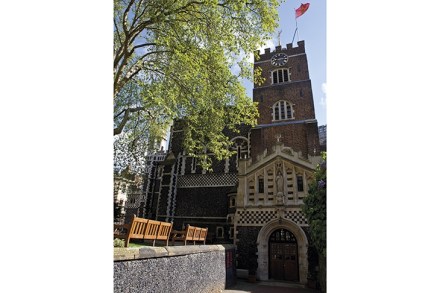
There is only one place in the world that has played host to both the Virgin Mary and Benjamin Franklin, and it is in trouble. At St Bartholomew the Great, London’s oldest parish church, the beams of the Lady Chapel are rotting. Rebuilt in the 14th century, the present chapel stands on the site of a much older structure. It was here, sometime in the late 12th century, that a monk named Hubert was visited by the Virgin. She was not best pleased; the praises offered to her, she complained, were no longer up to scratch. Hubert hurried to relay this to his fellow monks. All of them, from that time on, made sure to raise ‘a readier praise of her name’. Such was the impact of what remains, to this day, the only recorded appearance of Christ’s mother in the capital.
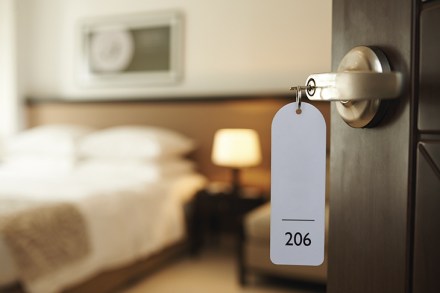
Hotel breakfasts are a risky business

A few Spectator readers may soon find themselves confined to quarantine hotels, so the magazine thought it timely to find someone familiar with hotel life to share their advice. Since Dominique Strauss-Kahn was somehow unavailable, they settled on me. Now the first question to ask is: how fancy a hotel should you choose? This is not as simple as it sounds. Indeed, other than buying a yacht, no extravagances pall faster than a posh hotel. As Viz magazine once recommended: ‘Turn your home into a luxury hotel by installing a small fridge next to the bed and burning a £10 note every time you use it.’ I rather agree with Leo Johnson — Boris’s brother — who argues that the quality of French hotels is inversely related to the price.

Why Doc Martens are the only footwear you need

Doc Martens are one of those quintessentially British things that, like the royal family and lorries queuing on the M20, turn out actually to be Germany’s doing. The ancestor of what became the ‘Air Wair’ sole was designed in 1945 by a German army doctor with a sore foot. Amid the postwar hurly-burly, he ‘salvaged’ a cobbler’s last from a shop in Munich and knocked himself up an air-cushioned shoe to relieve his discomfort. Pleased with the success of his invention, he and a pal went into business producing bouncing soles.

My historical re-enactment group’s battle with Silicon Valley

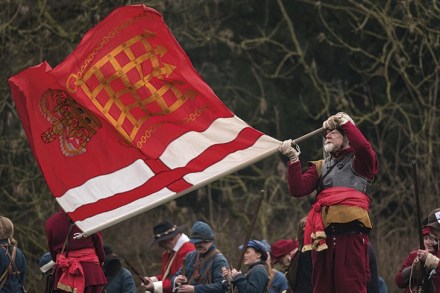
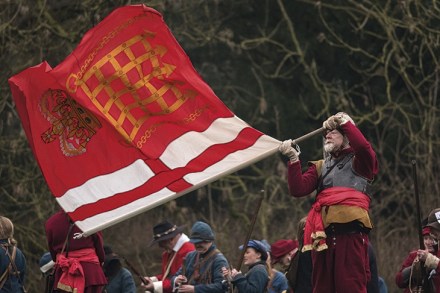
The Wimborne Militia of Dorset prides itself on being the only formally commissioned ‘private army’ in England. We’re well known locally but less well known in California, which is perhaps why Facebook banned our homepage a few weeks ago, thinking we were a right-wing Trumpian ‘militia’. Its algorithm seems not to recognise historical re-enactment societies, which is a shame. They are an important part of British cultural life. I’ve been a historical re-enactor since 1983 and I’ve found that my fellow amateur historians are happy with the moniker of ‘mostly harmless’ eccentrics.

The political power of America’s First Dogs

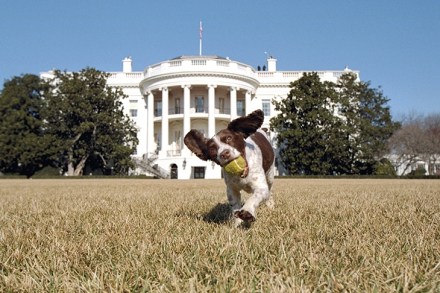
From the moment Donald Trump’s presidency began, he was lacking something. But Joe Biden is about to make up for it — twice over. Trump was the first president in more than a century not to have a dog in the White House. Biden’s German shepherds Champ, 12, and two-year-old Major will be filling the vacancy left by Barack Obama’s Portuguese water dogs, Bo and Sunny, and continuing a tradition of First Dogs that can trace its pedigree back to George Washington. Far from being mere political poodles, many First Dogs have made history in their own right. Calvin Coolidge’s collie Rob Roy was the first dog to feature in an official First Family portrait, which still hangs in the China Room, while George W.

How to be a hermit

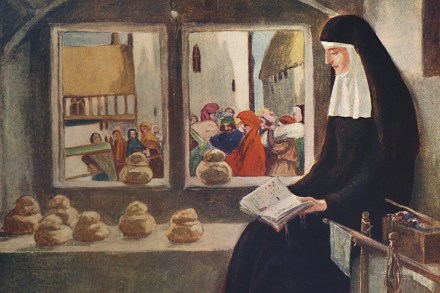
At a time when so many of us are experiencing some measure of isolation, it is hard to fathom the choice to live in extreme confinement in the middle of the urban bustle. But hermits were once unremarkable features of England’s cities. The 13th-century traveller entering London from the north, at Cripplegate, would have walked within yards of a hermit’s cell. There were also cells at Aldgate, Bishops-gate, Temple Bar and Cornhill, as well as many others beyond the city limits. These hermits — more properly called anchorites or anchoresses — permanently enclosed themselves in cells attached to churches in order to live a life of prayer and contemplation. (The word comes from the Greek anachorein, meaning ‘to retire or retreat’.

The many uses of frankincense and myrrh

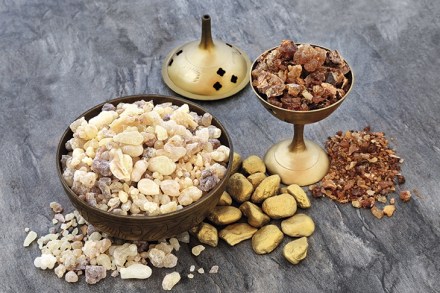
‘And when they were come into the house, they saw the young child with Mary his mother, and fell down, and worshipped him: and when they had opened their treasures, they presented unto him gifts; gold, and frankincense, and myrrh.’ About 15 years ago, a colleague at Cambridge was returning from a visit to Yemen. The British customs officers asked him what he had bought, and he declared that his luggage contained frankincense and myrrh. ‘And gold as well, I suppose!’ came the ironic reply, and he was let through without further ado. Later, he gave me a brown paper bag filled with nuggets of myrrh, which I used to hand round at my lectures when talking about the history of the trade in perfumes and spices, inviting my audience to chew a piece.

Mothing is a serious business

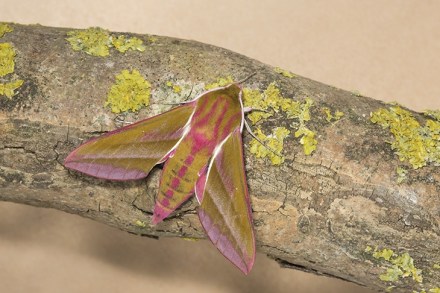
As darkness falls, a group of mainly middle-aged men set up traps of various shapes and sizes — some sophisticated and expensive-looking, others more Heath Robinson-like — in gardens and fields across the country. These are moth enthusiasts: a largely unknown and, by their very nature, unseen group of hobbyists. They are mostly fanatical birdwatchers too, and from backgrounds that include journalism, the civil service, the Royal Mail and the NHS. They lay their traps, some of which cost £500 or more, throughout most of the year. In the mornings they count, identify and list their catch in minute detail. The moths are then carefully released, away from prowling blackbirds who turn up when they think there’s a chance of an easy meal.

The traditional cricket tea is under threat

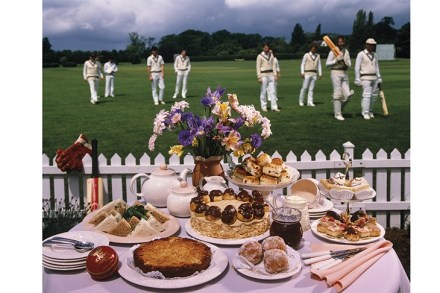
Cricket is not renowned for embracing change. The introduction of the middle stump, overarm bowling and Kevin Pietersen were all greeted with great suspicion. But now the biggest change of the lot is proposed. Forget the Hundred: the traditional cricket tea is under threat. This summer, as a result of guidelines to tackle Covid-19, amateur cricketers were not able to use changing rooms, shine the ball with saliva or sweat, or enjoy the customary tea provided by the home club. Now the Sussex League is voting on whether to make tea voluntary next season for its 140 clubs. They will decide whether the home team should provide the cakes and sandwiches that players and officials have come to expect in the interval between innings.

Robins have earned their cultural perch on Christmas cards

At the risk of sounding like Sid James in some late period Carry On, I currently have two birds on the go. One in the garden, one at the allotment, both real beauties — both robins. I’m smitten and I suspect I’m not alone. With much of the nation either working from home or on actual gardening leave, robins have become more familiar than ever. Most species of garden birds are horribly in decline (around 60 per cent of house sparrows, for instance, have been lost since the mid-1970s), but the robin has stubbornly stuck around in great numbers. While those other great survivors, magpies and pigeons, are brash and ungainly, the robin is a delicate little gem: magpie song is shrill, pigeon dumbly repetitive, but robin chirrups are a delight.

Who decides what’s allowed on a gravestone?

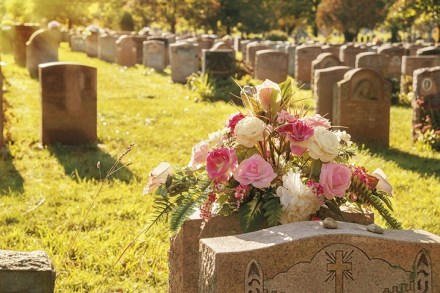
A parishioner in West Yorkshire has been allowed to put an inscription in Chinese on a relative’s gravestone. ‘There is no general prohibition on the inclusion in inscriptions on headstones of words or phrases in a language other than English,’ said Mark Hill QC, Chancellor of the Diocese of Leeds, sitting in a consistory court. If that is so, why was a family of Irish background forbidden by a consistory court in June from putting an Irish inscription on the gravestone in a Nuneaton churchyard of Margaret Keane, who had died aged 73? The inscription would have said: ‘In ár gcroíthe go deo.' Perhaps not many people in Nuneaton would have known it meant ‘In our hearts for ever’.

The rise and fall of mink

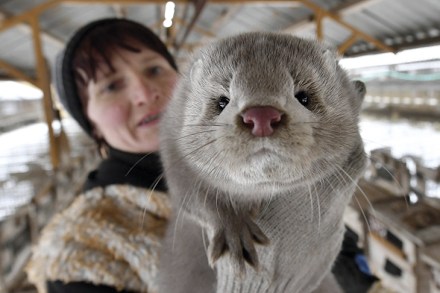
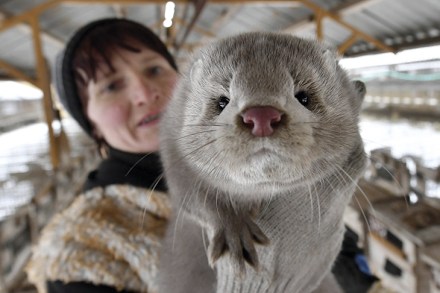
Mink keeps you warm. That’s a most acceptable bonus, but its prime function is status. This week, however, the focus on mink has been for an altogether different reason. Denmark, the world’s largest exporter of mink skins, began culling 17 million minks to stop a mutated form of coronavirus. As a precaution, Britain has closed its borders to anyone travelling from Denmark. There were once three species of mink: American, European and the sea mink of North America. The last went extinct in the early 20th century because of the fur trade. Minks are related to stoats and otters. They’re great swimmers and have evolved a coat to suit their watery lives: a dense underfur overlaid with dark, glossy guard hairs.

Why I like right-wing fruit

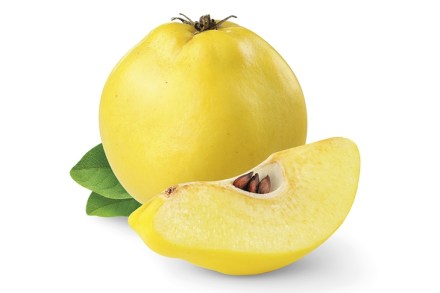
I recently bought some quinces in our local farmshop as part of my new policy of investing heavily in right-wing fruit, vegetables and legumes. This undertaking, born of principle, has meant a surfeit of cauliflower in our diet, the brassica having been identified by the Democratic party congresswoman Alexandria Ocasio-Cortez as a signifier of white colonialism. That the quince is decidedly right of centre is surely beyond dispute. It was first grown in England by Edward I, the ‘Hammer of the Scots’, a man who would have made short work of Nicola Sturgeon. In the 5th century BC the fruit cropped up in Aristophanes’s play The Acharnians, when the farmer Dicaeopolis remarks to a teenage sex-worker: ‘Oh! my gods! what bosoms! Hard as a quince!

The haunting stories of Britain’s ‘bog bodies’

Some believe that All Hallows’ Eve is adopted from a much older Celtic holiday, Samhain, that marked the change from harvest’s living richness to the darkness of winter. In its modern guise, Halloween still retains something of that pagan philosophy — a time when the borders between the living and the spirit world are supposed to be at their weakest. For our pre-Christian ancestors, this sense of the in-between was felt not only in the mulchy decay of autumn but also in the land around them. Bogs were an in-between space for Iron Age Europeans. They thought that these muted open wetlands, with their sodden pools of still black water, exposed an opening to some other realm.

The joy of drinking alone

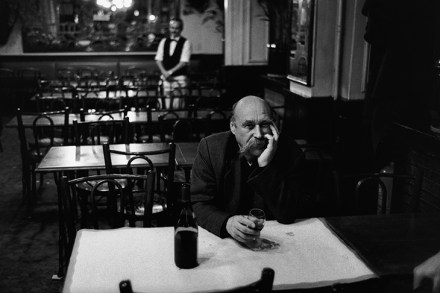
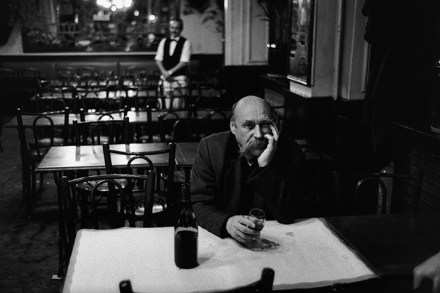
Thanks to a combination of night-time curfews, social-distancing rules, pubs closing, restaurants failing, the ‘rule of six’ and compulsory mask-wearing, that basic and necessary human need for people to meet for a drink has never been so difficult. Now, with the government’s new three-tier Covid strategy in place, anyone at any moment could find their local pub shut, their parties cancelled, and all forms of indoor mixing prohibited. Millions in the UK are already living under these restrictions. It’s a fair bet that millions more will soon join them. And if the government gives in to demands for a ‘circuit breaker’ — a short-term lockdown — it would in effect totally suspend social drinking as we know it.

Winkles

For the first time in 30-odd years, many Brits have started eating winkles again. Unable to holiday abroad this summer, we headed to the British seaside and rediscovered the winkle stalls that were once part of everyday life. Winkle recipes — similar to snail recipes — are suddenly popping up, and October is the perfect month for picking these shore-dwelling molluscs. For me, a winkle has a Proustian effect. Every Sunday when I was a child, we’d have winkles for tea. My father would put some on each of our plates and we’d have an eggcup full of vinegar, some pepper, and our own winkling pin to get the little blighters out.

Has Covid killed off Punch and Judy?

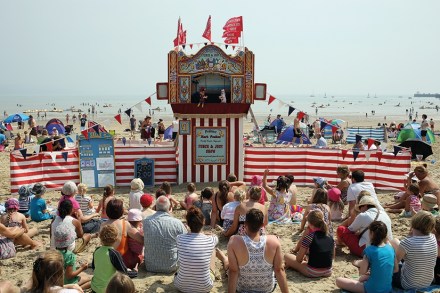
They’re one of the country’s most famous married couples. You just need to spot his colourful jester outfit and the long tassle bobbing from his sugarloaf hat, and you know it’s Mr Punch and his wife Judy. But now, with the Covid restrictions, this familiar sideshow is under threat. Mr Punch may be swinging his final blow. Punch and Judy’s red-striped puppet booth has been popping up in Weymouth, Dorset, since 1880. Mark Poulton first saw the mayhem caused by hooked-nosed Mr Punch and his giant baton in the 1970s when he was four years old. He was transfixed and decided that when he grew up he would become a professor, the title bestowed upon a booth operator.

Box clever: the surprising history of signal boxes

Petersfield signal box is in the wrong place. Or at least it is now. When it was built in the 1880s, it was in precisely the right place, near the tracks and next to the level crossing that the signalman controlled. It had to be. Signal boxes had a series of big levers which controlled both signals and the points on the track. In the days before electric motors, the boxes had to be as near as possible to the points or shifting the levers became too difficult, especially in cold weather. Petersfield is Grade II listed because it is a rare example of a box containing equipment developed by the London & South Western Railway, which built most of the lines out of Waterloo.

Why crowds are so pleasing

London, writes Dr Watson in the first Sherlock Holmes story, is ‘that great cesspool into which all the loungers and idlers of the Empire are irresistibly drained’. The quote sums up the thrill of a crowd, the excitement of being with lots of other people, of not knowing who or what you’ll see or hear. It’s a thrill that feels a very long way away at the moment.

Could Trump save the capital letter?

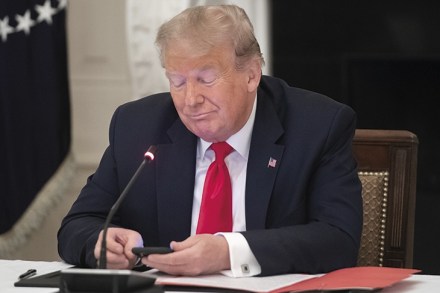
Irrespective of whether Donald Trump ends up being a two-term president, surely no modern political figure has done more to raise the profile of the capital letter. Joe Biden, in contrast, does not seem as enamoured with his caps lock button as the current Tweeter-in-Chief. No more FAKE NEWS, WITCH HUNT or MAKE AMERICA GREAT AGAIN if Biden is in the White House. At one point, Trump’s love of upper case was even mooted as the possible final straw which would lead to a third world war, after the President’s famously cautious tweet in July 2018: ‘To Iranian President Rouhani: NEVER, EVER THREATEN THE UNITED STATES AGAIN OR YOU WILL SUFFER CONSEQUENCES THE LIKES OF WHICH FEW THROUGHOUT HISTORY HAVE EVER SUFFERED BEFORE.