More from Books

The catastrophe that allowed mammals to reign supreme

Humans are so comfortable with their self-declared dominance over the rest of life, appointing themselves titular head of an entire geological age in the ‘Anthropocene’, that we forget how we are party to a much wider evolutionary alliance: the mammals. Steve Brusatte announces that mammals reign supreme upon this planet. One thinks especially of their place as climax predators in almost all regions – the lions, tigers, wolves and bears for example – or the sheer weight of numbers of the megafauna in the African savanna, the herds of wildebeest, antelopes and zebras. Mammals are more widely spread over the planetary surface than all higher organisms, with the possible exception of birds.

Where does brave, stubborn Hungary stand today?

‘Deplorable,’ wrote the historian Denis Sinor in 1958 about the state of Hungarian historiography in English. ‘Not only are the interpretations out of date but the facts themselves are all too often erroneous, and a proper name which is not misspelt is received with a sigh of relief by the reader who knows Hungarian.’ That was only two years after the revolution of 1956, when Hungary was on the world’s lips. Today, when the government of Viktor Orbán and the country’s position on Russia and Ukraine makes it equally talked about, this book – from an author born in Budapest in 1956 – is well timed, and its subtitle ‘Between East and West’ pertinently chosen.

A flawed utopia: The Men, by Sandra Newman, reviewed

The problem for feminism is men. Not, specifically, in the sense that men are the source of women’s problems, although the statistics do tend to point in that direction. Feminism’s men problem is that, despite all this, women like men. Love men. One of the lessons of second-wave experiments in separatism is that the idealised man-free existence is always fighting against the gravity of affection. Sandra Newman’s novel The Men takes that quandary and does something clever with it. She imagines a world in which all the men and all the boys and all the trans women and all the male non-binaries and all the Y-chromosome-carrying foetuses are mysteriously spirited out of existence in one strange instant.

A twist on the American classic: The Sidekick, by Benjamin Markovits, reviewed

On the cover of The Sidekick, just below a broken basketball hoop, a quote from Jonathan Lethem suggests Benjamin Markovits is a ‘classic American voice’. Open the book and the first sentence – ‘I was a big slow fat kid but one thing I could do was shoot free throws’ – confirms the kind of American classicism we can expect: Salinger-conversational, Updike-melancholic, Roth-confessional. Male and white, in short. A decade ago, when The Sidekick is largely set, this would be hardly worth mentioning, but for a new novel to stand on such patriarchal shoulders now feels curiously old-fashioned.

Musings on harmony, melody and rhythm

Every Good Boy Does Fine – a banal phrase that also just happens to be the key to limitless wonder. You may have learned it, like Tom Stoppard, as Every Good Boy Deserves Favour, or perhaps as the rather more tension-fraught Every Good Boy Deserves Food (whose sinister implication haunted more of my childhood than I ever confessed to my parents). Whichever it is, this mnemonic for the notes that fall on the lines of the stave in the treble clef is where music begins for most of us: the key that turns hieroglyphs into sound and, eventually, meaning. So it was for Jeremy Denk.

‘It was all a fairy tale’: Lina Heydrich’s description of the Holocaust

There have been many biographies of Reinhard Heydrich, the cold, cynical head of the SS in the Third Reich, but none quite like this one. Nancy Dougherty, an American film critic and biographer, died in 2013 before finishing a very large manuscript. The book was put into shape by Christopher Lehmann-Haupt, an old friend of hers, who died in 2018. It now sees the light of day years after the research and writing was carried out, but it is a fine posthumous monument to both author and editor. What makes this biography different is not the life of Reinhard but his wife Lina. Dougherty spent three long sessions in the 1970s and 1980s tape recording interviews with Heydrich’s widow on the Baltic island of Fehmarn, where Lina was born, and where she returned after the end of the war.

After Aberfan, clairvoyants had a field day

In the wake of catastrophe, however random or unpredictable, one of the first things people can be relied upon to do is look around for somebody to blame. There isn’t always an obvious candidate, of course, but disaster makes us resourceful, and often the casting process is simply a matter of laying hands on someone who happens to be fairly near by and looks like a good enough fit for the role. Assigning responsibility is an extremely effective therapy, after all, restoring a feeling of control over the capricious environment. Someone should have known, we insist. Someone ought to have seen this coming. John Barker, the central figure of The Premonitions Bureau, took this final claim rather literally.

Why are crime writers so weird?

What a weird lot crime writers are. I don’t come to this conclusion lightly, since I’m a crime writer myself, but on the evidence of this magisterial but wickedly entertaining book the conclusion is inescapable. As you turn the pages, the evidence mounts up. One crime writer has been considered a serious candidate for sainthood and another has been convicted of murder. Wilkie Collins simultaneously maintained two mistresses and their children but never bothered to marry either. Mary Roberts Rinehart, an early 20th-century queen of American suspense fiction, narrowly escaped being murdered by her chef because she wouldn’t promote him to butler. Agatha Christie famously engineered her own disappearance, and Dorothy L.

A child’s eye view: Fight Night, by Miriam Toews, reviewed

Writing from a child’s point of view is a daredevil act that Miriam Toews raises the stakes on in her latest novel. The nine-year-old narrator is meant to have written the words that appear on the page. But then there is something inherently risky about Toews’s whole undertaking as a novelist. She has made her name in fiction that grapples with the restrictive Mennonite community in which she was raised – keeping faith with it and betraying it simultaneously. Her masterly Women Talking confronted the community head on, depicting the secret meetings of a group of women deciding how to respond to pervasive sexual violence.

Life’s great dilemma: Either/Or, by Elif Batuman, reviewed

In this delightful sequel to her semi-autobiographical novel The Idiot (2017), which was a finalist for the Pulitzer Prize, Elif Batuman returns to Harvard to follow her protagonist Selin during her sophomore year. Selin has spent the summer of 1996 teaching English in Hungary, trailing her friend Ivan. Her crush on him remains unrequited and unconsummated, but she is determined to make up for lost time by having ‘interesting love experiences’ this year. The Idiot was preceded by The Possessed, a New York Times bestseller about Batuman’s fascination with Russian literature.

Brother against brother in the English civil war

‘The Wars of the Three Kingdoms’ is the best description of the devastating conflict that erupted in England, Ireland and Scotland during the 1640s and 1650s. While Britain lost 2.2 per cent of its population in the first world war, 4 per cent perished during these terrible 17th-century clashes. The kingdoms were, at the outset, Charles I’s. At a time when even a great leader would have struggled to navigate the political, religious and social torrents confronting him, the king was weak and apt to act on the latest advice he received; his only strengths were piety, art patronage and being a loving husband and father. When a ruler of energy and charisma was desperately needed, Charles was happiest reading the Bible or playing chess or lawn bowls.

The real Norfolk: Stewkey Blues, by D.J. Taylor, reviewed

D.J. Taylor is a Norfolk native who, un-usually, has stayed put. These stories, written during the pandemic, are all set in that county, though the author is largely uninterested in its more fashionable acreage – the strip of coast so popular with Sunday supplements and London owners of second homes. He writes instead about the ‘other’ Norfolk, which is comparatively unmonied, flat as a map, and barely gets a look-in from the SUVs speeding north. Most of these stories feature men, often young men, though in ‘New Facts Emerge’ a harried City businesswoman finds her Christmas plans imperilled by the obstructions of a sexist superior. She finally snaps when the colleague’s soullessness and the grind of the commute from Diss push her past breaking point.

Reflections on water in the Middle East

These Bodies of Water begins dramatically (as befits a book derived from Sabrina Mahfouz’s Royal Court show A History of Water in the Middle East) in a stuffy little room in Whitehall where the author is being interrogated by a man in a beige mac who is vetting her for top security clearance. It all sounds a bit James Bond, except that Mahfouz is more like an ‘Egyptian Guyanese Nancy Drew’, as a boyfriend joked – extremely unusual in the civil service fast stream as a woman, working-class and Middle Eastern (her father is Egyptian, her mother is Guyanese-British). While her peers laugh off questions like ‘Have you ever had sex with an animal?’, Mahfouz finds herself ‘existing purely in opposition’ for the first time in her life.

The danger of learning too much from Covid

When Ray Bradbury was asked if his dystopian vision in Fahrenheit 451 would become a reality, he replied: ‘I don’t try to predict the future. All I want to do is prevent it.’ In the hot embers of the Covid-19 pandemic, it may not be enough to foresee infectious disease threats if we lack the ability to forestall them. After all, predictions were made about 2019. In a Ted talk four years earlier, Bill Gates warned about what he later called ‘Disease X’, a respiratory disease that would cause millions of fatalities. Devi Sridhar, a professor of public health at the University of Edinburgh, addressed the Hay Festival in 2018 with an uncanny description of a zoonotic virus from China that could spread across the globe.

Is Anna Wintour human?

Apparently Anna Wintour wants to be seen as human, and Amy Odell’s biography goes some way to helping her achieve that aim. Nearly all the photographs show her smiling, looking friendly, even girlish. And the text quite often mentions her crying. On 9 November 2016 she cried in front of her entire staff because Hillary Clinton lost the election. But then she immediately set about trying to persuade Melania Trump to do a Vogue shoot. Melania, another tough cookie, refused unless she was guaranteed the cover. Dame Anna has been the editor of American Vogue since 1988 and holds a position of extraordinary power in the fashion world. Designers, photographers, models and celebs tremble to obey her whim.

Operation Chariot succeeded because it was unthinkable

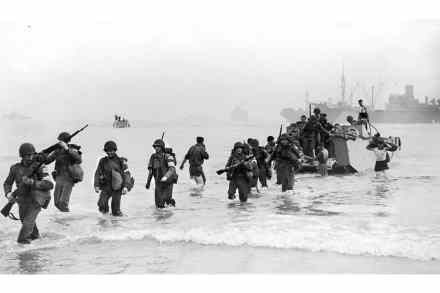
Eighty years ago, just after midnight on 28 March 1942, the British destroyer HMS Campbeltown crept up the estuary of the River Loire towards the heavily defended port of St Nazaire. Here lay an immense dry dock, the only facility on the west coast of France that German battleships such as the ferocious Tirpitz could use if they needed repair. Destroy the dock, and Tirpitz would be unable to sortie against the Atlantic convoys supplying Britain. The only way to do that, however, was to wreck the lock gate at the entrance. And that meant filling a ship with explosives, ramming it into the gate and blowing the whole lot up, while commandos jumped ashore to demolish the pumps, the winding gear and anything else they could.

Travels in time and space: Sea of Tranquility, by Emily St. John Mandel, reviewed

It’s a bold writer who confronts a major historical moment such as a pandemic before it’s over, but Emily St. John Mandel has a claim to fictionalised outbreaks. Her 2014 novel Station Eleven presciently envisioned a devastating flu. That book was televised by HBO and became a major hit, and this latest touches on the same ground. As J.G. Ballard proved, revisiting a subject – as a painter might – can be a fertile approach in speculative fiction. Sea of Tranquility initially adopts a time-leaping structure reminiscent of David Mitchell’s Cloud Atlas (which itself sprang from Italo Calvino’s masterpiece If On a Winter’s Night a Traveller). In 1912, we meet a young English aristocrat exiled to Canada for his radical views.