More from Books

Has the role of resistance in the second world war been exaggerated?

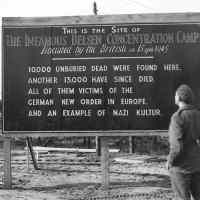
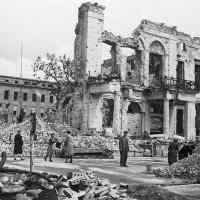
When in 1941 Winston Churchill famously declared that the newly formed Special Operations Executive, set up to encourage resistance movements, would ‘set Europe ablaze’, neither he nor anyone else could have known the extent of the help the partisans would provide to the liberation of the continent. Nor, indeed, did anyone envisage the fact that not all of them would prove as biddable to Allied wishes as they hoped. As Halik Kochanski shows in her compendious book on the six-year underground war, resisters came in all shapes and sizes, not easily controlled or corralled into categories. She divides her survey into three periods. The first runs from March 1939 and the occupation of Czechoslovakia to the German invasion of Russia in June 1941.

That sinking feeling: The Swimmers, by Julie Otsuka, reviewed

Julie Otsuka has good rhythm, sentences that move to a satisfying beat. Even as her tone shifts — from tender to funny to cynical to sinister — the beat goes on uninterrupted. In this, her third novel, the narrative has a steady flow. The Swimmers traces the cracks that develop in an underground pool, and in a woman’s mind, and the slow and unavoidable deterioration of both. It opens with an introduction to the pool that reads like a guided tour from the swimmers themselves. We learn about their rituals: ‘Some of us have to swim 100 laps every day, others… until the bad thoughts go away (Sister Catherine, lane two).’ There are dos and don’ts and people to watch out for — ‘tailgaters, lane Nazis, arm flailers’.

A playful version of the universe: Pure Colour, by Sheila Heti, reviewed

Readers familiar with Sheila Heti’s work, most notably How Should a Person Be? and Motherhood, in which she examines both the possibility and implications of choosing one’s life and dealing with the consequences, will be familiar with her apparent capriciousness. Her prose — freewheeling, elliptical, a tangle of jokiness and jeopardy — seems to capture the puzzle of proportionality: how seriously should we take this one life we have, and how can we hope to balance our opposing urges towards levity and gravity?

Howard Jacobson superbly captures the terrible cost of becoming a writer

Howard Jacobson, who turns 80 this year, published his first novel aged 40. Since then he has produced roughly a book every two years, including The Finkler Question, which won the Man Booker in 2010. Given that he was put on Earth to write, why the wait? This is the subject of Mother’s Boy, a tale of self-persecution in the form of a monologue which includes interjections from the ghosts of his parents and one chapter, recording a period in his twenties that he drifted through in a dream state, printed in a font resembling handwriting. ‘How’s the novel coming along?’ his father would routinely ask after Jacobson graduated from Cambridge with a ‘poor degree’ in English. He was taught by F.R.

The machinations of the Dudleys make Game of Thrones look tame

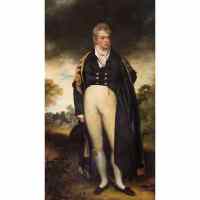
This is the gripping story of the ever-fluctuating fortunes of three generations of the Dudley dynasty, servants to — and at times rivals for — the Crown in the 16th century. As Joanne Paul observes in her engrossing biography of an extraordinary family, ‘had fate, Fortuna, Nemesis or God made only the slightest adjustment to their orchestration of events’, the Dudleys, not the Tudors, might have ruled England for generations. The narrative begins in the 1490s with Edmund Dudley, an Oxford-educated barrister who rose to a position of power, influence and wealth at the early Tudor court, only to be arrested and imprisoned in the Tower within days of Henry VII’s death in 1509.

What’s to become of Africa’s teeming youth?

Demographers are attached to their theories. The field’s most enduring is the ‘demographic transition’, whereby modernisation inexorably lowers a society’s once-high fertility to replacement rate. Unfortunately, reality is obstreperous and doesn’t always obey the rules. The United Nations Population Division bases population projections on the assumption that all countries will eventually follow the pattern of plummeting birth rates first observed across the West. Edward Paice’s Youthquake addresses the exception so far: Africa. The continent is hardly a minor asterisk.

From pirates to princes — the heroic transformation of the Normans

The Normans had an astonishingly good run. Not only did they take over England in 1066, of course, but they also triumphed over the Muslims, establishing themselves in southern Italy and founding a principality in the Near East. William the Conqueror’s is one of the most famous names from Europe’s Middle Ages, but the achievements of Robert Guiscard were nearly as astonishing: leaving Normandy with five knights and 30 infantrymen, he became Duke of Sicily, Apulia and Calabria. Meanwhile, his son Bohemond was one of several Norman heroes of the First Crusade, and rose to become Prince of Antioch. These military successes did not surprise contemporaries.

Playing until her fingers bled: the dedication of the pianist Maria Yudina

The 20th century was an amazing time for Russian pianists, and the worse things got, politically and militarily, the more great pianists thrived, despite the extreme danger and discomfort in which they lived and in which some of them died. If we think immediately of Richter, the greatest of them all, and Gilels, there are at least 20 more that we could add without exaggeration. One of the most important was without question Maria Yudina, born in 1899, who astonishingly survived until 1970. She was not just a sovereign artist but an eccentric of the kind and degree that only Russia seems able and willing to supply.

Christina Patterson overcomes family misfortunes

The journalist and broadcaster Christina Patterson’s memoir begins promisingly. She has a talent for vivid visual description, not least: ‘We are a pink and navy family. Two pink girls, a navy boy and a navy wife.’ Her early family holidays in Sweden, where her mother is from, are full of lingon-berries, hammocks and mini-golf. She recounts the story of her parents’ courtship as students and says of their relationship: ‘Love at first sight. Love for nearly 50 years. Love till death do us part’ — ominously pointing out how easy they have made love and marriage look. Most arresting, however, in this early part of the book, is her depiction of her elder sister Caroline’s nervous breakdown as a teenager.

Know your left from your right: the brain’s divided hemispheres

The dust jacket of The Matter With Things quotes a large statement from an Oxford professor: ‘This is one of the most important books ever published. And, yes, I do mean ever.’ Can any contemporary work withstand such praise? The ‘intelligent general reader’ (the book’s target audience) should, however, not be discouraged, for Iain McGilchrist has to be taken seriously: a Fellow of All Souls, eminent in neurology, psychiatry and literary criticism, a thinker and — it’s impossible to avoid the term —a sage. His previous book, The Master and His Emissary, was admired by public figures from Rowan Williams to Philip Pullman. Some consider McGilchrist the most important non-fiction writer of our time.

An innocent abroad: a Dutch tour operator in 1980s Russia

‘One morning in late October 1988,’ begins The Long Song of Tchaikovsky Street, ‘this dapper-looking guy from Leiden asked me if I might be able to deliver 7,000-odd Bibles to the Soviet Union.’ It’s the kind of line you might hear in a bar when you accidentally catch the eye of the resident storyteller — a tale so implausible it could just be true. Where on the scale between fact and fiction Pieter Waterdrinker’s memoir lies is impossible to tell, and beside the point: his engrossing 400-page account of post-Soviet disorder grips you and doesn’t let go.

A Canadian’s experience of the migrant’s ordeal

No one boards an overladen dinghy and sets out across a choppy sea without very good reason. Laden into migrant boats go backstories as well as bodies: tales of war-hit homes and bloodied police cells, of empty larders and decrepit schools. But illegal migration is as much about what lies ahead as what’s left behind: the hope of a better life, the chance to start anew. That was certainly the case with Omar, a young Afghan taxi driver and former interpreter. Back when the Canadian-born freelance correspondent Matthieu Aikins first arrived in Kabul, the Corolla-owning Omar had been a single gung-ho guy about town. Seven years later, with foreign troops drastically reduced and dollar contracts hard to find, life was looking far less rosy.

The best and coolest decade: nostalgia for the 1990s

The long 1990s began with the Pixies album Surfer Rosa in 1989 and ended with the invasion of Iraq in 2003. Or perhaps the short 1990s began with Nirvana’s Nevermind in 1991 and ended with The Matrix in 1999. Or perhaps the 1990s never really ended for those of us who have lived blissfully ever since in a mental version of Portlandia — the place where, according to that sitcom’s theme tune, ‘the spirit of the Nineties lives on’. Or perhaps the 1990s did end at some point in the new millennium, if only so that the 1990s revival could commence straight afterwards.

Lonely voices: Dance Move, by Wendy Erskine, reviewed

‘The drawer beside Roberta’s bed contained remnants of other people’s fun’: so begins ‘Mathematics’, one of 11 stories in this outstanding collection by the Belfast author Wendy Erskine. The opening is Erskine in miniature: the wry, unostentatious prose; the sad interiors with their charged objects (‘a small mother-of-pearl box inlaid with gold, a lipstick that was a stripe of fuchsia, a lucky charm in the shape of a dollar sign’); a character’s casual curiosity about the intimate affairs of others. A bereaved mother scours Belfast with a paint scraper, removing the ‘missing’ posters of her dead son Dance Move might also have been titled Other People’s Fun.

Don’t listen to Johann Hari to help your attention span

In 1887, Friedrich Nietzsche made a complaint about the modern world, writing in The Gay Science: Even now one is ashamed of resting, and prolonged reflection almost gives one a bad conscience. One thinks with a watch in one’s hand, even as one eats one’s midday meal while reading the latest news on the stock market; one lives as if one always ‘might miss out on something’. Johann Hari’s Stolen Focus rehearses this complaint. We fill our lives with distractions, he says, and have no time to think.

Abstract and concrete: the beauty of brutalism

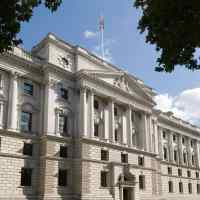
Nothing divides the British like modernist architecture. Traditionalists are suspicious of its utopian ambitions and dismiss it as ugly; proponents romanticise it, yearn for the civic principles that built it and gloss over its failings; the young see period charm in flat roofs and straight lines, while the old associate them with deprivation; the wealthy mostly avoid it — and many people have no choice but to live in it. Nearly 100 years after Le Corbusier set out his five points of modern architecture the British are still arguing about its merits, partly because we still live with so much of it: housing, offices and civic and industrial buildings. Two new books may change our perspective — or at least convince us that neither side is entirely right.

Stalin the intellectual: the dictator cast in a new light

The link between mass-murdering dictators and the gentle occupation of reading and writing books is a curious one, but it definitely exists. Mao was a much- praised practitioner of traditional Chinese poetry; Hitler was widely if haphazardly read, dictated Mein Kampf and was a fan of Karl May’s Wild West stories; and Stalin, as Geoffrey Roberts shows, took books at least as seriously as the purging of foes, real and imagined.